en
en  русский
 Español
 عربى
عربى
Content
- 1 1. Product Overview and Design Concept
- 2 2. Key Advantages Over Conventional Novelty Hats
- 3 3. Materials, Construction, and Product Details
- 4 4. Manufacturing Strengths and Production Capabilities
- 5 5. Manufacturing Process for a Plush Hat
- 6 6. Commercial Applications
- 7 7. Wholesale Information and Ordering Considerations
- 8 8. Quality, Safety, and Compliance Planning
- 9 9. How the Product Can Be Customized
- 10 10. Why an Integrated Manufacturer Matters
- 11 11. Merchandising and Marketing Recommendations
- 12 12. Competitive Positioning
- 13 13. Buyer Checklist Before Bulk Production
- 14 14. Frequently Asked Questions
- 14.1 What is the Koala-Ear Plush Hat made from?
- 14.2 What color is the standard product?
- 14.3 What is the standard size?
- 14.4 How much does one hat weigh?
- 14.5 What makes this different from a regular animal hat?
- 14.6 Can the product be customized?
- 14.7 What is the minimum order quantity?
- 14.8 What is the sample fee?
- 14.9 How long does sampling take?
- 14.10 How long is the production delivery time?
- 14.11 How are the products packed?
- 14.12 Who can purchase this product?
- 14.13 Can the hat be part of a larger plush collection?
- 14.14 What should buyers check before approving production?
- 15 15. Conclusion
- 16 References
- 17 Product: Koala-ear plush hat
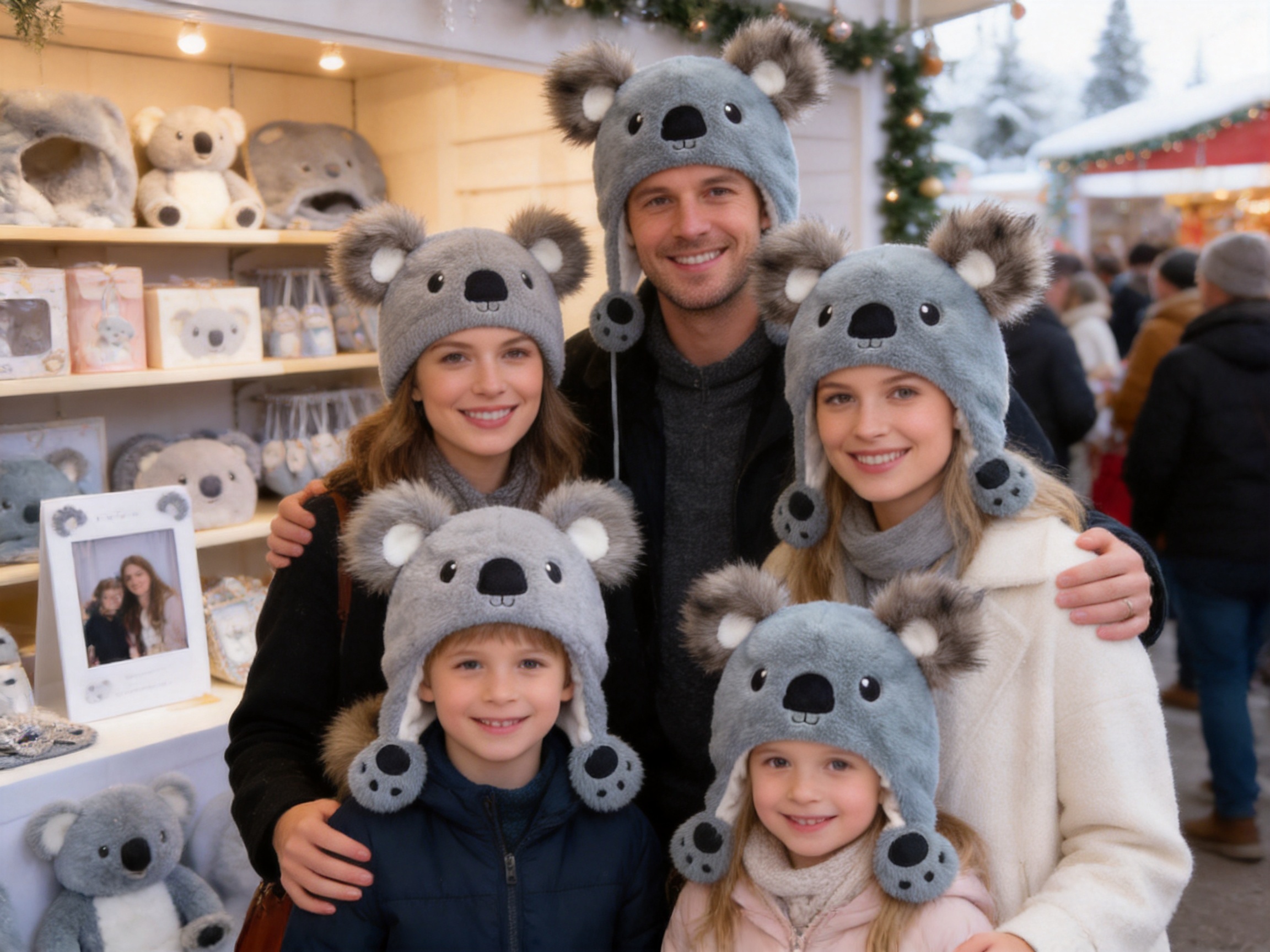
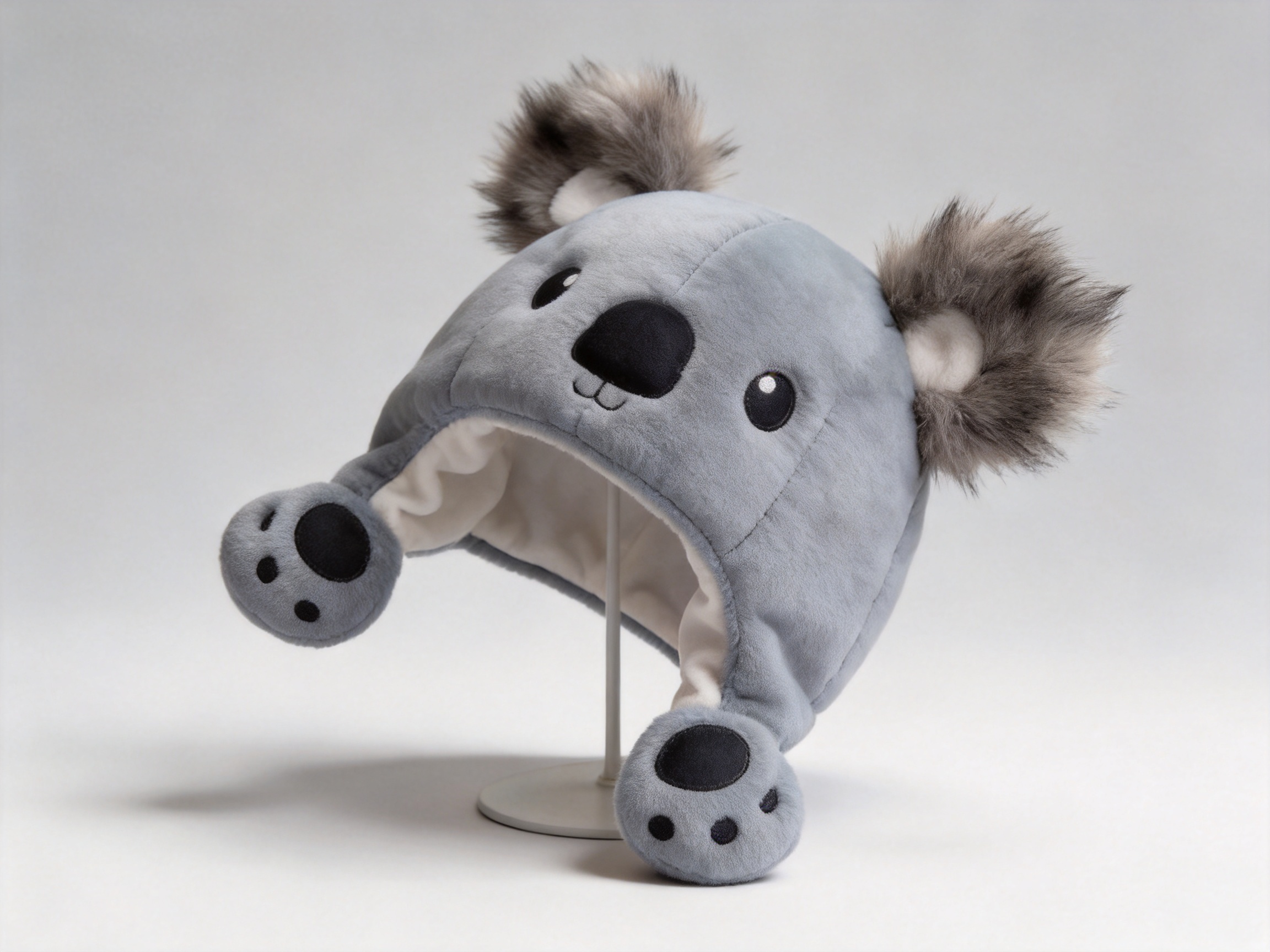
The Koala-Ear Plush Hat combines the practical appeal of a wearable accessory with the emotional charm of a soft toy. Designed around the recognizable features of a koala, it uses a rounded gray silhouette, fluffy ears, a dimensional black nose, and playful paw-shaped earflaps to create an instantly expressive product. It can be used as a novelty hat, a winter accessory, a costume component, a promotional giveaway, or a seasonal gift item.
For wholesalers, retailers, promotional agencies, entertainment brands, gift companies, and custom merchandise developers, this product offers a flexible foundation for a broad range of commercial applications. Its friendly animal appearance makes it approachable for children and adults, while its soft plush construction gives it a tactile quality that ordinary fabric hats cannot easily provide. The product can be ordered in its standard gray koala presentation or adapted through OEM and ODM development according to a buyer’s design, branding, market, or campaign requirements.
The Koala-Ear Plush Hat is manufactured by Tianchang Bestjoy Craft & Gift Co., Ltd., an integrated plush product manufacturer based in Anhui Province, China. The company provides research and development, design, production, sales, and after-sales support, allowing customers to work with one supplier through multiple stages of product development. With a factory covering more than 10,000 square meters, an experienced design team, professional production equipment, and established export experience, the company is positioned to support both standard product orders and customized plush projects.
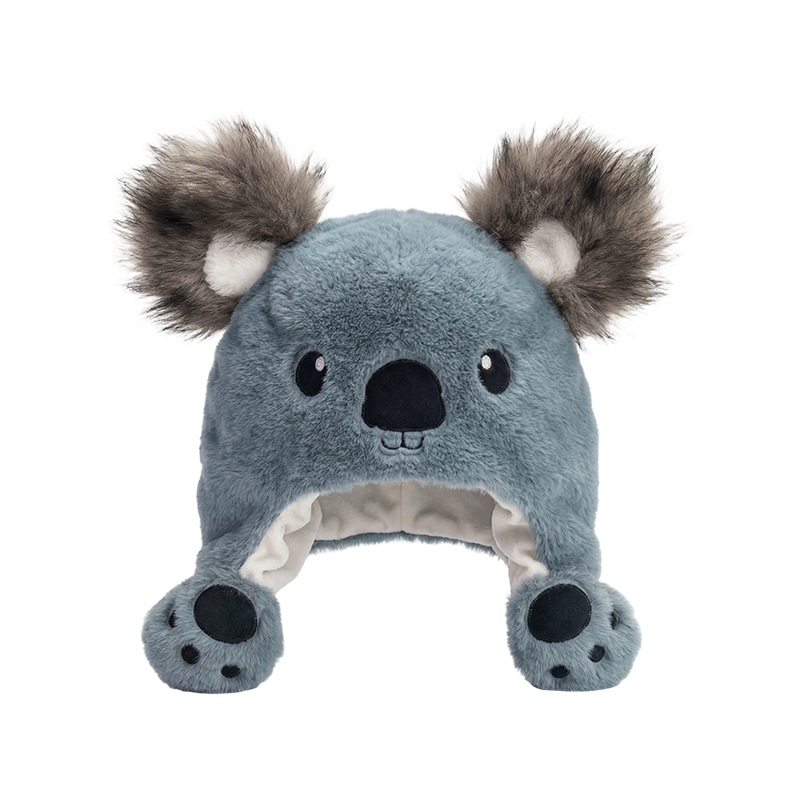
Koala-ear plush hat
1. Product Overview and Design Concept
The central design idea of the Koala-Ear Plush Hat is to transform a familiar animal character into a wearable, three-dimensional product. Instead of printing a koala image on a flat textile surface, the design uses raised plush elements to create volume, texture, and movement. The two ears rise above the head, the black nose projects from the front, and the side earflaps end in paw-shaped details. Together, these features give the hat a lively personality and make it visually recognizable from a distance.
The main color is gray, reflecting the natural appearance commonly associated with koalas. The ears feature a gradient effect that moves from darker gray toward lighter gray at the tips. This variation prevents the product from looking visually flat and adds a more natural, dimensional appearance. The contrast between the gray plush body and the round black nose creates a strong focal point, helping the hat remain attractive in product photography, retail displays, social media content, and event environments.
The earflaps are more than functional extensions of the hat. Their paw-like shape adds a playful character feature and supports the product’s novelty value. When the wearer moves, the earflaps can swing naturally, making the accessory more animated than a conventional winter hat. This movement is particularly useful for promotional events, themed parties, store demonstrations, holiday campaigns, and photo opportunities.
The standard size is approximately 30 centimeters, with customization available. Depending on the target market, buyers may request adjustments to the overall dimensions, proportions, colors, facial expression, ear shape, paw design, or decorative details. A custom version could be developed for a zoo, wildlife education program, children’s entertainment property, travel destination, charity campaign, winter festival, or retail collection.
Recognizable Animal Appeal
Animal-inspired products have strong visual communication value because customers can understand the theme almost immediately. The Koala-Ear Plush Hat does not depend on complex graphics or written explanations. Its ears, nose, gray coloring, and paw-shaped earflaps communicate the koala concept through form. This makes the product suitable for international markets where language-neutral visual appeal is important.
The koala theme also supports several emotional associations, including softness, calmness, friendliness, nature, conservation, and childhood comfort. These associations can be useful when the product is marketed as a gift, character accessory, educational merchandise item, or family activity product. The design can also be positioned as a fun addition to photo booths, animal-themed attractions, and outdoor winter events.
Soft Tactile Experience
The shell fabric is soft plush fabric, selected to provide a comfortable and touchable surface. Plush texture is one of the product’s most important advantages because it encourages customers to interact with the item. A hat that looks soft and feels soft can create a stronger first impression than a flat novelty cap made from standard woven fabric.
PP cotton is used as the filling material for the plush components. This helps the ears, nose, and paw details maintain their shape while preserving a lightweight feel. The listed product weight is approximately 150 grams, which supports the concept of a comfortable accessory that is easy to display, pack, transport, and wear during short-term promotional or seasonal activities.
2. Key Advantages Over Conventional Novelty Hats
The Koala-Ear Plush Hat competes not only with other animal hats but also with printed caps, fleece beanies, costume headwear, and inexpensive promotional accessories. Its advantages come from combining multiple product functions in one design: visual decoration, tactile appeal, character expression, seasonal usefulness, and customization potential.
Three-Dimensional Character Construction
Many novelty hats depend primarily on printed artwork. Although printing can communicate a character, it usually remains limited to a two-dimensional surface. The Koala-Ear Plush Hat creates a more immersive effect through dimensional construction. The ears stand above the head, the nose is raised, and the earflaps have sculptural paw shapes. This makes the item resemble a soft character product rather than a basic piece of headwear.
Three-dimensional construction can also improve shelf visibility. When several hats are displayed together, the upright ears and contrasting nose create a distinctive silhouette. Retail buyers can use this shape to build a more noticeable display, while promotional teams can use it to make staff, performers, or participants easier to identify in a crowd.
Strong Photo and Social Media Potential
Products with clear character features often perform well in visual marketing because they are easy to photograph. The Koala-Ear Plush Hat can support product images, user-generated content, event photographs, seasonal campaigns, and short-form video. The earflaps and ears create natural movement, while the black nose gives the face a strong center point.
For businesses seeking merchandise that encourages customer participation, a wearable product can provide more exposure than an item that remains on a shelf. Customers may wear the hat at parties, festivals, store openings, themed attractions, sporting events, or family gatherings. Every photograph taken by a customer can potentially extend the product’s visibility beyond the original point of sale.
Broad Seasonal and Promotional Use
The design is suitable for autumn and winter promotions, holiday gift collections, animal-themed campaigns, school events, charity activities, and family entertainment. It can be used as a standalone retail product or paired with other koala-themed items such as plush toys, keychains, blankets, stationery, backpacks, slippers, or home accessories.
Its seasonal value does not limit it to one holiday. The product may be used for winter gift programs, costume parties, wildlife awareness events, school performances, tourism merchandise, or year-round character collections. This flexibility can help buyers reduce the risk associated with products that are relevant only to a single date or celebration.
Lightweight and Efficient to Ship
At approximately 150 grams per unit, the product is relatively lightweight for a plush accessory. This can be beneficial for wholesale logistics, promotional distribution, online order fulfillment, and retail replenishment. The product is packed 12 pieces per carton, with a listed gross carton weight of 3 kilograms and net weight of 2 kilograms. These specifications allow buyers to plan storage, shipment, and handling requirements more effectively.
Customization Potential
OEM and ODM services are available. This means buyers can discuss either manufacturing a supplied design or developing a product concept with the manufacturer’s design and production team. Customization may involve colors, materials, facial features, proportions, packaging, labels, decorative elements, and other product details, subject to technical review and sampling.
Customization is particularly valuable for companies that need products connected to a specific brand identity. A buyer could request a different animal, a mascot-inspired variation, a themed color palette, a campaign slogan on the packaging, or a character accessory that matches an existing plush collection. The standard koala design provides a proven visual starting point while leaving room for creative development.
3. Materials, Construction, and Product Details
The product is made with soft plush fabric on the outer shell and PP cotton inside the padded components. These materials are commonly used in plush manufacturing because they offer a combination of softness, shape retention, light weight, and visual warmth. The fabric surface can also support different textures, pile lengths, and color treatments depending on the approved sample and final production requirements.
The listed gray color gives the product a natural koala appearance. The darker-to-lighter gradient at the ear tips adds a sense of depth and differentiation. During product development, color references should be confirmed through physical samples or approved color standards because digital images and screen displays can vary from the actual finished material.
The nose is designed as a three-dimensional black element. Its rounded appearance gives the face a clear focal point and helps distinguish the product from generic animal hats. The nose may be developed through a suitable plush, fabric, or molded component according to the final design and safety requirements. The exact construction should be reviewed during sampling to ensure that it is secure, visually consistent, and appropriate for the intended market.
The two earflaps are shaped like small plush paws. This detail supports both decoration and product interaction. Depending on the buyer’s concept, the earflaps could potentially be adapted with different paw shapes, contrast colors, embroidery, logos, or other soft embellishments. Any changes should be evaluated for balance, comfort, durability, and production feasibility.
Recommended Development Review
Before mass production, buyers should review the complete sample rather than relying only on a digital drawing. The sample review should examine the overall dimensions, fit, ear placement, ear symmetry, nose position, seam appearance, gradient color effect, filling distribution, earflap length, and packaging presentation.
For wearable products, comfort and stability are especially important. The product should be assessed for how it sits on the head, whether the earflaps hang evenly, whether the plush material feels comfortable against the skin, and whether the hat maintains its shape after handling. Sample testing can also help confirm whether the product is intended primarily for costume use, decorative use, short-term wear, or broader seasonal use.
The standard sample fee is listed as 100 dollars per design. The sample lead time is approximately 3 to 7 working days. These details provide a relatively clear starting point for buyers preparing a new product proposal, although the actual schedule may depend on design complexity, material availability, sample revisions, and approval requirements.
4. Manufacturing Strengths and Production Capabilities
Tianchang Bestjoy Craft & Gift Co., Ltd. operates as an integrated manufacturer specializing in the research and development, design, production, and sale of plush products. This integrated structure is important for buyers because product development often requires close coordination between creative design, material selection, pattern development, sewing, filling, finishing, quality review, and packaging.
When these activities are managed within one coordinated manufacturing organization, communication can be more direct. Design changes can be discussed with production personnel, technical concerns can be identified earlier, and the product can be adjusted before it reaches the mass production stage. This is particularly useful for plush accessories because small changes in proportion, filling, stitching, or material can significantly affect the final appearance.
In-House R&D and Design Support
The company has an innovative research and development and design team. For a product such as the Koala-Ear Plush Hat, design support may include the development of sketches, three-dimensional proportions, material suggestions, color coordination, component placement, and sample refinement. Buyers that have only a basic concept can use this type of support to move from an idea to a manufacturable product.
Design expertise is also valuable when buyers want to create a series rather than a single item. The koala hat could become part of an animal accessory collection with coordinated dimensions, colors, packaging, and presentation. A consistent design system can help retailers create a recognizable shelf identity and allow promotional companies to offer multiple character options to their clients.
Professional Production Equipment
The company maintains professional production equipment for plush product manufacturing. Equipment alone does not determine product quality, but appropriate production tools can improve repeatability, efficiency, and consistency when combined with skilled operators and controlled procedures. Consistency is particularly important for repeated facial features, symmetrical ears, matching earflaps, seam lines, stuffing levels, and batch-to-batch color results.
A production environment that handles plush toys, promotional gifts, home furnishings, stationery gifts, handicrafts, and cartoon decorations can also provide useful experience across different construction methods. Such experience may support the development of hats with varied shapes, accessory details, embroidery, appliqué, printed elements, and custom character features.
Factory Scale and Export Experience
The factory covers more than 10,000 square meters. This provides a substantial operating base for coordinating material storage, production processes, sample development, inspection, and packing. The company reports annual sales exceeding 12 million RMB and exports products to Europe, America, Australia, Japan, and South Korea.
International export experience can be valuable for buyers that require communication across different markets, packaging expectations, documentation practices, and delivery schedules. The company’s reported customer base includes major retail and supermarket clients such as Walmart, Target, Albertsons, and Kmart. This experience indicates familiarity with the expectations of large-scale commercial buyers, although individual order requirements should always be confirmed during the quotation and approval process.
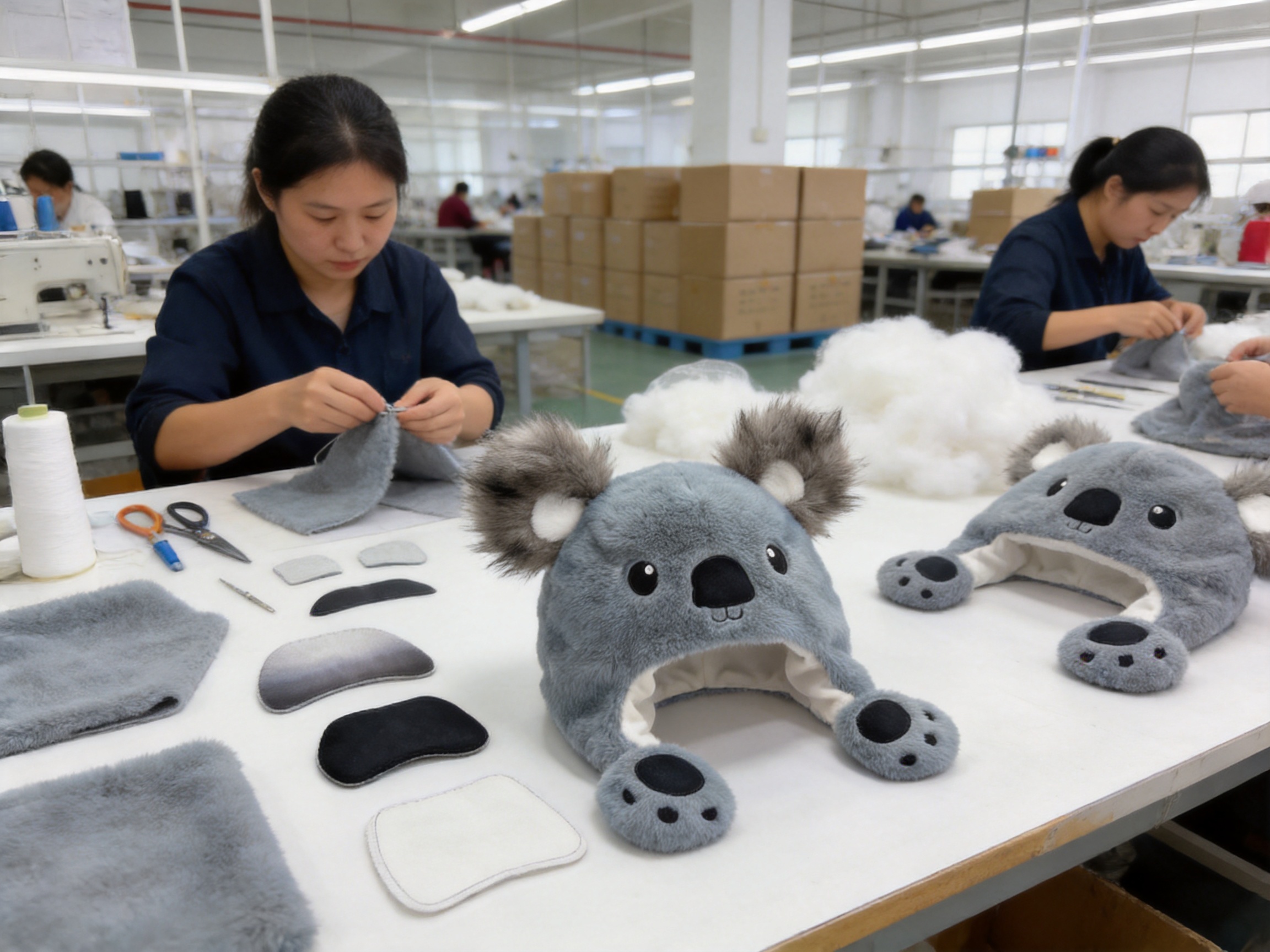
5. Manufacturing Process for a Plush Hat
The manufacturing process for the Koala-Ear Plush Hat begins with product definition. At this stage, the buyer and manufacturer clarify the intended size, target customer, design references, colors, materials, packaging, order quantity, and delivery expectations. The manufacturer can then assess whether the proposed design is suitable for existing production methods or whether special development is needed.
Step One: Design Confirmation
The design is reviewed from both aesthetic and manufacturing perspectives. The team considers the shape of the hat, the placement of the koala ears, the proportions of the nose, the size of the paw-shaped earflaps, and the relationship between the plush components. The product must look attractive in a drawing while also being practical to cut, sew, fill, assemble, inspect, and pack.
For custom orders, the buyer may provide artwork, sketches, reference images, technical drawings, or a physical sample. The manufacturer can translate these materials into production patterns and material specifications. Any unclear points should be resolved before sampling to reduce the possibility of repeated revisions.
Step Two: Material and Color Selection
The shell plush fabric, filling material, thread, nose component, labels, and packaging materials are selected according to the approved product concept. For the standard version, gray plush fabric and black nose details support the koala appearance. If the buyer requests customized colors, the final shades should be approved using physical material swatches whenever possible.
Material selection should consider softness, appearance, durability, colorfastness, pile direction, seam behavior, and suitability for the intended market. A fabric that looks attractive on a small sample may behave differently in mass production, so the manufacturer should evaluate how it performs during cutting, sewing, stuffing, and finishing.
Step Three: Pattern Development
Patterns determine how flat pieces of fabric become a shaped product. The hat body, ears, earflaps, nose area, and paw details require coordinated patterns so that the final shape is balanced. The pattern team must consider seam allowances, turning openings, filling access, component alignment, and the finished dimensions.
Pattern accuracy is important for maintaining symmetry. If the two ears differ noticeably in size or angle, the character expression may appear uneven. Similarly, if the paw-shaped earflaps are not aligned, the hat may hang incorrectly when worn. Pattern refinement during the sample stage helps reduce these problems before bulk cutting begins.
Step Four: Cutting and Sewing
Once the patterns and materials are approved, plush fabric is cut into the required shapes. Careful attention is needed for fabric direction, gradient placement, and matching pairs. The darker-to-lighter ear effect should be positioned consistently so that both ears present a coordinated appearance.
The cut pieces are then sewn into the hat body and individual plush components. Sewing quality affects both appearance and durability. Seams should be neat, secure, and appropriate for the thickness of the plush material. Curved pieces, small paw shapes, and dimensional nose components require particular attention because uneven stitching can alter their shape.
Step Five: Filling and Shaping
PP cotton is inserted into the appropriate components to create volume. The filling must be distributed evenly so that the ears, nose, and paw details maintain a balanced shape. Too little filling can make a component look flat, while too much filling can create excessive stiffness or affect comfort.
After filling, the components are shaped and closed. Workers can adjust the distribution of the PP cotton by hand to improve symmetry and surface smoothness. This stage is important because plush products rely on both internal structure and external finishing to achieve their intended character appearance.
Step Six: Component Assembly
The ears, nose, and earflaps are attached to the hat body according to the approved sample. Placement must be checked from the front, side, and top views. The nose should remain centered, the ears should stand at the intended angle, and the paw-shaped earflaps should hang naturally.
For a character accessory, assembly accuracy has a direct effect on customer perception. A well-positioned face appears lively and professional, while misplaced features may make the product look unbalanced. Consistent assembly is therefore one of the key production priorities for this type of design.
Step Seven: Finishing and Inspection
Finished hats are checked for loose threads, visible defects, uneven filling, incorrect color placement, incomplete seams, and component security. The surface may be brushed or adjusted to restore the intended plush appearance after sewing and packing. Products that do not meet the approved standard can be separated for correction or rejection.
Inspection criteria should be agreed with the buyer before mass production. These criteria may include dimensions, color tolerance, acceptable seam variation, component attachment, cleanliness, packaging, labeling, and carton quantity. Clear standards make it easier for both sides to evaluate production objectively.
Step Eight: Packing and Delivery Preparation
The listed packing arrangement is 12 pieces per carton. The carton size is provided as 43L × 25W × 18H, with a gross weight of 3 kilograms and a net weight of 2 kilograms. Buyers should confirm the measurement unit and final carton specifications before shipping because packing methods can change when custom packaging, additional labels, or revised product dimensions are introduced.
With a stated delivery time of approximately 45 days, the production schedule should include material preparation, cutting, sewing, filling, assembly, inspection, packing, and shipment coordination. The final timeline may be affected by order quantity, customization, sample approval, seasonal demand, and shipping arrangements.
6. Commercial Applications
Retail Gift Stores
Gift stores can position the Koala-Ear Plush Hat as a character accessory, animal-themed present, or seasonal novelty item. It can be displayed near plush toys, children’s gifts, winter accessories, or travel souvenirs. Its recognizable silhouette helps it function as both a wearable item and a display product.
Zoos, Wildlife Parks, and Conservation Campaigns
The koala theme is naturally suited to wildlife-related organizations. Zoos, conservation groups, animal parks, and educational programs may use the hat as merchandise or as part of an awareness campaign. Custom packaging can communicate information about wildlife, habitat preservation, or organizational activities, subject to the buyer’s branding and content requirements.
Promotional Events
Promotional agencies can use the product for store openings, product launches, corporate family days, mall events, themed exhibitions, and seasonal campaigns. Staff members wearing matching koala hats can become more visible and approachable. The accessory can also be included in customer participation activities, prize programs, or limited-edition promotional bundles.
Children’s Entertainment and Family Activities
The friendly expression and soft construction make the product suitable for family-oriented environments. It may be included in party packages, school performances, summer camps, winter celebrations, or character-themed activities. Buyers should establish suitable age guidance and market-specific safety requirements for their intended use.
Tourism and Souvenir Merchandise
Tourist destinations often seek products that are easy to recognize, easy to pack, and visually connected to local attractions or wildlife. A koala-inspired hat can work as a souvenir, especially when paired with destination-specific packaging or a coordinated animal collection. Its relatively low unit weight can also benefit travelers and online souvenir retailers.
Online Retail and Social Commerce
The product’s expressive face and wearable format can support online sales. Retailers can present it through lifestyle photography, short videos, seasonal landing pages, gift guides, and customer photographs. Since the product has several visible details, online listings should include front, side, and worn views so customers can understand the shape and scale.
7. Wholesale Information and Ordering Considerations
The minimum order quantity is listed as 500 pieces. This quantity is suitable for wholesalers, retailers, promotional agencies, and organizations planning a coordinated campaign. Buyers should clarify whether the MOQ applies to one design, one color, one size, or a combined order because customization arrangements can differ.
The sample fee is listed as 100 dollars per design, and the sample lead time is approximately 3 to 7 working days. A sample allows the buyer to assess the physical product before approving mass production. If multiple colors, sizes, or construction options are being considered, buyers should ask whether each variation requires a separate sample or whether some variations can be confirmed through material swatches and digital approvals.
The stated delivery time is 45 days. For seasonal programs, buyers should plan backward from the desired in-market date. The schedule should include design confirmation, sample approval, purchase order processing, material preparation, production, inspection, packing, export handling, and transportation. Early planning is especially important before winter holidays and major promotional periods.
| Specification | Listed Information | Buyer Consideration |
| Product | Koala-ear plush hat | Confirm intended market and usage scenario |
| Category | Plush hats | Suitable for retail, promotional, seasonal, and specialty applications |
| Standard size | 30 cm or customized | Confirm measurements, fit, and proportions during sampling |
| Unit weight | 150 g | Useful for logistics, storage, and shipping calculations |
| Color | Gray | Approve physical color references for custom versions |
| Shell fabric | Soft plush fabric | Review softness, pile, color, and durability |
| Filling | PP cotton | Check volume, resilience, and component shape |
| OEM/ODM | Available | Discuss custom design, packaging, and branding requirements |
| MOQ | 500 pieces | Confirm whether quantity applies per design or combined order |
| Sample fee | 100 dollars per design | Confirm revision policy and sample approval process |
| Sample lead time | 3–7 working days | Allow additional time for shipping and revisions |
| Delivery time | 45 days | Confirm schedule after final approval and order placement |
| Carton packing | 12 pieces per carton | Use for warehouse and freight planning |
8. Quality, Safety, and Compliance Planning
Quality expectations should be defined according to the destination market and intended age group. A buyer should discuss applicable product safety standards, labeling requirements, packaging rules, chemical restrictions, flammability requirements, and testing documentation with the manufacturer before placing a bulk order. Requirements can vary by country, sales channel, and whether the product is marketed as a toy, costume accessory, decorative item, or general wearable product.
Particular attention should be given to the attachment of the ears, nose, earflaps, labels, and any decorative features. A product intended for children may require more stringent assessment than a product marketed exclusively as an adult novelty accessory. Buyers should provide clear instructions about target age, foreseeable use, packaging warnings, and required testing.
Plush fabric should be reviewed for softness, appearance, shedding, colorfastness, and resistance to ordinary handling. The PP cotton filling should remain contained within the product. Seams should be inspected for secure closure, and finished products should be free from loose threads or excess materials that could affect appearance or use.
Quality control is most effective when it takes place throughout production rather than only at the end. Material inspection, first-piece approval, in-process checks, final inspection, and carton verification can work together to reduce avoidable problems. Buyers may also request inspection reports, production photographs, pre-shipment inspections, or third-party testing where appropriate.
9. How the Product Can Be Customized
The standard gray koala design is a strong starting point, but OEM and ODM support can expand the product into a broader merchandise program. A buyer may request a different color palette while retaining the koala structure, or develop a new animal using the same basic plush hat construction.
Color Customization
Colors can be adapted to match a brand, event, school, sports team, retail collection, or holiday theme. Buyers may choose contrasting ears, colored earflaps, a different nose color, or a gradient treatment that supports a particular visual identity. Color changes should be checked for material availability, minimum quantities, and sample approval.
Shape and Proportion Customization
The size of the ears, length of the earflaps, shape of the paws, height of the hat, and position of the nose can all affect the personality of the product. A children’s version may use smaller proportions, while an adult promotional version may require a larger circumference or longer earflaps. Changes should be evaluated for comfort, stability, and production efficiency.
Branding and Packaging
Branding can be added through woven labels, printed labels, hangtags, embroidery, packaging cards, polybags, gift boxes, or custom cartons, depending on the project. Packaging is an important opportunity to explain the product, present care information, communicate campaign messaging, or connect the hat with other items in a collection.
For retail customers, attractive packaging can improve shelf presentation. For promotional clients, packaging can create a more complete branded experience. For wildlife organizations, packaging may provide space for educational content or campaign information.
Collection Development
The manufacturer’s wider plush product experience can support the creation of coordinated product families. A koala hat could be paired with a matching koala plush toy, travel pillow, bag charm, blanket, pencil case, or home decoration. A collection can increase average order value and give retailers more ways to display related products.
10. Why an Integrated Manufacturer Matters
Working with an integrated plush manufacturer can reduce the complexity of coordinating multiple vendors. Instead of sourcing design from one company, materials from another, production from a third, and packaging from a fourth, buyers can discuss the project through one manufacturing partner. This arrangement may improve communication, particularly when changes to one part of the product affect other parts.
For example, increasing the size of the ears may affect the balance of the hat, the carton packing arrangement, the amount of plush fabric required, and the final shipping cost. Changing the earflap design may influence filling requirements, sewing time, and product weight. An integrated team can review these effects together and advise the buyer before production begins.
The company’s combination of R&D, design, production, sales, and after-sales service also supports longer-term cooperation. A buyer developing several seasonal products may benefit from maintaining consistent communication, approved material references, packaging formats, and quality standards across different orders.
The company was established in 2013 as a joint venture between Hong Kong Jintong International Co., Ltd. and Tianyuan Enterprise Investment Management Co., Ltd. Its experience since establishment provides a foundation for serving international plush product buyers. The company also offers in-stock services, which may be useful for customers seeking existing products or faster access to selected inventory, subject to availability.
11. Merchandising and Marketing Recommendations
The product should be presented as more than a simple hat. Marketing can emphasize its character identity, soft plush texture, paw-shaped earflaps, dimensional nose, and potential for photographs. Product images should show the front, side, and back views, along with a scale reference or model wearing the hat.
Retail descriptions can focus on the emotional and visual benefits of the product. Phrases such as “playful koala character accessory,” “soft plush animal hat,” and “customizable promotional headwear” can help communicate its position. Buyers should use market-appropriate wording and avoid making unsupported claims about warmth, medical benefits, or guaranteed performance.
In-store displays can place the product at eye level, near seasonal accessories, animal plush toys, children’s gifts, or event merchandise. A small mirror or photo area may encourage customers to try the hat and share images. For online shops, video demonstrations can show the movement of the earflaps and the three-dimensional character details.
Promotional agencies can create interactive campaigns in which customers wear the hat for photographs, participate in animal-themed activities, or receive it as part of a purchase promotion. Because the hat is both a product and a visual prop, it can help create a stronger atmosphere at events than a conventional giveaway with limited display value.
12. Competitive Positioning
The Koala-Ear Plush Hat occupies a distinctive position between plush toys and wearable accessories. Compared with a standard beanie, it offers stronger character expression and more tactile appeal. Compared with a conventional plush toy, it provides an interactive wearing experience. Compared with a printed promotional cap, it has greater three-dimensional presence and novelty value.
Its competitive strength is not based on one isolated feature. It comes from the combination of the koala theme, gray gradient ears, dimensional black nose, paw-shaped earflaps, soft plush surface, PP cotton filling, lightweight construction, and OEM/ODM availability. This combination gives buyers several ways to position the product depending on the market.
For a gift retailer, the product can be presented as a fun and memorable animal accessory. For a zoo, it can become wildlife-related merchandise. For a promotional agency, it can function as a recognizable event prop. For an online seller, it can support visual content and seasonal sales. For a brand owner, it can serve as a customizable base for a broader plush collection.
13. Buyer Checklist Before Bulk Production
Buyers should first confirm the intended sales channel and target user. The product requirements may differ if the hat is intended for children, adults, event staff, tourists, collectors, or general gift buyers. The target use will influence sizing, labeling, packaging, testing, and product description.
Next, the buyer should approve the design details. This includes the gray color, ear gradient, nose appearance, earflap shape, overall dimensions, plush pile, filling amount, labels, and packaging. A written specification or approved sample can help reduce misunderstandings during production.
The buyer should also confirm the commercial terms: MOQ, sample fee, sample lead time, delivery time, payment conditions, shipping method, carton details, and any testing or inspection requirements. For customized designs, the buyer should ask which changes may affect price, tooling, production time, or minimum order quantity.
Finally, the buyer should establish a quality reference. The approved sample should be retained as a standard for mass production. Any acceptable tolerances should be discussed in advance, especially for color, size, symmetry, filling, and component placement.
14. Frequently Asked Questions
What is the Koala-Ear Plush Hat made from?
The outer shell is made from soft plush fabric, and PP cotton is used as the filling material for the padded plush components. The final material specifications should be confirmed during the sample and quotation process.
What color is the standard product?
The standard product is gray. The design includes a gradient from darker gray to lighter gray at the ear tips, creating a more dimensional koala appearance. Custom colors may be discussed through OEM or ODM development.
What is the standard size?
The listed standard size is 30 centimeters. Customized sizing is available, subject to design confirmation, sample approval, and production requirements.
How much does one hat weigh?
The listed unit weight is approximately 150 grams. The final weight may vary if the buyer changes the dimensions, materials, filling, or decorative components.
What makes this different from a regular animal hat?
The product uses several three-dimensional plush features, including upright koala ears, a raised black nose, and paw-shaped earflaps. Its soft plush texture and character construction give it a more expressive and interactive appearance than a flat printed hat.
Can the product be customized?
Yes. OEM and ODM services are available. Buyers can discuss custom designs, colors, dimensions, character details, packaging, and branding. The manufacturer should review each request for technical feasibility and commercial terms.
What is the minimum order quantity?
The listed minimum order quantity is 500 pieces. Buyers should confirm whether this applies to each design and color or whether multiple variations can be combined.
What is the sample fee?
The listed sample fee is 100 dollars per design. Buyers should confirm whether the fee is refundable, how revisions are handled, and whether additional sample versions require separate charges.
How long does sampling take?
The listed sample lead time is 3 to 7 working days. Shipping time, material preparation, design revisions, and approval time may be additional.
How long is the production delivery time?
The listed delivery time is 45 days. The actual schedule should be confirmed after design approval, order placement, material confirmation, and production planning.
How are the products packed?
The listed carton packing is 12 pieces per carton. The provided carton size is 43L × 25W × 18H, with a gross weight of 3 kilograms and net weight of 2 kilograms. The buyer should confirm the final carton data before shipment.
Who can purchase this product?
Potential buyers include wholesalers, retail stores, gift companies, promotional agencies, zoos, wildlife organizations, entertainment businesses, tourism operators, seasonal merchandise distributors, and brands developing custom plush accessories.
Can the hat be part of a larger plush collection?
Yes. The koala theme can be developed into a collection with matching plush toys, home gifts, stationery, bags, travel products, or other character merchandise. A coordinated collection may help retailers create a stronger visual presentation.
What should buyers check before approving production?
Buyers should review size, fit, fabric, color, gradient placement, ear symmetry, nose position, earflap shape, filling, seam quality, labels, packaging, safety requirements, carton packing, and delivery timing. The approved sample should be used as the main production reference.
15. Conclusion
The Koala-Ear Plush Hat offers a distinctive combination of wearable function, plush softness, animal character, and customization potential. Its upright ears, gray gradient coloring, dimensional black nose, and paw-shaped earflaps create a recognizable design that can attract attention in retail displays, promotional events, seasonal campaigns, and online content.
Its lightweight construction, standard 30-centimeter size, PP cotton filling, soft plush shell, and compact carton packing support practical wholesale distribution. The availability of OEM and ODM services allows buyers to adapt the product for different markets, campaigns, characters, and brand identities.
Tianchang Bestjoy Craft & Gift Co., Ltd. strengthens the product proposition through integrated R&D, design, manufacturing, sales, and after-sales capabilities. Its factory scale, professional production equipment, international export experience, innovative design team, and broad plush product portfolio provide a suitable foundation for both standard orders and customized development.
For buyers seeking a product that stands apart from ordinary hats and flat promotional accessories, the Koala-Ear Plush Hat provides a memorable and versatile option. With proper sampling, clear specifications, appropriate quality planning, and coordinated packaging, it can become a strong addition to retail collections, wildlife merchandise programs, seasonal gift lines, and branded promotional projects.
References
1. Product specification sheet for the Koala-Ear Plush Hat, including size, weight, materials, packaging, MOQ, sample information, and delivery details.
2. Company profile of Tianchang Bestjoy Craft & Gift Co., Ltd., including manufacturing capabilities, factory scale, export markets, product categories, and organizational history.
3. General plush product development practices covering pattern creation, fabric selection, PP cotton filling, component assembly, finishing, inspection, and packaging.
4. General retail merchandising principles for character accessories, seasonal products, promotional gifts, and visual product displays.
5. General buyer guidance for OEM and ODM product development, sample approval, quality specifications, packaging confirmation, and production scheduling.