en
 русский
 Español
 عربى

Content
- 1 1. Why Creative Designer Plush Toys Continue to Grow
- 2 2. Product Overview and Core Specifications
- 3 3. Design Features That Create Competitive Value
- 4 4. Suitable Applications and Market Channels
- 5 5. Materials and Construction
- 6 6. Advanced Manufacturing and Development Strengths
- 7 7. Quality Management Considerations
- 8 8. Packaging and Logistics
- 9 9. OEM and ODM Customization Opportunities
- 10 10. Advantages Compared with Ordinary Plush Products
- 11 11. Recommended Buyer Workflow
- 12 12. Frequently Asked Questions
- 12.1 Q1: What is the standard size of the plush key-chain?
- 12.2 Q2: How much does one product weigh?
- 12.3 Q3: What materials are used?
- 12.4 Q4: Is the product suitable for adults as well as children?
- 12.5 Q5: Can the color be customized?
- 12.6 Q6: Can the facial expression or embroidery be changed?
- 12.7 Q7: Can the bow tie be customized?
- 12.8 Q8: Is OEM or ODM service available?
- 12.9 Q9: What is the minimum order quantity?
- 12.10 Q10: How much is the sample fee?
- 12.11 Q11: How long does sample development take?
- 12.12 Q12: What is the estimated delivery time?
- 12.13 Q13: Is the product suitable for blind boxes?
- 12.14 Q14: Is the product suitable for gacha machines?
- 12.15 Q15: How is the product packaged?
- 12.16 Q16: What markets does the manufacturer serve?
- 12.17 Q17: What makes this product different from a normal stuffed animal?
- 13 13. Conclusion
- 14 References
- 15 Product: Soft toy creative fashionable toy designer plush toys
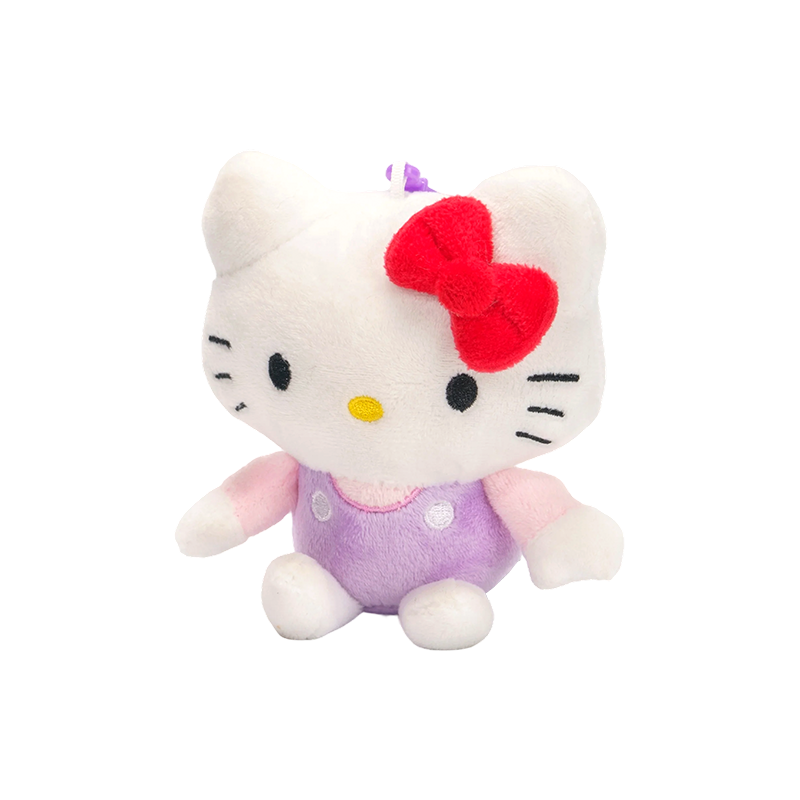
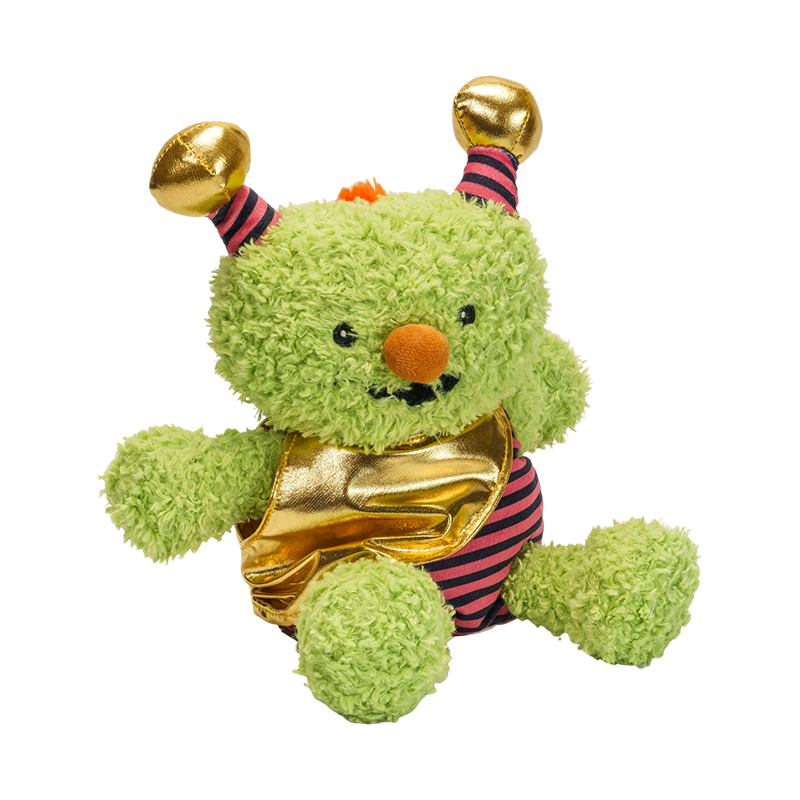
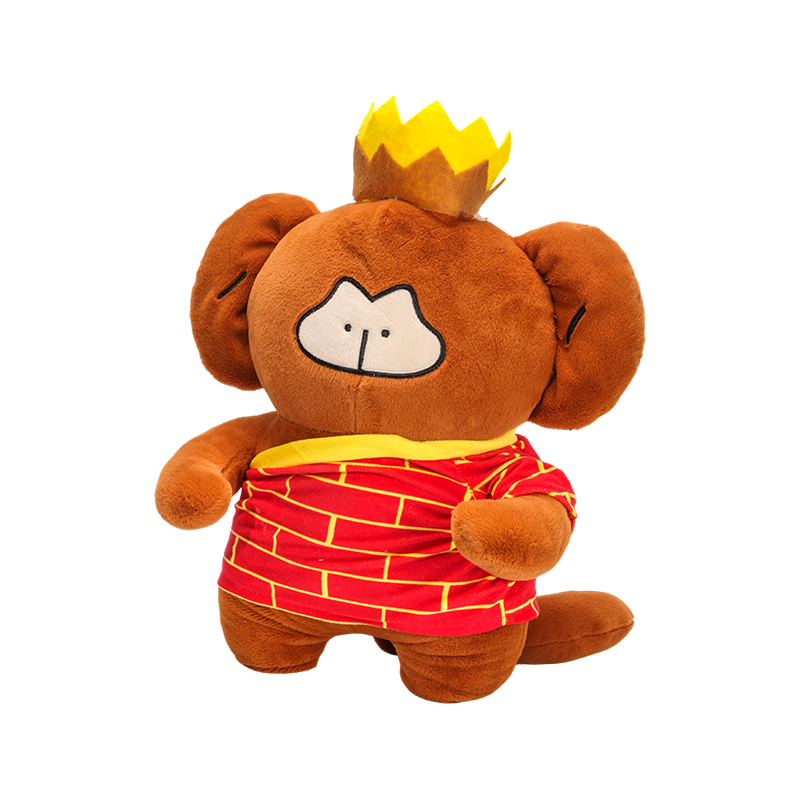
Creative plush toys have evolved far beyond traditional children’s stuffed animals. Today, they are lifestyle accessories, collectible objects, promotional gifts, travel companions, desk decorations, and expressive pieces of pop culture. The Soft Toy Creative Fashionable Toy Designer Plush Toy is designed for this changing market. With its compact 13-centimeter format, soft-touch materials, bold designer-inspired appearance, brown color scheme, key-chain construction, and optional bow-tie accessory, it combines emotional appeal with practical versatility.
Created for consumers who want more personality from their everyday accessories, this plush toy can serve as a “slacking-off buddy” on an office desk, a small companion attached to a backpack, or an adventure partner carried in a suitcase. Its compact form makes it easy to display, transport, package, and distribute, while its soft plush surface and PP cotton filling provide the familiar comfort associated with high-quality stuffed toys.
The product also meets the needs of businesses searching for customized plush merchandise. It is suitable for designer toy collections, promotional campaigns, seasonal gifts, retail programs, blind-box concepts, gacha-machine distribution, licensed collaborations, and personalized corporate merchandise. With OEM and ODM services available, buyers can adapt the design, color, size, accessories, packaging, and character details to match a particular brand or campaign.
1. Why Creative Designer Plush Toys Continue to Grow
The plush toy market is increasingly influenced by design, storytelling, social media culture, and collectibility. Consumers are no longer interested only in realistic animal shapes or traditional cartoon characters. Many buyers want unusual silhouettes, expressive faces, exaggerated proportions, unexpected colors, and products that communicate an identity or mood.
Creative designer plush toys respond directly to these expectations. They are often visually distinctive enough to attract attention on a store shelf or in an online product image. Their physical softness creates an emotional connection, while their design language encourages collecting and sharing. This combination gives them a broader appeal than ordinary soft toys.
A small plush key-chain can appeal to several customer groups at the same time. Children may enjoy its friendly appearance and tactile softness. Teenagers and young adults may use it as a fashion accessory attached to a backpack or handbag. Office workers may keep it on a desk as a decorative companion. Travelers may attach it to luggage as a recognizable personal item. Companies may use it as a promotional gift that remains visible after an event has ended.
These multiple use cases provide an important commercial advantage. A conventional toy may depend on one age group or one seasonal buying occasion. A well-designed plush accessory can reach consumers through toy stores, gift shops, lifestyle retailers, online marketplaces, event merchandising, travel retail, corporate purchasing, and promotional distribution.
The product’s compact design is particularly valuable in a retail environment. At approximately 13 centimeters, it is large enough to show recognizable character details but small enough for convenient display and transport. It does not require extensive shelf space, and it can be sold individually, in gift sets, in colorful boxes, or through surprise-based sales formats.
2. Product Overview and Core Specifications
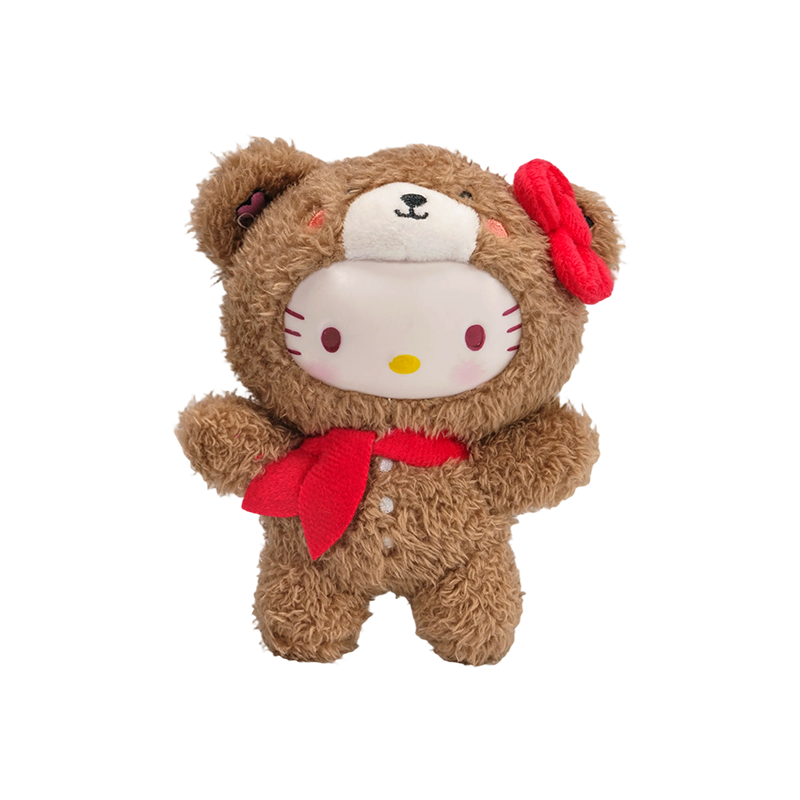
This designer plush toy is made with a super-soft plush shell and filled with PP cotton. The soft outer fabric creates a comfortable tactile experience, while the filling provides a lightweight and resilient body. The brown color gives the product a warm and approachable appearance, although customized colors can be considered for OEM and ODM projects.
| Product Detail | Specification |
|---|---|
| Product type | Creative fashionable designer plush toy |
| Category | Designer and trendy plush toys |
| Standard size | Approximately 13 cm |
| Customization | Customized size available for project requirements |
| Approximate weight | 70 g |
| Standard color | Brown |
| Style | Key-chain plush toy |
| Shell fabric | Super-soft plush |
| Filling | PP cotton |
| Accessories | Safety plastic, embroidery thread, key-chain, and bow tie |
| OEM/ODM | Welcome |
| Minimum order quantity | 1,000 pieces |
| Sample fee | US$100 per design |
| Sample development time | 3–7 working days |
| Estimated delivery time | 45 days |
The accessory configuration gives this plush toy a distinctive product identity. The key-chain component transforms it from a stationary stuffed animal into a portable lifestyle product. The bow tie adds a fashionable detail and creates an opportunity for visual customization. Embroidery thread can be used for facial features, logos, names, symbols, or other decorative details, depending on the design brief.
Safety plastic components are suitable for creating selected character details while maintaining a playful appearance. For commercial projects, component specifications, age grading, testing requirements, and applicable market regulations should be confirmed during the quotation and sample approval process.
3. Design Features That Create Competitive Value
3.1 A Strong Balance Between Softness and Portability
Many plush products are soft and attractive but inconvenient to carry. Large stuffed animals can be difficult to display in small retail spaces, expensive to ship, and unsuitable as everyday accessories. This product addresses those limitations through a compact key-chain format.
The 13-centimeter size supports several commercial advantages. It can be attached to bags, backpacks, luggage, key rings, display hooks, and gift packaging. Its estimated 70-gram weight is light enough for regular use without adding excessive bulk. At the same time, the size provides enough surface area for a recognizable face, decorative details, embroidery, and fashion accessories.
Compared with very small novelty items, the product retains more of the comforting physical presence associated with a traditional plush toy. Compared with large stuffed animals, it is easier to handle, store, ship, and merchandise. This middle position gives it flexibility across both toy and lifestyle channels.
3.2 A Designer-Led Visual Direction
The product concept is based on creative, fashionable, and exaggerated design. Instead of relying solely on realistic animal proportions, designer plush toys can use distinctive shapes, expressive features, bold visual decisions, and memorable details. These characteristics help a product stand out in a crowded market.
A recognizable silhouette is especially important for online shopping and social media exposure. A product that can be identified quickly in a photograph has a stronger opportunity to attract attention. The same principle applies to store displays, blind-box collections, event booths, and promotional campaigns.
The brown color included in the standard specification creates a warm and versatile foundation. Brown can communicate comfort, friendliness, nature, and vintage-inspired fashion. It can also coordinate with neutral packaging and lifestyle products. For a custom program, the basic color palette may be adjusted to suit seasonal themes, brand guidelines, entertainment properties, sports identities, or regional preferences.
3.3 Emotional and Storytelling Potential
Modern consumers often purchase plush products because of the feelings and stories connected with them. A plush character may represent relaxation, friendship, humor, courage, travel, or personal identity. The product description positions this toy as both an office companion and an adventure companion, giving it a flexible emotional narrative.
This storytelling potential benefits retailers and promotional buyers. A brand can create a character with a name, personality, origin story, and collection theme. Different outfits, colors, expressions, or accessories can represent different chapters in the story. Limited editions can be connected to holidays, campaigns, anniversaries, or special events.
When a product has a story, customers may be more likely to collect multiple versions rather than purchase only one item. This makes the product appropriate for series-based development. A basic character can be expanded into seasonal variations, collaboration editions, employee gifts, event mascots, or location-specific designs.
Soft toy creative fashionable toy designer plush toys
4. Suitable Applications and Market Channels
4.1 Desk Companions and Office Gifts
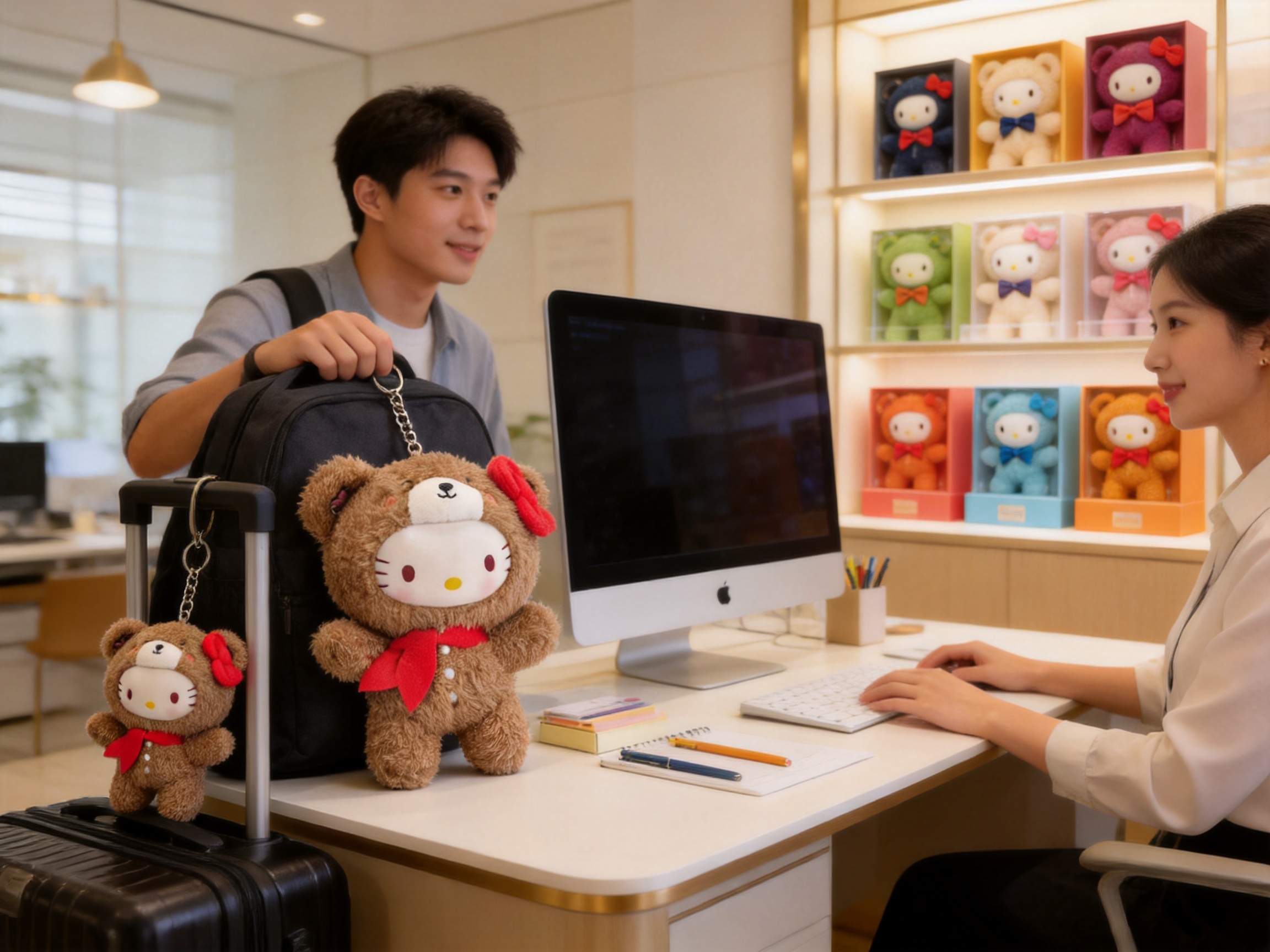
The compact size and soft appearance make this plush toy suitable for office environments. It can sit beside a monitor, rest on a shelf, or hang from a desk organizer. As a desk companion, it adds warmth and personality to an otherwise functional workspace.
Businesses can use customized plush toys for employee appreciation, company anniversaries, onboarding gifts, internal campaigns, or workplace wellness initiatives. A character may be designed to represent a company value such as creativity, teamwork, persistence, or relaxation. The key-chain format also allows employees to take the item home or use it outside the office.
4.2 Travel and Luggage Accessories
Travel products benefit from accessories that are easy to recognize and emotionally engaging. Attached to a suitcase or travel bag, a plush key-chain can act as a visual identifier. It can help a traveler distinguish a personal bag from similar luggage while adding a playful and personal touch.
Travel retailers, airport gift shops, tourism organizations, hotels, and destination marketing groups may use custom versions as souvenirs or promotional merchandise. A location-themed accessory can include regional colors, embroidered icons, local animals, or a special bow-tie design.
4.3 Blind Boxes and Surprise Collections
Blind-box and surprise-product formats have increased interest in collectible plush toys. The customer purchases a sealed package without knowing the exact version inside. This format creates anticipation and encourages repeat purchases, especially when a series contains common, rare, hidden, or limited editions.
The product’s compact dimensions are well suited to this sales model. A collection can include multiple expressions, colors, costumes, or accessories while maintaining a consistent base character. Colorful boxes can support the surprise experience and improve shelf presentation.
For a blind-box program, the buyer should establish a clear product ratio, packaging structure, rarity plan, quality standard, and labeling approach. Hidden editions should be managed carefully so that the collection remains exciting while maintaining transparent commercial and consumer information.
4.4 Gacha Machines and Capsule Retail
Key-chain plush toys are also appropriate for gacha machines and other automated retail systems. Their relatively small format allows multiple units to be displayed in a compact space. A series of characters can be distributed through shopping centers, entertainment venues, specialty stores, arcades, and event locations.
The design should be evaluated against the dimensions of the intended machine or capsule. Packaging and hardware requirements should be discussed before mass production. The supplier can help assess whether the selected accessory configuration, box size, or individual wrapping is appropriate for the chosen sales channel.
4.5 Promotional and Seasonal Campaigns
Promotional plush toys are often more memorable than flat paper giveaways because they remain in homes, offices, vehicles, and bags for a longer period. A soft product can communicate friendliness and approachability, making it suitable for customer loyalty campaigns, retail promotions, product launches, charity events, and public activities.
Seasonal versions can be created for holidays, school events, winter programs, spring campaigns, travel seasons, or annual celebrations. The bow tie can be changed to match a particular theme, and embroidery can be used for dates, slogans, icons, or campaign messages.
4.6 Home and Lifestyle Decoration
Although the product is designed as a key-chain plush toy, its visual character also gives it value as a home and lifestyle accessory. It can be placed on a bookshelf, bedside table, entryway shelf, children’s room display, or decorative tray. Its small size makes it easy to combine with other figures, plants, stationery, and interior accessories.
This broader positioning helps retailers present the product not merely as a toy but as a small object of personal expression. It may appeal to adult collectors, design-conscious consumers, and customers who enjoy playful home details.
5. Materials and Construction
5.1 Super-Soft Plush Shell
The shell fabric is one of the first features customers notice. A super-soft plush surface encourages touch and creates the comforting sensory experience expected from a stuffed product. It also supports product photography by giving the character a visually rich texture.
Fabric selection should consider softness, pile length, color consistency, seam performance, surface appearance, and suitability for the intended use. Different designs may require different fabric weights or textures. During sampling, the buyer should inspect how the fabric behaves around curved seams, embroidered features, accessory attachment points, and small character details.
5.2 PP Cotton Filling
PP cotton is used as the filling material. It is lightweight and commonly used in plush products because it can create a soft, resilient form. Correct filling distribution is important. Insufficient filling may cause a character to look flat or lose its shape, while excessive filling may make it too firm and reduce the soft tactile experience.
Professional filling work should focus on consistency between units. The head, body, limbs, and other shaped sections must receive an appropriate amount of filling for the approved sample. The finished toy should maintain its intended proportions while remaining comfortable to hold.
5.3 Embroidery Details
Embroidery thread allows facial expressions and decorative patterns to be produced with a clean textile finish. Embroidered eyes, mouths, symbols, initials, and logos can contribute to a handmade or premium appearance. Embroidery is particularly useful for custom orders because it can be adapted to many character concepts.
Embroidery quality depends on artwork preparation, thread selection, stitch density, alignment, and the stability of the underlying fabric. A production-ready sample should be reviewed for thread tension, clean edges, consistent positioning, and resistance to loose ends.
5.4 Key-Chain Attachment
The key-chain is central to the product’s lifestyle function. It must be positioned securely and proportionately so the plush toy hangs naturally when attached to a bag or other object. The attachment area should be evaluated during sampling to ensure that it supports routine use.
The key-chain also affects packaging and logistics. It may need protective placement inside the individual bag or box to prevent scratching or tangling. For specific applications, buyers may request alternative hardware styles or finishes, subject to design and production feasibility.
5.5 Bow-Tie Accessory
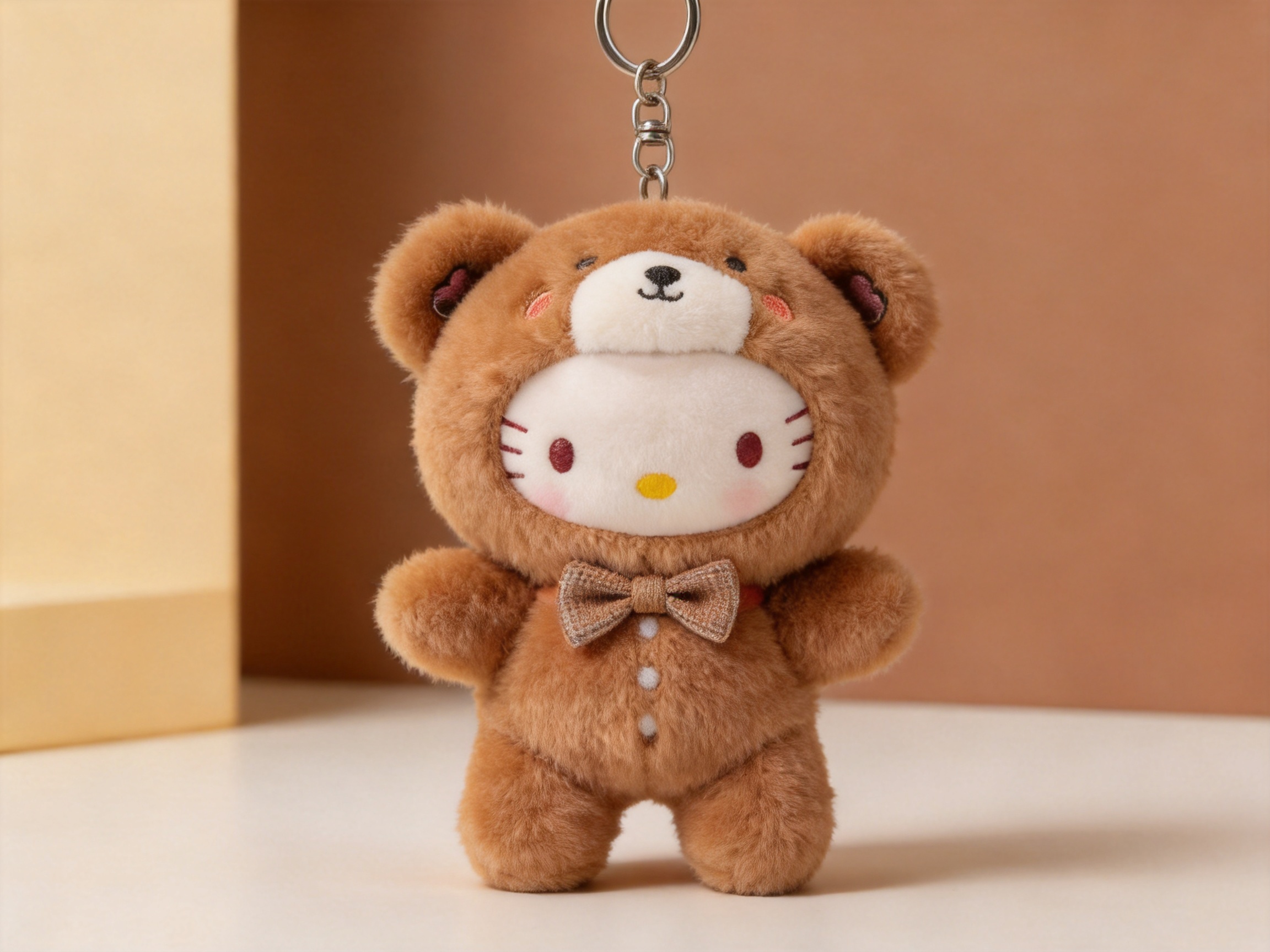
The bow tie adds a fashionable accent and helps distinguish the item from ordinary plush key-chains. It can be used as a signature design element or changed across a product series. For example, different bow-tie colors may identify different characters, seasons, product tiers, or limited editions.
As with all accessories, the bow tie should be checked for secure attachment, clean finishing, appropriate proportions, and compatibility with the intended age group and market requirements.
6. Advanced Manufacturing and Development Strengths
6.1 Integrated R&D, Design, and Production
The manufacturer is an integrated company specializing in research and development, design, production, and sales of plush products. This integrated structure is valuable because the product does not have to move through unrelated suppliers at every stage. Design requirements can be communicated more directly to the teams responsible for pattern development, material selection, sample making, production, and packaging.
For buyers, integrated manufacturing can simplify project management. Instead of coordinating a designer, a sample workshop, a sewing factory, a filling facility, and a packaging supplier separately, the buyer can communicate with one experienced plush-product partner. This may reduce misunderstandings and make it easier to maintain consistency between the approved sample and mass production.
6.2 Professional Product Development
Designer plush toys often require more than a simple sewing pattern. The development process may involve converting a visual concept into a three-dimensional character, determining how individual pieces fit together, selecting appropriate fabrics, positioning embroidery, balancing the filling, and integrating accessories.
An experienced development team can identify manufacturing challenges before mass production begins. For example, a highly curved shape may require a revised seam structure. A small facial feature may need a different embroidery scale. A key-chain may need reinforcement at its attachment point. Early technical evaluation can help preserve the visual identity of the design while improving production reliability.
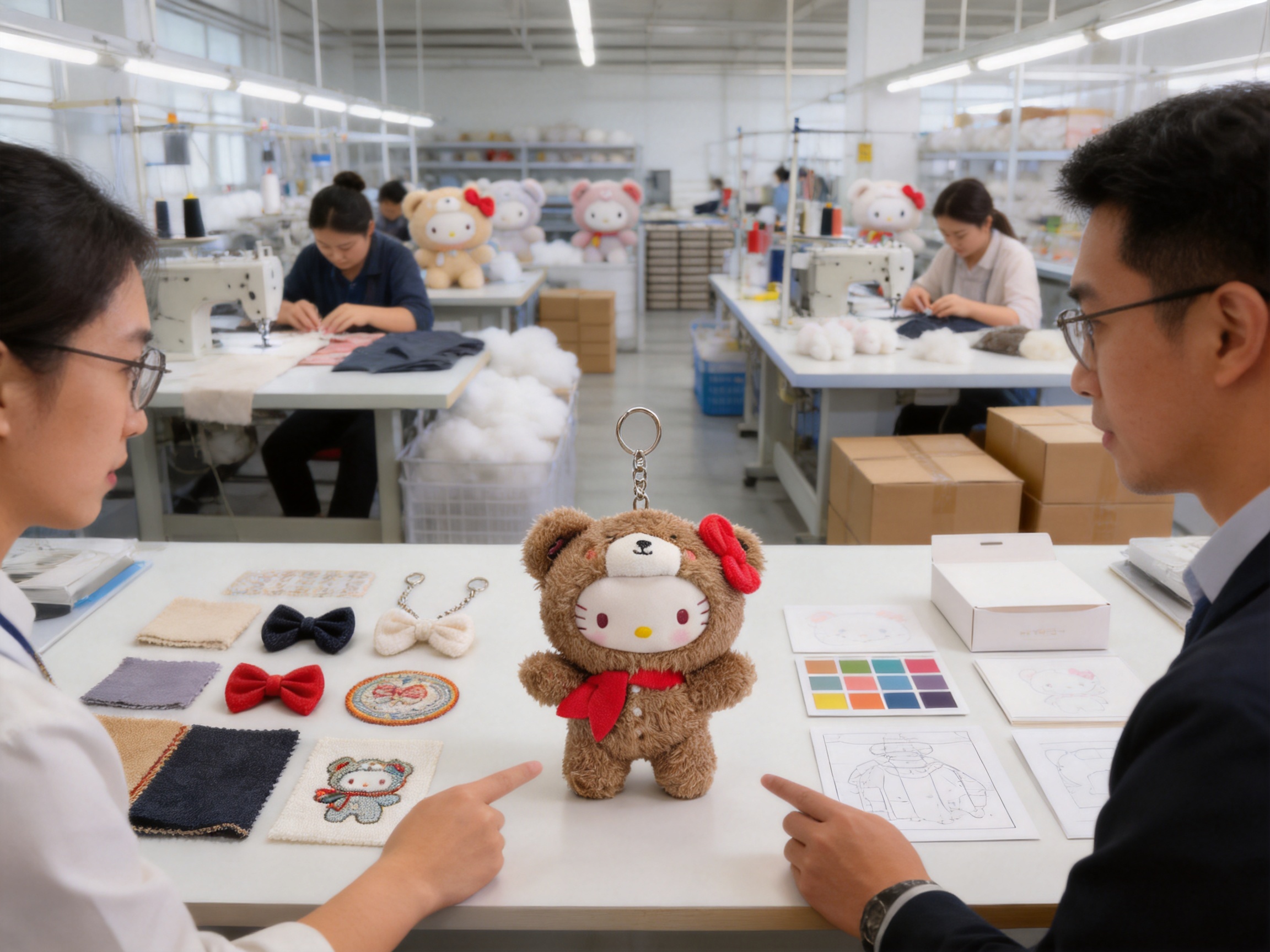
6.3 Sample Development in 3–7 Working Days
The listed sample development time is 3–7 working days, with a sample fee of US$100 per design. This provides buyers with a practical starting point for evaluating shape, fabric, color, embroidery, accessories, and overall appearance.
Fast sampling is important in trend-driven markets. Retailers and brand owners may need to respond quickly to seasonal opportunities, social media trends, licensing schedules, or promotional deadlines. A short sample cycle allows the buyer to identify changes earlier and move more efficiently toward approval.
The sample stage should be used to confirm all important specifications. Buyers should evaluate dimensions, weight, color, softness, filling, stitching, facial details, key-chain strength, bow-tie placement, packaging compatibility, and the appearance of the final product under normal lighting.
6.4 Production Experience and Facility Scale
The company was established in 2013 as a joint venture between Hong Kong Jintong International Co., Ltd. and Tianyuan Enterprise Investment Management Co., Ltd. Its factory covers more than 10,000 square meters and records annual sales exceeding 12 million RMB.
This operating history and facility scale indicate experience in handling structured plush production programs rather than only isolated handmade orders. A larger manufacturing environment can support organized material management, dedicated production areas, specialized equipment, sample development, quality procedures, and coordinated shipment preparation.
The company’s product range includes trendy plush toys, children’s plush toys, pet plush toys, plush promotional gifts, plush home furnishings, plush stationery gifts, plush handicrafts, and plush cartoon decorations. This broad product experience can benefit buyers seeking multiple categories or a long-term product development partner.
6.5 International Market Experience
The company exports products to Europe, America, Australia, Japan, and South Korea. It also serves major clients including Walmart, Target, Albertsons, and Kmart. International market experience can help a manufacturer understand the importance of consistent specifications, packaging organization, communication, delivery planning, and commercial documentation.
Different markets may have different expectations for labeling, packaging, product testing, age grading, accessories, and import procedures. Buyers should provide the destination-market requirements at the beginning of the project so that the product can be evaluated against the correct standards before mass production.
6.6 In-Stock and Customization Services
The company offers in-stock services and welcomes customers worldwide to cooperate. In-stock options may be useful for buyers who need a smaller range of ready products, faster purchasing decisions, or immediate promotional support. Custom OEM and ODM development is more appropriate for buyers who require a unique character, specific colors, branded packaging, or a complete collection concept.
The combination of in-stock and customized services creates flexibility. A retailer may begin with available products to test market response and later develop an exclusive version. A promotional buyer may choose an existing format and customize the color, embroidery, packaging, or accessory details. A designer brand may develop an entirely new series through the R&D and sampling process.
7. Quality Management Considerations
Quality is essential for plush products because customers judge them through appearance, touch, construction, and durability. A successful quality process should begin with the approved artwork and sample rather than waiting until the finished goods are ready.
7.1 Incoming Material Inspection
Fabric, filling, thread, key-chain hardware, plastic elements, labels, packaging, and other components should be checked against the approved specifications. Important points include color, texture, quantity, dimensions, surface condition, and compatibility with the product design.
Consistent incoming materials help reduce variation during production. If the fabric color changes between batches, the finished character may look different from the approved sample. If hardware dimensions vary, the position and balance of the key-chain may be affected.
7.2 Pattern and Cutting Accuracy
Plush toys depend on multiple fabric pieces that must be cut and assembled accurately. Pattern alignment affects the final silhouette, symmetry, facial placement, and accessory position. Accurate cutting is particularly important for small products because even a minor shift can become visually obvious.
Designers and production teams should confirm seam allowances, fabric direction, nap direction, and the orientation of decorative elements. These details help ensure that the finished product retains the intended appearance.
7.3 Sewing and Assembly Control
Stitch quality affects both appearance and durability. Seams should be clean, secure, and consistent with the approved construction. Critical attachment points, especially around the key-chain and accessories, should receive special attention.
The assembly sequence should be organized so that embroidery, sewing, filling, closing, and accessory installation are completed efficiently. A stable process helps reduce rework and supports consistent output across a large order.
7.4 Filling and Shape Inspection
Each unit should be checked for appropriate filling distribution and final shape. The head and body should maintain the approved proportions, while the toy should remain soft and comfortable. Inspectors may compare finished units with the approved sample to identify flat areas, excessive firmness, uneven surfaces, or distortion.
7.5 Final Appearance Review
Final inspection should review overall cleanliness, loose threads, embroidery, facial expression, color, accessory attachment, dimensions, packaging, and product quantity. For custom orders, the final product should be compared with the customer-approved sample and artwork.
Buyers should establish their inspection criteria before production begins. Clear criteria help both parties understand acceptable tolerances and reduce disagreement during shipment approval.
8. Packaging and Logistics
Packaging protects the plush toy while also contributing to the product’s retail presentation. The listed packaging configuration includes one piece per PP bag, colorful boxes as the outer packaging, and 18 pieces per carton.
| Packaging Item | Provided Specification |
|---|---|
| Inner packaging | 1 piece per PP bag |
| Outer packaging | Colorful boxes |
| Carton quantity | 18 pieces per carton |
| Gross/net weight | 2.4 kg / 1.4 kg |
| Carton dimensions | 52 L × 28 W × 16 H |
Colorful boxes are suitable for gift retail, display counters, surprise collections, and promotional distribution. For a blind-box program, the packaging can be designed to conceal the exact version while presenting the overall series concept. For a standard retail program, the box may show the character, product name, collection information, and usage details.
The PP bag provides an additional layer of protection during handling and transportation. Buyers should confirm whether the selected market requires specific warnings, labeling, recycling information, material declarations, or alternative packaging formats.
The carton configuration supports organized warehouse handling and shipment planning. Before placing an order, buyers should confirm the final carton dimensions, actual gross weight, net weight, carton quantity, stacking requirements, and shipping marks because these details may change after customization or packaging revisions.
9. OEM and ODM Customization Opportunities
OEM and ODM services allow buyers to transform the standard product concept into a more distinctive commercial item. Customization can be limited to selected details or extend to the complete design and packaging system.
9.1 Shape and Size
The standard product is approximately 13 centimeters, but customized sizes are available for suitable projects. A smaller version may be appropriate for capsule machines, event giveaways, or large-volume promotional distribution. A larger version may be preferred for home decoration, premium gifts, or retail display.
Changing the size affects fabric consumption, filling quantity, accessory proportions, packaging, shipping volume, and production cost. These factors should be reviewed together rather than considered separately.
9.2 Colors and Character Variations
Color is one of the simplest ways to create a collection. Buyers may request custom colors linked to a brand identity, holiday theme, sports team, product launch, or regional market. Multiple color variations can create a collectible series while preserving the same recognizable character form.
Color matching should be reviewed through physical samples because digital screens do not always display fabric colors accurately. The final approval should identify the accepted fabric color and, where relevant, the thread and accessory colors.
9.3 Embroidery, Expressions, and Logos
Embroidery can customize facial expressions, names, symbols, logos, patterns, and messages. Small changes to the eyes or mouth can create a completely different personality. A smiling version may communicate friendliness, while a sleepy expression may reinforce the “slacking-off buddy” concept.
Corporate logos and promotional messages should be positioned carefully so they remain visible without overwhelming the character design. For licensed or collaborative products, the artwork should be approved by the appropriate rights holder before production.
9.4 Accessories and Wardrobe
The standard bow tie can become the foundation for a larger accessory strategy. Buyers may request different bow-tie colors, patterns, fabrics, or shapes. Additional clothing elements may also be considered, depending on the design and production requirements.
Accessory changes can create limited editions without redesigning the entire plush body. This is an efficient way to develop seasonal collections, event versions, or promotional tiers.
9.5 Packaging and Collection Architecture
Customized packaging can strengthen the story of a collection. A box may introduce the character, show the available series, communicate a campaign message, or present the product as a gift. For a blind-box concept, packaging can be designed with consistent series graphics while keeping the specific item unknown.
Retail buyers should consider how many units are displayed together, whether the packages can be hung or stacked, how the product is identified in a warehouse, and whether the packaging is suitable for shipping through e-commerce channels.
10. Advantages Compared with Ordinary Plush Products
The strongest competitive advantage of this product is its combination of collectible design and everyday usefulness. Ordinary plush toys are often purchased for children or kept as stationary decorations. This key-chain format expands the product’s role into fashion, travel, promotion, and lifestyle merchandising.
Its compact size creates logistical advantages compared with oversized plush products. It requires less storage space, can be displayed in smaller retail areas, and may be more economical to distribute at events. The lightweight construction also supports convenient personal use.
The designer-led concept gives the product more visual differentiation than generic stuffed animals. Exaggerated forms, strong color choices, embroidery, a bow tie, and a recognizable silhouette can make the toy easier to remember. A distinctive appearance is valuable when many similar products compete for attention.
The product is also more flexible than a single-purpose promotional item. It can be positioned as a gift, collectible, desk accessory, travel charm, seasonal product, or brand mascot. This flexibility allows one production platform to serve multiple markets.
The manufacturer’s integrated R&D, design, production, and sales structure provides another advantage. Buyers can receive support across concept development, sampling, manufacturing, packaging, and delivery planning. This is especially useful for businesses without their own plush product engineering team.
International export experience, a factory area of more than 10,000 square meters, an established history since 2013, and a broad product portfolio further support the company’s ability to handle professional sourcing programs. These strengths do not replace project-specific quality checks, but they provide a substantial foundation for cooperation.
11. Recommended Buyer Workflow
Step 1: Define the Commercial Purpose
Before requesting a quotation, the buyer should identify whether the product will be sold as a retail toy, fashion accessory, promotional gift, blind-box item, gacha product, home decoration, or seasonal merchandise. The intended channel affects the design, packaging, quantity, and compliance requirements.
Step 2: Prepare the Design Brief
The design brief should include sketches or reference images, target size, colors, fabric preferences, facial details, embroidery, accessories, packaging requirements, destination market, estimated order quantity, and desired delivery schedule.
Step 3: Confirm Technical Feasibility
The manufacturer can review the design and identify issues related to shape, seams, hardware, embroidery, filling, packaging, and production. Early technical discussion helps prevent expensive changes after sampling.
Step 4: Approve the Sample
The sample should be inspected carefully. Buyers should document approved colors, dimensions, fabric, filling, embroidery, accessory placement, packaging, and tolerances. Any revisions should be completed before mass production begins.
Step 5: Confirm the Production Plan
Once the sample is approved, both parties should confirm the MOQ of 1,000 pieces or the applicable project quantity, final price, packaging, production schedule, shipping terms, payment arrangement, inspection method, and required documentation.
Step 6: Arrange Quality Inspection and Shipment
Final inspection should be conducted against the approved sample and order specifications. The buyer should also verify carton quantities, shipping marks, packaging condition, and documentation before dispatch.
12. Frequently Asked Questions
Q1: What is the standard size of the plush key-chain?
The standard size is approximately 13 centimeters. Customized sizes may be considered depending on the project requirements, production feasibility, packaging, and intended sales channel.
Q2: How much does one product weigh?
The listed product weight is approximately 70 grams. The final weight may vary slightly after customization, especially if the size, filling quantity, accessories, or packaging changes.
Q3: What materials are used?
The shell uses super-soft plush fabric, and the filling is PP cotton. The listed accessories include safety plastic, embroidery thread, a key-chain, and a bow tie.
Q4: Is the product suitable for adults as well as children?
Its designer appearance, compact key-chain format, and lifestyle positioning make it suitable for adult collectors, office users, travelers, and promotional programs as well as children. Final age grading and safety requirements should be confirmed for the destination market.
Q5: Can the color be customized?
Yes. The standard color is brown, while OEM and ODM projects may request alternative colors. Physical samples should be reviewed for final color approval.
Q6: Can the facial expression or embroidery be changed?
Yes. Embroidery can be adapted for expressions, logos, names, symbols, and other decorative details, subject to artwork review and production feasibility.
Q7: Can the bow tie be customized?
The bow tie may be customized in color, pattern, material, or style for suitable projects. It can also help distinguish seasonal, promotional, or limited-edition versions.
Q8: Is OEM or ODM service available?
Yes. OEM and ODM cooperation is welcome. Buyers can discuss customized shape, size, color, embroidery, accessories, packaging, and collection development.
Q9: What is the minimum order quantity?
The listed minimum order quantity is 1,000 pieces. The applicable MOQ may depend on the design, materials, customization level, and packaging requirements.
Q10: How much is the sample fee?
The listed sample fee is US$100 per design. The final sample arrangement should be confirmed with the manufacturer according to the project brief.
Q11: How long does sample development take?
The listed sample development time is 3–7 working days. Complex designs or extensive revisions may require additional discussion.
Q12: What is the estimated delivery time?
The listed delivery time is 45 days. The actual schedule should be confirmed after design approval, order confirmation, material preparation, production planning, inspection, and shipping arrangements.
Q13: Is the product suitable for blind boxes?
Yes. Its compact size and collectible designer concept are suitable for blind-box series. Buyers should confirm the rarity structure, packaging, labeling, product ratio, and collection design in advance.
Q14: Is the product suitable for gacha machines?
It can be suitable for gacha or capsule-based retail, subject to the dimensions of the machine, capsule, or packaging system. The product and packaging should be tested against the intended equipment before mass production.
Q15: How is the product packaged?
The listed packaging includes one piece per PP bag, colorful boxes as outer packaging, and 18 pieces per carton. The listed carton size is 52 L × 28 W × 16 H, with a stated gross/net weight of 2.4 kg/1.4 kg.
Q16: What markets does the manufacturer serve?
The company exports to Europe, America, Australia, Japan, and South Korea, and its clients include Walmart, Target, Albertsons, and Kmart. Buyers should still confirm destination-specific requirements for each project.
Q17: What makes this product different from a normal stuffed animal?
It combines the softness of a stuffed toy with the portability of a key-chain accessory and the visual appeal of a collectible designer product. It can be used for personal expression, travel, office decoration, retail collection, or promotional distribution.
13. Conclusion
The Soft Toy Creative Fashionable Toy Designer Plush Toy is designed for a market that values personality, portability, softness, and collectibility. Its approximately 13-centimeter size, 70-gram weight, super-soft plush shell, PP cotton filling, brown color, key-chain structure, embroidery details, and bow-tie accessory create a versatile product suitable for both consumer and business applications.
Its advantages extend beyond appearance. The compact format supports efficient storage, transportation, display, and distribution. The designer-oriented concept provides stronger differentiation than generic plush products. The product can become a desk companion, travel accessory, collectible, gift, seasonal item, promotional mascot, or blind-box character.
The manufacturer supports this concept through integrated R&D, design, production, sales, and after-sales capabilities. Established in 2013, it operates a factory of more than 10,000 square meters, has international export experience, serves well-known retail clients, and offers both in-stock and customized services. OEM and ODM cooperation allows buyers to develop exclusive shapes, colors, embroidery, accessories, packaging, and collection programs.
For retailers, promotional agencies, brand owners, designers, entertainment companies, and gift distributors, this product offers a practical platform for developing memorable plush merchandise. With a clear design brief, careful sample approval, appropriate quality planning, and coordinated packaging requirements, it can become a distinctive product for modern lifestyle and collectible markets.
References
1. Product specification and packaging information supplied for the Soft Toy Creative Fashionable Toy Designer Plush Toy.
2. Company profile and manufacturing information supplied for the plush product manufacturer.
3. General principles of plush toy product development, textile construction, filling distribution, and accessory integration.
4. General retail merchandising practices for designer toys, blind-box products, promotional gifts, and lifestyle accessories.
5. General quality-management considerations for fabric inspection, embroidery, sewing, filling, packaging, and final product review.