en
en  русский
 Español
 عربى
عربى
Content
- 1 Product Overview
- 2 Key Specifications
- 3 Material Quality and Comfort
- 4 Design Advantages Over Basic Plush Products
- 5 Advanced Manufacturing Process
- 6 Factory Strengths and Production Experience
- 7 OEM and ODM Cooperation
- 8 Applications and Target Markets
- 9 Commercial and Logistical Benefits
- 10 Quality Considerations for Buyers
- 11 How the Product Compares with Competitors
- 12 Recommended Customization Options
- 13 Purchasing and Development Process
- 14 Care, Display, and Product Presentation
- 15 Frequently Asked Questions
- 15.1 What is the size of the standard plush toy?
- 15.2 What materials are used?
- 15.3 Is the toy suitable for children?
- 15.4 Can the princess skirt be customized?
- 15.5 Can the bow and facial features be changed?
- 15.6 What is the minimum order quantity?
- 15.7 How much is the sample fee?
- 15.8 How long does sampling take?
- 15.9 How long does bulk delivery take?
- 15.10 Where are the products manufactured?
- 15.11 Does the manufacturer support international orders?
- 15.12 What makes this plush toy different from a basic stuffed animal?
- 15.13 Can this product be used for promotional campaigns?
- 16 Why Choose an Integrated Plush Toy Manufacturer?
- 17 Conclusion
- 18 References
- 19 Product: plush toys of cartoon characters wearing princess skirts
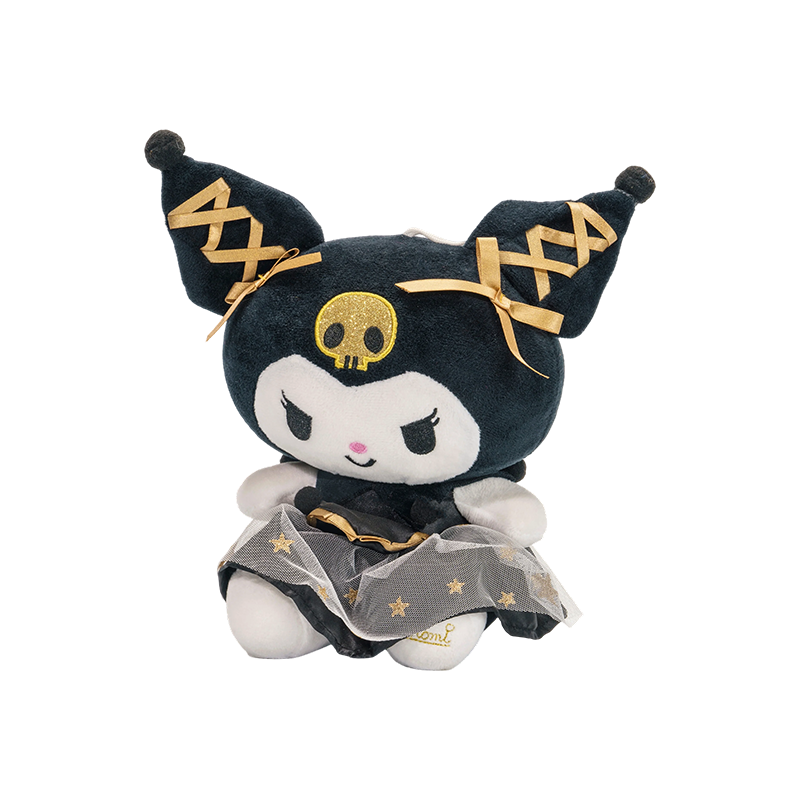
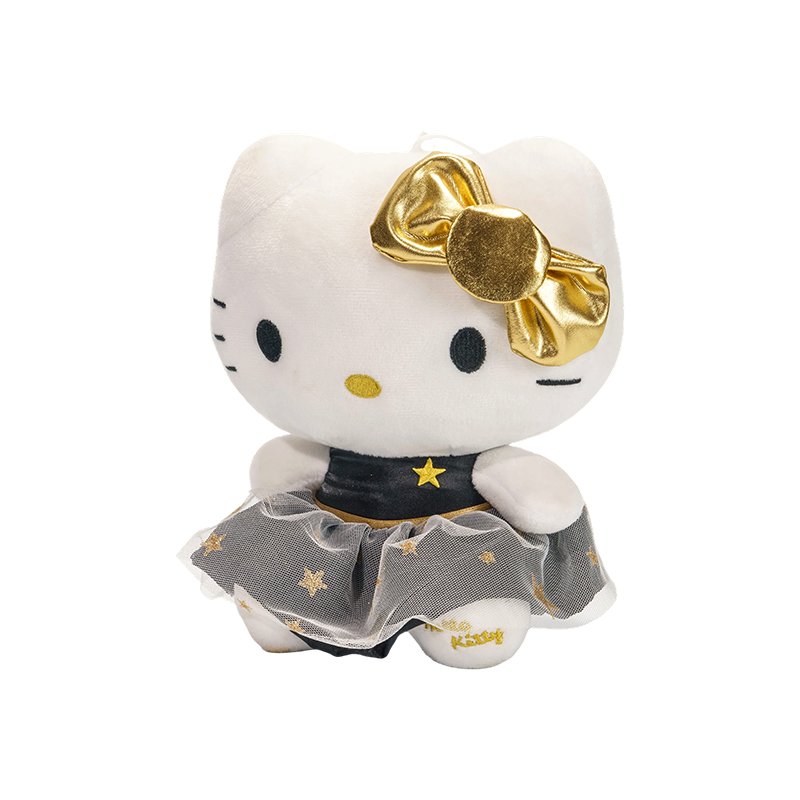
Cartoon character plush toys wearing princess skirts combine the emotional appeal of familiar character styling with the softness, charm, and giftability of a well-made stuffed animal. Designed for children, collectors, promotional campaigns, seasonal merchandising, and lifestyle decoration, this product category offers broad commercial potential. A rounded cartoon face, expressive eyes, a seated body, a golden bow, and a lace princess outfit create a visual identity that is immediately recognizable as cute, elegant, and suitable for display.
The featured plush toy measures approximately 15 centimeters and weighs about 80 grams. Its compact size makes it convenient for retail shelves, gift boxes, event distribution, party favors, themed collections, and online product bundles. At the same time, its customized production capability allows buyers to adapt the size, colors, clothing, accessories, facial details, packaging, and character styling to suit different markets.
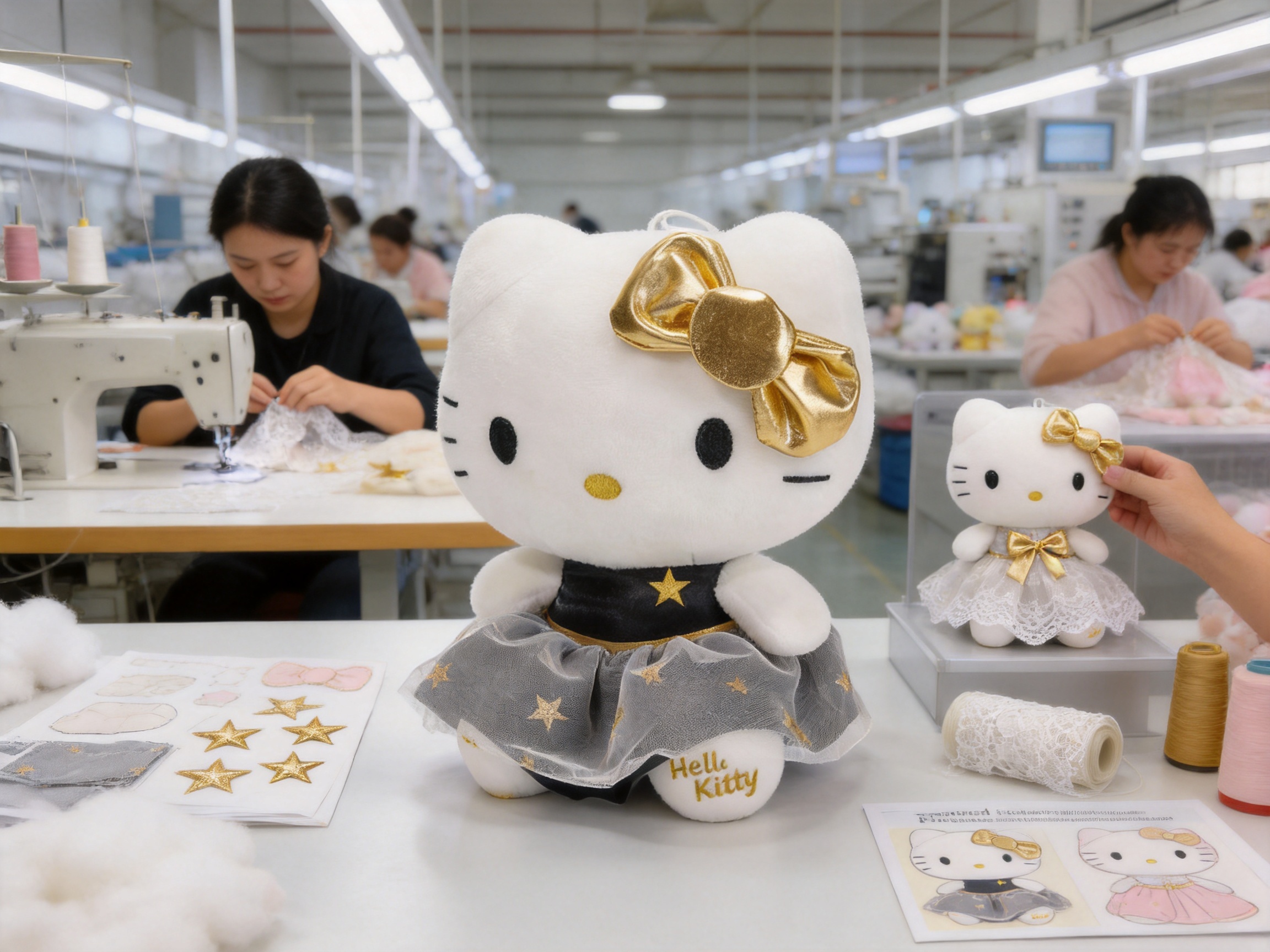
Manufactured by Tianchang Bestjoy Craft & Gift Co., Ltd., the product reflects the capabilities of an integrated plush toy manufacturer with experience in research and development, design, production, and sales. The company operates from a factory of more than 10,000 square meters in Anhui Province, China, and serves customers in Europe, America, Australia, Japan, and South Korea. Its manufacturing background, export experience, design resources, and OEM/ODM services make the product suitable for brands and distributors seeking a dependable custom plush toy partner.
plush toys of cartoon characters wearing princess skirts
Product Overview
This cartoon character plush toy is designed in a sitting style, giving it a stable silhouette that works well for both play and decoration. The sitting position allows the toy to rest on shelves, desks, beds, sofas, counters, and display platforms without requiring a separate stand. For retailers, this can simplify merchandising and create attractive group displays when multiple colors or character variations are placed together.
The character design emphasizes a round head, large eyes, and an endearing facial expression. These features are widely associated with cute character design because they create a friendly and approachable appearance. The proportions are especially suitable for plush products intended to generate an immediate emotional response. The toy is easy to recognize from a distance, while the decorative clothing and bow reward closer inspection.
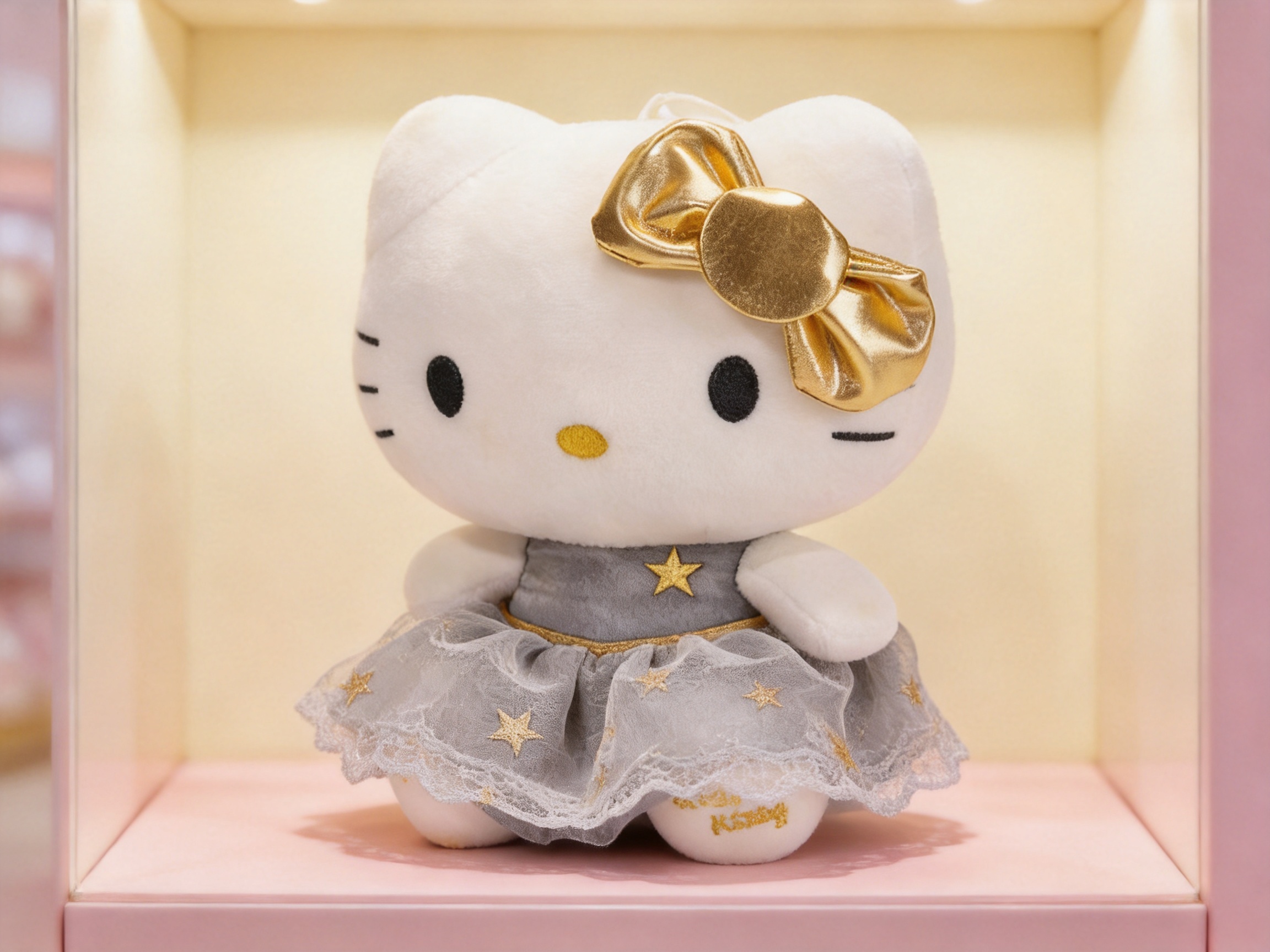
The outfit is the central feature of the design. Instead of using a basic printed surface or a simple one-piece costume, the plush character is dressed in a lace princess dress with small golden elements. The skirt-like silhouette gives the toy a graceful appearance, while the lace construction adds visual texture. The golden details resemble small stars, creating a dreamy night-sky effect that supports princess, fantasy, celebration, and seasonal themes.
A golden bow is placed on the head of the character. Its metallic-looking surface introduces contrast against the soft plush body and helps the product stand out on a retail display. The bow can also become a recognizable design signature for a collection. In an OEM or ODM project, it may be adapted into different colors, finishes, shapes, or branded accessories according to the buyer’s requirements.
The combination of a soft body and refined costume gives the toy a broader appeal than a conventional basic plush animal. It can be positioned as a children’s toy, a collectible character, a decorative home accessory, a holiday gift, a promotional item, or part of a themed product range. This versatility is one of its strongest commercial advantages.
Key Specifications
| Item | Specification |
|---|---|
| Product type | Cartoon character plush toy |
| Design theme | Cartoon character wearing a princess skirt or princess dress |
| Approximate size | 15 cm, with customized sizes available |
| Approximate weight | 80 g |
| Body style | Sitting |
| Shell fabric | Super soft plush |
| Filling material | PP cotton |
| Customization | OEM and ODM services welcome |
| Minimum order quantity | 1,000 pieces |
| Sample fee | US$100 per design |
| Sample development time | Approximately one week |
| Production and delivery time | Approximately five to six weeks |
The specifications provide a practical starting point for product planning. A 15-centimeter format is small enough for efficient packing and economical shipping while still providing sufficient surface area for expressive facial features and decorative clothing. The approximately 80-gram weight is also suitable for promotional distribution, gift programs, and multi-item retail packaging.
For larger presentation pieces, buyers can request customized dimensions. A larger version may be appropriate for premium gifts, store displays, amusement venues, children’s activity areas, or character licensing programs. Smaller versions may be used as bag charms, capsule-style products, party favors, or low-cost promotional gifts, subject to design and manufacturing review.
Material Quality and Comfort
The toy uses super soft plush fabric for its outer shell. Fabric selection has a direct effect on the product’s hand feel, appearance, durability, and perceived value. A soft surface encourages tactile interaction and makes the product more attractive as a comfort object. It also helps the toy look fuller and more luxurious in photographs, which is important for e-commerce listings and social media promotion.
Soft plush fabric can be selected in different pile lengths, densities, colors, and surface finishes depending on the character concept. A short pile may support detailed facial features and clean color blocking, while a longer pile can create a more cloud-like or cuddly appearance. The final choice should be matched with the character’s artwork, sewing structure, target age group, packaging method, and expected retail price.
PP cotton filling is used to give the plush toy its volume and resilience. Proper filling distribution is important because uneven stuffing can affect the shape of the head, body, arms, and skirt. An experienced manufacturer can control the filling process so that the character maintains a balanced silhouette and a pleasant hand feel. The toy should feel soft without appearing flat, while the sitting structure should remain stable after handling.
For commercial buyers, material consistency is just as important as initial appearance. When a collection includes multiple production batches, consistent fabric color, filling density, stitching quality, and accessory placement help protect the visual identity of the range. Manufacturing controls and sample approval procedures can reduce variation and improve the reliability of repeat orders.
Design Advantages Over Basic Plush Products
Distinctive Princess Styling
Many basic plush toys rely primarily on the appeal of an animal shape or a simple cartoon face. This product adds a complete fashion and fantasy concept through the princess skirt, lace dress, star-like golden decoration, and head bow. The costume gives the character an occasion-based identity and makes it more suitable for princess themes, birthdays, holiday promotions, children’s gift collections, and imaginative play.
The clothing also creates opportunities for visual storytelling. A retailer can present the toy as a royal character, a star princess, a fantasy friend, or a special celebration mascot. These narratives can be used in packaging copy, point-of-sale displays, online listings, seasonal campaigns, and social media content. A product with a clear story is often easier to market than a generic stuffed figure.
Strong Shelf Recognition
The round head and large eyes create an easily visible facial focal point, while the golden bow and light-catching costume details draw attention to the upper body. The contrasting textures of plush, lace, and decorative elements make the product more visually complex than a single-fabric toy. This can help it stand out among ordinary stuffed animals displayed in the same retail area.
At approximately 15 centimeters tall, the toy is large enough to be seen clearly but small enough to be grouped with other products. Retailers can display several characters together, create color-coordinated arrangements, or combine the plush toy with stationery, accessories, children’s apparel, gift boxes, and seasonal merchandise.
Flexible Market Positioning
The product can be positioned at several price and sales levels depending on the selected materials, accessories, packaging, and order volume. A standard version may suit mass-market distribution, while upgraded fabrics, custom labels, decorative packaging, or special embroidery may support a premium gift edition.
This flexibility gives buyers more control over their product strategy. A toy brand may use the design as a core character. A promotional agency may add a company mascot or campaign theme. A department store may create an exclusive seasonal colorway. A home and lifestyle retailer may present the toy as a decorative accent rather than only as a children’s plaything.
Customization Potential
OEM and ODM support is available for buyers who want to develop an original version. Customization may include the body shape, facial expression, color palette, skirt design, lace pattern, bow style, embroidered features, accessories, labels, packaging, and overall character concept. Depending on the project, the manufacturer can work from sketches, digital artwork, reference samples, or a general creative direction.
Customization is particularly valuable for businesses that need differentiation. Instead of competing with identical catalog products, the buyer can create a plush item that reflects a particular brand identity or campaign message. Customized details may also help build a coordinated collection of multiple characters, each with a different dress, color, personality, or seasonal theme.
Advanced Manufacturing Process
High-quality plush production is a sequence of connected operations rather than a single sewing step. The final appearance depends on design accuracy, pattern development, fabric selection, cutting, embroidery, sewing, filling, assembly, finishing, inspection, and packaging. An integrated factory can coordinate these stages more efficiently than a trading structure that relies entirely on unrelated subcontractors.
1. Concept Development and Design Review
The manufacturing process begins with the product concept. The buyer and design team review the intended character, target market, size, colors, clothing, accessories, and expected retail position. At this stage, practical considerations are addressed alongside visual goals. The team considers whether the facial details can be reproduced accurately, whether the skirt can be sewn efficiently, and whether the accessories are appropriate for the intended market.
For custom projects, artwork may be converted into technical drawings showing front, side, and rear views. Proportions are checked before patterns are created. Important details such as the distance between the eyes, the placement of the bow, the length of the skirt, and the position of embroidery can be documented to support consistency during production.
2. Pattern Engineering
Patterns determine how flat fabric pieces become a three-dimensional plush character. The head, body, arms, legs, ears, clothing, and decorative components must be proportioned correctly. A pattern that is too narrow may produce a thin or distorted form, while a pattern that is too broad may create unnecessary material use or an unstable shape.
For a sitting toy, pattern engineering must also consider balance. The lower body and legs need to support the character’s weight, while the filling must be distributed to keep the toy upright. The princess skirt must fit the body without covering important facial or decorative features. A carefully developed pattern improves both appearance and production efficiency.
3. Fabric Selection and Cutting
After the design and pattern are approved, the selected plush fabric and costume materials are prepared for cutting. Consistent fabric direction, color, and surface texture are important for achieving a uniform appearance. The cutting process must also account for seam allowances, fabric stretch, and the orientation of any nap or pile.
When several colors are used, accurate cutting helps maintain clean boundaries between the character’s body, facial features, bow, dress, and decorative components. For larger orders, organized cutting procedures reduce material waste and help ensure that every production batch follows the approved sample.
4. Embroidery and Decorative Application
Facial features and small decorative elements can be produced through embroidery, appliqué, printing, or carefully selected accessory components. Embroidery is often valuable for plush products because it can create a neat and durable finish without relying on hard parts for every detail. The eyes, mouth, star-like decorations, and other design features can be evaluated according to the intended age group and product specifications.
The golden bow and metallic-looking decorative elements are especially important to the character’s identity. Their color, placement, and attachment method should be controlled carefully. A well-positioned bow gives the face a balanced appearance, while inconsistent placement can make a collection look uneven. Production samples help confirm the correct location and finish before bulk manufacturing begins.
5. Sewing and Assembly
Sewing joins the cut fabric pieces and establishes the character’s structure. Operators must manage curves, corners, seam allowances, and fabric thickness. The head and body require particular attention because small changes in seam tension can affect the final expression and silhouette.
The princess dress is assembled as a separate visual layer around the plush body. Lace and trim must be attached securely while preserving the light, delicate appearance of the costume. The skirt should maintain an attractive shape when the toy is sitting, packed, transported, or displayed. Careful sewing helps prevent loose edges, uneven gathers, and unwanted distortion.
6. Filling and Shaping
PP cotton is inserted after the main sewn components are prepared. Filling is distributed in stages so that the head, body, limbs, and other areas achieve the correct firmness and volume. Too little filling can make the character appear collapsed, while excessive filling can place stress on seams and change the intended proportions.
Shaping is an important manual skill. Operators adjust the filling and smooth the outer fabric so that the head remains rounded, the body retains its sitting form, and the arms and legs are positioned consistently. A final shaping step can improve the toy’s presentation and reduce the effects of compression during packing.
7. Finishing and Inspection
Finished products are checked for appearance, stitching, fabric condition, accessory attachment, filling distribution, and overall shape. The inspection process is intended to identify issues before packing and shipment. Particular attention should be paid to the face, costume, bow, lace edges, seams, and sitting stability because these areas have a strong effect on customer perception.
For customized products, inspection should compare the finished item with the approved sample or technical specification. Color accuracy, logo placement, packaging instructions, and quantity records can be reviewed as part of the order’s quality documentation. This process supports consistency across large production runs and repeat orders.
8. Packaging and Delivery Preparation
Plush toys can be packed individually, in sets, or in retail-ready packaging according to buyer requirements. Packaging design may include character information, care instructions, barcodes, hangtags, branded labels, seasonal artwork, or gift presentation. The packaging format should protect the bow, skirt, lace, and facial features during transportation.
The stated delivery time is approximately five to six weeks after the relevant approvals and order details are confirmed. Actual scheduling can depend on order quantity, customization complexity, material availability, packaging requirements, and production planning. Early approval of artwork and samples can help buyers maintain their target launch schedule.
Factory Strengths and Production Experience
Tianchang Bestjoy Craft & Gift Co., Ltd. is an integrated plush product manufacturer established in 2013. Its business combines research and development, product design, production, sales, and after-sales service. This integrated structure is valuable for buyers who need communication between creative development and factory execution.
The company’s factory covers more than 10,000 square meters and is located in Jinji Industrial Park, Tianchang City, Anhui Province, China. A substantial production site can support organized material handling, sample development, sewing operations, quality management, packaging, and order coordination. The physical scale also gives the manufacturer a base for managing different product categories and production requirements.
The company reports annual sales exceeding 12 million RMB and exports products to Europe, America, Australia, Japan, and South Korea. Experience across multiple international markets can help a manufacturer understand different expectations for product appearance, packaging, communication, and delivery. Export experience also requires attention to documentation, scheduling, order accuracy, and customer service.
The product range includes trendy plush toys, children’s plush toys, pet plush toys, promotional gifts, plush home furnishings, plush stationery gifts, plush handicrafts, and plush cartoon decorations. This broad category knowledge supports cross-category development. For example, a princess character can potentially be adapted into a plush key accessory, stationery gift, home decoration, seasonal ornament, or coordinated promotional product.
The company serves major clients including Walmart, Target, Albertsons, and Kmart, according to the supplied company information. Experience serving large retail-oriented customers indicates familiarity with structured order processes and the importance of stable quality, reliable delivery, and commercially suitable product design. Every order remains subject to its own specifications and approvals, but this background can be reassuring for buyers evaluating manufacturing capability.
An innovative research and development team can help transform a concept into a manufacturable product. This is particularly important for character plush toys because small visual differences can influence the product’s appeal. The design team must balance creativity with practical concerns such as material availability, sewing complexity, durability, filling, packaging, and target cost.
OEM and ODM Cooperation
OEM and ODM services allow buyers to select the level of involvement they prefer. An OEM customer may provide an established design, character specification, or brand guideline and request production according to approved requirements. An ODM customer may begin with a general concept and work with the manufacturer’s design and development team to create a finished product.
OEM Development
OEM production is suitable for retailers, licensors, promotional agencies, gift companies, and established toy brands that already have a visual identity. The buyer may provide artwork, a character model, a color standard, packaging files, or an existing sample. The manufacturer then reviews the project for technical feasibility and prepares samples for confirmation.
For the princess skirt plush toy, an OEM project could involve changing the bow to match corporate colors, adding a logo to the dress, adjusting the facial expression, or replacing the standard skirt with a licensed costume. The final details should be formally documented so that production remains aligned with the approved design.
ODM Development
ODM development is useful for buyers who want a distinctive product but do not have a complete design. The manufacturer can help shape the character concept, select suitable fabrics, develop proportions, recommend decorative methods, and create a sample. The buyer can then review the prototype and request revisions before approving the final version.
An ODM project may develop an entire princess-themed series rather than one individual toy. Different characters could use coordinated clothing while varying in color, hairstyle, accessories, facial expression, or fantasy role. A collection approach can increase cross-selling opportunities and encourage repeat purchases.
Sample Approval
The listed sample fee is US$100 per design, and the sample development time is approximately one week. A physical sample is important because digital artwork cannot fully show fabric softness, filling volume, lace behavior, accessory scale, or sitting stability. Buyers should inspect the sample carefully and provide consolidated feedback to reduce delays.
Sample approval should cover dimensions, weight, fabric, color, facial details, clothing, bow placement, decorations, seams, labels, packaging, and any safety or compliance requirements relevant to the target market. Once the sample is approved, it can serve as a reference for bulk production and future repeat orders.
Applications and Target Markets
Children’s Gifts
The soft texture, friendly face, and fantasy clothing make the product suitable for children’s gift programs. It may be included in birthday collections, holiday promotions, party gift packs, reward programs, or themed toy assortments. The sitting design is convenient for children to hold and for parents to display in bedrooms or play areas.
When the product is marketed for children, buyers should define the intended age range and confirm the appropriate safety requirements for the destination market. Details such as accessory construction, embroidery, seams, fabric composition, and labeling should be evaluated according to the applicable regulations and the buyer’s compliance program.
Promotional Campaigns
Promotional plush toys can turn a short-term campaign into a tangible keepsake. A customized princess character may represent a retailer, entertainment event, children’s service, food promotion, tourism destination, or community initiative. The product’s emotional and decorative qualities can encourage recipients to keep it longer than a disposable promotional item.
Brand elements can be integrated through embroidered logos, custom clothing colors, hangtags, packaging, or campaign-specific accessories. The character should remain visually appealing while presenting the promotional message in a tasteful and memorable way. A well-designed product can support brand recognition without appearing like a simple advertising object.
Seasonal Merchandise
The princess theme is naturally compatible with holidays and special events. Gold details can support Christmas, New Year, anniversary, wedding, birthday, and celebration collections. The skirt and bow may also be adapted for spring festivals, Valentine’s Day, children’s day events, or limited-edition launches.
Seasonal customization allows buyers to refresh an established character without redesigning the entire product structure. Changing the dress color, decorative pattern, bow, or packaging may create a new edition while retaining the recognizable body shape. This approach can make seasonal product planning more efficient.
Home and Lifestyle Decoration
Small plush figures are increasingly used as decorative objects in bedrooms, nurseries, study areas, offices, gift shops, and lifestyle boutiques. The princess costume gives this product a decorative quality that extends beyond traditional toy use. It can be placed on a shelf, sofa, bedside table, or themed display alongside other soft furnishings.
Home and lifestyle retailers may present the character with cushions, blankets, storage products, children’s room accessories, or seasonal decorations. The compact format is convenient for customers who want a charming accent without requiring significant display space.
Collectible Character Series
Collectors often value consistency, recognizable styling, limited editions, and variations within a series. The base character can be expanded through different princess skirts, colors, accessories, hairstyles, fantasy themes, or event costumes. Numbered editions, special packaging, and coordinated character stories may increase the appeal to collectors, subject to the buyer’s marketing strategy.
Commercial and Logistical Benefits
The product’s compact dimensions can help reduce storage requirements compared with larger plush formats. It can be packed in cartons efficiently and displayed in a variety of retail environments. Its approximately 80-gram weight may also support economical shipping, although final freight costs depend on packaging, carton dimensions, order quantity, and destination.
A minimum order quantity of 1,000 pieces is suitable for distributors, retail programs, promotional campaigns, and brands planning a meaningful market launch. While the quantity may be higher than a small craft order, it allows the manufacturer to organize materials and production more efficiently. Buyers can use the quantity for a single design or discuss a broader assortment depending on the project terms.
Customization at this order level can help create stronger market differentiation. Instead of purchasing a generic item available to multiple competitors, the buyer can develop an exclusive colorway, costume, accessory, or packaging concept. This can support a more coherent retail presentation and reduce direct price comparison with identical products.
The approximately five- to six-week delivery period provides a useful planning framework for product launches. Buyers should allow additional time for artwork preparation, quotation, sample review, revisions, purchase order confirmation, packaging approval, inspections, and freight arrangements. Projects with complex accessories or special materials may require a different schedule.
Quality Considerations for Buyers
Buyers should evaluate the complete product rather than focusing only on the visual design. The character’s face, body proportions, costume construction, material softness, seam strength, filling distribution, accessory attachment, and packaging all contribute to the customer experience.
Color consistency is especially important for a princess-themed product. The gold bow and star-like decorations should complement the dress and body fabric without appearing excessively dark, dull, or uneven. If metallic materials are used, buyers should confirm the desired finish during sample approval and review how the material looks under different lighting conditions.
Lace requires careful attention because its visual delicacy must be balanced with practical durability. The lace should be attached cleanly, with edges secured and excess threads removed. The skirt should retain its shape after handling and packing. If the target market involves younger children, the buyer should also confirm that the selected decorative construction meets relevant safety expectations.
The facial expression should be checked from multiple angles. Large eyes and a round head are central to the product’s charm, so even small changes in eye spacing, embroidery size, or mouth placement can affect the character’s personality. A clear approval sample and production reference can reduce unwanted variation.
Packaging compression is another practical consideration. Plush toys may be packed in bags or cartons that temporarily flatten the fabric. Buyers should confirm whether the product returns to its intended shape after unpacking and whether the bow and dress remain presentable. Packaging should protect the decorative elements without adding unnecessary cost or volume.
How the Product Compares with Competitors
Compared with simple single-color stuffed animals, this princess character plush toy offers more layers of design and a stronger theme. Its value comes from the combination of character recognition, costume detail, tactile softness, and customization potential. Competitors may offer similar basic forms, but a carefully developed outfit and accessory system can give this product a more distinctive retail presence.
Compared with hard plastic character figures, the plush toy provides a softer and more comforting tactile experience. It is lightweight, quiet, and suitable for cuddling or decorative use. It can also be packed more flexibly and may appeal to customers who prefer soft lifestyle products over rigid collectibles.
Compared with highly complex large plush toys, the 15-centimeter format can be easier to ship, store, display, and use in promotional programs. The smaller size does not prevent visual impact because the face, bow, lace, and golden details are concentrated in a compact silhouette. Buyers can therefore balance presentation value with logistical efficiency.
Compared with generic catalog products, OEM and ODM support provides a path toward exclusivity. Buyers can modify the design to match a campaign, collection, or brand identity. This reduces dependence on standard products and gives companies greater control over their merchandising strategy.
The product’s strongest competitive position is its balance. It combines a commercially accessible size, soft materials, a recognizable cartoon style, elegant princess clothing, and practical customization. This balance allows it to serve multiple sectors without being limited to one narrow application.
Recommended Customization Options
Character Appearance
Buyers may explore changes to the face, eye shape, mouth expression, hairstyle, ears, body color, or character proportions. These adjustments can create different personalities while preserving the overall sitting structure. A cheerful expression may suit children’s retail, while a more refined expression could support a lifestyle or collectible line.
Princess Skirt and Dress
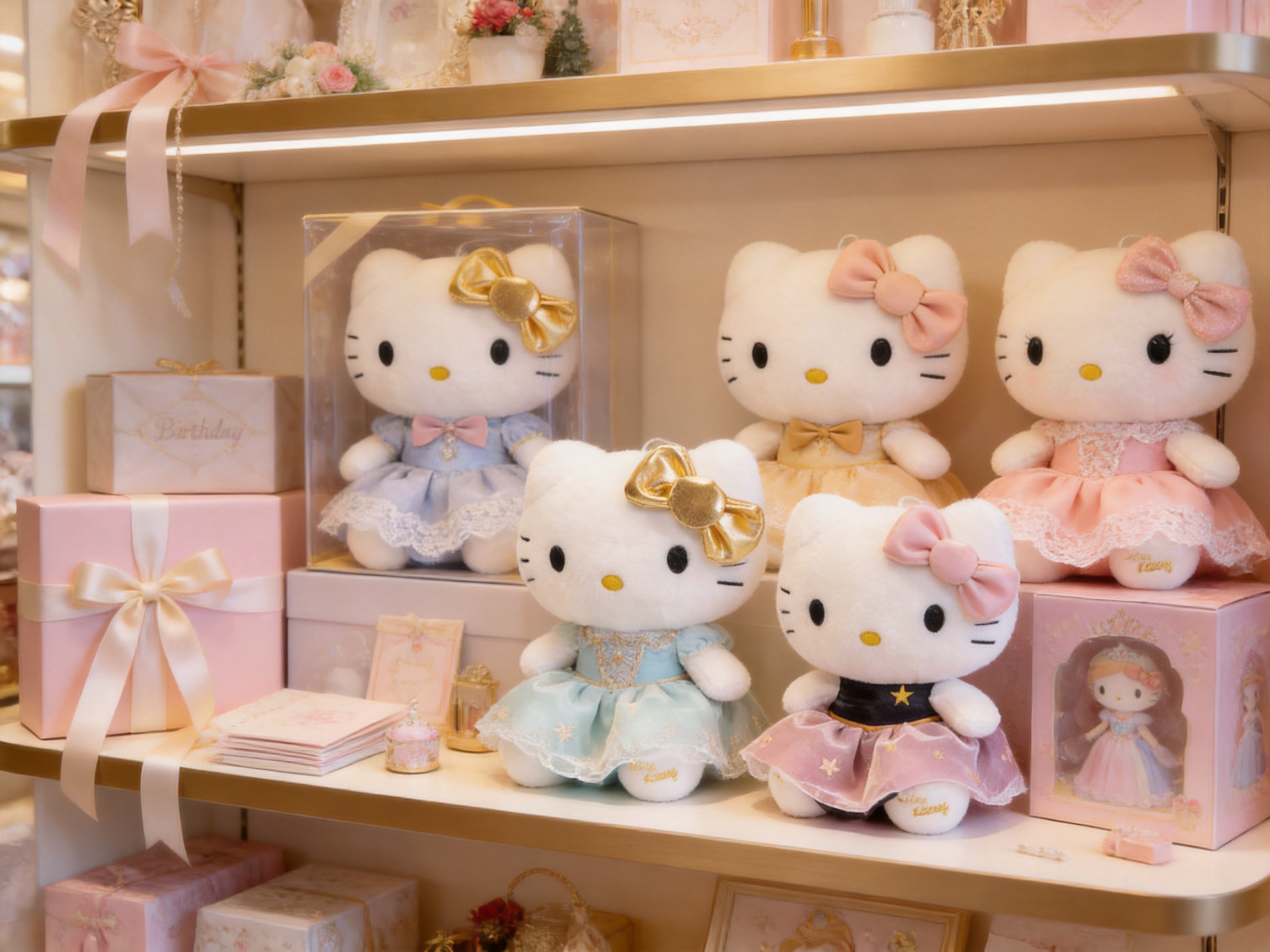
The skirt can be adapted in length, volume, color, fabric, trim, and decorative pattern. Lace may be replaced or combined with satin, tulle, velvet, printed fabric, metallic trim, or embroidered panels. The clothing can be designed for different seasons, festivals, age groups, or brand themes.
Accessories
The golden bow is one possible accessory direction, but buyers may also consider crowns, stars, flowers, ribbons, handbags, capes, shoes, wands, or character-specific symbols. Accessories should be selected according to the target market, desired price, production feasibility, and applicable safety requirements.
Branding and Packaging
Brand identity can be introduced through woven labels, printed tags, embroidery, custom boxes, gift bags, story cards, stickers, or retail sleeves. Packaging can explain the character’s name and personality, present a collection story, or communicate seasonal messaging. A coordinated package makes the product feel more complete and can improve its suitability for gifting.
Size and Format
The standard size is approximately 15 centimeters, but customized dimensions are available. Buyers should choose size according to display space, target price, shipping plan, intended age range, and product function. A small version may suit promotional distribution, while a larger version may create stronger impact in premium retail or home decoration.
Purchasing and Development Process
A clear development process helps buyers move from an idea to a reliable production order. The first stage is to provide the manufacturer with the product concept, estimated quantity, target market, desired size, artwork, reference images, packaging expectations, and required delivery date.
The manufacturer can then review the request, recommend materials and construction methods, and prepare a quotation. At this stage, buyers should clarify whether the quotation includes sampling, packaging, labels, accessories, testing, inspection, and delivery terms. Clear commercial information reduces misunderstandings later in the project.
After the quotation is accepted, the design is developed into a sample. The buyer reviews the sample and provides comments in an organized format. Changes should be prioritized according to importance, such as facial expression, body proportions, fabric color, skirt shape, bow position, or packaging artwork.
Once the sample is approved, production details are confirmed. This may include the final purchase order, deposit arrangement, material approval, packaging files, labeling information, carton specifications, and inspection requirements. Production then proceeds according to the agreed schedule.
Before shipment, the buyer may request photographs, a production sample, or a third-party inspection, depending on the project. Final approval should confirm quantity, quality, packaging, and shipping documentation. After delivery, feedback can support improvements for repeat orders or future designs.
Care, Display, and Product Presentation
Plush toys should be stored in a clean, dry environment away from excessive moisture, direct sunlight, and strong odors. Proper storage helps preserve fabric color, softness, and the appearance of the princess dress. Retailers should avoid placing the product where the bow or lace can be crushed by heavy items.
For display, the sitting position makes the toy easy to arrange on shelves and counters. A group of characters can be positioned at different heights using display risers. Coordinating the plush toys with pastel colors, gold accents, story cards, or themed props can reinforce the princess concept without requiring a large display area.
Online sellers should photograph the product from the front, side, and rear, with close-up images of the face, bow, lace, and golden decorations. Product copy should clearly state the size, material, filling, intended use, and any relevant care information. Accurate presentation helps customers understand the product and supports stronger purchase confidence.
Frequently Asked Questions
What is the size of the standard plush toy?
The standard size is approximately 15 centimeters. Customized sizes can be discussed for different retail, promotional, decorative, or collectible applications.
What materials are used?
The outer shell uses super soft plush fabric, and the filling material is PP cotton. The princess outfit may include lace and decorative elements according to the approved design.
Is the toy suitable for children?
The product is designed as a cartoon character plush toy, but suitability depends on the final design, accessories, labeling, and destination-market requirements. Buyers should confirm the intended age range and complete any necessary safety evaluation before commercial sale.
Can the princess skirt be customized?
Yes. Buyers can discuss changes to the skirt’s color, shape, fabric, lace, trim, pattern, and decorative details. Customization should be confirmed through artwork and sample approval.
Can the bow and facial features be changed?
Yes. OEM and ODM services support modifications to accessories, facial expressions, colors, embroidery, and other character details. The manufacturer can review the technical feasibility of each request.
What is the minimum order quantity?
The listed minimum order quantity is 1,000 pieces. Buyers with multiple designs or special purchasing plans should discuss the assortment structure and order terms with the manufacturer.
How much is the sample fee?
The listed sample fee is US$100 per design. The final fee and any additional development costs should be confirmed according to the complexity of the requested product.
How long does sampling take?
The listed sample development time is approximately one week. The exact timing depends on design completeness, material availability, accessory complexity, and the number of revisions required.
How long does bulk delivery take?
The listed delivery time is approximately five to six weeks after design approval and order confirmation. Buyers should also plan for quotation, sample review, packaging approval, inspection, and transportation time.
Where are the products manufactured?
The products are manufactured by Tianchang Bestjoy Craft & Gift Co., Ltd. at its factory in Jinji Industrial Park, Tianchang City, Anhui Province, China.
Does the manufacturer support international orders?
Yes. The company’s products are exported to Europe, America, Australia, Japan, and South Korea, and the company welcomes cooperation with customers worldwide.
What makes this plush toy different from a basic stuffed animal?
Its main differences are the cartoon character styling, sitting silhouette, princess skirt or dress, lace construction, golden star-like details, metallic-looking bow, soft plush body, and ability to be customized for branded or themed programs.
Can this product be used for promotional campaigns?
Yes. The compact size, recognizable character format, and customization options make it suitable for promotional gifts, event merchandise, seasonal campaigns, customer rewards, and themed brand programs.
Why Choose an Integrated Plush Toy Manufacturer?
An integrated manufacturer can connect design decisions with production realities from the beginning of a project. This helps identify potential issues before sampling, such as difficult seams, unstable sitting positions, unsuitable materials, oversized accessories, or packaging limitations.
Integrated production can also simplify communication. Buyers may work with one coordinated team for concept development, sampling, manufacturing, quality control, packaging, and after-sales support. This reduces the risk of information being lost between separate design studios, sourcing agents, and factories.
For repeat orders, an integrated factory can retain product records, approved samples, patterns, material information, and packaging specifications. These records may help improve consistency when the buyer reorders the same design or develops a related collection.
The company’s experience in multiple plush categories is another advantage. Knowledge of children’s toys, promotional gifts, home furnishings, pet products, stationery gifts, and cartoon decorations can support creative product extensions. A buyer may begin with the princess plush toy and later develop a broader soft-product program using the same character identity.
Conclusion
Cartoon character plush toys wearing princess skirts offer a strong combination of softness, visual charm, thematic identity, and commercial flexibility. The featured design uses a round cartoon face, large eyes, a golden bow, a lace princess dress, star-like golden decorations, and a stable sitting form to create a product that is both adorable and elegant.
Its approximately 15-centimeter size and 80-gram weight support convenient storage, shipping, gifting, and retail display. Super soft plush fabric and PP cotton filling provide the tactile foundation expected from a quality stuffed toy, while the costume and accessories give it a more distinctive position than a basic plush animal.
For businesses, the greatest advantages are the product’s broad application range and customization potential. It can serve children’s gift programs, promotional campaigns, seasonal merchandise, home and lifestyle collections, character series, and collectible product lines. OEM and ODM cooperation allows buyers to adapt the design to their own brand, market, packaging, and campaign requirements.
Tianchang Bestjoy Craft & Gift Co., Ltd. supports this product with integrated R&D, design, manufacturing, sales, and after-sales capabilities. Its more than 10,000-square-meter factory, international export experience, broad plush product range, and established manufacturing background provide a practical foundation for customized development and bulk production.
With careful sample approval, appropriate material selection, controlled production, and clear communication, this princess-themed plush toy can become a memorable retail product or promotional gift. Its balance of character appeal, decorative detail, soft construction, scalable customization, and manufacturing support makes it a versatile choice for companies seeking differentiated plush products.
References
1. Product specification sheet for cartoon character plush toys wearing princess skirts, including size, weight, materials, customization terms, sampling schedule, and delivery schedule.
2. Company profile information for Tianchang Bestjoy Craft & Gift Co., Ltd., including factory location, establishment history, production scope, export markets, and service capabilities.
3. General principles of plush toy product development, including pattern engineering, fabric cutting, sewing, filling, finishing, inspection, and packaging.
4. General guidance for children’s product design, age grading, labeling, accessory construction, and destination-market safety review.
5. General retail merchandising principles for compact character toys, seasonal gifts, promotional products, and home lifestyle decorations.