en
en  русский
 Español
 عربى
عربى
Content
- 1 Product Overview and Character Appeal
- 2 Key Specifications
- 3 Design Advantages Over Generic Plush Toys
- 4 Material Selection and Construction Performance
- 5 Manufacturing Strengths and Production Capabilities
- 6 Production Process for the Fast-Spinning Ferret Plush Toy
- 6.1 1. Design Review and Technical Interpretation
- 6.2 2. Pattern Development
- 6.3 3. Material and Color Confirmation
- 6.4 4. Cutting and Component Preparation
- 6.5 5. Sewing and Assembly
- 6.6 6. Facial Feature Application
- 6.7 7. Filling and Shaping
- 6.8 8. Trimming, Brushing, and Finishing
- 6.9 9. Quality Inspection
- 6.10 10. Packing and Delivery Preparation
- 7 OEM and ODM Customization Opportunities
- 8 Applications Across Multiple Markets
- 9 Quality and Reliability Considerations
- 10 Why an Integrated Factory Matters to Buyers
- 11 Order Planning and Development Timeline
- 12 Commercial Advantages for Retailers and Distributors
- 13 Competitive Positioning
- 14 Q&A
- 14.1 What is the fast-spinning ferret plush toy?
- 14.2 What size is the plush toy?
- 14.3 How much does each plush toy weigh?
- 14.4 What materials are used?
- 14.5 Can the design be customized?
- 14.6 What is the minimum order quantity?
- 14.7 How much is the sample fee?
- 14.8 How long does sample development take?
- 14.9 How long does bulk delivery take?
- 14.10 Where can this plush toy be used?
- 14.11 Why is the standing design useful?
- 14.12 What makes the product different from a generic animal plush?
- 14.13 Who manufactures the product?
- 14.14 Does the product have a confirmed spinning mechanism?
- 14.15 What should buyers provide when requesting a quotation?
- 15 Conclusion
- 16 References
- 17 Product: Fast-spinning ferret plush toys of IP characters plush toys
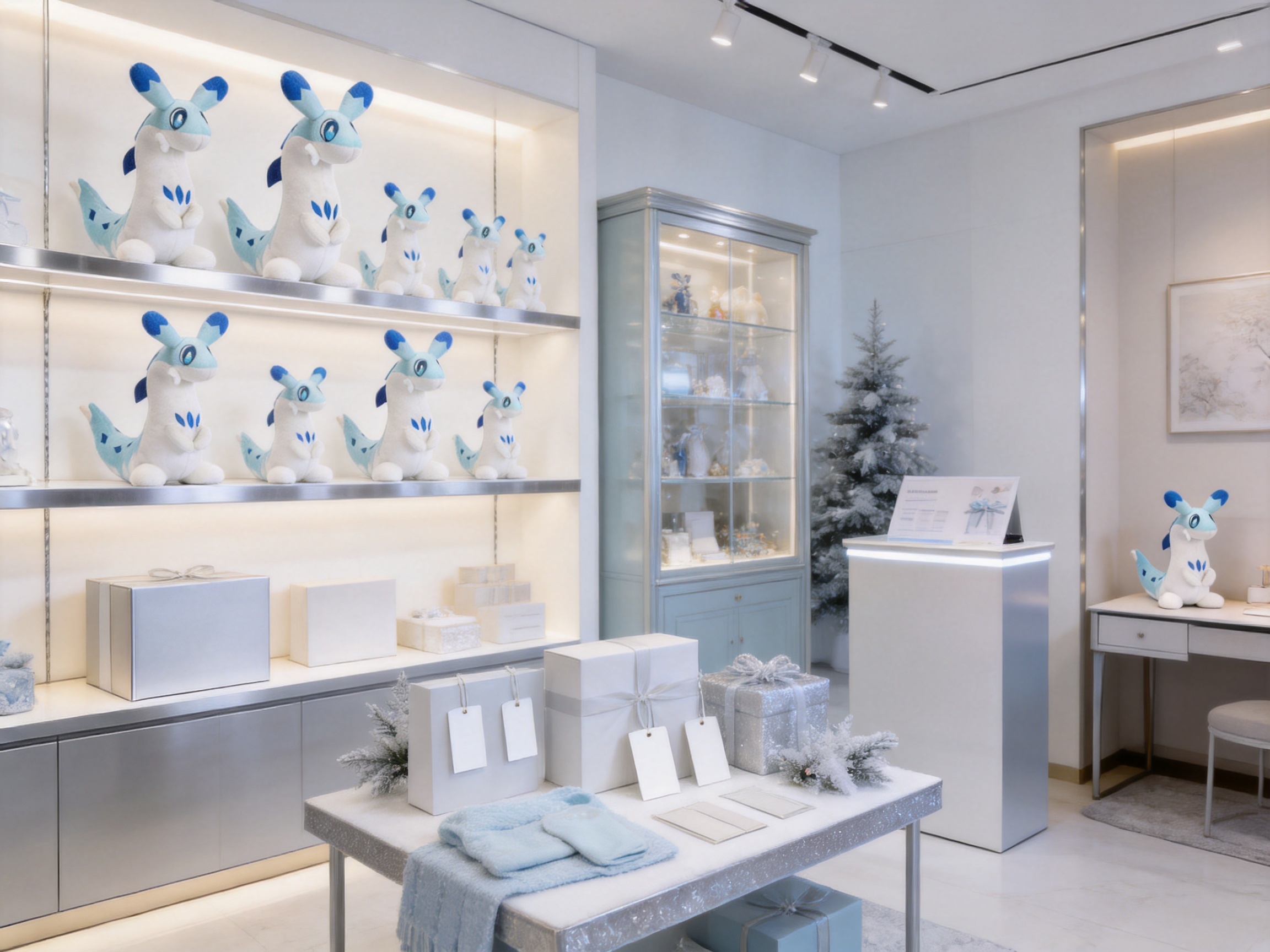
Plush toys continue to evolve from simple children’s playthings into collectible products, character merchandise, promotional gifts, home décor accents, and emotionally engaging lifestyle items. Within this expanding market, character plush toys must achieve more than softness. They need a memorable silhouette, expressive facial features, reliable construction, consistent color execution, and the flexibility to support customized production. The fast-spinning ferret plush toy described in this article combines these qualities in a compact, appealing design intended for IP character collections, retail programs, promotional campaigns, seasonal assortments, and specialty gift ranges.
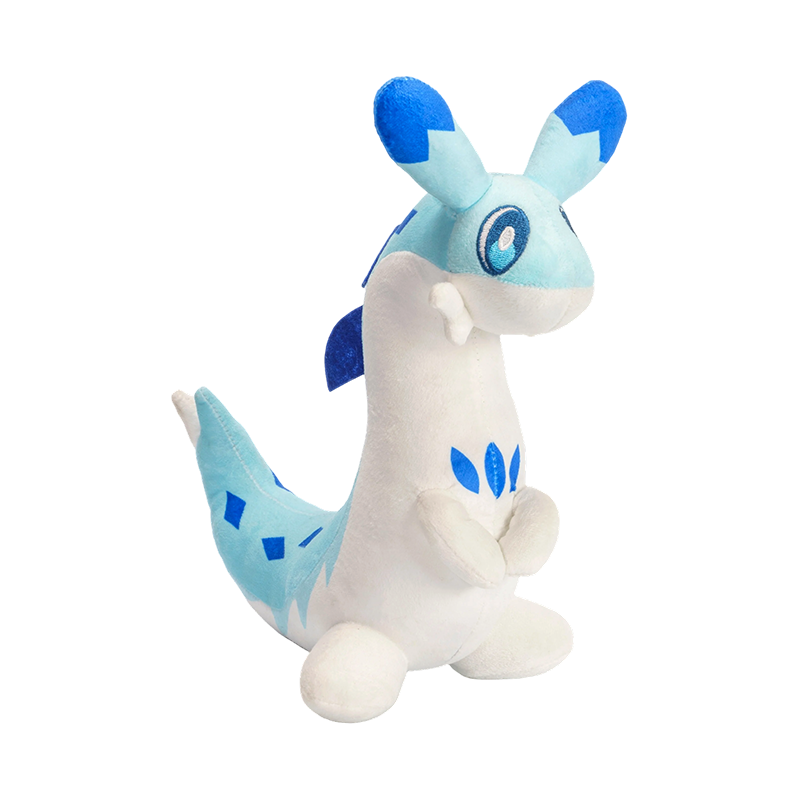
Measuring approximately 25 centimeters and weighing about 150 grams, this standing plush toy offers a practical balance between visual presence, portability, shipping efficiency, and shelf appeal. Its body is primarily pure white, while light blue accents appear across the head and back. Large blue eyes, upright ears, and a naturally curved tail create a lively expression and a recognizable character silhouette. The result is a soft product with a fresh, wintry appearance that can attract children, collectors, Pokémon-inspired audiences, and customers seeking distinctive decorative plush.
The product is manufactured by Tianchang Bestjoy Craft & Gift Co., Ltd., an integrated plush manufacturer with capabilities covering research and development, design, production, sales, and after-sales service. Established in 2013, the company operates a factory of more than 10,000 square meters in Anhui Province, China. Its experience in producing trendy plush toys, children’s plush products, pet plush, promotional gifts, home furnishings, stationery gifts, handicrafts, and cartoon decorations provides a strong foundation for customized character development and high-volume production.
This article examines the product’s design advantages, material selection, production potential, quality considerations, customization options, commercial applications, and the manufacturing strengths that distinguish it from ordinary generic plush toys.
Product Overview and Character Appeal
The fast-spinning ferret plush toy is designed around a fantasy-inspired character with a clean, energetic, and approachable appearance. Although the body shape is simple enough to remain suitable for efficient manufacturing, the combination of color, posture, facial expression, and tail placement gives the toy a distinctive identity. This balance is important in the competitive plush market. A product must be recognizable at first glance but also practical to produce in repeatable quantities.
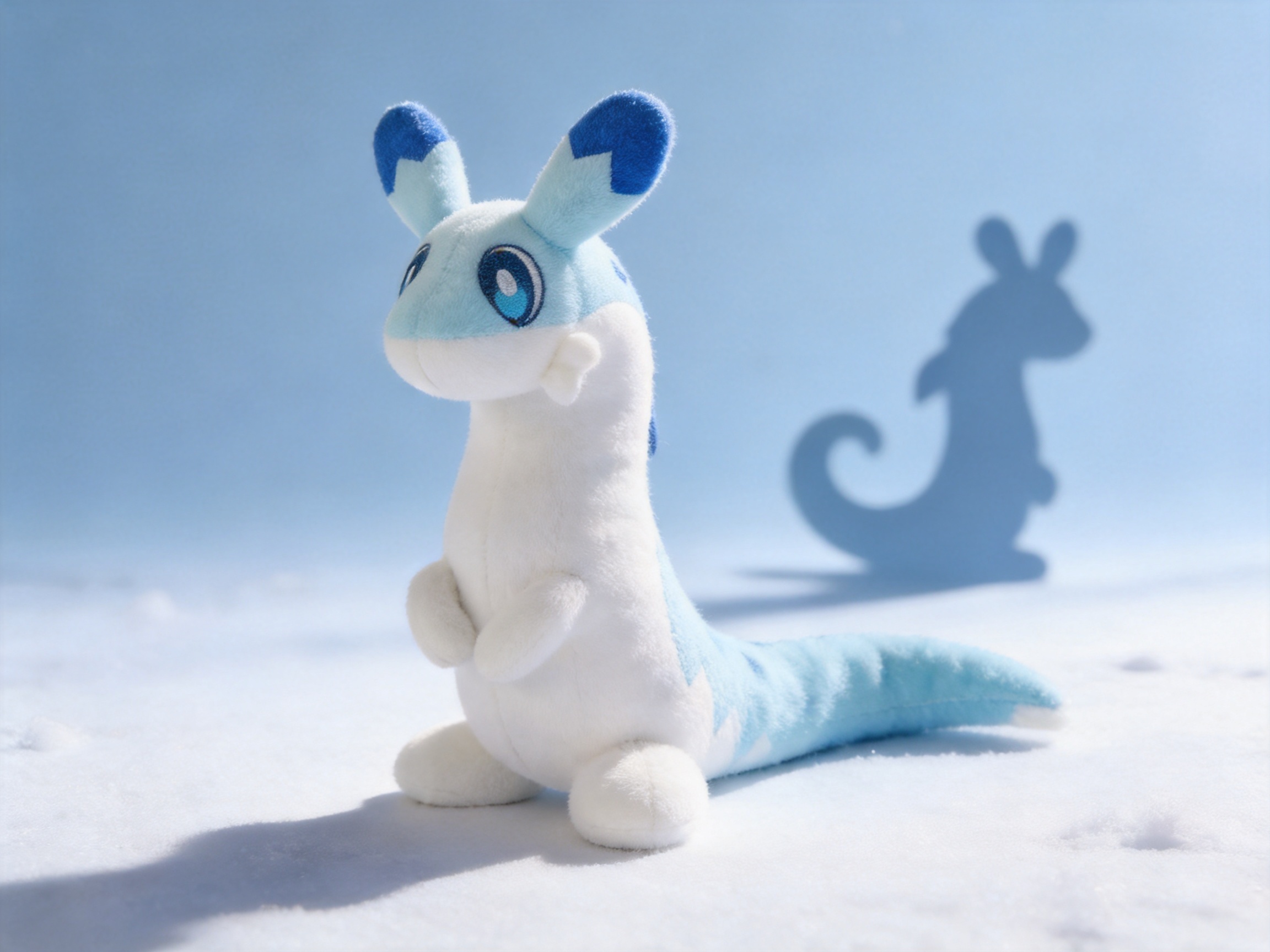
The standing posture is one of the product’s most useful design characteristics. A standing plush toy can be displayed on retail shelves, desks, bedside tables, bookcases, children’s rooms, reception counters, and promotional booths without requiring a support structure. The upright form also gives the character a stronger presence than a flat or reclining plush design. Its ears and tail extend the silhouette, making the product easier to identify even when viewed from a distance.
The body’s pure white base communicates softness, cleanliness, and a snow-like visual theme. White plush can create a premium appearance when the surface is smooth and evenly finished. The light blue markings introduce contrast without making the design visually aggressive. These cool tones suggest ice, winter, fantasy, and freshness, while the large blue eyes maintain a friendly and gentle personality.
The ears are positioned upright with a slight forward tilt. This small detail contributes significantly to the character’s expression. Ears that stand vertically can communicate alertness and energy, while the forward angle gives the toy a curious and playful appearance. The curved tail adds visual movement to a standing design and supports the product’s fast-spinning concept by creating a sense of motion even when the toy is displayed statically.
The name “fast-spinning” can support product storytelling, collection development, and interactive merchandising. Depending on the final specification, the spinning feature may be incorporated as a mechanical function, a rotating display concept, an animated promotional theme, or simply a visual identity centered on speed and movement. Any moving mechanism should be confirmed during engineering and sample approval. The current product information establishes the character design and standing style, while the exact spinning mechanism, if required, can be developed through OEM or ODM consultation.
Key Specifications
| Specification | Product Information | Commercial Value |
|---|---|---|
| Product type | IP character plush toy | Suitable for licensed collections, themed merchandise, and character programs |
| Approximate size | 25 centimeters, customizable | Large enough for visibility while remaining easy to display and ship |
| Approximate weight | 150 grams | Lightweight for handling, packaging, and logistics |
| Style | Standing | Supports shelf display, room décor, and retail presentation |
| Shell fabric | Super soft plush | Creates a tactile, comforting, and premium hand feel |
| Filling material | PP cotton | Provides lightweight resilience and a soft, rounded structure |
| OEM and ODM | Welcome | Enables design changes, private labeling, and collection development |
| Minimum order quantity | 1,000 pieces | Appropriate for retail programs, promotional campaigns, and wholesale distribution |
| Sample fee | 100 US dollars per design | Allows clients to evaluate appearance and construction before bulk production |
| Sample time | Approximately one week | Supports efficient approval and product development cycles |
| Delivery time | Approximately five to six weeks | Provides a practical production schedule for planned launches |
Design Advantages Over Generic Plush Toys
Many generic plush toys rely on familiar animal shapes without a strong visual identity. They may be soft and attractive, but they often lack the color language, facial expression, or thematic details needed to support a recognizable collection. The fast-spinning ferret plush toy addresses this weakness through a coordinated character design.
Distinctive Color Architecture
The white and light blue color scheme creates a clear visual system. Instead of using many unrelated colors, the design concentrates on a limited palette that is easy to recognize and reproduce. A restrained palette can improve brand consistency across different production batches, packaging formats, accessories, and related characters.
The primary white body provides a broad visual foundation, while light blue markings function as character identifiers. This approach is valuable for IP merchandise because recognizable details do not need to be overly complicated. A few carefully positioned markings can make a product memorable while reducing the number of difficult sewing or printing operations.
Strong Facial Expression
Large blue eyes are among the most important emotional features of the product. In plush design, the eyes influence whether a character feels friendly, mysterious, humorous, sleepy, energetic, or collectible. The blue eyes used in this design reinforce the cool color theme while adding warmth and liveliness to the face.
Compared with generic toys featuring small or poorly balanced facial elements, this product has the potential to create a stronger emotional response. Its face is easy to read from a distance, which is useful in retail environments where products are often viewed from several feet away. It is also suitable for online product photography because the eyes and color contrast remain visible in compact images.
Display-Friendly Standing Form
The standing posture offers an advantage over many sitting or floppy plush toys. A standing product can be positioned upright without leaning against another object. This makes it more suitable for retail shelves, collector displays, event counters, office desks, and themed room décor.
For wholesalers and retailers, display efficiency matters. A product that stands independently can reduce the need for extra supports or complicated packaging inserts. It can also make a product wall or display table look more organized. For consumers, the upright shape makes the toy feel like a character rather than only a soft cushion.
Balanced Size and Weight
At approximately 25 centimeters, the product occupies a useful middle range. It is large enough to feel substantial in the hands and visible on a shelf, but small enough to fit into standard gift packaging and common display spaces. Its approximate 150-gram weight supports portability and helps reduce transportation burden compared with oversized plush products.
This size can serve several market segments at once. Children can carry it comfortably, collectors can display it without needing excessive space, and promotional buyers can use it as a higher-perceived-value giveaway. The dimensions may also be customized for different channels, such as smaller keychain-scale versions, medium retail editions, or larger limited releases.
Softness and Tactile Appeal
The super soft plush shell is intended to create immediate tactile appeal. Touch is central to the plush category because consumers often evaluate softness, smoothness, resilience, and overall comfort before purchasing. A pleasant hand feel can distinguish a character toy from a rigid figurine or mass-produced plastic novelty.
Soft plush fabric also supports the product’s emotional positioning. The white body and light blue markings suggest coolness and purity visually, while the soft surface adds warmth and comfort physically. This contrast can make the product attractive as both a collectible character and a companion toy.
Material Selection and Construction Performance
The product uses super soft plush fabric for the outer shell and PP cotton for the filling. These materials are widely used in quality plush manufacturing because they provide a combination of softness, flexibility, low weight, and structural adaptability.
Super Soft Plush Shell
The shell fabric affects the product’s appearance, durability, color quality, and tactile experience. For this design, a smooth and soft surface is particularly important because the white body must look clean and refined. The fabric should be selected and processed to support even coloration, consistent pile direction, and a pleasant touch.
White plush requires careful handling throughout cutting, sewing, filling, and packing. Dust, oil, loose fibers, and uneven brushing can be more noticeable on a white surface than on a darker product. A professional manufacturing workflow therefore needs appropriate material storage, clean production areas, careful operator handling, and inspection before packing.
The light blue markings also require attention to color matching. A reliable production process should compare fabric or printed components against an approved color standard. Maintaining color consistency is especially important when multiple characters, accessories, or product sizes are part of the same collection.
PP Cotton Filling
PP cotton is used to create the soft internal volume of the toy. It is lightweight, resilient, and suitable for shaping rounded body sections. Proper filling distribution is essential because insufficient filling can make a character look flat or unstable, while excessive filling can produce a hard surface and distort the intended silhouette.
The standing form requires particular attention to the lower body and feet. These areas must contain enough filling to preserve shape while maintaining a stable base. The head, ears, tail, and back markings must also be filled or supported in a way that retains their visual proportions after compression during packaging and shipping.
Experienced production teams can adjust the quantity and distribution of PP cotton according to the size of each component. Filling is not simply a matter of placing the same amount of material into every section. The head may require a firm but soft structure, the body may need balanced density, and the tail may need enough support to maintain its curve without becoming rigid.
Seam and Shape Integrity
Plush quality depends heavily on the accuracy of pattern cutting and seam execution. The product’s body, ears, tail, and facial components must be assembled in a manner that preserves symmetry and character proportions. Uneven seams may change the angle of the ears, distort the face, or cause the toy to lean.
For a standing product, seam strength and base stability are especially important. The lower seams should withstand repeated handling, transportation, and ordinary play. The tail attachment should also be reinforced because protruding components are more likely to be pulled or compressed during use.
Quality-oriented production normally includes pattern review, first-piece evaluation, sewing inspection, filling inspection, trimming, shaping, and final appearance checking. These steps help ensure that the finished product remains close to the approved sample.
Manufacturing Strengths and Production Capabilities
Tianchang Bestjoy Craft & Gift Co., Ltd. operates as an integrated manufacturer rather than functioning only as a trading intermediary. Its stated capabilities cover R&D, design, production, sales, and after-sales service. This integrated structure can simplify communication and shorten the distance between concept development and factory execution.
The company was established in 2013 as a joint venture between Hong Kong Jintong International Co., Ltd. and Tianyuan Enterprise Investment Management Co., Ltd. Its factory covers more than 10,000 square meters, providing space for material handling, pattern development, sewing, filling, finishing, inspection, and packing operations. The company reports annual sales exceeding 12 million RMB and exports products to Europe, America, Australia, Japan, and South Korea.
International market experience is valuable for character plush production because buyers in different regions may have specific expectations regarding appearance, packaging, labeling, safety, delivery, and documentation. A manufacturer accustomed to serving overseas customers is better positioned to coordinate export-oriented production requirements and communication workflows.
Research and Development
R&D is an important advantage in the IP plush sector. Character products often begin with illustrations, digital models, sketches, reference images, or brand guidelines rather than a complete physical pattern. Converting those references into a soft three-dimensional form requires judgment and technical experience.
The R&D process may involve reviewing proportions, selecting construction methods, simplifying complex shapes, deciding how to create color blocks, and determining how the toy will stand. For the ferret design, particular attention is needed for the relationship between the head, upright ears, blue markings, eyes, tail, and base.
A capable development team can identify potential production problems before bulk manufacturing. For example, a very narrow ear may not retain its desired shape, a curved tail may require internal support, and a large embroidered eye may need a specific backing to prevent distortion. Early problem-solving helps reduce rework and improves sample approval efficiency.
Professional Production Equipment
The company reports the use of professional production equipment. In plush manufacturing, equipment supports important operations such as fabric cutting, sewing, embroidery, stuffing, trimming, shaping, and packing. The exact equipment configuration may vary according to product requirements, but an appropriate production setup improves repeatability and throughput.
Equipment alone does not determine quality. Its value depends on operator skill, maintenance, process control, and inspection standards. The strongest manufacturing performance comes from combining suitable machinery with experienced personnel and clearly defined procedures.
Production Team and Workflow Coordination
An integrated production team can coordinate multiple stages more effectively. Pattern makers, sample technicians, sewing operators, filling workers, inspectors, and packing staff must all understand the approved product specifications. When communication is clear, changes to color, size, fabric, labels, or packaging can be reflected across the production line.
This coordination is especially useful for OEM and ODM projects. A buyer may request a modified size, a different color palette, a new accessory, custom packaging, or a series of related characters. Managing these changes requires a production partner that can connect creative requirements with practical manufacturing decisions.
Export and Customer Service Experience
The company’s export markets include Europe, America, Australia, Japan, and South Korea. Its reported customer base includes major retail and wholesale organizations such as Walmart, Target, Albertsons, and Kmart. Experience with large customers can indicate familiarity with structured purchasing processes, product specifications, delivery schedules, and quality expectations.
The company also states that it provides after-sales service and in-stock services. These capabilities can be useful for buyers who need replenishment, repeat orders, or support after delivery. While each project should still confirm the exact service scope, an established sales and after-sales structure can make long-term cooperation more practical.
Fast-spinning ferret plush toys of IP characters plush toys
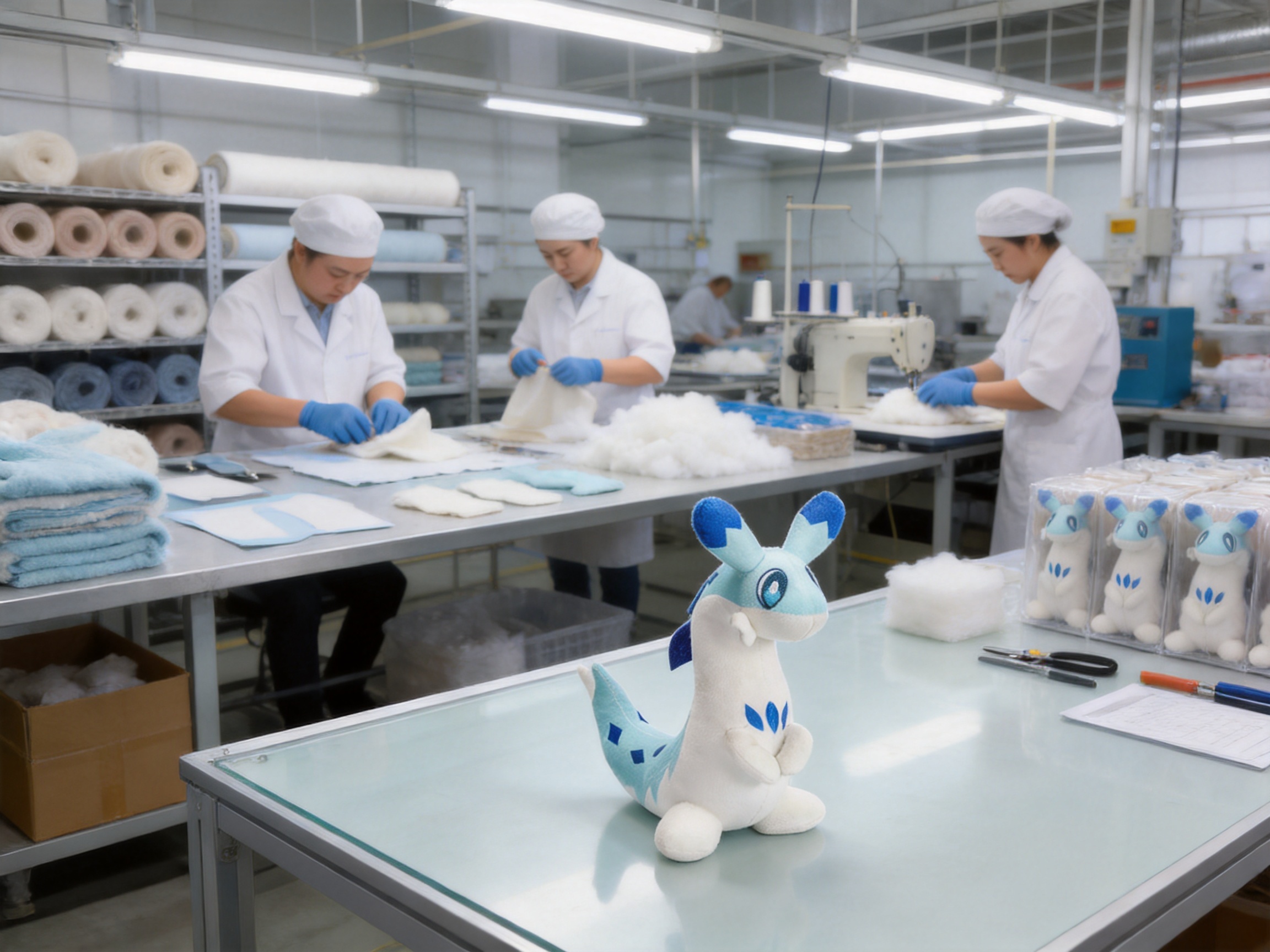
Production Process for the Fast-Spinning Ferret Plush Toy
A reliable plush product is the result of a connected manufacturing process. Each stage affects the final appearance and performance. The following workflow explains how a character design such as this ferret plush can move from concept to finished product.
1. Design Review and Technical Interpretation
The process begins with design review. The manufacturer examines the reference artwork or character concept and identifies the key features that must remain visually accurate. For this product, these features include the pure white body, light blue head and back markings, large blue eyes, upright ears, natural tail curve, and standing posture.
The team also assesses the intended size, weight, fabric type, filling material, packaging requirements, and target sales channel. A product intended for children may require different construction and labeling considerations than a collector-focused decorative edition. A promotional version may prioritize cost and delivery volume, while a premium edition may use enhanced fabrics, embroidery, or special packaging.
2. Pattern Development
Pattern development converts a three-dimensional character into two-dimensional fabric pieces. The pattern must account for seam allowances, fabric stretch, pile direction, component placement, and the final stuffed shape. A good pattern makes production more efficient while preserving the character’s personality.
The body pattern determines whether the toy appears slender, rounded, energetic, or heavy. The head pattern controls facial width and expression. Ear patterns affect uprightness and angle, while the tail pattern determines the curve and overall balance. Pattern development may require several revisions before the product achieves the correct silhouette.
3. Material and Color Confirmation
Before cutting, the shell fabric, thread, embroidery materials, labels, and accessories should be confirmed against the approved specification. The white and light blue components need consistent color treatment. If the product is part of a larger collection, color standards should be maintained across all related items.
Material confirmation also includes evaluating softness, pile height, recovery, thickness, and compatibility with sewing and embroidery. The selected fabric must support clean edges and stable seams. If a moving or spinning feature is included, the material must also work with any required internal components or reinforced areas.
4. Cutting and Component Preparation
Fabric cutting must follow the approved patterns accurately. Components should be matched according to color, orientation, and pile direction. Incorrect cutting can create asymmetry, cause markings to appear at different heights, or change the direction of the plush surface.
Small components such as ears, tail sections, facial pieces, and decorative markings require careful handling. These elements often have a strong effect on character recognition. Accurate preparation at this stage reduces later adjustment and supports consistent assembly.
5. Sewing and Assembly
During sewing, fabric pieces are joined according to the production sequence. The order of assembly matters because some seams become inaccessible after other components are attached. The face may need to be prepared before the head is closed, and the ears may need to be positioned before final head assembly.
Operators must maintain consistent seam allowances and avoid excessive tension that could wrinkle the fabric. The left and right sides should be checked for balance, especially around the ears and facial features. The curved tail should be attached securely and aligned with the intended body position.
6. Facial Feature Application
Facial features may be created through embroidery, appliqué, printed elements, or other approved techniques. The method should be selected according to the design, quantity, target market, and desired appearance. Large blue eyes are central to the product’s emotional expression, so their placement, size, spacing, and symmetry require careful checking.
For a premium plush product, embroidered details can provide a soft integrated appearance and may reduce the use of hard components. However, the final method must be selected based on the project’s safety requirements, visual standards, and approved sample. Every facial component should be firmly secured and inspected before the toy proceeds to filling.
7. Filling and Shaping
PP cotton is inserted into the sewn shell in controlled stages. The filling process must achieve the correct density and distribution. Workers shape the head, body, ears, legs, and tail as the toy is filled, ensuring that the product does not develop hollow areas, lumps, or uneven pressure.
The standing position is verified after filling. The toy should maintain a balanced base and should not lean excessively. If the product incorporates a spinning or rotating feature, the internal structure must be checked to ensure that the mechanism does not compromise softness, stability, or safety.
8. Trimming, Brushing, and Finishing
After filling, excess threads are trimmed and the plush surface is brushed or shaped as required. White fabric must be inspected carefully for marks, loose fibers, or discoloration. The light blue areas should remain clean and clearly defined.
Finishing also includes checking the tail curve, ear angle, facial expression, body symmetry, and overall proportion. Small adjustments at this stage can significantly improve the product’s retail presentation.
9. Quality Inspection
Quality inspection should cover appearance, dimensions, weight, seams, filling, feature attachment, cleanliness, and packaging readiness. Inspectors compare finished pieces with the approved sample and product specifications.
For large orders, inspection may be performed at several stages rather than only at the end. Early inspection can identify recurring issues before they affect a large quantity. Final inspection verifies that the completed products meet the agreed standard before shipment.
10. Packing and Delivery Preparation
Plush toys are often compressed or arranged for efficient packing, but the packing method must not permanently damage the shape. The manufacturer should consider how the ears, tail, face, and standing base will recover after unpacking.
Packaging can be customized for retail, wholesale, promotional, or collector use. Options may include individual polybags, printed boxes, hangtags, carton markings, branded inserts, or seasonal packaging. Packaging specifications should be confirmed early because they can influence production timing and shipping volume.
OEM and ODM Customization Opportunities
The product is available for OEM and ODM cooperation, making it suitable for businesses that want to develop a private-label character range or adapt the design for a specific market. Customization may be applied to the product itself, the packaging, the accessories, or the overall collection concept.
Size and Proportion Customization
The standard size is approximately 25 centimeters, but the product can be customized. A smaller version may be suitable for blind-box programs, travel gifts, promotional bundles, or lower-price retail channels. A larger version may be positioned as a premium collectible, room decoration, event centerpiece, or seasonal gift.
Changing the size requires more than simply enlarging or reducing the pattern. The manufacturer must evaluate the relationship between fabric weight, filling density, seam strength, stability, packaging, and shipping cost. A professional development team can help preserve the original character proportions while adapting the product to a new scale.
Color and Marking Customization
The white and light blue palette can be retained for character consistency or adjusted for special editions. Seasonal colors, metallic accents, pastel variations, glow-inspired details, or event-specific palettes may be considered. Any changes should be reviewed against the intended audience and brand guidelines.
Markings can also be modified in shape or placement. However, because the markings contribute strongly to character recognition, changes should be approved through a physical sample or detailed digital specification before mass production.
Fabric and Texture Options
Different fabric textures can create different market positions. A short plush may appear neat and modern, while a longer pile can create a more fluffy and huggable effect. Velboa, coral fleece, minky-style fabrics, printed plush, and other materials may be considered depending on the desired hand feel and cost target.
When changing fabric, buyers should evaluate color accuracy, durability, shedding, seam behavior, printing quality, and the way the material responds to filling. The softest fabric is not automatically the best fabric for every design. The correct choice is the one that supports the product’s appearance, function, target market, and production requirements.
Packaging and Private Labeling
OEM customers may add private labels, woven tags, hangtags, printed packaging, brand cards, or collection identifiers. Packaging can explain the character story, introduce related products, support seasonal campaigns, or provide care information.
For retail distribution, packaging should protect the plush while allowing customers to see the product. For promotional programs, compact packaging may be more practical. For collector editions, a rigid box, numbered card, or premium insert may increase perceived value.
Interactive and Spinning Features
The fast-spinning concept creates opportunities for interactive development. Depending on the buyer’s requirements, the product may be paired with a rotating display stand, a safe internal mechanism, a motion-themed package, or a series of animated character poses. Any mechanical feature must be engineered carefully so that it does not compromise the soft nature of the product.
Important considerations include mechanism safety, battery requirements if applicable, noise level, maintenance, packaging protection, weight distribution, and compliance with the regulations of the destination market. The manufacturer can assess these requirements during the OEM or ODM development stage.
Applications Across Multiple Markets
IP Character Merchandise
The most direct application is IP character merchandise. A recognizable fantasy creature with a carefully controlled appearance can become part of a broader character collection. Retailers and licensees may use the toy in themed displays, seasonal launches, online stores, fan events, or bundled product programs.
For licensed products, buyers must ensure that all intellectual property rights, approvals, artwork permissions, and regional distribution requirements are properly managed. The manufacturer can work from approved references, but the buyer remains responsible for securing the necessary rights for the character and associated branding.
Children’s Gifts
The soft body, friendly face, and moderate size make the product suitable for children’s gift ranges, subject to the applicable safety evaluation and age grading. It can be positioned as a birthday gift, holiday present, reward item, or companion toy.
Children are likely to respond to the product’s large eyes, upright ears, cool colors, and soft texture. Parents and gift buyers may also appreciate the manageable size and lightweight construction. Packaging and labeling should clearly communicate the intended age range and care instructions.
Collector and Fan Merchandise
Character collectors often value accuracy, consistency, and display quality. The standing form makes this plush appropriate for shelves, cabinets, desks, and themed collections. Limited colors, special packaging, numbered editions, or event exclusives can be developed for collector programs.
A collector-oriented version may use more detailed embroidery, carefully matched fabric, premium packaging, or a certificate-style insert. The physical sample should be reviewed closely because collectors are sensitive to facial balance, color variation, and deviations from the approved character design.
Promotional Campaigns
Companies can use custom plush toys as promotional gifts, loyalty rewards, event merchandise, or campaign incentives. A character plush generally has a longer life than many disposable promotional items because recipients may keep it, display it, or give it to a child.
The product can be customized with a campaign color scheme, branded tag, themed packaging, or a related mascot. A minimum order quantity of 1,000 pieces is suitable for many promotional campaigns, store openings, product launches, and customer loyalty programs.
Seasonal and Holiday Collections
The snow-like white and light blue appearance naturally supports winter, holiday, and seasonal merchandising. The design may be included in Christmas displays, winter gift programs, cold-weather campaigns, or fantasy-themed seasonal assortments.
Seasonal customization can include scarves, hats, gift boxes, snowflake patterns, winter tags, or coordinated accessories. These additions should be assessed for attachment security, production timing, and packing efficiency.
Home and Lifestyle Décor
Plush products are increasingly used as decorative objects in bedrooms, nurseries, offices, gaming rooms, reading spaces, and hospitality interiors. The product’s clean color palette and standing form allow it to function as a decorative accent as well as a toy.
For home and lifestyle customers, the visual quality of the surface is particularly important. The white plush should remain clean and evenly shaped, while the blue markings should provide enough contrast to complement modern interiors. A larger customized version could be developed for room décor or store display applications.
Quality and Reliability Considerations
Quality in plush manufacturing is multidimensional. It includes visual accuracy, tactile performance, structural integrity, cleanliness, packaging condition, and consistency from one unit to another. A professional supplier should define these expectations during the sample and quotation stages.
Appearance Consistency
Every production unit should resemble the approved sample in color, shape, facial expression, ear position, tail placement, and overall size. Minor natural differences may occur in handmade or semi-manual products, but major deviations can reduce customer satisfaction and damage the consistency of an IP collection.
Dimensional and Weight Control
The stated size is approximately 25 centimeters and the weight is approximately 150 grams. Tolerances should be agreed according to the buyer’s requirements. Dimensional control helps ensure that the product fits packaging, display fixtures, shipping cartons, and online product descriptions.
Seam and Attachment Checks
Seams, ears, tails, eyes, labels, and decorative elements should be checked for secure attachment. Protruding parts require additional attention because they are more exposed to pulling, bending, and compression. The filling should not escape through seams, and the fabric should not show excessive puckering.
Cleanliness and Presentation
White plush products reveal stains and loose fibers easily. A clean production and packing process is therefore essential. Finished products should be brushed, inspected, and packed in a way that protects them from dust and moisture during storage and transportation.
Destination-Market Requirements
Plush toys sold internationally may be subject to different safety, labeling, testing, and documentation requirements. Requirements can vary according to product design, intended age, materials, market, and whether the toy contains electronic or mechanical features.
Buyers should communicate the destination market and intended age range at the beginning of the project. This allows the manufacturer to consider appropriate materials, construction details, packaging, warning labels, and testing arrangements. Compliance should be confirmed for each specific order rather than assumed universally.
Why an Integrated Factory Matters to Buyers
Working with an integrated plush manufacturer can provide advantages over sourcing each stage from separate suppliers. When design, sampling, production, sales, and after-sales service are coordinated within one organization, communication is often more direct. This can reduce misunderstandings about patterns, materials, colors, and delivery requirements.
An integrated factory can also retain technical knowledge from the sample stage. If the same organization develops the sample and produces the bulk order, the production team has a clearer reference for reproducing the approved design. This continuity can be especially valuable for products with distinctive facial features or unusual shapes.
For repeat customers, an integrated manufacturer can maintain product files, material records, packaging specifications, and revision histories. These records support future reorders and help ensure that a successful product can be reproduced with fewer delays.
Tianchang Bestjoy Craft & Gift Co., Ltd. combines product development, manufacturing, sales, and after-sales support. Its experience across trendy plush, children’s products, pet plush, promotional gifts, home furnishings, stationery gifts, and plush handicrafts enables it to serve buyers with different commercial goals.
Order Planning and Development Timeline
The listed sample time is approximately one week, with a sample fee of 100 US dollars per design. A one-week sample schedule can support buyers who need to compare several suppliers, prepare a seasonal launch, or approve a product within a short development window. The actual timing may depend on design complexity, material availability, sample revisions, and the approval process.
The listed delivery time is approximately five to six weeks. This schedule should be confirmed according to order quantity, customization level, production capacity, packaging requirements, testing needs, and shipping arrangements. Buyers can improve schedule reliability by preparing artwork, color standards, packaging files, order quantities, and labeling requirements before sample approval.
The minimum order quantity is 1,000 pieces. This quantity is appropriate for wholesale distribution, promotional campaigns, retail programs, and character launches. Buyers planning a smaller trial should ask whether mixed designs, stock products, or alternative arrangements are available.
A clear development process can be organized as follows:
First, the buyer provides character artwork, dimensions, color references, logo files, packaging requirements, target market information, and estimated quantity.
Second, the manufacturer reviews the design for construction feasibility, material selection, size, filling, facial features, standing stability, and potential interactive functions.
Third, the manufacturer prepares a sample or prototype for evaluation. The buyer reviews the character accuracy, softness, shape, colors, labels, and packaging presentation.
Fourth, both parties confirm revisions and approve a final reference sample. Changes should be documented clearly to avoid confusion during mass production.
Fifth, bulk production begins after confirmation of quantity, payment terms, packaging details, delivery schedule, and any required testing or inspection arrangements.
Finally, finished goods are inspected, packed, and prepared for shipment. After-sales communication remains available for future orders, replenishment, or product improvements.
Commercial Advantages for Retailers and Distributors
Retailers and distributors need products that are attractive, practical, and easy to position. This ferret plush toy offers several advantages in that regard.
Its character-centered design supports storytelling. Retailers can display it as part of a fantasy collection rather than treating it as an anonymous animal plush. Its cool color palette provides a distinct visual block on shelves and online pages. Its standing form makes merchandising easier, while its moderate size supports both individual sales and multi-product displays.
The product can also be adapted to different price tiers. A basic version may focus on the standard super soft fabric, PP cotton filling, and simple packaging. A higher-value edition may add customized accessories, enhanced embroidery, special labels, gift boxes, or a rotating display concept. This flexibility allows buyers to serve different customer segments without abandoning the core character identity.
For online retailers, the product photographs well because of its high-contrast facial features and clear silhouette. The white and light blue color scheme can be presented effectively against both light and dark backgrounds. Product descriptions can emphasize softness, standing display, fantasy character appeal, compact size, and customization availability.
For physical stores, the toy can be displayed individually, grouped with related characters, placed near seasonal merchandise, or used as a visual anchor in a promotional display. Its shape allows it to remain visible even when surrounded by other products.
Competitive Positioning
The plush market includes low-cost generic products, licensed character merchandise, handmade collectibles, electronic toys, and premium lifestyle items. The fast-spinning ferret plush toy occupies a flexible position between accessible character merchandise and customizable premium development.
Compared with generic plush toys, it offers stronger identity through its coordinated colors, expressive face, upright ears, curved tail, and fantasy-inspired design. Compared with rigid figurines, it offers softness, comfort, and tactile engagement. Compared with very large plush products, it is easier to ship, display, and handle. Compared with small novelty items, its 25-centimeter size gives it more presence and perceived value.
The ability to customize the size, materials, colors, packaging, and possible interactive features further expands its competitive potential. Buyers can adapt the product to their brand strategy instead of accepting a fixed, one-size-fits-all design.
Manufacturing support is another competitive factor. A supplier with design, R&D, production, export, and after-sales capabilities can help buyers move from concept to finished product more efficiently than a supplier focused only on order processing. Tianchang Bestjoy Craft & Gift Co., Ltd.’s factory scale, product range, international market experience, and integrated structure support this type of cooperation.
Q&A
What is the fast-spinning ferret plush toy?
It is a standing IP character plush toy featuring a primarily white body, light blue markings on the head and back, large blue eyes, upright ears, and a curved light blue tail. The design conveys a playful, cool, and fantasy-inspired appearance.
What size is the plush toy?
The standard listed size is approximately 25 centimeters. Customized sizes are available, subject to pattern development, material evaluation, sample approval, and production requirements.
How much does each plush toy weigh?
The listed approximate weight is 150 grams. Final weight may vary slightly according to size, fabric, filling density, accessories, and any internal features.
What materials are used?
The outer shell uses super soft plush fabric, and the filling material is PP cotton. Other fabrics or construction details may be discussed for OEM and ODM projects.
Can the design be customized?
Yes. OEM and ODM cooperation is welcome. Buyers may discuss changes to size, colors, markings, materials, labels, packaging, accessories, and collection concepts. Any moving or spinning function should be reviewed and engineered as part of the specific project.
What is the minimum order quantity?
The listed minimum order quantity is 1,000 pieces. Buyers should confirm whether different designs can be combined or whether alternative quantities are available for a particular order.
How much is the sample fee?
The listed sample fee is 100 US dollars per design. The final cost may depend on the complexity of customization and any special materials or components requested.
How long does sample development take?
The listed sample time is approximately one week. Actual timing can vary according to design complexity, material availability, revisions, and approval speed.
How long does bulk delivery take?
The listed delivery time is approximately five to six weeks. Buyers should confirm the schedule based on quantity, customization, packaging, testing, and shipping arrangements.
Where can this plush toy be used?
It can be used for IP merchandise, children’s gifts, collector products, promotional campaigns, seasonal programs, home décor, event giveaways, and specialty plush collections.
Why is the standing design useful?
A standing design can remain upright on shelves, desks, counters, and display cabinets without additional support. It also creates a stronger character silhouette and improves visibility in retail and online presentations.
What makes the product different from a generic animal plush?
The product combines a distinctive fantasy-inspired identity, white and light blue color architecture, large expressive blue eyes, upright ears, a curved tail, a standing posture, and OEM or ODM development potential. These features provide stronger character recognition and merchandising flexibility.
Who manufactures the product?
The product is manufactured by Tianchang Bestjoy Craft & Gift Co., Ltd., an integrated plush manufacturer located in Anhui Province, China. The company provides R&D, design, production, sales, and after-sales services.
Does the product have a confirmed spinning mechanism?
The product title presents a fast-spinning concept, while the listed product style is standing. Buyers who require an actual rotating or spinning function should confirm the mechanism, power source, safety requirements, packaging, and engineering specifications with the manufacturer before placing an order.
What should buyers provide when requesting a quotation?
Buyers should provide character artwork, desired size, quantity, material preferences, color references, packaging requirements, target market, delivery destination, labeling needs, and information about any interactive or mechanical features.
Conclusion
The fast-spinning ferret plush toy offers a strong combination of character appeal, tactile softness, display practicality, and customization potential. Its pure white body, light blue details, large blue eyes, upright ears, and curved tail create a memorable fantasy-inspired appearance. The approximately 25-centimeter standing format provides a useful balance between visibility, portability, shipping efficiency, and retail flexibility.
Its super soft plush shell and PP cotton filling support a comfortable hand feel and rounded structure, while the standing posture improves shelf presentation and home display. The product can serve IP merchandise programs, children’s gift collections, collector ranges, promotional campaigns, seasonal assortments, and lifestyle décor projects.
The manufacturing support behind the product is equally important. Tianchang Bestjoy Craft & Gift Co., Ltd. brings together R&D, design, production, professional equipment, international sales experience, and after-sales service. Its factory of more than 10,000 square meters and broad product experience create a suitable foundation for OEM and ODM cooperation.
For buyers seeking a distinctive plush character rather than a generic animal toy, this product provides a flexible starting point. With careful sample approval, clear specifications, suitable quality control, and thoughtful packaging, it can be developed into a commercially effective character product for global markets.
References
1. Product specification sheet for the fast-spinning ferret IP character plush toy, including dimensions, materials, style, MOQ, sample schedule, and delivery schedule.
2. Company profile of Tianchang Bestjoy Craft & Gift Co., Ltd., including factory background, product categories, export markets, and integrated manufacturing capabilities.
3. General principles of plush toy product development, including pattern making, fabric selection, filling distribution, sewing, shaping, finishing, and inspection.
4. General guidance for character merchandise development, including visual consistency, facial expression, color control, packaging, and collection planning.
5. General international considerations for plush toy safety, labeling, age grading, testing, and destination-market compliance.