en
en  русский
 Español
 عربى
عربى
Content
- 1 1. Product Overview and Design Positioning
- 2 2. Key Product Features
- 3 3. Advantages Over Conventional Plush Hats and Competing Product Types
- 4 4. Product Specifications at a Glance
- 5 5. Manufacturing Strengths Behind the Product
- 6 6. Manufacturing Process for the Tiger-Stripe Bear Plush Hat
- 6.1 6.1 Concept Review and Technical Development
- 6.2 6.2 Pattern and Size Confirmation
- 6.3 6.3 Material Selection and Color Coordination
- 6.4 6.4 Cutting and Component Preparation
- 6.5 6.5 Sewing and Three-Dimensional Assembly
- 6.6 6.6 Filling and Shaping
- 6.7 6.7 Installation of the Squeaky Component
- 6.8 6.8 Facial Feature Application
- 6.9 6.9 Final Inspection and Packing
- 7 7. OEM and ODM Customization Opportunities
- 8 8. Commercial Applications and Marketing Ideas
- 9 9. Quality, Safety, and Order Planning Considerations
- 10 10. Why an Established Plush Manufacturer Matters
- 11 11. Recommended Buyer Workflow
- 12 12. Q&A
- 12.1 Q1: What is the Tiger-Stripe Bear Plush Hat?
- 12.2 Q2: Is it a tiger hat or a bear hat?
- 12.3 Q3: What materials are used?
- 12.4 Q4: What is the standard size?
- 12.5 Q5: How much does one hat weigh?
- 12.6 Q6: Is the color customizable?
- 12.7 Q7: Can the design be customized for a private label?
- 12.8 Q8: What is the minimum order quantity?
- 12.9 Q9: How long does sampling take?
- 12.10 Q10: What is the sample fee?
- 12.11 Q11: How long does bulk delivery take?
- 12.12 Q12: How many pieces are packed in one carton?
- 12.13 Q13: Where can the product be sold?
- 12.14 Q14: Is the hat suitable for children?
- 12.15 Q15: Can matching plush products be developed?
- 13 13. Conclusion
- 14 References
- 15 Product: Tiger-stripe bear plush hat
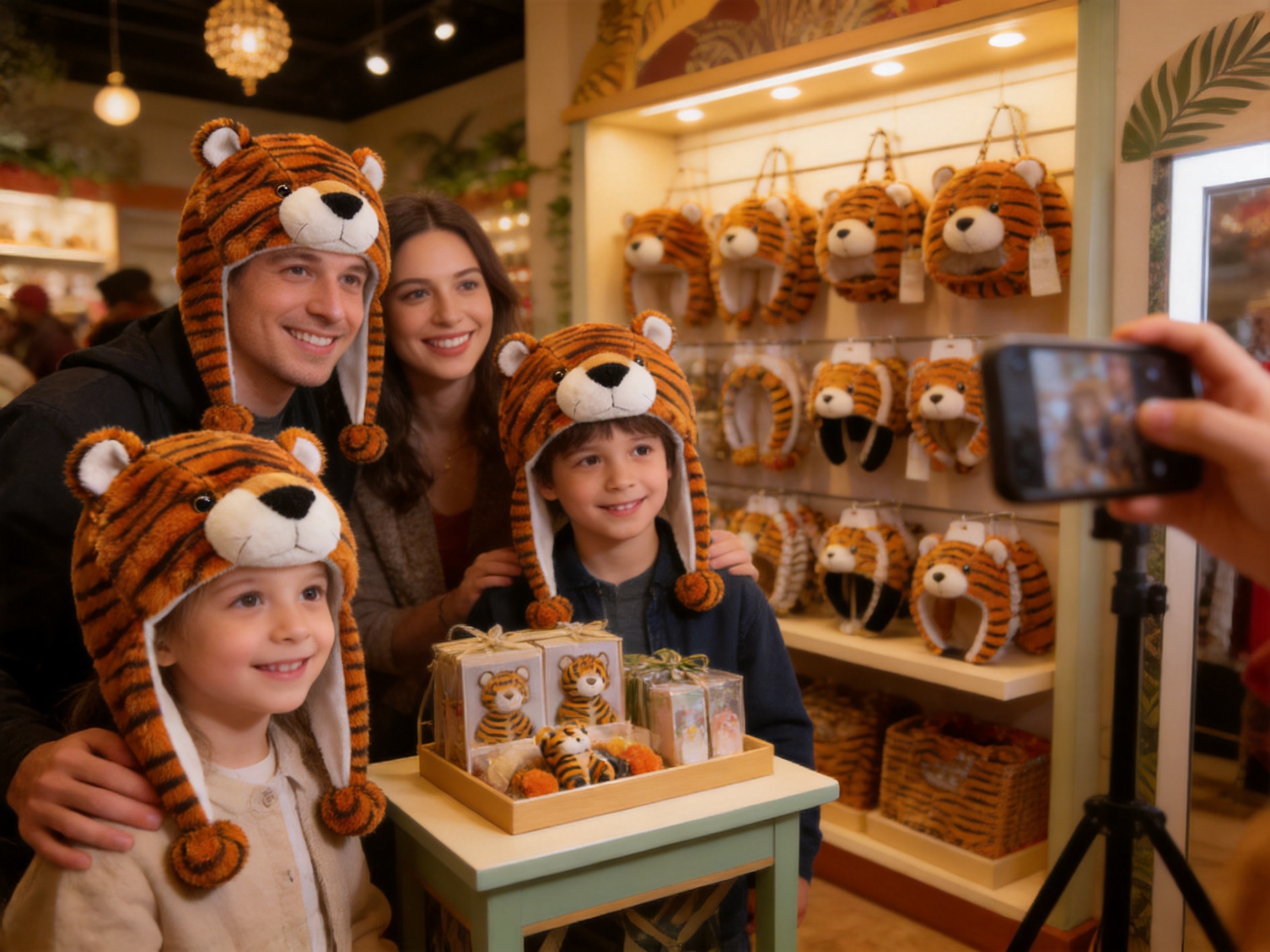
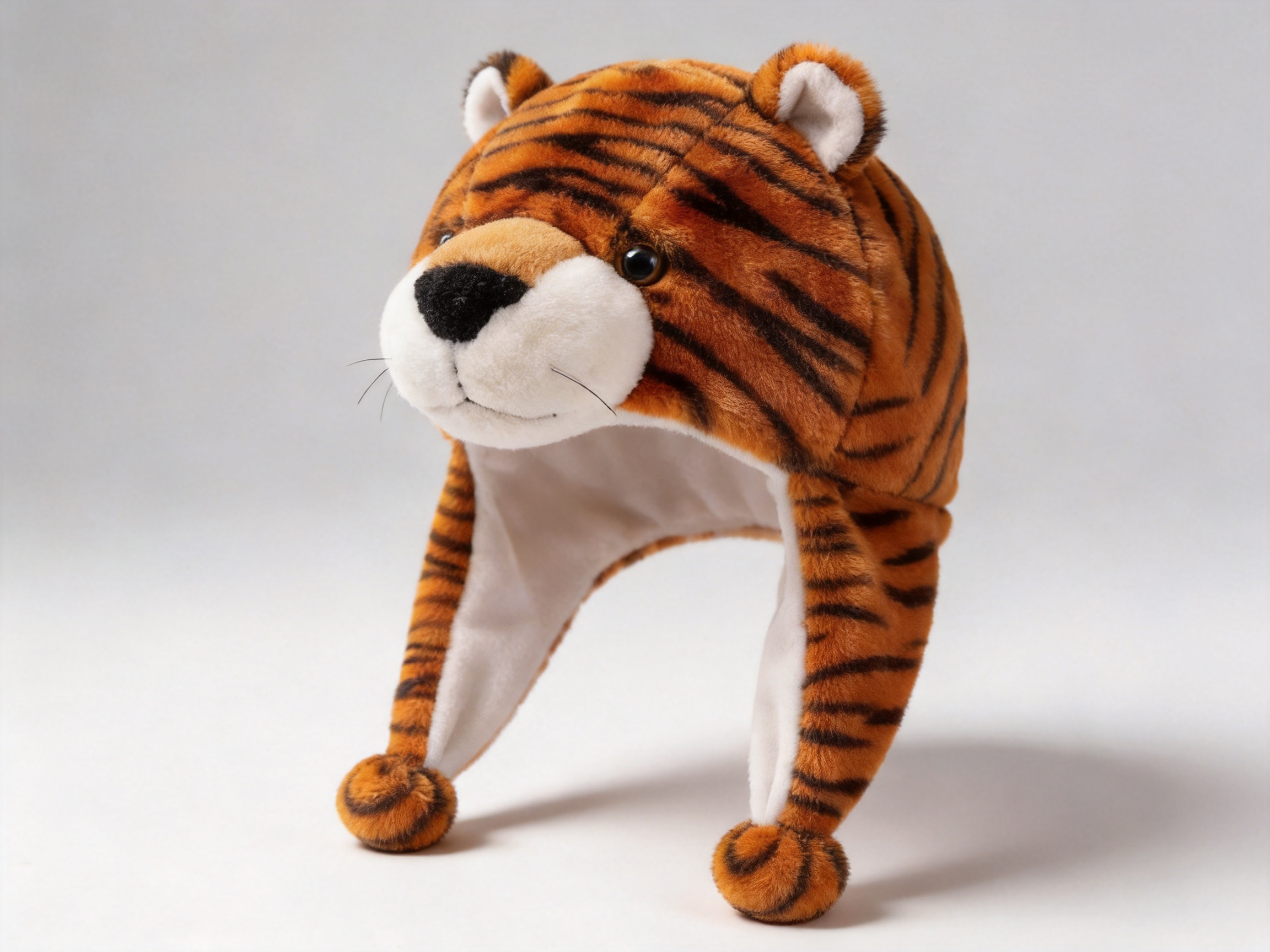
The Tiger-Stripe Bear Plush Hat is a distinctive plush accessory that combines the recognizable visual energy of a wild tiger with the friendly appeal of a soft bear-inspired character. Designed for children, families, costume users, promotional campaigns, seasonal events, and specialty gift collections, this plush hat offers more than simple headwear. It functions as a wearable character, a photo-friendly prop, a collectible plush item, and a memorable promotional product.
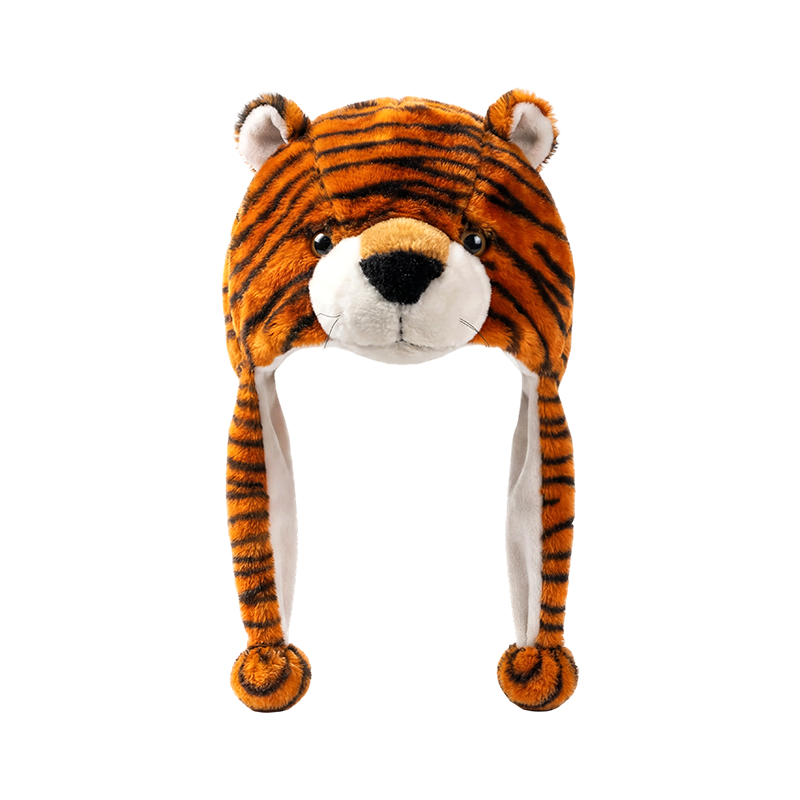
Its orange-and-black tiger-stripe appearance immediately attracts attention, while the rounded ears, white facial area, bright black eyes, small nose, and expressive mouth give the design a warm and approachable personality. The result is a product that balances boldness and softness. It looks energetic enough for themed events and visual merchandising, yet remains cute and comfortable enough for family-oriented retail environments.
The product is manufactured by Tianchang Bestjoy Craft & Gift Co., Ltd., an integrated plush product manufacturer specializing in research and development, design, production, and sales. With an established factory, an experienced design team, professional production equipment, OEM and ODM capabilities, and export experience across multiple international markets, the company is positioned to support both standard product purchasing and customized plush hat programs.
1. Product Overview and Design Positioning
The Tiger-Stripe Bear Plush Hat belongs to the plush hats category, but its commercial potential extends into several product categories. It can be marketed as a character accessory, a novelty hat, a costume item, a seasonal gift, a promotional giveaway, a party accessory, or part of a broader animal-themed plush collection.
The design is centered on a tiger-inspired head shape. The classic orange-and-black stripes establish the animal identity immediately, while the rounded ears and soft construction preserve the appealing characteristics associated with a bear-style plush character. This combination creates a hybrid visual concept that can stand apart from conventional animal hats. Instead of presenting a flat printed image or a basic animal-ear accessory, the product uses a three-dimensional plush form to create a stronger character presence.
At approximately 30 centimeters in size, the hat has enough visual volume to be noticed on a shelf, in a display basket, at an event booth, or in a product photograph. The stated size can also be customized, allowing buyers to explore different proportions for children, adults, mascots, promotional campaigns, or themed collections.
The listed weight is approximately 150 grams. This lightweight construction supports practical handling and helps make the item suitable for short-term wear, photo opportunities, retail demonstrations, and event use. Because the product is made from soft plush fabric and filled with PP cotton, it has a tactile quality that encourages customers to touch, try on, and interact with it.
The product is listed in brown, while the visual description emphasizes orange-and-black tiger stripes with white and black facial details. This combination can be adapted during sampling and customization according to the buyer’s preferred color system, character concept, or packaging requirements. The ability to refine colors and details is especially useful for promotional projects that require alignment with a campaign theme or retail assortment.
2. Key Product Features
2.1 Tiger-Inspired Visual Identity
The most important feature of the Tiger-Stripe Bear Plush Hat is its strong visual identity. Tiger stripes are among the most recognizable patterns in animal-themed merchandise. Their contrast creates instant shelf impact and remains easy to identify in online product images, event photography, and social media content.
The orange-and-black pattern gives the product a lively and adventurous appearance. It can appeal to children who enjoy animal characters, families looking for fun accessories, and retailers seeking products with a clear theme. At the same time, the soft facial expression and rounded ears prevent the design from appearing intimidating. The character feels playful rather than aggressive.
Compared with plain plush hats, the tiger-stripe design offers stronger storytelling potential. A plain hat may be used as a simple winter or novelty accessory, but this product presents a complete character concept. Buyers can build themed displays around jungle animals, wildlife education, safari parties, school events, amusement attractions, or seasonal entertainment programs.
2.2 Three-Dimensional Character Construction
The hat is carefully shaped to resemble an animal’s head rather than relying only on surface printing. The upright round ears, shaped facial area, and dimensional profile help create a more recognizable silhouette. This three-dimensional construction is valuable because a strong silhouette remains visible from a distance and in photographs.
Dimensional features also improve the product’s tactile appeal. Customers can see and feel the softness of the fabric, the fullness of the PP cotton filling, and the structure of the character’s face. This sensory experience can support impulse purchases in gift shops, children’s stores, theme parks, party-supply stores, and event venues.
The three-dimensional form also gives buyers more opportunities for customization. A manufacturer can adjust the ear shape, stripe placement, facial proportions, muzzle size, nose form, or character expression during the prototype stage. These adjustments make it possible to transform the basic concept into a private-label design or a campaign-specific mascot.
2.3 Squeaky Interactive Function
The Tiger-Stripe Bear Plush Hat is described as a squeaky hat. The sound element adds an interactive function that differentiates it from standard plush headwear. When activated, a squeak can attract attention, encourage play, and make the product more memorable during demonstrations or retail handling.
An interactive feature is particularly useful in children’s product displays and promotional environments. A customer may notice the visual design first, then become more engaged after discovering the sound. This sequence can increase the time spent interacting with the product and help the item stand out among silent accessories.
For commercial programs, the squeaky function can also support themed activities. It may be used during animal-themed parties, family entertainment events, mascot promotions, educational displays, photo booths, and seasonal campaigns. Buyers should confirm the final sound component, placement, operating method, and applicable safety requirements during the sampling stage.
2.4 Soft Plush Fabric and PP Cotton Filling
The shell fabric is soft plush fabric, and the filling material is PP cotton. This material combination is widely used in plush products because it offers a soft hand feel, a visually full appearance, and flexible shaping possibilities.
Soft plush fabric helps create the warm, comforting quality expected from a character-based product. It also enhances the color depth of the tiger stripes and facial details. A well-finished plush surface can make the product appear more premium than a thin synthetic accessory or a printed fabric hat.
PP cotton filling supports the three-dimensional structure of the ears and face. It can help the hat maintain its character shape during packing, shipping, display, and normal handling. The filling also contributes to the lightweight nature of the product. The final density and firmness can be adjusted during development depending on whether the buyer prefers a softer, more flexible hat or a fuller, more structured character form.
2.5 Broad Usage Scenarios
The product can serve multiple commercial purposes. Its primary uses may include children’s play, costume wear, party accessories, promotional gifts, seasonal retail, character merchandise, and home entertainment. Its flexible positioning makes it suitable for both direct-to-consumer sales and business-to-business purchasing.
Retailers can present the hat beside animal plush toys, children’s costumes, holiday accessories, or novelty gifts. Promotional agencies can use it as an event giveaway or as part of a branded activation. Theme parks and family entertainment venues can offer it as an in-venue souvenir. Schools and community organizations can use animal hats during performances, fundraisers, or educational programs.
The product may also be included in gift sets. For example, buyers can combine it with a small tiger plush, animal-themed stationery, a children’s activity book, or a seasonal gift bag. Because the product is both wearable and collectible, it can support merchandise programs that encourage customers to purchase several animal characters.
Tiger-stripe bear plush hat
3. Advantages Over Conventional Plush Hats and Competing Product Types
Competition in the plush accessory market includes simple animal-ear hats, printed character caps, low-profile novelty headwear, costume hoods, and mass-produced plush accessories with limited customization. The Tiger-Stripe Bear Plush Hat offers several design and manufacturing advantages when compared with these product types.
3.1 Stronger Shelf and Display Recognition
Many basic plush hats depend on a small number of visual details, such as ears, eyes, or a single printed pattern. The Tiger-Stripe Bear Plush Hat uses multiple coordinated elements: tiger stripes, a shaped head, upright ears, a contrasting white face, black eyes, a nose, and a mouth. Together, these features create a complete character image.
This layered design can improve recognition in crowded retail environments. Customers can identify the animal concept quickly, even when the product is displayed among other hats or plush accessories. The strong color contrast also supports online merchandising because the design remains clear in thumbnail images and promotional banners.
3.2 More Emotional Appeal Than Flat Accessories
A flat accessory may communicate a theme, but it does not always create a strong emotional response. The Tiger-Stripe Bear Plush Hat is designed with a face, expression, and soft character form. These details encourage customers to see the item as a personality rather than merely as a piece of headwear.
Character-based products can be easier to merchandise because they invite storytelling. A retailer can present the tiger-stripe character as brave, playful, curious, or friendly. This emotional framing can help parents, gift buyers, and children connect with the product more quickly.
3.3 Interactive Sound Adds Memorability
The squeaky function is another point of differentiation. Standard plush hats are generally passive products. The user wears them, touches them, or photographs them, but the product itself does not offer an additional sensory response. A squeaky feature introduces sound, which may make demonstrations more engaging.
For promotional events, an interactive product may generate more attention than a silent giveaway. Participants can discover the feature through handling, and the product may become part of a playful photo or video. This can help extend the product’s visibility beyond the moment of distribution, although the final sound mechanism should be reviewed carefully for the intended market.
3.4 Customization Potential
The product is available for OEM and ODM development. This means buyers can explore modifications to the basic design rather than purchasing only a fixed, off-the-shelf item. Customization may include size, colors, facial expression, stripe layout, fabric selection, packaging, labels, and other approved details.
Customization is a significant advantage for organizations that need a distinctive product identity. A retailer may want an exclusive colorway. An event organizer may request a mascot variation. A promotional agency may need a character that reflects a campaign concept. A gift company may want the item to match an existing animal collection.
The stated sample fee is 100 dollars per design, with a sample lead time of approximately three to seven working days. These terms provide a defined starting point for buyers who need to evaluate the appearance and construction before placing a production order. Final sample arrangements should be confirmed with the manufacturer based on artwork complexity, materials, and revision requirements.
3.5 Suitable for Multiple Market Segments
A product with only one obvious use may face seasonal or channel limitations. The Tiger-Stripe Bear Plush Hat can be introduced through several channels, including toy retailers, gift shops, costume stores, children’s boutiques, amusement venues, promotional distributors, online marketplaces, and seasonal pop-up stores.
This multi-channel potential can help buyers create a more flexible sales strategy. The product can be positioned as a toy in one market, a costume accessory in another, and a promotional gift in a third. The underlying product remains the same, while the packaging, messaging, and merchandising context change.
3.6 Compact Shipping and Display Format
According to the supplied packaging information, twelve pieces are packed per carton. The listed carton size is 43L × 25W × 18H, with a gross weight of 3 kilograms and a net weight of 2 kilograms. This packing format provides buyers with useful information for logistics planning, warehouse allocation, and initial freight estimation.
The product’s relatively light weight can support practical handling throughout the supply chain. Retailers can place multiple units in a small display area, and event organizers can transport quantities to venues without the logistical burden associated with larger plush toys or rigid costume products.
4. Product Specifications at a Glance
| Specification | Provided Information | Commercial Relevance |
|---|---|---|
| Product name | Tiger-Stripe Bear Plush Hat | Defines the animal-inspired wearable character concept |
| Product category | Plush Hats | Suitable for accessories, toys, costumes, gifts, and promotions |
| Approximate size | 30 cm or customized | Supports standard production and custom proportions |
| Approximate product weight | 150 g | Lightweight for handling, display, and event use |
| Listed color | Brown | Can be reviewed with the tiger-stripe visual design during sampling |
| Shell fabric | Soft plush fabric | Provides a soft tactile surface and character-like appearance |
| Filling material | PP cotton | Supports soft, lightweight, three-dimensional construction |
| Interactive function | Squeaky feature | Adds sensory engagement and promotional appeal |
| OEM/ODM | Available | Allows design, color, size, and packaging development |
| Minimum order quantity | 500 pieces | Suitable for retailers, distributors, and organized campaigns |
| Sample fee | 100 dollars per design | Supports prototype evaluation before bulk production |
| Sample lead time | 3–7 working days | Provides a defined preliminary development schedule |
| Delivery time | Approximately 45 days | Useful for inventory and campaign planning |
| Carton packing | 12 pieces per carton | Supports quantity planning and warehouse organization |
5. Manufacturing Strengths Behind the Product
The product’s appearance is important, but reliable manufacturing capability is equally important for buyers placing commercial orders. A plush hat must maintain consistent shape, color placement, stitching quality, filling density, and accessory installation across the production run. The manufacturer’s integrated structure is designed to support these requirements from early concept development through final delivery.
5.1 Integrated Research and Development
Tianchang Bestjoy Craft & Gift Co., Ltd. specializes in research and development, design, production, and sales. An integrated structure can reduce the communication gap that sometimes occurs when design, sampling, production, and sales are handled by unrelated organizations.
For a product such as the Tiger-Stripe Bear Plush Hat, design coordination is especially important. The stripe placement must follow the intended character appearance, the face must remain balanced, and the ears must be positioned correctly to preserve the recognizable silhouette. An integrated development process allows these elements to be reviewed together instead of treated as separate tasks.
The company’s design team can support the transition from a basic concept to a production-ready pattern. This may include preparing construction details, selecting suitable fabric, evaluating proportions, refining facial features, and coordinating the placement of interactive components. Buyers can therefore approach the product as a developed platform for customization rather than as an unchangeable sample.
5.2 Professional Production Equipment
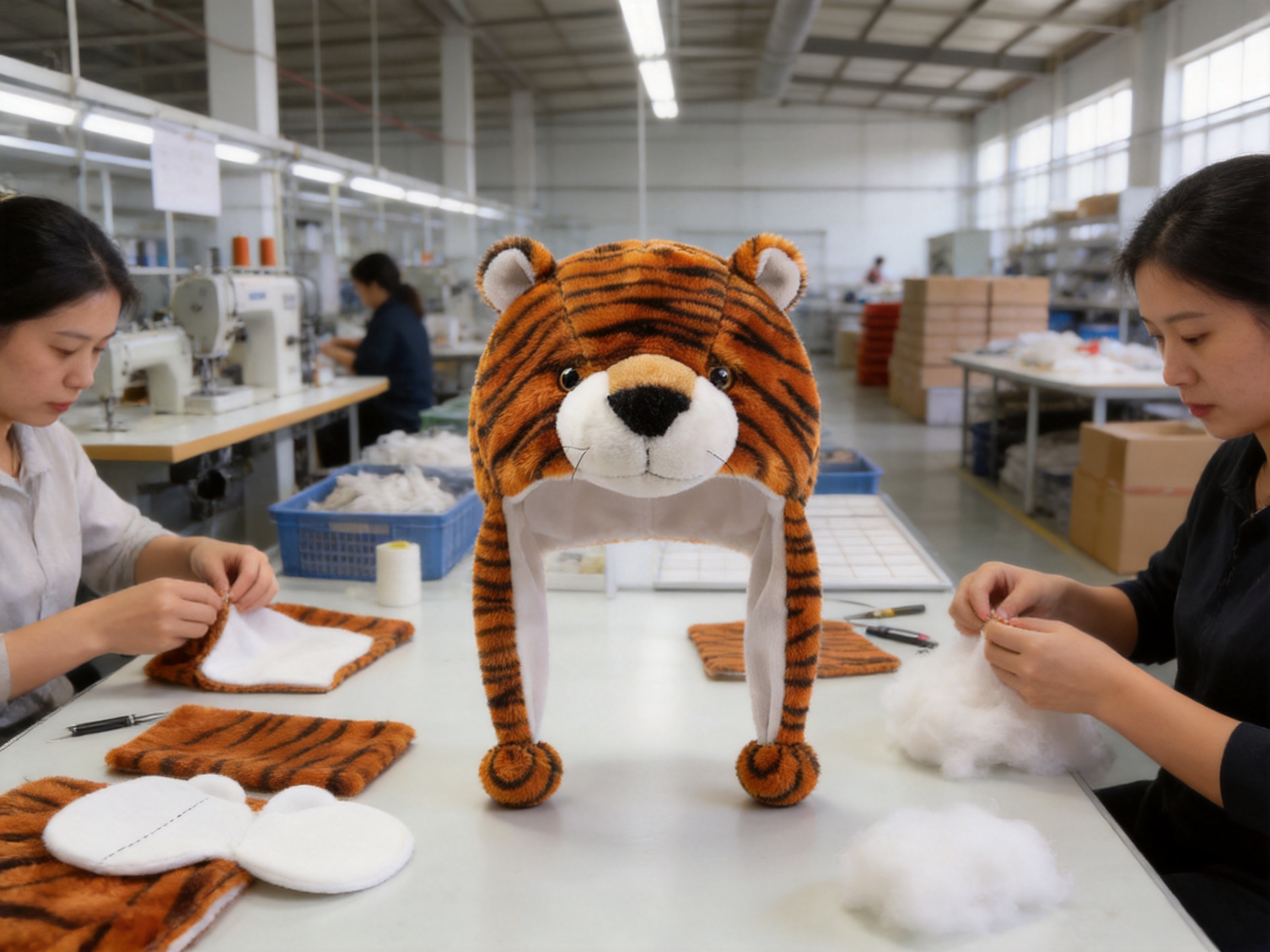
The company operates with professional production equipment intended for plush manufacturing. Although equipment details may vary by production line and order requirement, an established plush factory generally relies on coordinated processes for cutting, sewing, stuffing, shaping, finishing, inspection, and packing.
For the Tiger-Stripe Bear Plush Hat, accurate cutting is important because the tiger stripes and facial panels need to align with the approved design. Sewing precision is important because the hat must retain its form while being handled or worn. Stuffing control is important because uneven filling can affect the ears, face, and overall visual balance.
Professional equipment and organized production procedures can support repeatability. Repeatability matters for buyers ordering hundreds or thousands of pieces, because every unit should present a consistent character appearance. A product that looks attractive in a sample but varies significantly in bulk production can create retail complaints and increase sorting costs. Manufacturing discipline helps reduce that risk.
5.3 Factory Scale and Production Organization
The factory covers more than 10,000 square meters. This scale indicates an established manufacturing base with room for production, material handling, sampling, inspection, and packing activities. A larger organized facility can be advantageous when supporting multiple product categories and different customer programs at the same time.
The company reports annual sales exceeding 12 million RMB. This business volume reflects ongoing commercial activity and experience serving customers with recurring product requirements. For buyers, supplier continuity is important because a long-term plush program may involve repeat orders, seasonal launches, design updates, and multiple product variations.
A structured factory environment can also help coordinate order schedules. The listed delivery time for the product is approximately 45 days. Actual timing depends on order quantity, artwork approval, material availability, packaging requirements, production scheduling, and shipping arrangements, but the stated lead time gives buyers an initial planning reference.
5.4 Experience in International Markets
The company’s products are exported to Europe, America, Australia, Japan, and South Korea. Experience with international customers can support a better understanding of overseas purchasing procedures, packaging expectations, communication practices, and shipment coordination.
International market experience is particularly relevant for plush products because buyers may require specific labeling, packaging, documentation, product testing, or material declarations. Requirements differ according to destination market and intended age group. Buyers should communicate these requirements before sample approval so the manufacturer can evaluate the appropriate production and documentation process.
The company has served major clients including Walmart, Target, Albertsons, and Kmart. This reported customer experience demonstrates exposure to large-scale retail expectations. It should not be interpreted as a guarantee that every product automatically meets a particular retailer’s current standards, but it indicates familiarity with the level of organization required for substantial commercial supply programs.
5.5 Cross-Category Plush Expertise
The company’s product range includes trendy plush toys, children’s plush toys, pet plush toys, plush promotional gifts, plush home furnishings, plush stationery gifts, plush handicrafts, and plush cartoon decorations. This broad category experience can benefit the Tiger-Stripe Bear Plush Hat because many of its design requirements overlap with other plush products.
For example, character development experience can help refine the face and expression. Promotional product experience can support customization and campaign packaging. Children’s plush production experience can inform soft construction and finishing. Home and lifestyle plush experience can contribute to color coordination and display presentation.
A supplier with experience across categories may also help buyers develop a coordinated collection. The tiger-stripe hat could be produced alongside a matching plush toy, bag charm, cushion, keychain, or decorative item. A coordinated range can create a stronger retail story and improve cross-selling opportunities.
5.6 Sales and After-Sales Support
The company maintains a professional sales team and a comprehensive after-sales service team. For international buyers, support after sampling and shipment is an important part of supplier evaluation. Clear communication can help resolve questions about artwork, production updates, packaging, delivery schedules, and repeat orders.
After-sales support is also useful when buyers plan product revisions. A first order may reveal opportunities to adjust the ear shape, facial proportions, fabric color, packaging format, or sound component. A responsive supplier can help convert those observations into practical updates for the next production cycle.
6. Manufacturing Process for the Tiger-Stripe Bear Plush Hat
Producing a successful plush hat requires more than sewing fabric pieces together. The product combines wearable proportions, character shaping, surface patterning, soft filling, and an interactive feature. Each stage must be coordinated to achieve a consistent finished result.
6.1 Concept Review and Technical Development
The process begins with a review of the product concept. The development team considers the intended size, head shape, ear position, facial expression, stripe arrangement, fabric type, filling level, sound feature, and target market.
At this stage, the buyer can provide artwork, sketches, reference images, brand guidelines, packaging concepts, or dimensional requirements. The manufacturer then evaluates how these elements can be translated into a practical plush construction. A well-developed pattern should balance appearance, comfort, durability, production efficiency, and cost.
6.2 Pattern and Size Confirmation
Pattern development determines the shape of the hat’s main body, ears, facial panels, and other components. The listed standard size is approximately 30 centimeters, but customized dimensions are available. The correct size depends on the intended user and use case.
A children’s version may require different proportions from an adult promotional version. An oversized event model may be designed primarily for visual impact rather than extended wear. The pattern team can adjust the depth, opening, ear height, facial projection, and overall volume during sampling.
6.3 Material Selection and Color Coordination
Soft plush fabric is selected for the shell, with PP cotton used as the filling. Material selection should consider hand feel, surface appearance, color consistency, sewing performance, and the intended use environment.
The tiger-stripe pattern requires careful coordination between base fabric color and stripe color. The white facial area must contrast clearly with the darker stripes, while the black eyes, nose, and mouth should remain visible without making the character appear harsh. Color approvals are normally based on physical samples rather than screen images alone because lighting and display settings can affect perception.
6.4 Cutting and Component Preparation
Once the pattern and materials are approved, fabric components are prepared for cutting. Accurate component sizing is essential for maintaining symmetry between the left and right sides of the character. The ear panels, face sections, and main hat body must be cut consistently so that the finished product does not appear tilted or uneven.
For a striped design, cutting also requires attention to pattern placement. The stripe direction and spacing should remain visually balanced across the face and sides. Depending on the final construction method, stripes may be incorporated through printed fabric, appliqué, embroidery, or sewn fabric panels. The selected method should be confirmed during the prototype process.
6.5 Sewing and Three-Dimensional Assembly
The prepared components are sewn and assembled into the three-dimensional character form. The sequence of assembly affects the final shape, seam appearance, and ease of stuffing. Facial panels must be positioned accurately so that the eyes, nose, and mouth create a balanced expression.
The upright ears are particularly important to the design. They should be securely attached and filled to the approved level so that they stand as intended. The construction should also allow the product to retain its character shape during packing and normal handling.
6.6 Filling and Shaping
PP cotton is inserted after the relevant sections have been sewn. Filling density is controlled to achieve the desired softness and fullness. Too little filling may cause the face or ears to appear flat, while excessive filling may make the hat rigid or uncomfortable.
Shaping is performed as the product is filled. The production team checks the symmetry of the face, the curve of the hat body, the position of the ears, and the overall character silhouette. This stage is essential because small differences in filling distribution can affect the visual quality of the finished product.
6.7 Installation of the Squeaky Component
The squeaky element is integrated into the product during assembly according to the approved design. Its location should provide an appropriate user experience while maintaining the product’s appearance and soft construction.
Because the product includes an interactive component, buyers should define the intended age group and destination market early in the process. The manufacturer and buyer can then review component selection, attachment, accessibility, sound performance, and applicable testing requirements. These details should be verified as part of the final product approval rather than assumed from the basic product description.
6.8 Facial Feature Application
The bright black eyes, small nose, and mouth contribute strongly to the character’s expression. These elements may be applied using suitable plush manufacturing techniques selected according to the buyer’s design, target market, and required durability.
Feature placement should be checked against the approved sample. The eyes should be aligned, the nose should be centered, and the mouth should communicate the intended personality. A friendly expression can make the tiger concept more accessible to younger consumers and help distinguish the product from more realistic or intimidating animal designs.
6.9 Final Inspection and Packing
Before packing, finished units should be inspected for fabric defects, loose threads, seam quality, filling consistency, facial alignment, color accuracy, ear attachment, and sound function. Packaging checks should confirm quantity, carton markings, labels, and any buyer-specific instructions.
The supplied carton information indicates twelve pieces per carton, with a carton size of 43L × 25W × 18H, a gross weight of 3 kilograms, and a net weight of 2 kilograms. Buyers should confirm whether these figures apply to the final customized version, since changes in size, packaging, accessories, or filling density may affect the shipping data.
7. OEM and ODM Customization Opportunities
The Tiger-Stripe Bear Plush Hat can be used as a starting platform for a customized product program. OEM and ODM services allow buyers to develop a version that fits a specific brand identity, campaign, customer demographic, or retail collection.
7.1 Size Customization
The standard listed size is approximately 30 centimeters, but the product can be customized. Size changes may be suitable for children’s collections, adult novelty accessories, oversized event props, or compact promotional items.
When changing the size, buyers should consider the relationship between the head opening and the external character form. A larger design may require additional structural support or revised filling. A smaller design may need simplified facial details to preserve clarity. The manufacturer can evaluate these factors during prototype development.
7.2 Color and Pattern Customization
The tiger-stripe theme can be adapted through color variation. Buyers may request a warmer orange, a darker brown, a softer cream base, or an alternative stripe combination. The white facial area can also be adjusted to create different character personalities.
Pattern customization may include changing stripe width, direction, spacing, or density. A highly stylized pattern can support a fashionable trend collection, while a more natural pattern may suit a wildlife-themed product line. Buyers should provide clear artwork or visual references to reduce interpretation differences during sampling.
7.3 Facial Expression and Character Development
The face can be modified to create a specific personality. A smiling mouth may increase the product’s friendly appeal, while a curious or surprised expression may support a more playful campaign. Eye size, eye position, nose shape, and mouth curvature all influence how customers perceive the character.
Character development can also support a series strategy. For example, a tiger-stripe character could be joined by other animal hats with consistent eye styles, facial proportions, and packaging. A coherent series may encourage collecting and create stronger visual organization in retail displays.
7.4 Packaging and Private-Label Presentation
Packaging is an important part of commercial presentation. Buyers can discuss custom labels, hangtags, polybags, cartons, inserts, story cards, and retail-ready packaging according to their sales channel.
A story card could introduce the character and explain its playful personality. A promotional package could include campaign messaging and event information. A retail package could highlight the soft plush fabric, wearable format, and squeaky function. Packaging should be designed in coordination with the product’s final size and shipping requirements.
7.5 Coordinated Plush Collections
The manufacturer’s broad plush category experience makes it possible to consider matching products. A buyer could develop a tiger plush toy, cushion, bag, stationery gift, decoration, or promotional accessory using the same character identity.
Coordinated products can help retailers create a complete display rather than selling a single isolated item. They can also support tiered pricing, with smaller accessories for impulse purchases and larger plush products for higher-value gifts.
8. Commercial Applications and Marketing Ideas
8.1 Retail Gift Shops
Gift shops can position the Tiger-Stripe Bear Plush Hat as an unusual souvenir or character accessory. The product’s visual volume makes it suitable for display near checkout counters, children’s sections, animal-themed merchandise, or seasonal gift areas.
A mirror or small fitting area can encourage customers to try on the hat. This is especially useful because the product’s appeal is partly visual and social. Customers may be more likely to purchase after seeing the character effect in photographs or sharing the experience with family and friends.
8.2 Theme Parks and Family Entertainment Venues
Animal-themed venues, family entertainment centers, and amusement attractions can use the hat as a souvenir or event accessory. The tiger design can connect with jungle, safari, wildlife, or adventure themes.
The squeaky function may increase its appeal during live demonstrations or character interactions. The product can also be incorporated into photo packages, children’s activity programs, or seasonal entertainment events. Venue-specific packaging can turn the hat into a memorable reminder of the visit.
8.3 Promotional Campaigns
Promotional distributors and marketing agencies can use the product as a high-visibility campaign item. Unlike a small flat giveaway, a plush hat is wearable and photographable. It can create a recognizable visual presence at festivals, family days, product launches, school activities, and community events.
Customization can align the tiger character with a campaign message, mascot, or seasonal theme. The product may be distributed as a prize, included in a gift package, or used by event staff and performers to create a unified atmosphere.
8.4 Seasonal Sales
The hat can support seasonal merchandising for holidays, school celebrations, animal-themed parties, costume events, and winter gift programs. Its plush construction gives it a cozy appearance, while its tiger design adds a playful novelty element.
Seasonal buyers should plan production and shipping in advance. The stated delivery time is approximately 45 days, and additional time may be needed for artwork approval, sampling, revisions, packaging production, inspection, and transportation. Early planning is particularly important when a product is intended for a fixed event date.
8.5 Online Retail and Social Content
The product’s expressive face and bold stripes are suitable for online presentation. High-quality product photographs can show the hat from front, side, and three-quarter views, while lifestyle images can demonstrate how it looks when worn.
Short videos may also highlight the squeaky feature and the softness of the plush fabric. Buyers should present accurate information about size, weight, materials, intended use, and care instructions. Clear content helps customers understand that the item is both a wearable accessory and a plush character product.
9. Quality, Safety, and Order Planning Considerations
Commercial buyers should establish quality expectations before production begins. The approved sample should serve as the reference for color, shape, facial details, filling density, sound function, packaging, and workmanship.
For products intended for children, buyers must identify the destination market, age grading, labeling requirements, and applicable product safety standards. The presence of a squeaky component makes it important to review component security, accessibility, sound performance, and mechanical construction. Testing and documentation requirements should be confirmed according to the intended market and sales channel.
Buyers should also clarify whether the product will be worn for extended periods or used mainly as a costume prop. This distinction can affect the desired head opening, internal comfort, fabric choice, ventilation, weight distribution, and finishing requirements.
Before placing a bulk order, buyers should review the sample carefully. Recommended review points include the following:
• Confirm the overall dimensions and head opening.
• Check whether the ears remain upright and symmetrical.
• Review tiger-stripe placement and color consistency.
• Inspect the white facial area and black facial details.
• Evaluate the softness and density of the plush fabric.
• Check whether the PP cotton filling creates an even form.
• Test the squeaky feature according to the intended use.
• Review stitching, seams, edges, and attached components.
• Confirm labels, packaging, carton quantity, and shipping marks.
• Verify that the final product meets destination-market requirements.
The minimum order quantity is listed as 500 pieces. This quantity can be suitable for retailers, distributors, promotional agencies, and event organizers that need a coordinated stock level. Buyers should calculate the required quantity by considering sales forecasts, campaign attendance, replacement units, sample distribution, and possible repeat orders.
10. Why an Established Plush Manufacturer Matters
Choosing a plush supplier involves more than comparing the unit price of a single sample. The supplier’s development experience, production organization, communication ability, quality procedures, and after-sales support can influence the success of the entire product program.
An established manufacturer can help identify practical solutions when a design is difficult to produce. For example, a stripe layout may need adjustment to reduce fabric waste, an ear shape may need reinforcement to remain upright, or a sound component may require repositioning to maintain comfort. These decisions are easier to manage when the supplier has experience with plush construction and a working design team.
Tianchang Bestjoy Craft & Gift Co., Ltd. was established in 2013 as a joint venture between Hong Kong Jintong International Co., Ltd. and Tianyuan Enterprise Investment Management Co., Ltd. Its history provides a foundation for ongoing manufacturing and export operations.
The company’s factory is located in Jinji Town, Tianchang City, Anhui Province, China, and covers more than 10,000 square meters. Its reported annual sales exceed 12 million RMB. The company serves international markets and offers product categories ranging from trendy toys and children’s plush products to promotional gifts, home furnishings, stationery gifts, handicrafts, and cartoon decorations.
This combination of factory scale, category breadth, design capability, international experience, and OEM/ODM availability makes the manufacturer suitable for buyers who want to develop a plush hat as part of a larger product strategy.
11. Recommended Buyer Workflow
Step 1: Define the Commercial Objective
Before requesting a sample, buyers should identify whether the hat is intended for retail sale, promotional distribution, seasonal use, event participation, or a coordinated character collection. The objective will influence size, packaging, materials, quantity, and customization.
Step 2: Submit Artwork and Requirements
Buyers should provide available artwork, preferred colors, target size, packaging expectations, intended age group, delivery destination, and any testing or labeling requirements. Clear information helps the manufacturer determine the most practical development route.
Step 3: Review the Sample
The listed sample fee is 100 dollars per design, and the sample lead time is approximately three to seven working days. Buyers should use the sample stage to review both appearance and function. If revisions are needed, they should be recorded in a clear approval document.
Step 4: Confirm Bulk Production Details
Once the sample is approved, buyers should confirm quantity, unit specifications, packaging, carton details, inspection expectations, payment terms, and delivery schedule. The minimum order quantity is listed as 500 pieces, and the delivery time is approximately 45 days.
Step 5: Coordinate Production and Inspection
During production, communication should focus on approved specifications and any agreed inspection process. Buyers may request production updates or pre-shipment checks depending on the order size and program requirements.
Step 6: Plan Retail or Event Presentation
The product should be supported with suitable merchandising. Display hooks, baskets, mannequin heads, fitting mirrors, signage, or themed backdrops can help communicate its character value. For online sales, photographs and short videos should show the product clearly from several angles.
12. Q&A
Q1: What is the Tiger-Stripe Bear Plush Hat?
It is a soft, three-dimensional plush hat designed with a tiger-inspired face and stripes. It features rounded upright ears, a white facial area, black eyes, a small nose, a mouth, and a squeaky interactive function.
Q2: Is it a tiger hat or a bear hat?
The product combines a bear-like plush hat form with a tiger-inspired visual design. Its tiger stripes and facial styling create the main animal identity, while the rounded ears and soft character construction contribute to its friendly bear-like appeal.
Q3: What materials are used?
The shell fabric is soft plush fabric, and the filling material is PP cotton. The final sound component and other construction details should be confirmed during the sampling and specification approval process.
Q4: What is the standard size?
The listed size is approximately 30 centimeters. Customized sizing is available, subject to design review and production confirmation.
Q5: How much does one hat weigh?
The listed product weight is approximately 150 grams. Weight may change if the size, fabric, filling density, sound component, or packaging is customized.
Q6: Is the color customizable?
OEM and ODM services are available, so buyers can discuss color changes and pattern adjustments. The listed product information identifies the color as brown, while the design description emphasizes orange-and-black tiger stripes and a white facial area. Final colors should be approved using physical samples or agreed color references.
Q7: Can the design be customized for a private label?
Yes. Buyers can discuss private-label development, including size, colors, facial details, packaging, labels, and coordinated character elements. The exact customization scope depends on the artwork and production requirements.
Q8: What is the minimum order quantity?
The listed minimum order quantity is 500 pieces. Buyers should confirm whether the MOQ changes for customized materials, packaging, colors, or multiple designs.
Q9: How long does sampling take?
The listed sample lead time is three to seven working days. This schedule may depend on artwork completeness, material availability, prototype complexity, and the number of requested revisions.
Q10: What is the sample fee?
The stated sample fee is 100 dollars per design. Buyers should confirm payment details and whether any sample-related costs are treated separately from bulk production charges.
Q11: How long does bulk delivery take?
The listed delivery time is approximately 45 days. The actual schedule should be confirmed after design approval, order confirmation, material preparation, production planning, inspection, and shipping coordination.
Q12: How many pieces are packed in one carton?
The listed carton packing is twelve pieces per carton. The carton size is 43L × 25W × 18H, with a gross weight of 3 kilograms and a net weight of 2 kilograms. Customized versions should be rechecked because size and packaging changes may affect these figures.
Q13: Where can the product be sold?
Potential channels include toy stores, gift shops, costume retailers, children’s boutiques, theme parks, family entertainment centers, promotional distributors, online shops, seasonal pop-up stores, and event merchandise programs.
Q14: Is the hat suitable for children?
The product has a soft plush construction and a playful character design, but suitability depends on the final specification, intended age group, sound component, labeling, and destination-market safety requirements. Buyers should confirm all applicable requirements before marketing it to children.
Q15: Can matching plush products be developed?
The manufacturer produces a wide range of plush products, including trendy toys, children’s plush toys, promotional gifts, home plush products, stationery gifts, handicrafts, and cartoon decorations. Buyers can discuss coordinated products based on the tiger-stripe character concept.
13. Conclusion
The Tiger-Stripe Bear Plush Hat is a versatile character product that combines visual impact, soft tactile appeal, three-dimensional construction, and interactive sound. Its tiger-inspired stripes create immediate recognition, while the rounded ears and friendly facial details make the design approachable for children, families, gift buyers, and event audiences.
Compared with simple animal-ear hats or flat printed accessories, the product offers a stronger character identity and more opportunities for storytelling, photography, collecting, and promotional use. Its lightweight construction, soft plush fabric, PP cotton filling, customizable size, and OEM/ODM availability make it suitable for a wide range of commercial programs.
The product is supported by an established plush manufacturer with experience in research and development, design, production, sales, and after-sales service. A factory covering more than 10,000 square meters, reported annual sales exceeding 12 million RMB, international export experience, professional production equipment, and broad plush category expertise provide a solid manufacturing foundation.
For buyers seeking a distinctive plush accessory, the product can serve as a ready-made concept or as the starting point for a customized character program. With careful sample review, clear technical communication, appropriate safety evaluation, and coordinated packaging, the Tiger-Stripe Bear Plush Hat can support retail collections, promotional campaigns, seasonal events, entertainment venues, and broader plush merchandise lines.
References
1. Product specification sheet for the Tiger-Stripe Bear Plush Hat, including size, weight, materials, packaging, MOQ, sampling, and delivery information.
2. Manufacturer profile of Tianchang Bestjoy Craft & Gift Co., Ltd., including company history, factory scale, product categories, export markets, and service capabilities.
3. General principles of plush toy product development, including pattern making, fabric selection, filling, sewing, character shaping, inspection, and packaging.
4. General retail merchandising practices for character accessories, seasonal gifts, promotional products, and interactive plush items.
5. General buyer guidelines for customized plush product sampling, production approval, packaging coordination, and destination-market compliance.