en
en  русский
 Español
 عربى
عربى
Content
- 1 1. Product Overview
- 2 2. Character Design and Visual Appeal
- 3 3. Material Selection and Soft-Touch Comfort
- 4 4. Advantages Compared with Ordinary Plush Competitors
- 5 5. Manufacturing Capability and Production Strength
- 6 6. Production Process for the Yellow Octopus Plush Toy
- 7 7. Sampling and Customization Process
- 8 8. Commercial Applications
- 9 9. Packaging, Shipping, and Order Planning
- 10 10. Quality Control Priorities
- 11 11. Why the Product Is Suitable for Global Buyers
- 12 12. Recommended Buyer Workflow
- 13 13. Sustainability and Responsible Product Development
- 14 14. Conclusion
- 15 Questions and Answers
- 15.1 Q1: What type of product is the yellow octopus plush toy?
- 15.2 Q2: What is the standard size?
- 15.3 Q3: What materials are used?
- 15.4 Q4: Is the product suitable for children?
- 15.5 Q5: Can the octopus be customized?
- 15.6 Q6: What is the minimum order quantity?
- 15.7 Q7: How much is the sample fee?
- 15.8 Q8: How long does sampling take?
- 15.9 Q9: How long does mass production take?
- 15.10 Q10: Where can this plush toy be sold?
- 15.11 Q11: What makes this octopus different from ordinary plush toys?
- 15.12 Q12: What manufacturing support is available?
- 15.13 Q13: What should buyers confirm before ordering?
- 16 References
- 17 Product: Yellow octopus plush toys ocean life plush toy
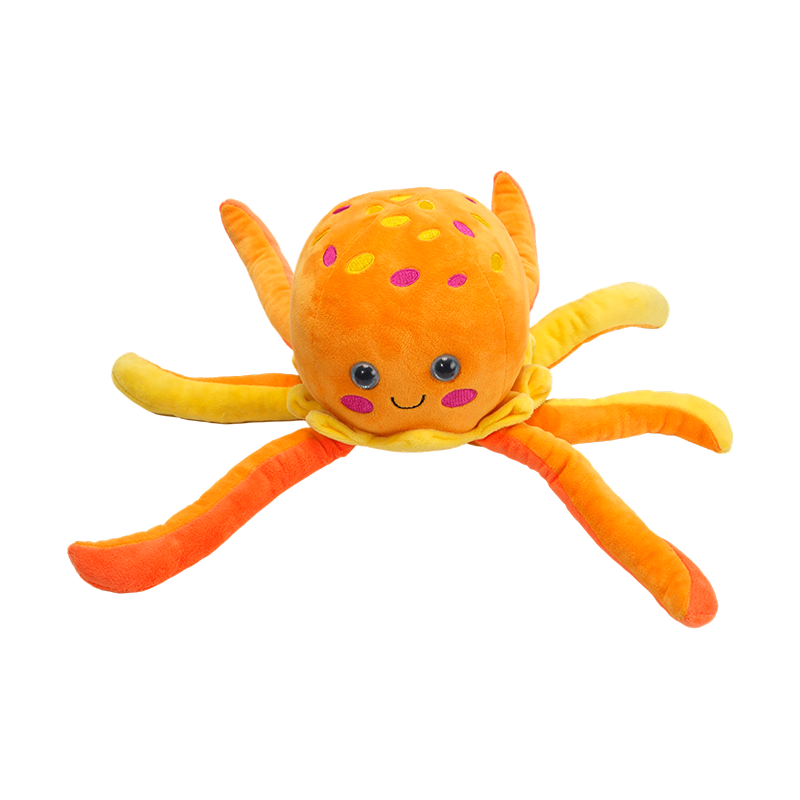
The yellow octopus plush toy is a cheerful ocean life plush product designed to attract attention through color, character, softness, and expressive detailing. With its warm orange-yellow body, colorful spots, rosy face, bright blue eyes, smiling expression, and eight relaxed tentacles, it offers the visual charm that retailers, gift buyers, children, families, and promotional customers look for in a memorable plush toy.
Unlike many ordinary sea-animal plush toys that rely on a simple shape or a single color, this octopus combines a recognizable marine silhouette with a playful character design. Its round body creates an immediately huggable appearance, while its long tentacles add movement, personality, and tactile interest. The result is a product that can function as a children’s toy, a decorative cushion, a themed gift, a promotional item, or part of a broader ocean-inspired collection.
The product is manufactured by Tianchang Bestjoy Craft & Gift Co., Ltd., an integrated plush product manufacturer specializing in research and development, design, production, and sales. With a factory covering more than 10,000 square meters, established export experience, professional production equipment, and an international customer base, the manufacturer is positioned to support both standard product orders and OEM/ODM development programs.
This article examines the design advantages, material selection, production considerations, customization potential, commercial applications, quality expectations, and sourcing value of this yellow octopus plush toy.
Yellow octopus plush toys ocean life plush toy
1. Product Overview
The yellow octopus plush toy belongs to the ocean life plush toys category. It is presented in a sitting style and has a listed size of 60 centimeters, with customized dimensions available for suitable projects. Its listed weight is approximately 200 grams, creating a lightweight form that is easy to display, package, ship, carry, and use as a gift.
| Product Attribute | Specification |
| Product Type | Yellow octopus ocean life plush toy |
| Category | Ocean Life Plush Toys |
| Style | Sitting |
| Standard Size | 60 cm |
| Customization | Customized size and OEM/ODM development available |
| Listed Weight | 200 g |
| Shell Fabric | Super soft plush |
| Filling Material | PP cotton |
| Minimum Order Quantity | 1,000 pieces |
| Sample Fee | US$100 per design |
| Sample Lead Time | Approximately one week |
| Production Lead Time | Approximately five to six weeks |
The proportions are designed to create an appealing balance between a rounded central body and eight extended tentacles. This structure allows the toy to look full and expressive when placed on a bed, sofa, shelf, children’s reading corner, gift display, or retail fixture. It can also be held comfortably because the tentacles provide multiple soft areas for children and adults to touch, hug, or arrange.
The yellow-orange color palette gives the product a bright and energetic identity. Yellow is commonly associated with happiness, warmth, optimism, and friendliness, which makes it suitable for children’s collections and cheerful seasonal campaigns. The colorful spots create visual variation across the surface and help the toy stand out from plain single-color plush products.
2. Character Design and Visual Appeal
A successful plush toy usually needs more than a soft surface. It needs an identifiable character that can create an emotional response at first sight. This octopus achieves that through several coordinated design elements: a rounded body, expressive facial features, colorful surface spots, a warm color scheme, and tentacles that radiate outward in a lively way.
2.1 A recognizable ocean silhouette
The octopus is an instantly recognizable sea creature. Its eight tentacles create a distinctive outline that differentiates it from more conventional teddy bears, rabbits, cats, and dogs. For retailers developing an ocean-themed range, the shape provides a clear connection to marine life without requiring complicated storytelling or additional accessories.
The tentacles also give the product a sense of motion. Although the plush toy has a sitting form, the tentacles appear to stretch in multiple directions, making the character look active and playful. This is an advantage over rigid or highly symmetrical plush designs, which may appear less dynamic on a retail shelf.
2.2 Friendly facial expression
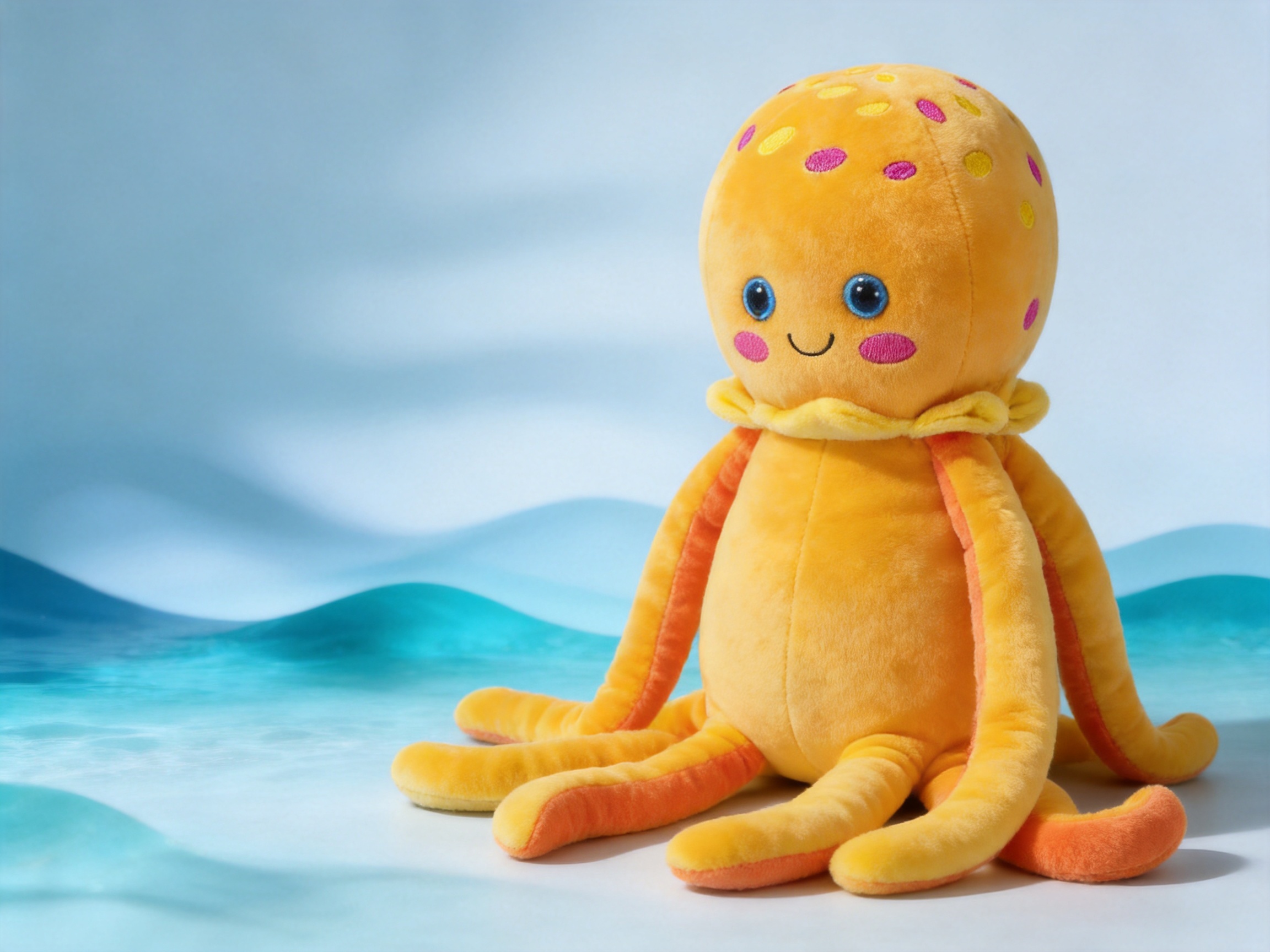
The rosy face, bright blue eyes, and upward-curving smile give the octopus a welcoming expression. Facial features are especially important in children’s plush design because they influence whether a toy appears approachable, cute, funny, or intimidating. The upward smile helps create a positive emotional impression and supports use in gifting, children’s rooms, and family-oriented promotional programs.
The contrast between the blue eyes and the warm yellow-orange body increases visual clarity. Bright eyes can become a focal point when the product is photographed for an online store, catalog, social media campaign, or packaging artwork. The face also provides a natural area for brand storytelling, character naming, and collection development.
2.3 Decorative colorful spots
Colorful spots add visual rhythm to the body and help avoid a flat or overly basic appearance. They can be interpreted as imaginative markings inspired by the underwater world, giving the product a more original identity than a plain yellow octopus.
From a manufacturing and customization perspective, the spot pattern can also become a flexible design feature. Customers may request revised spot colors, different spot sizes, a themed pattern, or a version matched to a company’s visual identity. The same body construction could therefore support several product variations while preserving the recognizable octopus form.
3. Material Selection and Soft-Touch Comfort
The shell fabric is listed as super soft plush, a material choice that supports the main purpose of the product: providing a pleasant tactile experience. Softness affects both the first impression and the likelihood that a customer will continue to use the item after purchase. A plush toy that feels comfortable is more likely to become a favorite companion, bedroom accessory, or repeat gift choice.
The soft outer fabric is particularly suitable for the rounded body and tentacles. These areas benefit from a smooth hand feel because users naturally touch, squeeze, and hug them. The fabric can also enhance the visual richness of the yellow-orange color by providing a gentle, non-reflective surface that appears warm and inviting under store lighting or photography.
PP cotton is used as the filling material. This type of filling is widely used in plush manufacturing because it can create a lightweight, resilient, and soft interior. It is suitable for products that need a comfortable balance between structure and squeezability. When properly distributed, the filling helps the body maintain its shape while keeping the tentacles flexible and soft.
3.1 Balance between structure and softness
The central challenge in producing a multi-tentacled plush toy is achieving enough internal structure for the octopus to hold its recognizable form without making it too firm. If the body is underfilled, it may appear flat or lose its character. If it is overfilled, the toy may feel hard and the tentacles may become stiff.
A controlled filling process helps maintain consistent volume across production units. The body and tentacles can be filled according to their individual shape requirements rather than receiving exactly the same density throughout. This approach supports a rounded body, comfortable tentacles, and a stable sitting presentation.
3.2 Suitability for multiple users
The combination of soft plush fabric and PP cotton makes the product appropriate for a broad customer group. Children may value its friendly face and huggable shape. Teenagers may use it as a decorative room accessory. Adults may select it as an ocean-themed gift, novelty item, or soft home accent. Retailers can therefore position it across several age and lifestyle segments instead of limiting it to one narrow audience.
As with all plush products intended for children, the finished product should be evaluated according to the safety requirements of the destination market. Relevant considerations may include seam strength, attachment security, fabric performance, filling cleanliness, labeling, packaging, and age grading. Specific testing and certification requirements should be confirmed with the manufacturer and importer before mass production.
4. Advantages Compared with Ordinary Plush Competitors
The yellow octopus plush toy has several commercial and design advantages when compared with generic plush products.
4.1 Strong shelf visibility
Its bright yellow-orange body creates a high-visibility presence in stores, gift shops, children’s sections, marine-themed displays, and online product listings. Many plush toys use muted beige, gray, brown, or pastel tones. A vivid yellow octopus can therefore provide a useful color contrast within a broader assortment.
The eight tentacles further increase the product’s visual footprint. Even when placed among other plush toys, the extended shape can catch the eye from different angles. This is valuable for retailers that want products to be recognized quickly in a crowded display.
4.2 More distinctive than conventional animal shapes
Teddy bears and other familiar animals remain popular, but an octopus offers a more distinctive alternative. The marine theme gives buyers a reason to explore a different type of character and allows stores to create specialized collections based on the ocean, sea animals, coral reefs, aquariums, travel, summer, or environmental education.
The product can also serve customers who are specifically searching for sea creature gifts. Because the octopus shape is clear and expressive, the product does not need extensive explanation to communicate its theme.
4.3 Broad merchandising potential
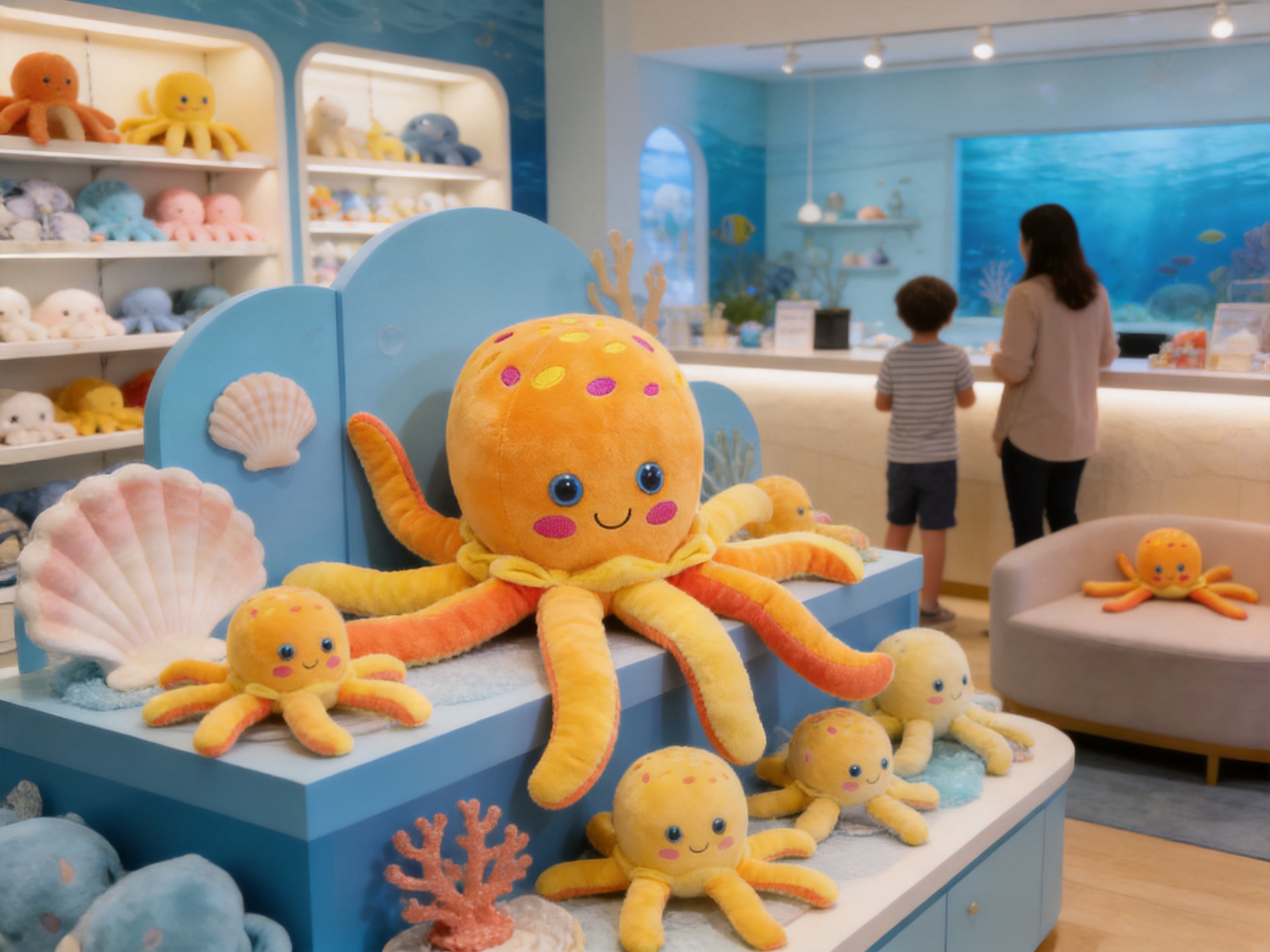
A conventional plush toy may be limited to children’s toy aisles, while an attractive ocean character can be merchandised in several locations. Potential placements include home décor departments, aquarium gift shops, museum stores, travel retail, children’s bookstores, souvenir outlets, seasonal displays, promotional gift programs, and online marketplaces.
The sitting design is especially useful for display because the product can be positioned without complex supports. It can sit on a shelf, table, counter, bed, sofa, or display platform. Retailers can arrange several color variations or sizes together to create a visually appealing group.
4.4 A strong foundation for customization
The product is suitable for OEM/ODM development. Buyers can use the existing design as a starting point and request adjustments to color, size, facial expression, surface pattern, labels, packaging, or other details. This makes it possible to create an exclusive version without developing an entirely new animal concept from the beginning.
Customization can be particularly valuable for promotional campaigns. A company may request a specific spot pattern, a branded accessory, an embroidered message, or packaging connected to an event. A museum, aquarium, resort, or educational organization may also develop a character based on local marine life or a themed campaign.
5. Manufacturing Capability and Production Strength
The product is supported by a manufacturer with an integrated operating model covering research and development, design, production, and sales. This structure is important for buyers because plush development involves cooperation between creative, technical, sampling, production, quality, packaging, and export teams.
When these functions are coordinated within one manufacturing organization, the communication path can be more direct. Design feedback can be transferred to pattern development, sample production, material selection, and mass-production planning without relying entirely on unrelated intermediaries.
5.1 Research and development support
The manufacturer has an innovative research and design team. For customers, this can support the creation of new characters, adjustments to existing products, and development of product families. An R&D team can help translate a two-dimensional idea, sketch, reference image, or brand concept into a three-dimensional soft toy.
Plush development requires attention to shape, proportion, fabric direction, seam placement, filling access, facial positioning, embroidery or appliqué details, and production feasibility. A design that looks simple on paper may require considerable technical refinement before it can be made consistently. Professional development support helps identify these issues during the sample stage.
5.2 Factory scale and equipment
The factory covers more than 10,000 square meters and is equipped with professional production facilities. A facility of this scale can provide space for material storage, cutting, sewing, stuffing, finishing, inspection, packing, and shipment preparation. It also indicates that the manufacturer is organized to handle structured production rather than relying only on small-scale workshop output.
The listed minimum order quantity for this product is 1,000 pieces. This quantity is suitable for distributors, chain retailers, promotional campaigns, online brands, gift companies, and importers planning a meaningful product launch. It also allows buyers to create a coordinated assortment while maintaining a manageable initial order size.
5.3 Export experience
The company’s products are exported to Europe, America, Australia, Japan, and South Korea. Experience across these destinations can be valuable because international buyers often have different packaging, documentation, labeling, communication, delivery, and quality expectations.
The manufacturer has served major clients including Walmart, Target, Albertsons, and Kmart. Such customer experience suggests familiarity with organized retail requirements and the need for consistent product execution, delivery coordination, and commercial documentation. Buyers should still confirm the exact standards and testing requirements for their own markets and sales channels.
5.4 Integrated after-sales service
The company maintains a professional sales team and a comprehensive after-sales service team. Effective after-sales communication can help resolve questions related to samples, revisions, packing, production schedules, shipping arrangements, replenishment, and future customization.
For importers, this support is important because a plush order is not complete when manufacturing finishes. The buyer may need assistance with carton information, shipment preparation, product revisions, replacement discussions, or follow-up orders. A stable communication process can reduce misunderstandings and improve long-term cooperation.
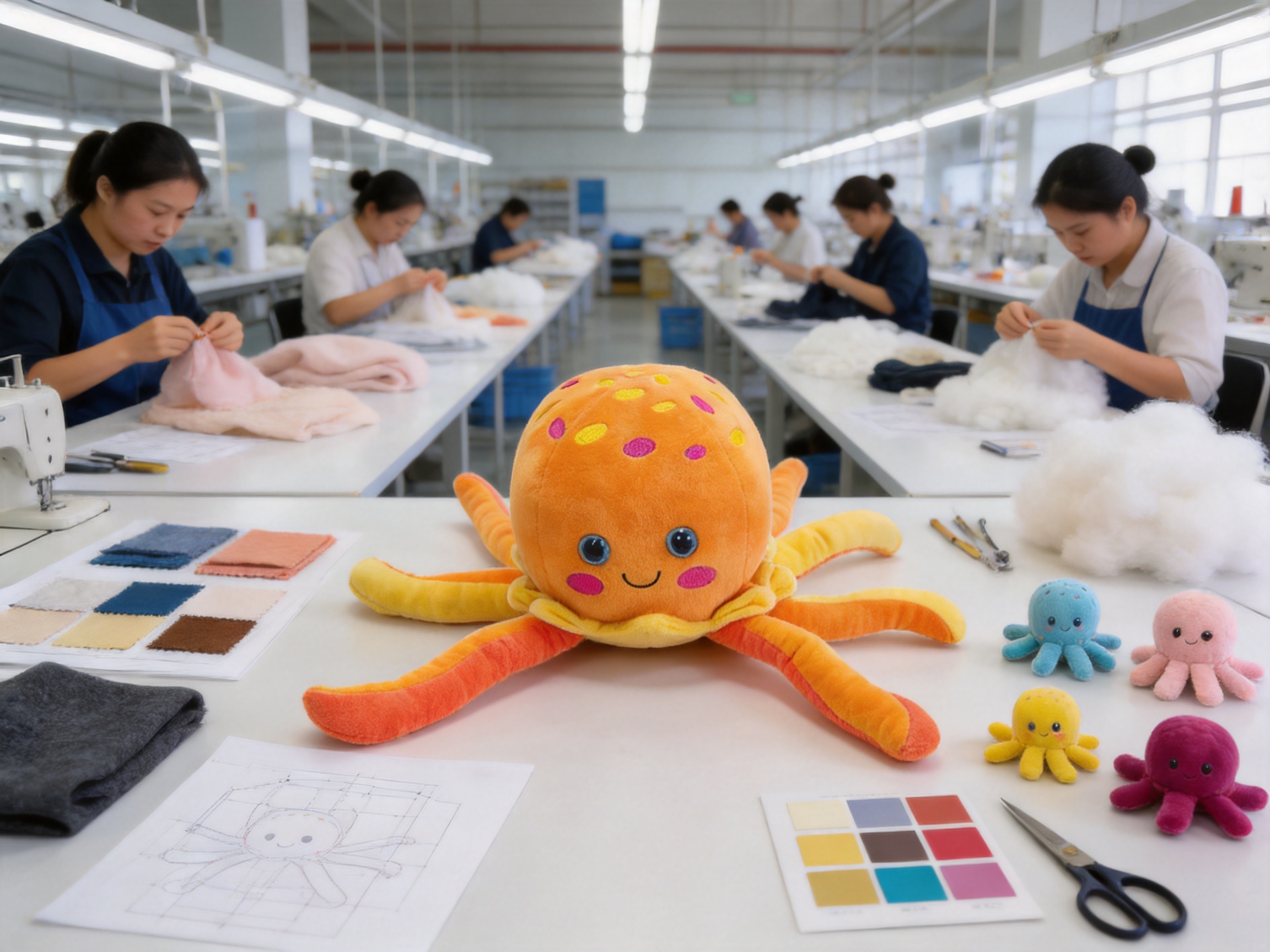
6. Production Process for the Yellow Octopus Plush Toy
Although specific internal procedures may vary by order, a professional plush production workflow generally includes design confirmation, pattern development, fabric preparation, cutting, sewing, stuffing, facial detailing, finishing, inspection, and packing. Each stage influences the final quality and appearance of the yellow octopus.
6.1 Design confirmation
Production begins with confirmation of the design specifications. The buyer and manufacturer should agree on the overall dimensions, body proportions, color references, spot pattern, eye style, smile shape, tentacle length, sitting posture, label requirements, packaging, and any requested modifications.
Clear design confirmation reduces risk during sampling and mass production. If a buyer requires a particular yellow or orange shade, it is advisable to confirm the color using physical fabric samples or an agreed color standard rather than relying only on digital images. The same applies to blue eyes, rosy face details, and multicolor spots.
6.2 Pattern development
The rounded body and eight tentacles require carefully developed patterns. The pattern determines how fabric panels join together, how curves are formed, and how the finished toy retains its shape. The tentacles must be proportioned so that they look lively without making the product unstable or difficult to package.
Pattern development also affects seam placement. Seams should follow the shape naturally and be positioned in a way that supports durability and a clean appearance. A well-developed pattern can reduce excess fabric, improve consistency, and make mass production more efficient.
6.3 Fabric cutting
Once the pattern is approved, the super soft plush fabric is prepared and cut into the required panels. Cutting accuracy is important because small differences across multiple panels can affect symmetry, body volume, and the position of decorative spots.
For a product using more than one color or a repeated spot pattern, the cutting and marking stages require additional attention. The production team must ensure that color pieces are assigned correctly and that visible areas receive the intended design treatment.
6.4 Sewing and assembly
The cut panels are sewn into the body and tentacle components. Sewing quality influences the appearance of the curves, the strength of the seams, and the toy’s ability to withstand ordinary handling. Because the octopus has multiple tentacles, the attachment areas between the body and tentacles deserve particular attention.
Consistent seam allowances and controlled stitching help create a uniform appearance from piece to piece. Skilled workers and appropriate equipment are important at this stage because plush fabric can conceal irregularities during sewing, while uneven internal construction may become visible after stuffing.
6.5 Stuffing and shaping
PP cotton is inserted into the sewn components to form the body and tentacles. The filling process must be controlled to achieve a consistent feel and a stable sitting shape. The body should remain rounded, while the tentacles should be sufficiently filled to appear substantial without losing their soft flexibility.
After filling, the product may require manual shaping. Workers can distribute the PP cotton, smooth uneven areas, and adjust the silhouette before the final closure. This stage is especially important for a character with a central round body and several extended limbs.
6.6 Face and surface detailing
The eyes, smile, rosy face, and colorful spots create much of the product’s personality. These details must be placed accurately so that the face remains balanced and expressive. Even a small shift in eye position or smile angle can change the character’s appearance.
Depending on the approved design, details may be produced through embroidery, appliqué, printed components, or other suitable methods. The selected method should be evaluated for appearance, durability, safety, wash-care expectations, and target-market requirements.
6.7 Final finishing
Finishing may include thread trimming, surface cleaning, shape adjustment, label attachment, and appearance inspection. The toy is checked to ensure that the body is properly formed, the tentacles are attached securely, the colors match the approved sample, and the facial features are positioned consistently.
Careful finishing is one of the differences between a basic plush item and a commercially polished product. Buyers and consumers notice loose threads, uneven facial features, inconsistent stuffing, and poorly aligned decorative details. A professional finishing process helps preserve the value of the product in retail environments.
7. Sampling and Customization Process
The listed sample fee is US$100 per design, and the sample time is approximately one week. This provides buyers with an opportunity to evaluate the design before committing to a minimum order of 1,000 pieces.
7.1 What to review in a sample
A sample should be examined for overall size, shape, color, softness, weight, filling distribution, sitting stability, tentacle proportions, facial expression, spot placement, seam quality, and packaging presentation. Buyers should compare the physical sample with the approved artwork or specification sheet.
It is also useful to evaluate the product under the conditions in which it will be sold. A buyer may photograph the sample, place it on a shelf, test its appearance in a display group, and assess how it looks next to other products. Online retailers should check how well the colors and facial features remain visible in product images.
7.2 Possible customization directions
Customers may request customized dimensions to produce a smaller counter-size version, a larger floor or bed-size version, or a coordinated size range. Size changes should be evaluated together with filling, packaging, freight efficiency, and retail price.
Color customization can include alternative body colors, revised spot combinations, seasonal palettes, or colors selected to match a campaign. Facial expressions can also be adjusted, although changes to the face should be assessed carefully because they can alter the character’s emotional impression.
Branding options may include woven labels, hangtags, packaging sleeves, printed boxes, embroidered logos, themed accessories, or promotional messages. The appropriate solution depends on the product’s purpose, target market, budget, and required production quantity.
7.3 OEM and ODM value
OEM production is useful when a buyer has a defined design and wants the manufacturer to produce it according to agreed specifications. ODM development is useful when the buyer wants assistance with design adaptation, material selection, or the creation of a new product based on a concept.
The yellow octopus can serve as an ODM starting point because its basic character is already established, while many design details remain adaptable. A customer could develop an exclusive ocean mascot, a regional souvenir, a promotional character, or a coordinated series of sea creatures using the same development resources.
8. Commercial Applications
8.1 Children’s toy collections
The friendly expression, bright colors, and soft construction make the octopus appropriate for children’s plush collections, subject to applicable safety testing and age requirements. It can be displayed alongside whales, dolphins, turtles, sharks, crabs, starfish, and other ocean characters.
An ocean-themed collection can support educational storytelling. Retailers or organizations may use the characters to introduce children to marine biodiversity, underwater habitats, environmental responsibility, or the importance of protecting oceans. The octopus can act as a central character in books, activity materials, classroom displays, or event decorations.
8.2 Aquarium and museum gift shops
Aquariums, marine science centers, museums, zoos, and visitor attractions often need merchandise that connects directly with their exhibits. The octopus is a strong candidate for these environments because its silhouette communicates marine life immediately and its colorful appearance is suitable for family-oriented souvenir retail.
A customized version could incorporate an institution’s preferred colors, logo labeling, educational hangtag, or local exhibition theme. The product can also support limited-edition programs tied to new exhibits, school holidays, summer events, or conservation campaigns.
8.3 Promotional gifts
Companies seeking a memorable promotional product may prefer a character item over a conventional branded object. A plush octopus can attract attention at trade shows, family events, retail promotions, tourism campaigns, and customer loyalty programs.
Its eight tentacles can also support creative marketing language, such as themes of connectivity, versatility, teamwork, or reaching multiple markets. These ideas should be developed according to the promotional campaign and should not be treated as inherent product claims.
8.4 Home and lifestyle décor
The product’s bright color and rounded form make it suitable for bedrooms, playrooms, nurseries, reading spaces, entertainment rooms, and casual home décor. Some consumers purchase plush toys not only for play but also as soft decorative objects that express personality.
The sitting style is helpful for home display because it can remain upright on a bed, sofa, bookcase, or shelf. The colorful spots also allow the item to coordinate with playful interior themes and coastal or marine-inspired spaces.
8.5 Seasonal and holiday programs
The yellow octopus can be included in summer, beach, vacation, travel, ocean, and school-holiday assortments. Its bright appearance is suitable for warm-weather promotions, resort retail, seaside gift shops, and summer camp merchandise.
With customized packaging or accessories, the same base product may support special events, company anniversaries, educational weeks, environmental campaigns, or limited seasonal releases. This flexibility can increase the value of the design for buyers who need products with more than one sales opportunity.
9. Packaging, Shipping, and Order Planning
The listed delivery time is approximately five to six weeks after relevant production details are confirmed. Actual timing may depend on sample approval, order quantity, material availability, packaging requirements, testing, seasonal capacity, and shipping arrangements.
Because the octopus has extended tentacles, packaging design should be considered early. A suitable package should protect the facial details and preserve the body shape while using storage and transport space efficiently. Buyers may choose individual polybags, printed bags, cartons, gift boxes, or retail-ready packaging according to their sales channel.
The 200-gram listed weight makes the product comparatively manageable for handling and shipping, although final freight calculations should be based on the confirmed production version and packed carton dimensions. Changes in size, fabric, filling density, packaging, or accessories may affect both gross weight and volume.
9.1 Retail presentation
A hangtag or package insert can communicate the product name, character story, material information, care instructions, manufacturer details, importer information, and applicable safety guidance. For an ocean-themed product, packaging artwork may emphasize underwater colors, waves, coral, sea plants, or educational messages.
Online sellers should prepare clear images showing the front, side, back, face, tentacles, scale, and packaging. Product descriptions should accurately state the size, material, style, and intended use. Visual consistency between the sample, listing images, and delivered product is important for customer satisfaction.
10. Quality Control Priorities
Quality control should begin during design and continue through mass production. The following points are especially relevant to this octopus plush toy.
10.1 Appearance consistency
Each product should maintain the approved yellow-orange body color, colorful spots, facial expression, and overall shape. Variation may occur naturally in soft products, but excessive differences can reduce the quality of a retail assortment.
10.2 Seam and attachment strength
The seams around the body, tentacles, facial features, labels, and decorative components should be inspected for secure attachment. The tentacles are prominent handling points, so their connection to the body should receive particular attention.
10.3 Filling distribution
The body should be rounded and adequately supported, while the tentacles should remain soft and flexible. Inspectors should check for hard lumps, empty areas, excessive compression, or an unstable sitting position.
10.4 Fabric condition
The super soft plush surface should be checked for stains, pulled fibers, uneven color, bald patches, cutting damage, or unacceptable texture differences. The finished item should also be free from unnecessary loose threads and visible manufacturing residue.
10.5 Safety and compliance
Safety requirements vary by country and sales channel. Buyers should identify the applicable standards before placing an order and communicate testing needs during the quotation and sampling stages. Areas may include mechanical safety, flammability, chemical restrictions, labeling, packaging, and small-part requirements.
The manufacturer and buyer should agree on the inspection method, acceptable quality limits, sample approval procedure, testing responsibilities, and documentation requirements. Clear expectations reduce the chance of disputes after production.
11. Why the Product Is Suitable for Global Buyers
Global buyers often seek products that combine visual appeal, manageable customization, reliable production support, and broad market potential. This yellow octopus plush toy addresses these needs through a distinctive ocean character, an attractive color scheme, soft materials, a practical sitting style, and available OEM/ODM support.
The manufacturer’s export experience in Europe, America, Australia, Japan, and South Korea provides a foundation for international cooperation. Its product range includes trendy plush toys, children’s plush toys, pet plush toys, promotional gifts, home furnishings, stationery gifts, handicrafts, and cartoon decorations. This broader category knowledge can help buyers develop complementary items rather than sourcing every product from a separate supplier.
The company was established in 2013 as a joint venture between Hong Kong Jintong International Co., Ltd. and Tianyuan Enterprise Investment Management Co., Ltd. Its annual sales exceed 12 million RMB, and its factory is located in Jinji Town, Tianchang City, Anhui Province, China. These details indicate an established operating history and a manufacturing base capable of supporting ongoing customer relationships.
For buyers seeking a long-term supplier, the combination of design capability, production resources, export experience, and after-sales service is more valuable than a single low quotation. Product consistency, communication, sample accuracy, delivery planning, and the ability to develop future versions can influence the total commercial success of a plush program.
12. Recommended Buyer Workflow
A practical sourcing process can begin with a clear product brief. The brief should identify the target market, expected age group, quantity, desired size, color references, packaging concept, delivery destination, testing needs, and intended retail price.
The next step is to request a quotation and confirm the standard specifications. Buyers should ask whether the quoted price includes the plush toy, labels, packaging, sample development, testing, and shipping-related preparation. Any special requirements should be written into the order documentation.
After reviewing the sample, the buyer should provide consolidated feedback rather than sending separate and conflicting revision messages. A final approved sample, color reference, artwork file, and specification sheet should be retained for comparison during mass production.
Before production begins, the buyer should confirm the order quantity, deposit terms, delivery schedule, packaging, carton marks, inspection process, and required documents. This preparation helps the manufacturer organize materials and production capacity.
After production, inspection should verify the finished goods against the approved sample. If the product is being imported into a regulated market, the buyer should also ensure that the necessary test reports, declarations, labels, and documentation are available before shipment or retail distribution.
13. Sustainability and Responsible Product Development
Responsible plush development involves considering material use, durability, packaging, product lifespan, and end-of-life expectations. A well-made plush toy can remain in use for a long time, reducing the likelihood of immediate replacement. Durable seams, stable filling, and quality surface finishing contribute to product longevity.
Buyers may discuss packaging reduction, recyclable packaging options, fabric choices, production waste management, and carton optimization with the manufacturer. Specific environmental claims should only be made when they are supported by appropriate material information or documentation.
The ocean theme also creates an opportunity for responsible storytelling. Brands and institutions may use the octopus to encourage interest in marine ecosystems and ocean conservation. Educational messages should be accurate, age-appropriate, and aligned with the purpose of the campaign.
14. Conclusion
The yellow octopus plush toy combines a bright ocean-inspired design with practical commercial flexibility. Its warm yellow-orange body, colorful spots, rosy face, blue eyes, smiling expression, and eight soft tentacles create a character that is easy to recognize and emotionally appealing. The 60-centimeter standard size gives it a strong display presence, while the sitting style makes it convenient for shelves, beds, sofas, counters, and gift displays.
Super soft plush fabric and PP cotton filling support a comfortable tactile experience, while OEM/ODM availability allows buyers to customize the product for retail collections, promotional programs, aquariums, museums, educational campaigns, travel destinations, seasonal events, and home lifestyle applications.
The manufacturing strengths behind the product include integrated R&D, design, production, sales, professional equipment, a factory of more than 10,000 square meters, international export experience, established retail customers, and after-sales support. These resources provide a solid foundation for buyers who require more than a basic off-the-shelf plush item.
With a minimum order quantity of 1,000 pieces, sample development of approximately one week, and an estimated production lead time of five to six weeks, the product is suitable for planned commercial launches and customized programs. Buyers should confirm all final specifications, testing requirements, packaging details, and delivery terms before placing an order.
As a distinctive ocean life character, the yellow octopus offers a strong alternative to conventional plush animals. It is colorful enough to attract attention, soft enough to invite handling, recognizable enough for themed merchandising, and adaptable enough to support a wide range of private-label and promotional applications.
Questions and Answers
Q1: What type of product is the yellow octopus plush toy?
It is an ocean life plush toy designed in the form of a cheerful yellow-orange octopus. It has a rounded body, colorful spots, bright blue eyes, a smiling face, and eight extended tentacles.
Q2: What is the standard size?
The listed standard size is 60 centimeters. Customized sizes can be discussed for specific retail, promotional, or collection requirements.
Q3: What materials are used?
The shell fabric is super soft plush, and the filling material is PP cotton. These materials are selected to provide a soft, lightweight, and huggable product structure.
Q4: Is the product suitable for children?
Its friendly design and soft construction make it suitable for children’s product programs, but the final product must meet the safety, testing, labeling, and age-grading requirements of the intended market.
Q5: Can the octopus be customized?
Yes. OEM/ODM cooperation is welcomed. Buyers may discuss customized dimensions, colors, spot patterns, facial details, labels, packaging, and other product features.
Q6: What is the minimum order quantity?
The listed minimum order quantity is 1,000 pieces.
Q7: How much is the sample fee?
The listed sample fee is US$100 per design. The exact fee arrangement should be confirmed according to the requested customization.
Q8: How long does sampling take?
The listed sample time is approximately one week. Timing may vary depending on design complexity, material availability, artwork confirmation, and revision requirements.
Q9: How long does mass production take?
The listed delivery time is approximately five to six weeks after relevant specifications and production details are confirmed. The final schedule should be agreed upon for each order.
Q10: Where can this plush toy be sold?
Potential sales channels include children’s stores, gift shops, aquarium and museum stores, home lifestyle retailers, online marketplaces, promotional programs, travel retail, seasonal displays, and ocean-themed collections.
Q11: What makes this octopus different from ordinary plush toys?
Its distinctive octopus silhouette, bright yellow-orange color, multicolor spots, expressive face, and eight flexible tentacles give it stronger character recognition and visual differentiation than many plain or conventional plush designs.
Q12: What manufacturing support is available?
The manufacturer provides integrated research and development, design, production, sales, and after-sales support. It also has professional production equipment, a factory of more than 10,000 square meters, and experience exporting plush products to multiple international markets.
Q13: What should buyers confirm before ordering?
Buyers should confirm size, colors, materials, filling, facial details, packaging, labels, testing requirements, order quantity, delivery schedule, inspection standards, payment terms, and shipping arrangements before mass production.
References
1. Product specification materials supplied for the yellow octopus ocean life plush toy, including size, weight, style, fabric, filling, MOQ, sample timing, and production timing.
2. Manufacturer profile materials supplied for Tianchang Bestjoy Craft & Gift Co., Ltd., including company history, factory scale, product range, export markets, customer experience, and service capabilities.
3. General principles of plush toy design, including character development, pattern construction, filling distribution, seam planning, surface finishing, and retail presentation.
4. General international product-safety and quality-control considerations for stuffed toys, including mechanical safety, material review, labeling, packaging, inspection, and market-specific compliance.
5. General merchandising principles for children’s products, promotional gifts, seasonal products, ocean-themed collections, museum merchandise, and home lifestyle plush products.