en
 русский
 Español
 عربى

Content
- 1 Product Overview
- 2 Why the Dressed Bear Design Has Strong Market Appeal
- 3 Material Advantages and Tactile Quality
- 4 Size, Shape, and Display Performance
- 5 Advantages Over Ordinary Plush Bears
- 6 Applications for Retail and Wholesale Buyers
- 7 OEM and ODM Customization Opportunities
- 8 Manufacturing Strengths and Production Capability
- 9 Advanced Manufacturing Process for Plush Toys
- 10 Quality Control Considerations
- 11 Order Planning and Commercial Information
- 12 Branding and Packaging Possibilities
- 13 Home, Lifestyle, and Emotional Value
- 14 Sustainability and Responsible Product Development
- 15 How This Product Supports Competitive Retail Positioning
- 16 Buyer Checklist Before Placing an Order
- 17 Frequently Asked Questions
- 17.1 What is the approximate size of the bear?
- 17.2 What color is the standard product?
- 17.3 What type of filling is used?
- 17.4 Is the bear suitable for customization?
- 17.5 What is the minimum order quantity?
- 17.6 How long does sample development take?
- 17.7 How much is the sample fee?
- 17.8 What is the estimated production time?
- 17.9 How is the product packaged?
- 17.10 Can the bear be used as a promotional gift?
- 17.11 Is the product suitable for home décor?
- 17.12 What should buyers confirm before mass production?
- 18 Conclusion
- 19 References
- 20 Product: Adorable stuffed dressed bear plush toys
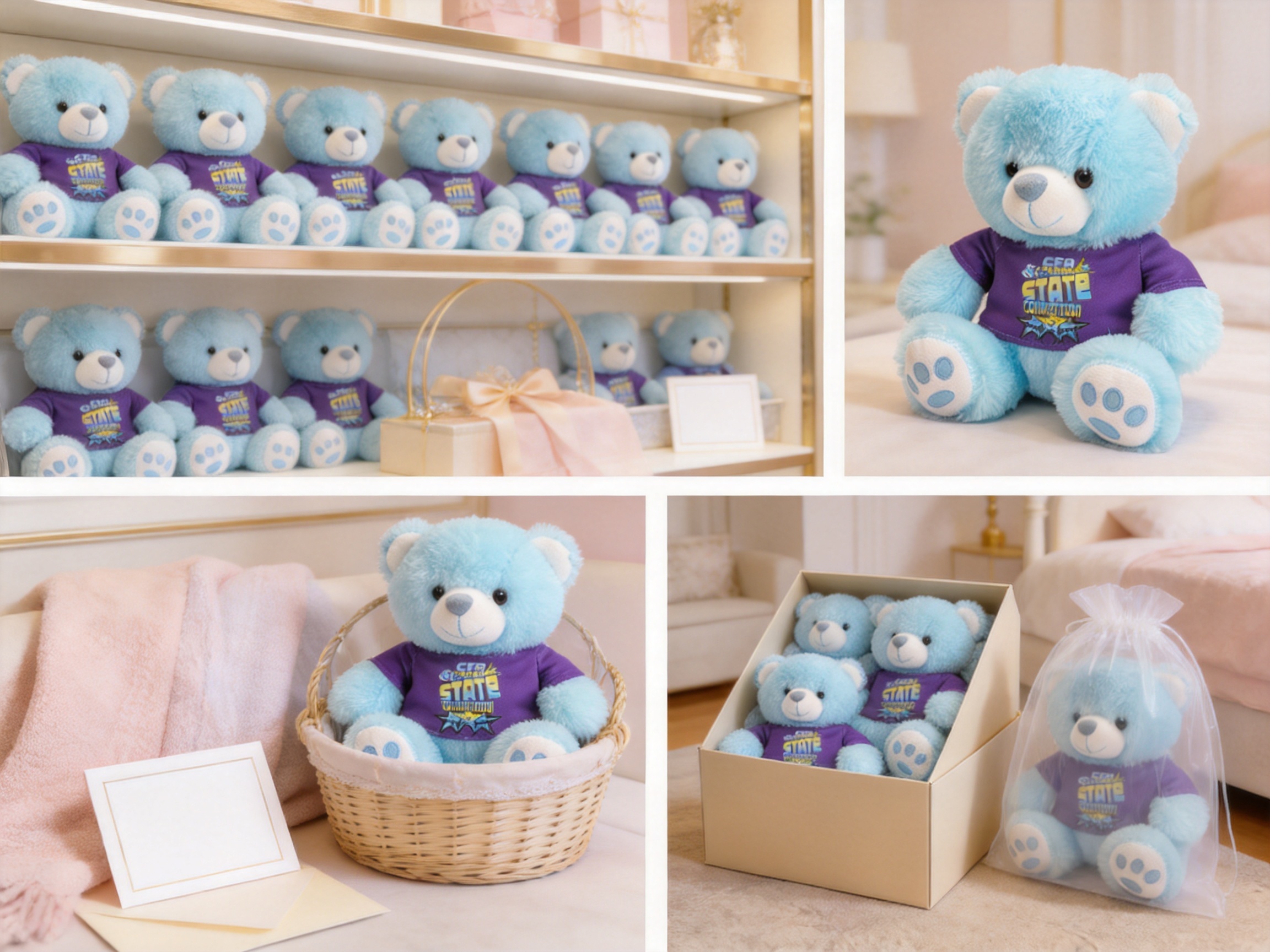
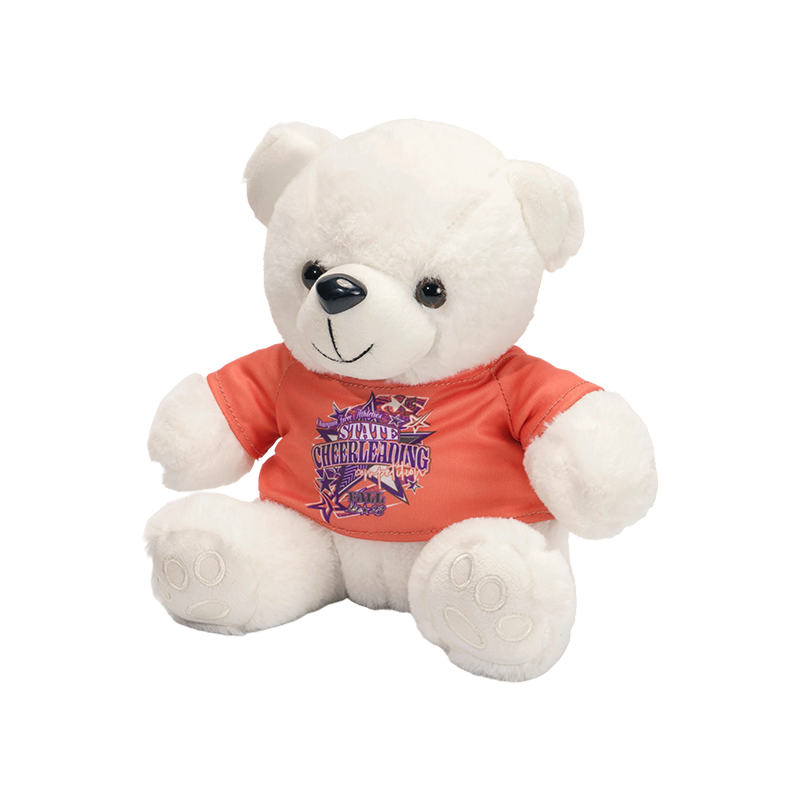
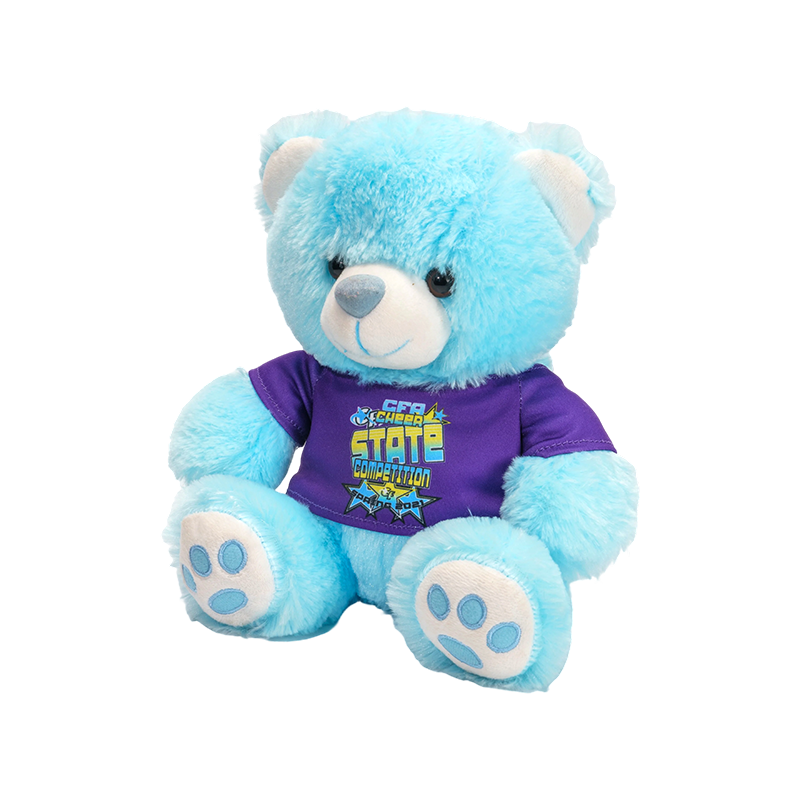
A well-designed teddy bear has a special ability to create an emotional connection. Its rounded shape, soft surface, friendly expression, and welcoming sitting posture can make a product feel familiar even before it is held. The adorable dressed bear plush toy described in this article combines these timeless qualities with a fresh sky-blue color, super-soft plush fabric, lightweight construction, and flexible customization options. It is designed to serve as a comforting companion, a thoughtful gift, a promotional item, a seasonal product, or a charming addition to a home and lifestyle collection.
With a height of approximately 30 centimeters, this bear is large enough to be visually appealing while remaining easy to carry, display, package, and ship. Its 150-gram weight supports comfortable handling for children and adults alike. The sitting style gives the bear a stable and attractive presentation on beds, shelves, desks, sofas, nursery furniture, retail displays, and gift counters. The blue color creates a calm and cheerful impression, while the dressed appearance gives the design additional character and helps it stand apart from ordinary teddy bears.
For importers, retailers, promotional agencies, gift companies, and brand owners, this product offers more than an attractive appearance. It provides a practical platform for OEM and ODM development. The basic design can be adapted through color changes, clothing details, accessories, embroidered elements, packaging, labels, and other product features. This makes it suitable for companies seeking a plush toy that can be developed for a specific market, campaign, character collection, holiday program, or retail identity.
Product Overview
This sky-blue dressed bear plush toy is created to communicate warmth, softness, and innocence. Its appearance resembles a gentle character from a dreamy storybook: friendly, cuddly, and easy to recognize. The fresh blue tone gives the bear a distinctive identity without becoming difficult to coordinate with other products or interior styles. It may be used as a children's toy, a decorative plush object, a comforting gift, or a promotional mascot.
The bear is manufactured with a shell made from super-soft plush fabric and filled with PP cotton. This combination is widely valued in the plush toy industry because it balances tactile softness, volume, resilience, and production practicality. The outer fabric creates the first sensory impression, while the filling helps the bear maintain its shape and provides the soft, squeezable feeling expected from a quality plush product.
The sitting posture is another important design advantage. A sitting bear can remain upright on a flat surface without requiring special supports. This improves retail presentation and makes the product useful as an ornament as well as a toy. A sitting plush character can be arranged easily in store windows, on shelves, in photography, in gift baskets, and in themed displays. It is also convenient for consumers who want to place the bear on a bed, bookcase, work desk, or nursery shelf.
| Product Feature | Specification | Commercial Benefit |
| Product type | Dressed bear plush toy | Combines classic bear appeal with character styling |
| Category | Classic Bears Plush Toys | Suitable for established teddy bear and gift markets |
| Approximate size | 30 cm or customized | Easy to display, hold, package, and ship |
| Approximate weight | 150 g | Lightweight for handling and distribution |
| Color | Sky blue | Fresh, gentle, and visually distinctive |
| Style | Sitting | Stable presentation on shelves and furniture |
| Shell fabric | Super-soft plush | Comfortable tactile experience |
| Filling material | PP cotton | Soft volume and shape support |
| Customization | OEM and ODM welcome | Supports private-label and character projects |
| Minimum order quantity | 1,000 pieces | Suitable for commercial production programs |
Why the Dressed Bear Design Has Strong Market Appeal
Classic teddy bears remain popular because their appeal is not limited to one age group or one sales channel. Children enjoy them as companions, while adults often purchase them as gifts, keepsakes, decorative objects, or nostalgic reminders. A dressed bear adds another layer of interest because clothing can suggest a personality, a story, a profession, a celebration, or a particular lifestyle.
The dressed styling of this product helps transform a simple bear silhouette into a recognizable character. Clothing elements can make a plush toy appear more polished and gift-ready. They can also support seasonal themes, school mascots, event campaigns, hospitality programs, and retail collections. When combined with the soft blue color, the clothing gives the bear a gentle and expressive personality that can be used across multiple marketing concepts.
Compared with an undressed basic bear, a dressed bear may offer stronger shelf differentiation. Retail shelves often contain many similar brown, white, or pink teddy bears. A blue bear with a coordinated outfit can create an immediate visual point of difference. Its appearance can attract customers who are searching for something modern, pastel-colored, fashionable, or suitable for a particular occasion.
The bear's character can also be developed through storytelling. It may become a cloud companion, a bedtime friend, a comforting gift, a travel mascot, or a seasonal messenger of joy. A product with a clear emotional story is easier to present in catalogs, online listings, point-of-sale materials, gift guides, and social media campaigns. The design therefore supports not only manufacturing but also brand communication.
Material Advantages and Tactile Quality
The shell fabric is one of the most important components of a plush toy. Consumers usually form an opinion within seconds of touching the product. Super-soft plush fabric helps create a pleasant first impression and supports the fundamental purpose of a stuffed animal: providing a soft, comforting, and enjoyable tactile experience.
Soft plush fabric can also improve visual presentation. The surface catches light gently and gives the bear a fuller, warmer appearance. A high-quality plush surface can make the color look more even and help the product appear more premium in photographs. This is especially important for online retail, where customers often judge the product through images before they can touch it.
PP cotton filling provides the internal volume required to create the bear's rounded head, body, arms, and legs. It allows the product to remain lightweight while still feeling substantial in the hands. Proper filling distribution is essential. If the filling is too loose, the bear may appear flat or uneven. If it is too dense, the product may lose its softness. Careful production control helps achieve a balanced result with an attractive shape and comfortable compression.
The combination of soft fabric and PP cotton also makes the bear suitable for repeated handling. Children may hug it, carry it, place it in different positions, or use it as a bedtime companion. Adults may use it as a decorative cushion-like object or gift. A well-constructed plush toy should retain its basic character after ordinary handling, and material selection is central to that goal.
For commercial buyers, material consistency is equally important. A large order needs to maintain a similar hand feel, color appearance, filling level, and overall shape across production batches. An experienced manufacturer can help control these variables through approved samples, material checks, production instructions, and inspection procedures.
Adorable stuffed dressed bear plush toys
Size, Shape, and Display Performance
At approximately 30 centimeters, this bear occupies a useful middle position in the plush toy market. It is more substantial than a small keychain or pocket plush, yet more manageable than a large floor-standing stuffed animal. This size is suitable for gift packaging, shelf display, bedroom decoration, event distribution, and online shipping.
The 30-centimeter format also gives the character enough surface area for visible design details. Clothing, embroidery, labels, decorative patches, color blocks, and facial features can be presented clearly. At the same time, the bear remains compact enough for retailers to display several units without requiring excessive shelf space.
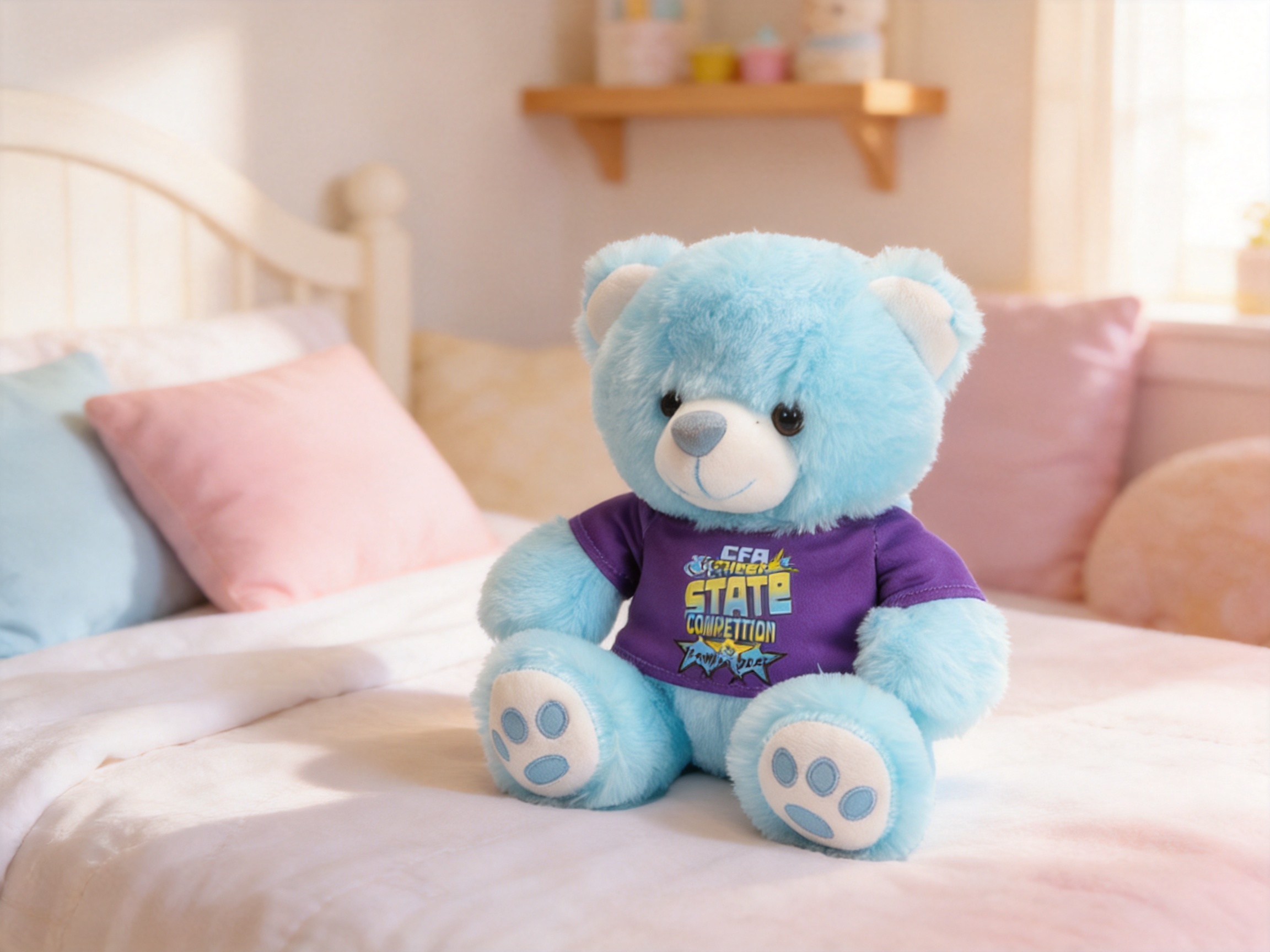
The sitting shape improves stability and makes the product easier to photograph. Product photography often benefits from a pose that does not require complex support. A seated bear can be shown facing forward, turned slightly to one side, placed beside a gift box, or arranged with other characters. This flexibility helps companies create attractive catalog images and promotional scenes.
For logistics planning, the stated carton configuration is 12 pieces per carton. The carton size is approximately 54 centimeters long, 32 centimeters wide, and 25 centimeters high. The listed gross and net weights are approximately 2.5 kilograms and 1.8 kilograms. Buyers should confirm final packing specifications before placing an order because customized clothing, accessories, tags, packaging, and size changes may affect carton measurements and weight.
| Packaging Item | Provided Specification | Planning Consideration |
| Individual inner packaging | 1 piece per PP bag | Helps protect each item during handling and transport |
| Outer packaging | Boxes | Supports grouped shipment and warehouse handling |
| Carton quantity | 12 pieces per carton | Useful for inventory and freight calculations |
| Gross/net weight | Approximately 2.5 kg / 1.8 kg | Should be reconfirmed for final customized orders |
| Carton size | Approximately 54 L × 32 W × 25 H cm | Supports preliminary logistics planning |
Advantages Over Ordinary Plush Bears
Distinctive Color Direction
Many traditional teddy bears use familiar neutral colors such as brown, cream, white, or tan. These colors remain commercially useful, but a sky-blue bear provides a different visual direction. Blue can communicate calmness, trust, freshness, imagination, and friendliness. It can work well in children's collections, nursery themes, baby gift programs, winter displays, cloud-inspired concepts, and modern lifestyle assortments.
The color is also suitable for coordinated collections. It can be paired with white, silver, pale yellow, soft pink, lavender, or mint green. Retailers may place it alongside complementary products such as blankets, cushions, sleep accessories, children's stationery, gift boxes, and room decorations. This increases the possibilities for cross-selling and themed merchandising.
Character Value Through Clothing
A dressed bear has greater storytelling potential than a basic stuffed bear. Clothing can communicate the intended use of the product and provide a visual identity that customers recognize quickly. Even simple garment elements can make the bear feel more like a character and less like a generic commodity.
Clothing also supports customization. A customer may request a special outfit for a school, sports club, hotel, airline, retailer, festival, charity, or corporate campaign. The clothing can be adjusted to match an event color scheme or a marketing theme. This flexibility is valuable for buyers who need a plush item that reinforces a specific identity.
Balanced Gift Size
The 30-centimeter size is appropriate for many gifting occasions. It is large enough to feel meaningful without becoming difficult to carry. It can fit into common gift bags, display baskets, and parcel sizes. It may be given for birthdays, baby showers, Valentine's Day, Christmas, anniversaries, graduations, welcome programs, or simply as a gesture of encouragement.
Broad Application Range
The product can be positioned in multiple categories, including classic bears, children's toys, trendy plush, home and lifestyle gifts, promotional merchandise, seasonal products, and specialty plush collections. This reduces dependence on a single sales channel. A retailer can offer it as a toy, while a gift company can promote it as a comfort item, and a business can customize it as a mascot or campaign gift.
Applications for Retail and Wholesale Buyers
Retailers can use the dressed bear as a core item in a teddy bear collection or as a seasonal color variation. It can be placed in toy departments, gift shops, children's boutiques, lifestyle stores, department stores, online marketplaces, and specialty stores. Its appearance is suitable for both impulse purchases and planned gifting.
Gift companies can incorporate the bear into curated gift sets. It may be paired with a blanket, greeting card, children's book, night-light, clothing accessory, or themed box. Its soft blue color can support calming or comforting gift concepts, while its dressed styling can make the entire package feel more complete.
Promotional agencies may use the bear as a branded giveaway or customer loyalty item. The character can be adapted with embroidered logos, branded garments, custom labels, campaign colors, or packaging inserts. Because the bear is useful after the event, it may continue to display the campaign message in a home, office, nursery, or vehicle.
Hotels, resorts, hospitals, airlines, and family entertainment venues can also consider customized plush bears for guest programs. A branded bear can become a welcome gift, a room amenity, a children's activity prize, or a souvenir. The product's friendly appearance helps communicate hospitality and care.
Seasonal businesses can adapt the basic design for holidays and annual campaigns. A different outfit, accessory, ribbon, hat, or packaging style may transform the same bear body into a Christmas character, spring gift, Valentine's keepsake, school-season mascot, or winter companion. Such adaptability can help companies develop recurring product programs while controlling development costs.
OEM and ODM Customization Opportunities
OEM and ODM services are especially valuable when a buyer wants more than an off-the-shelf product. OEM production allows a customer to provide specifications, branding requirements, packaging instructions, or approved artwork for manufacture. ODM development can support a more collaborative process in which the manufacturer helps transform an idea into a workable plush product.
For this dressed bear, potential customization areas include body size, body color, clothing fabric, garment shape, accessories, embroidery, facial details, labels, hangtags, packaging, and product presentation. Buyers can also explore different variations for a collection, such as a family of bears in coordinated colors or outfits.
Customization should be planned carefully because every change may affect materials, production time, sample development, cost, minimum order quantity, and packaging. A professional development process normally begins with a clear design brief. The brief may include target market, age range, dimensions, reference images, color requirements, artwork, packaging expectations, and intended sales channel.
The supplier can then prepare a prototype or pre-production sample. The sample allows the buyer to review shape, proportion, color, softness, clothing fit, embroidery placement, and overall character. Revisions should be recorded in an approved specification so that the production team has a clear reference.
The listed sample fee is 100 U.S. dollars per design, with a sample development time of approximately 3 to 7 working days. These details provide a useful starting point for project planning, although final sample charges and timing should be confirmed according to the complexity of the design and the number of requested changes.
Manufacturing Strengths and Production Capability
The manufacturer, Tianchang Bestjoy Craft & Gift Co., Ltd., operates as an integrated plush product company covering research and development, design, production, and sales. This integrated structure is important because a plush toy requires coordination between creative development, material sourcing, sewing, stuffing, finishing, inspection, packaging, and export logistics.
The company was established in 2013 and is located in Jinji Town, Tianchang City, Anhui Province, China. Its factory covers more than 10,000 square meters. A facility of this scale can support organized production areas, material storage, sample development, sewing operations, finishing work, quality inspection, and packaging management. Buyers benefit when the various stages of a project can be coordinated within one manufacturing system.
The company reports annual sales exceeding 12 million RMB and exports products to Europe, America, Australia, Japan, and South Korea. International experience can help a supplier understand the importance of export packaging, order documentation, communication, production scheduling, and customer-specific requirements. Serving multiple markets also exposes a manufacturer to different product preferences and quality expectations.
The company's product range includes trendy plush toys, children's plush toys, pet plush toys, promotional gifts, plush home furnishings, plush stationery gifts, plush handicrafts, and plush cartoon decorations. This broad range is relevant to the dressed bear because it indicates experience across both toy and lifestyle applications. The same manufacturing knowledge can support different fabrics, shapes, sizes, decorative techniques, and packaging formats.
The company also describes an innovative research and development and design team, professional production equipment, an experienced sales team, and a comprehensive after-sales service team. These resources are valuable in custom projects. A creative team can help refine the character, production personnel can translate the design into a manufacturable structure, sales staff can coordinate commercial details, and after-sales support can assist with follow-up questions after delivery.
Advanced Manufacturing Process for Plush Toys
Design Review and Technical Development
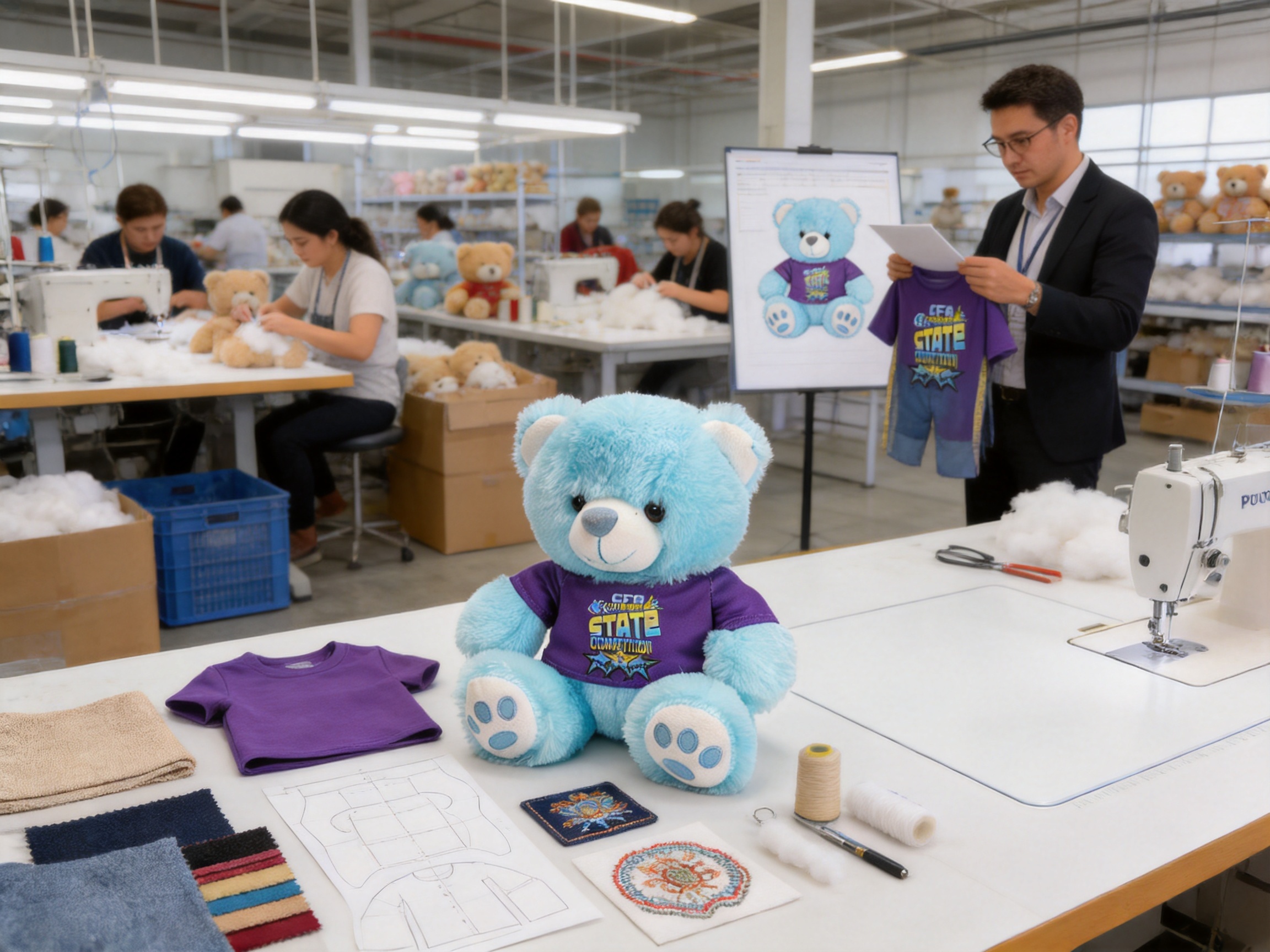
The manufacturing process begins with a design review. The design team examines the proposed bear from both visual and technical perspectives. Important considerations include the proportions of the head and body, sitting balance, limb attachment, clothing construction, facial expression, seam placement, material direction, and decoration methods.
This stage helps identify possible manufacturing challenges before production begins. For example, a very small facial feature may require a specific embroidery method, while a complex garment may need additional pattern pieces or reinforced seams. Resolving these issues during development helps reduce revisions and improves production efficiency.
Pattern Making and Material Preparation
After the design is confirmed, patterns are prepared for the fabric components. Patterns determine the dimensions and shape of the bear's head, body, arms, legs, ears, clothing, and accessories. Accurate patterns are essential for maintaining consistency across a production run.
Super-soft plush fabric is then selected and prepared according to the approved color and texture. Fabric may be checked for shade consistency, surface quality, width, stretch, and defects. The direction of the plush pile can influence the appearance of the finished bear, so cutting and assembly instructions should be consistent.
PP cotton filling is prepared for the stuffing stage. The amount of filling required depends on the size and structure of each component. A controlled filling process helps ensure that the bear remains soft without becoming misshapen. It also supports consistency between individual units.
Cutting and Sewing
Fabric pieces are cut according to the approved patterns. Cutting accuracy affects the symmetry and final proportions of the bear. The pieces are then sewn together using production methods appropriate for plush products. Seam strength, stitch density, thread quality, and alignment all contribute to product durability.
The clothing components are produced either as separate pieces or as integrated elements, depending on the approved design. Garments need to fit the bear's body correctly and remain visually neat. If the product is intended for repeated handling, clothing attachments should be evaluated for strength and safety.
Stuffing and Shaping
Once the fabric components are sewn, they are turned and filled with PP cotton. The stuffing process is carefully controlled to create the desired shape. Special attention is given to the head, body, limbs, ears, and areas around the seams. The sitting posture requires balanced filling so that the bear can remain upright and retain its intended silhouette.
After stuffing, workers shape the bear by distributing the filling evenly and checking for lumps, flat areas, or excessive tension. Proper shaping improves both appearance and hand feel. The bear should look full and friendly while remaining soft enough to cuddle.
Facial Features and Decorative Finishing
Facial features give the bear much of its personality. Eyes, nose, mouth, and other details must be positioned consistently. Depending on the design and customer requirements, features may be embroidered, sewn, or applied using approved decorative components.
Clothing details, labels, embroidery, patches, bows, and other accessories are added during the finishing stage. These details can create the difference between an ordinary plush item and a character with strong retail appeal. Finishing work also includes trimming loose threads, correcting surface irregularities, checking garment alignment, and preparing the product for inspection.
Inspection and Packaging
Finished products are inspected for appearance, dimensions, stitching, filling, color, clothing placement, cleanliness, and packaging accuracy. Any units that do not meet the approved standard can be identified before shipment.
Each bear is listed for individual packaging in a PP bag, followed by placement in outer cartons. Individual packaging helps protect the surface from dust and handling during transportation. Carton packing supports warehouse organization and export logistics. Buyers requiring retail-ready boxes, printed packaging, recyclable materials, barcode labels, or special inserts should discuss these requirements during the quotation and sampling stages.
Quality Control Considerations
Quality control for a plush toy involves more than checking whether the bear looks attractive. It includes material consistency, seam integrity, shape, filling distribution, decorative attachment, color accuracy, packaging, and order quantity. The quality standard should be defined before mass production begins.
For this product, particular attention should be paid to the uniformity of the sky-blue color. Differences in fabric dye lots may affect the visual consistency of an order. An approved color reference or sample can help establish the expected result.
The softness of the plush surface should also be compared with the approved sample. Buyers may wish to confirm pile length, texture, density, and overall hand feel. If the clothing uses a different fabric, the garment material should be checked for color coordination, comfort, and attachment quality.
The sitting posture should be reviewed because stability is a central product feature. The bear should sit naturally on a flat surface, with balanced proportions and properly positioned limbs. A pre-shipment inspection can identify units that lean excessively, have uneven filling, or show visible shape differences.
For products intended for children, buyers should define the applicable safety and compliance requirements for the destination market. These may include requirements related to materials, small parts, flammability, labeling, mechanical properties, chemical restrictions, and age grading. The manufacturer and buyer should confirm which tests and documents are necessary for the intended market before mass production.
Order Planning and Commercial Information
The stated minimum order quantity is 1,000 pieces. This quantity is suitable for retailers, wholesalers, promotional agencies, and brand owners planning a meaningful commercial launch. It can support more efficient production and help distribute sampling, setup, packaging, and development costs across a larger order.
The listed delivery time is approximately 45 days. This should be treated as a planning estimate rather than a universal guarantee. Actual timing may depend on design approval, material availability, sample confirmation, order quantity, packaging requirements, production scheduling, inspection arrangements, and shipping preparation.
To reduce delays, buyers should prepare complete artwork and specifications as early as possible. This may include logo files, color references, garment details, labels, packaging artwork, carton markings, barcode information, and inspection standards. Fast responses during sample review can also help maintain the planned schedule.
| Commercial Item | Provided Information | Recommended Buyer Action |
| OEM/ODM | Welcome | Prepare a design brief and customization requirements |
| MOQ | 1,000 pieces | Confirm whether the quantity applies per design or combined program |
| Sample fee | 100 U.S. dollars per design | Confirm payment terms and whether any credit is available after order placement |
| Sample time | 3–7 working days | Allow extra time for revisions and approval |
| Delivery time | Approximately 45 days | Confirm the schedule after specifications and materials are approved |
Branding and Packaging Possibilities
Branding can be incorporated into the bear in subtle or highly visible ways. A woven label may be attached to the clothing or side seam. An embroidered logo may be placed on a garment, paw, or accessory. A custom hangtag can communicate the character story, care information, company identity, or campaign message.
Packaging is another important part of the product experience. A simple PP bag protects the bear during shipment, but retail buyers may request upgraded presentation. Options may include printed paper sleeves, window boxes, gift boxes, belly bands, reusable bags, or themed cartons. The most suitable option depends on the target market, price point, sales channel, and sustainability goals.
For promotional projects, packaging can contain campaign information, event dates, promotional codes, product stories, or brand messages. For gift programs, it can include a greeting card or a short message. For character collections, packaging can introduce the bear's name, personality, and relationship to other products in the series.
Home, Lifestyle, and Emotional Value
Plush products are increasingly used beyond traditional toy departments. Consumers place them in bedrooms, nurseries, living rooms, offices, reading corners, and creative spaces. A soft blue dressed bear can complement interiors that use pastel, coastal, cloud, sky, minimalist, or children's design themes.
The bear's emotional value is also important. Soft toys can provide a sense of comfort during rest, travel, transitions, or stressful moments. They may be given to communicate affection, encouragement, congratulations, apology, or support. This emotional role gives the product a value that cannot be measured only by its materials or dimensions.
A thoughtfully designed bear can become part of a child's routine or a family's memory. It may be present during bedtime stories, holidays, photographs, trips, and celebrations. For adults, it may serve as a nostalgic gift or a decorative object that adds warmth to a room. These long-term associations can strengthen customer satisfaction and encourage repeat purchases.
Sustainability and Responsible Product Development
Responsible development should be considered from the beginning of a plush toy project. Buyers can discuss fabric choices, packaging reduction, recycled or recyclable materials, production efficiency, carton optimization, and responsible handling of waste with the manufacturer.
Packaging design can reduce unnecessary material while still protecting the product. Carton dimensions can be reviewed to improve loading efficiency. Durable construction may also support a longer product life, reducing the likelihood that the item will be discarded after a short period.
For customized projects, sustainability goals should be written into the product specification. This may include restrictions on certain materials, preference for paper-based packaging, reduction of plastic components, or use of certified materials where available. The feasibility and cost impact of each request should be evaluated before approval.
How This Product Supports Competitive Retail Positioning
A successful plush product needs a clear reason for customers to choose it. This dressed blue bear has several positioning advantages: a friendly classic silhouette, a modern color, soft tactile materials, a stable sitting pose, a gift-friendly size, and customization potential. Together, these qualities create a product that can be presented as both familiar and distinctive.
Retailers may position it as an affordable premium gift, a comforting children's companion, a nursery decoration, or a seasonal character. The same basic product can be marketed differently according to the sales environment. In a toy store, the focus may be softness and companionship. In a lifestyle store, the focus may be color and décor. In a promotional catalog, the focus may be customization and brand visibility.
Compared with low-cost generic plush items, a more carefully developed character can offer better storytelling and stronger display impact. Compared with highly specialized collectible figures, a classic bear may have broader consumer appeal and lower communication barriers. This balance between familiarity and individuality is one of the product's main competitive strengths.
Buyer Checklist Before Placing an Order
Buyers should begin by confirming the intended market and use. The requirements for a children's retail toy may differ from those for a decorative home product or a promotional giveaway. Defining the end use helps guide material choices, labeling, testing, packaging, and price planning.
The next step is to confirm the design. Buyers should review the bear's size, color, sitting posture, clothing, facial expression, accessories, logo placement, and packaging. Any differences between a reference image and the final required product should be documented.
Material specifications should also be confirmed. This includes the outer plush fabric, clothing fabric, PP cotton filling, thread, embroidery, labels, and any accessories. A physical sample is useful because photographs cannot fully communicate softness, density, color, or construction quality.
Commercial terms should be clarified before production. Buyers should confirm the MOQ, sample fee, sample schedule, unit price, payment terms, production lead time, shipping terms, carton details, inspection arrangements, and documentation. It is also useful to ask whether the quoted delivery time begins after sample approval, deposit payment, or material confirmation.
Finally, buyers should confirm the required compliance documents for the destination market. The appropriate testing plan may depend on the product's intended age range, materials, decorations, and sales territory. Early planning helps avoid costly changes after production has started.
Frequently Asked Questions
What is the approximate size of the bear?
The standard size is approximately 30 centimeters, although customized dimensions can be discussed for OEM and ODM projects. Any size change may affect the material usage, weight, packaging, unit cost, and delivery schedule.
What color is the standard product?
The standard product is sky blue or blue. Buyers can discuss alternative colors for custom projects, subject to material availability, minimum order requirements, and sample approval.
What type of filling is used?
The listed filling material is PP cotton. It provides soft volume and helps the bear maintain its rounded form while remaining lightweight and comfortable to handle.
Is the bear suitable for customization?
Yes. OEM and ODM services are welcomed. Possible customization areas include size, color, clothing, accessories, embroidery, labels, packaging, and other character details. Buyers should provide a clear design brief and approve a sample before mass production.
What is the minimum order quantity?
The listed minimum order quantity is 1,000 pieces. Buyers should confirm whether the MOQ applies to each individual design, color, or variation when requesting a customized program.
How long does sample development take?
The stated sample time is approximately 3 to 7 working days. Complex designs, multiple variations, special fabrics, and revision requests may require additional time.
How much is the sample fee?
The listed sample fee is 100 U.S. dollars per design. Final charges and payment arrangements should be confirmed with the supplier before development begins.
What is the estimated production time?
The listed delivery time is approximately 45 days. The actual schedule may depend on design approval, material sourcing, order quantity, packaging, inspection, and shipping preparation.
How is the product packaged?
The standard packaging information lists one piece per PP bag, with the products packed into outer boxes. The stated carton quantity is 12 pieces per carton. Customized packaging can be discussed for retail and promotional programs.
Can the bear be used as a promotional gift?
Yes. Its friendly character and customizable clothing make it suitable for promotional campaigns, customer gifts, event programs, hospitality projects, and branded merchandise. Logos, labels, colors, packaging, and campaign messages can be reviewed during development.
Is the product suitable for home décor?
Yes. The soft blue color and sitting posture make it suitable for bedrooms, nurseries, shelves, sofas, desks, and other home or lifestyle settings. It can be marketed as both a decorative plush item and a comforting companion.
What should buyers confirm before mass production?
Buyers should confirm the final sample, dimensions, fabric, color, filling, clothing details, decorations, labels, packaging, carton information, inspection requirements, compliance needs, MOQ, price, payment terms, and production schedule.
Conclusion
The adorable dressed bear plush toy offers a strong combination of emotional appeal, practical size, attractive styling, and customization potential. Its sky-blue color gives it a fresh identity, while its classic bear shape keeps it familiar and widely accessible. The super-soft plush shell and PP cotton filling support a comfortable tactile experience, and the sitting posture improves both stability and display value.
For retailers, the product can add a distinctive character to a classic bear assortment. For gift companies, it can become a warm and memorable present. For promotional agencies and brands, it provides a flexible platform for clothing, embroidery, packaging, and campaign customization. For home and lifestyle businesses, it offers a soft decorative object that can bring personality and comfort to an interior.
The manufacturing strength behind the product is equally important. An integrated manufacturer with R&D, design, production, sales, and after-sales capabilities can support the complete development process from concept to shipment. Factory scale, international export experience, professional production equipment, a dedicated design team, and experience across multiple plush categories provide a practical foundation for commercial cooperation.
With an approximate standard size of 30 centimeters, a listed weight of 150 grams, a minimum order quantity of 1,000 pieces, sample development in approximately 3 to 7 working days, and an estimated delivery time of 45 days, the product is structured for wholesale, retail, OEM, ODM, and promotional programs. Buyers who define their specifications clearly, review samples carefully, and confirm quality and compliance requirements early can use this charming blue bear as a versatile addition to a successful plush product strategy.
References
1. Product specification information supplied for the dressed bear plush toy, including size, weight, color, style, materials, packaging, MOQ, sampling, and delivery details.
2. Company information supplied for Tianchang Bestjoy Craft & Gift Co., Ltd., including manufacturing history, factory area, product categories, export markets, and organizational capabilities.
3. General principles of plush toy product development, including pattern making, fabric preparation, sewing, stuffing, finishing, inspection, packaging, and customization management.
4. General retail merchandising practices for toys, gifts, home accessories, promotional products, and seasonal character collections.
5. General product planning considerations for OEM and ODM plush toy manufacturing, including design briefs, sample approval, packaging development, quality control, and production scheduling.