en
en  русский
 Español
 عربى
عربى
Content
- 1 A Gentle Penguin Design with Broad Market Appeal
- 2 Key Product Specifications
- 3 Soft Materials for Tactile Comfort
- 4 Advantages Over Conventional Penguin Plush Designs
- 5 Applications Across Multiple Product Categories
- 6 OEM and ODM Possibilities
- 7 Advanced Manufacturing Capabilities
- 8 Sample Development and Order Process
- 9 Quality, Safety, and Responsible Product Planning
- 10 Merchandising and Marketing Opportunities
- 11 Why Choose an Experienced Custom Plush Manufacturer?
- 12 Frequently Asked Questions
- 12.1 What is the standard size of the penguin plush toy?
- 12.2 What materials are used?
- 12.3 What is the product’s posture?
- 12.4 Can the colors be changed?
- 12.5 Can the penguin carry a company logo?
- 12.6 What is the minimum order quantity?
- 12.7 How much is the sample fee?
- 12.8 How long does sampling take?
- 12.9 How long does bulk delivery take?
- 12.10 Is this product suitable for children?
- 12.11 Can the design be developed as part of a larger animal collection?
- 12.12 Is the toy suitable for promotional events?
- 12.13 Where is the manufacturer located?
- 12.14 Which markets does the company serve?
- 13 Buyer Checklist for a Successful Penguin Plush Project
- 14 Conclusion
- 15 References
- 16 Product: Adorable wild animals penguin plush toy
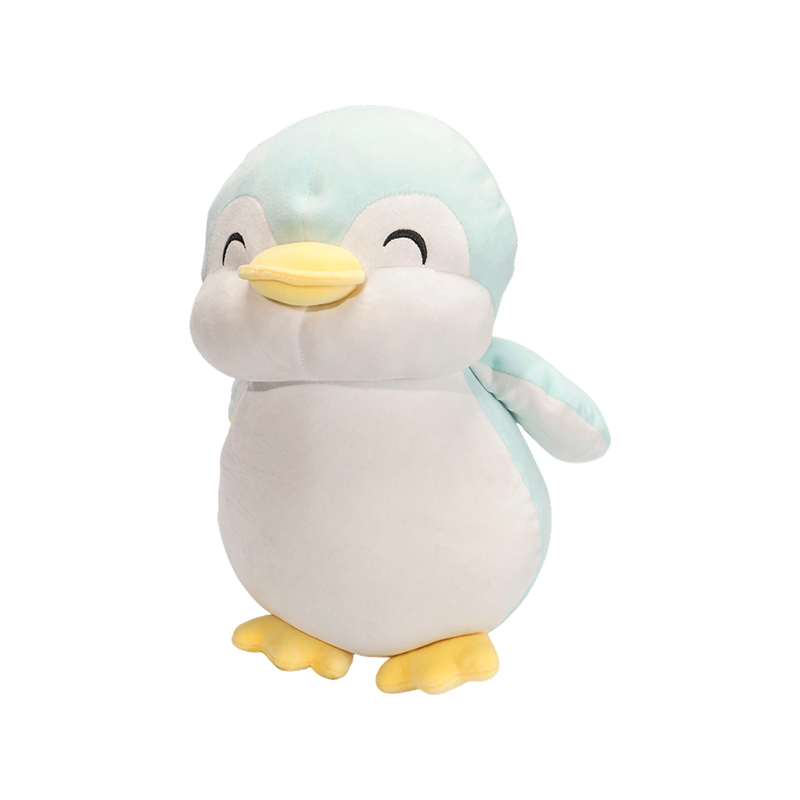
In the world of plush toys, the most successful designs often combine a memorable silhouette, a gentle color palette, tactile comfort, and broad commercial appeal. The adorable wild animal penguin plush toy presented here brings these qualities together in a compact sitting design that is suitable for children’s collections, seasonal promotions, home décor, gift programs, character merchandise, and specialty retail assortments.
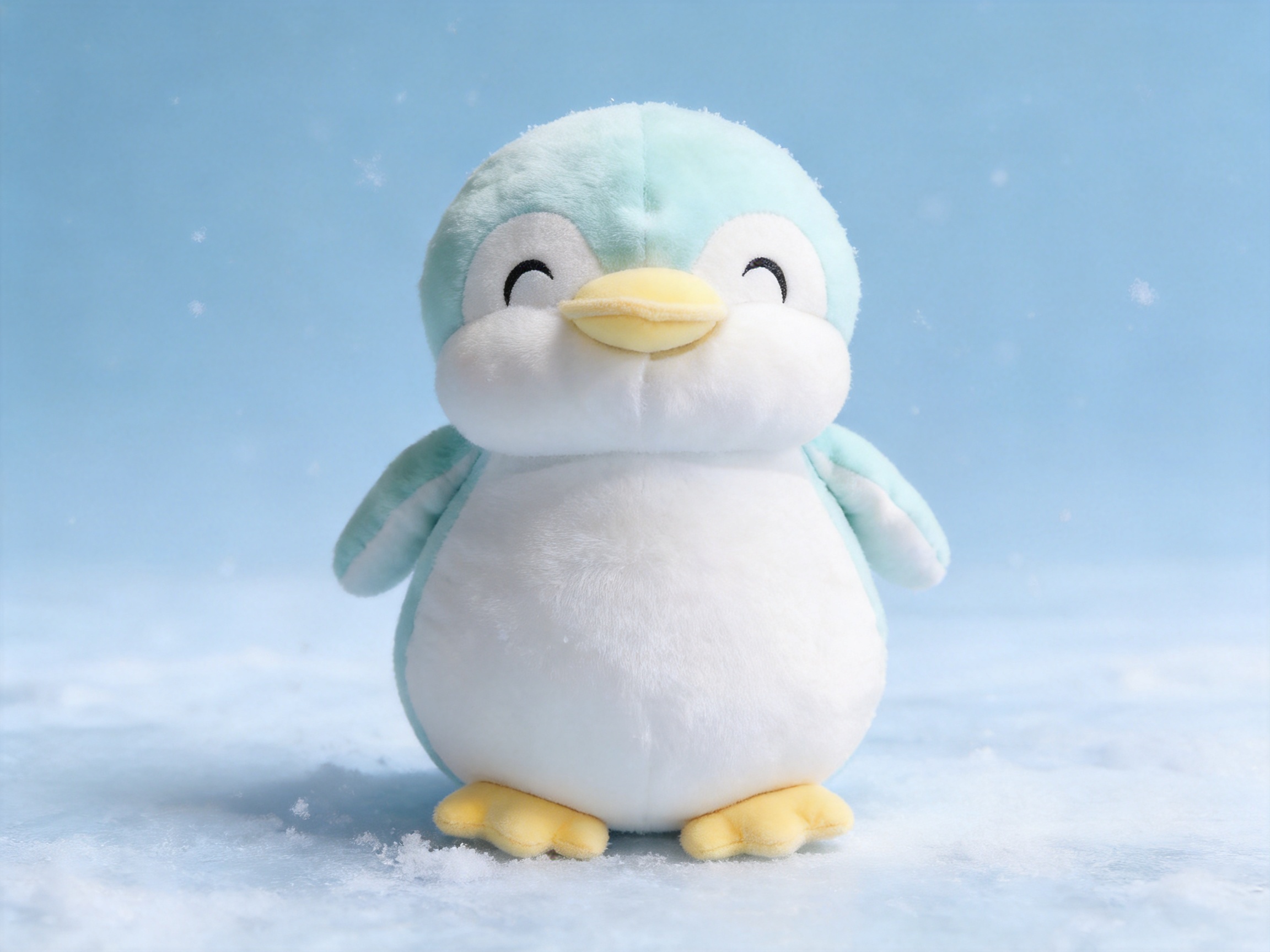
Designed with a fresh light blue-green and white color combination, this penguin plush toy expresses the calm beauty of ice and snow while maintaining a warm, approachable personality. Its rounded shape, soft surface, and friendly appearance make it easy to display, hold, gift, and incorporate into themed product lines. At approximately 25 centimeters, it offers a practical size for shelves, beds, desks, travel bags, gift baskets, and promotional events.
Beyond its visual appeal, the product reflects the capabilities of an experienced plush toy manufacturer. The design can be produced as a standard item or adapted through OEM and ODM services. Size, colors, fabrics, embroidered details, packaging, labels, and other features may be adjusted to meet the needs of wholesalers, retailers, brands, promotional agencies, amusement businesses, hospitality companies, and seasonal campaigns.
As a manufacturer specializing in plush products, Tianchang Bestjoy Craft & Gift Co., Ltd. combines product development, design, production, sales, and after-sales support in one integrated operation. Its experience in serving international markets provides a foundation for producing plush toys that balance appearance, workmanship, scalability, and commercial practicality.
Adorable wild animals penguin plush toy
A Gentle Penguin Design with Broad Market Appeal
The penguin is one of the most recognizable wild animals in the world. Its rounded body, short wings, contrasting colors, and upright posture create a silhouette that can be understood immediately by children and adults. This strong visual recognition gives penguin plush toys an advantage in retail and promotional settings because customers do not need extensive explanation to understand the character.
This particular design adds a distinctive visual identity by moving beyond the traditional black-and-white penguin palette. The main colors are light blue-green and white. Light blue-green creates a clean, youthful, and refreshing impression, while white contributes purity and softness. Together, the colors suggest glaciers, winter skies, fresh snow, and clear water without making the toy appear cold or distant.
The color scheme also supports a wide range of marketing themes. It can be used for winter promotions, polar animal education, environmental campaigns, baby gift collections, ocean-themed displays, travel souvenirs, hotel merchandise, and general children’s product assortments. Unlike a highly specific character design, the penguin’s appearance remains flexible enough for different markets and age-oriented presentations.
The sitting posture is another important design choice. A standing plush toy may require more internal support or a wider base, while a sitting toy naturally creates a stable and charming presentation. The sitting position gives the penguin a compact footprint and allows it to remain attractive when placed on a shelf, counter, bed, sofa, or office desk. It also makes the toy appear relaxed, friendly, and ready for interaction.
The rounded body and gentle expression help create an emotional connection. Plush toys are often purchased not only for their function but also for the feelings they communicate. A soft penguin can represent companionship, comfort, innocence, winter joy, exploration, or affection. These emotional associations make it suitable for personal purchases as well as gift-giving occasions.
Key Product Specifications
The following specifications describe the standard version of the product. The manufacturer also welcomes customized requirements for qualified OEM and ODM projects.
| Item | Standard Specification | Customization Potential |
|---|---|---|
| Product type | Wild animal penguin plush toy | Animal theme, character concept, or collection design |
| Size | Approximately 25 cm | Customized dimensions available |
| Weight | Approximately 100 g | May vary according to size, filling, and structure |
| Style | Sitting | Alternative poses may be discussed for new projects |
| Shell fabric | Super soft plush | Fabric type, texture, color, and finish may be customized |
| Filling material | PP cotton | Filling density and softness can be adjusted |
| OEM/ODM | Welcome | Design, color, label, packaging, and branding support |
| Minimum order quantity | 1,000 pieces | Subject to project evaluation and production requirements |
| Sample fee | US$100 per design | Final terms depend on design complexity |
| Sample time | Approximately one week | May vary according to revisions and material availability |
| Delivery time | Approximately five to six weeks | Calculated according to order quantity and specifications |
The standard dimensions make the toy large enough to feel substantial while remaining easy to pack, handle, and display. A 25-centimeter plush item can fit naturally into many existing retail fixtures and gift packaging formats. Its approximate 100-gram weight also helps support practical handling and economical distribution compared with oversized plush products.
For buyers developing a coordinated series, customized sizing can create a family of penguins in different dimensions. A smaller version may work as a party favor or bag charm concept, while a larger version may serve as a premium gift or decorative display. The same basic design language can therefore support multiple price points and sales channels.
Soft Materials for Tactile Comfort
Touch is one of the most important selling points of a plush toy. Customers often decide whether a product feels appealing by touching the surface, pressing the body, and observing how quickly it returns to its original shape. This penguin plush toy uses super soft plush fabric to create a smooth and comfortable tactile experience.
The fine plush surface gives the product a gentle hand feel that complements its visual softness. The light blue-green and white colors are enhanced by the fabric’s texture, allowing the toy to appear more dimensional and inviting. A soft surface is particularly important for children’s products, comfort-oriented gifts, bedtime companions, and home lifestyle collections.
PP cotton filling provides the internal volume needed to form the penguin’s rounded body. Properly distributed filling helps the toy maintain its sitting posture while preserving a squeezable and comfortable feel. The relationship between shell fabric, filling density, stitching, and pattern construction is essential. If the filling is too loose, the product may look flat; if it is too dense, the toy may feel stiff. Balanced filling supports both appearance and usability.
Material selection also affects the product’s perceived quality. A plush toy with a smooth surface, clean seams, even stuffing, and a stable shape communicates greater value to buyers. These details are especially important for retailers and brand owners because customers compare products visually and physically before purchase.
For customized programs, material choices may be evaluated according to the intended market, target age group, color system, budget, and packaging requirements. The manufacturer can discuss suitable fabric options, pile lengths, color matching, embroidery, appliqué, and other surface treatments during the development process.
Advantages Over Conventional Penguin Plush Designs
Many penguin plush toys rely on the familiar black, white, and orange combination. That approach can be effective, but it may also make products look similar when displayed together. The light blue-green and white color concept gives this design a more distinctive identity and helps it stand out in a crowded plush category.
Its color palette is especially suitable for brands seeking a softer or more contemporary appearance. Light blue-green can appeal to customers who prefer pastel colors, nature-inspired themes, minimalist interiors, or calming children’s products. White creates contrast without introducing a strong dark area, so the product feels bright and gentle from a distance.
Another advantage is the design’s cross-seasonal flexibility. The penguin naturally relates to winter and Christmas, but the fresh colors also work for spring, summer, ocean, and general animal themes. A retailer does not have to limit the product to one short seasonal sales period. It can be included in year-round wild animal collections, nursery décor, travel gift ranges, or educational displays.
The sitting posture provides display stability and reduces the need for complicated support structures. This may help simplify packaging and improve merchandising efficiency. The toy can be placed upright on a shelf without requiring special stands, hooks, or external supports. For promotional programs, a stable sitting design is also easier to arrange in event displays and product bundles.
The product’s moderate size is another competitive strength. Large plush toys can attract attention but may create storage, shipping, and shelf-space challenges. Very small plush toys may be economical but can have less visual impact. At approximately 25 centimeters, this penguin offers a balance between presence and practicality.
The design also supports customization more effectively than a highly detailed or mechanically complex toy. Its essential features can remain recognizable even when colors, accessories, facial expressions, labels, or packaging are changed. This allows buyers to develop exclusive versions without losing the core appeal of the penguin form.
Comparison with Common Market Alternatives
| Comparison Point | This Penguin Plush Toy | Basic Traditional Penguin Plush | Oversized Decorative Plush |
|---|---|---|---|
| Color identity | Fresh light blue-green and white | Usually black, white, and orange | Often dependent on large prints or bold colors |
| Display posture | Stable sitting position | May be sitting or standing | Usually requires considerable shelf or floor space |
| Standard size | Approximately 25 cm | Varies widely | Commonly larger than standard retail formats |
| Material feel | Super soft plush with PP cotton filling | Quality depends on supplier and specification | May prioritize volume over portability |
| Customization suitability | Strong potential for OEM and ODM adaptation | May be limited to color or packaging changes | Customization can involve higher development and logistics costs |
| Use occasions | Retail, gifts, promotions, home décor, seasonal campaigns | General toy retail | Large displays, premium gifts, and décor |
This comparison does not mean that every competing product has the same limitations. Plush quality varies by supplier, construction, and specification. However, the penguin described here offers a well-balanced combination of distinctive styling, practical dimensions, tactile softness, and customization potential.
Applications Across Multiple Product Categories
The product category range includes characters and trendy plush toys, stuffed animals, home and lifestyle plush, promotional and seasonal plush toys, and specialty plush toys. The penguin design can therefore be positioned in several commercial directions without requiring a complete redesign.
Children’s Plush Collections
For children’s assortments, the soft body and friendly animal identity can make the penguin a comforting companion. It may be offered as part of a broader wild animal series that includes polar bears, seals, whales, puffins, foxes, or other nature-related characters. A coordinated collection encourages repeat purchases and gives retailers opportunities to create themed shelf presentations.
The light color scheme can also support nursery and early-childhood product lines. Pale colors are often used in calm, gentle environments, including bedrooms, reading corners, daycare spaces, and baby gift collections. The product can be presented as a decorative companion as well as a traditional stuffed animal.
Trendy Plush and Character Merchandise
Trendy plush products depend heavily on silhouette, color identity, and emotional appeal. The penguin’s rounded body and fresh palette provide a strong foundation for a character program. Buyers can develop a name, personality, story, expression, or accessory system around the design.
For example, the penguin could become a winter explorer, an ocean guardian, a cheerful travel companion, or a symbol of friendship. These concepts can be adapted for retail packaging, social media campaigns, stationery, apparel, and gift sets. The plush toy can act as the central physical product in a broader character ecosystem.
Home and Lifestyle Products
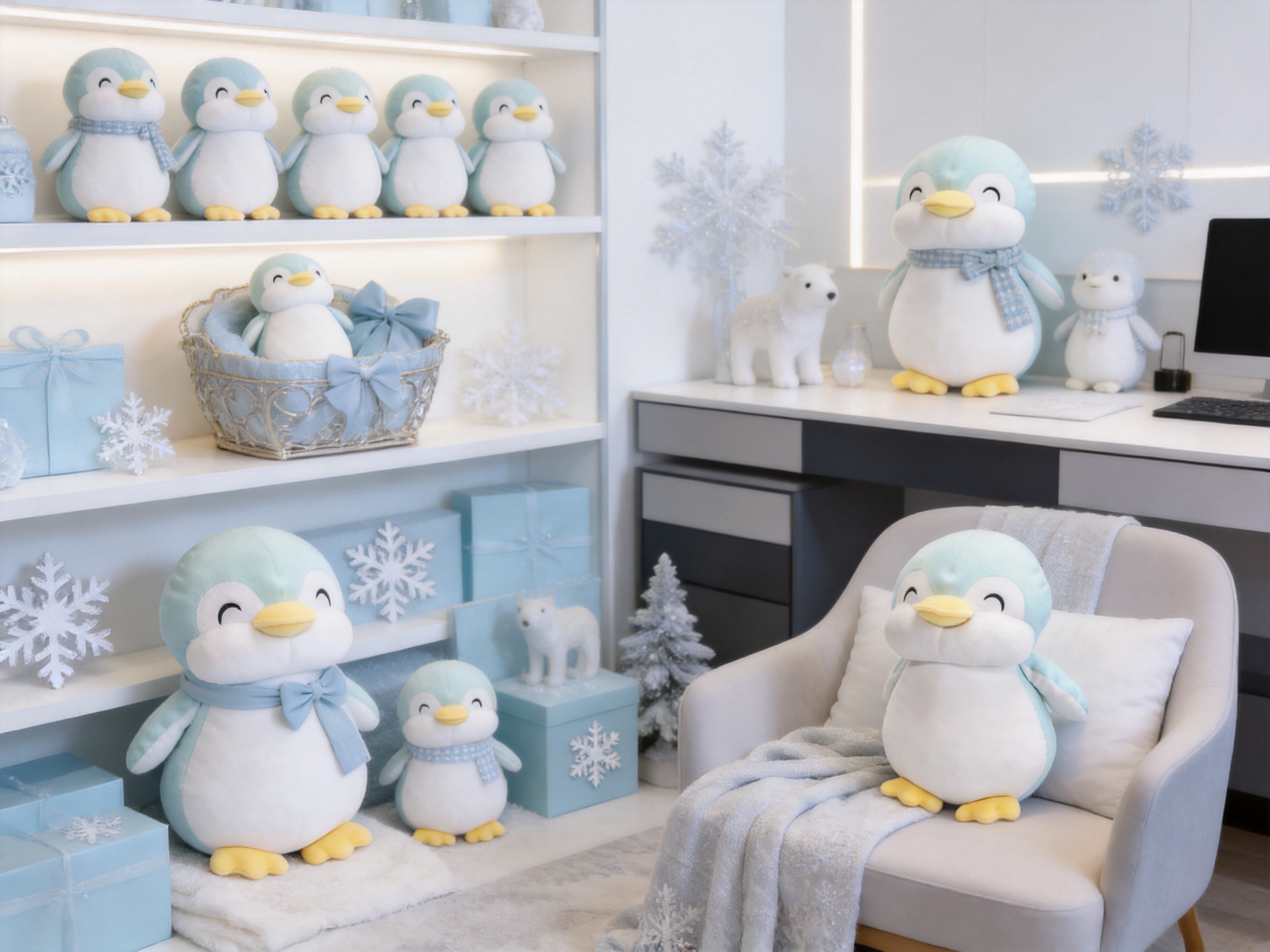
Many consumers now use plush products as part of their home environment. A well-designed animal plush can be placed on a sofa, bed, reading chair, children’s shelf, or work desk. The penguin’s pale color palette is compatible with modern interiors, Scandinavian-inspired rooms, winter displays, and pastel-themed spaces.
As a home lifestyle item, the toy may be sold through gift shops, lifestyle stores, museum stores, travel destinations, bookstores, and online marketplaces. Its decorative function expands the target audience beyond children to include collectors, animal lovers, students, office workers, and customers purchasing small comfort gifts.
Promotional and Corporate Gifts
Companies and organizations often use plush products to make campaigns more memorable. A penguin can represent environmental awareness, cold-chain logistics, marine conservation, winter events, travel, family activities, or community programs. Its friendly appearance makes it suitable for public-facing campaigns where an approachable symbol is preferred.
Customized embroidery, woven labels, hangtags, packaging sleeves, and color adjustments can help connect the toy with a specific campaign. A company may request a logo on a scarf, belly patch, tag, or package. The product can also be distributed at exhibitions, store openings, customer loyalty events, conferences, and charity programs.
Seasonal and Holiday Merchandise
Penguins are strongly associated with snow and winter, making them natural additions to Christmas and holiday ranges. The standard blue-green and white colors can be supplemented with seasonal accessories such as scarves, hats, gift bows, snowflake details, or winter-themed packaging. These adaptations can create limited editions while preserving the core product structure.
Seasonal plush toys can also be used in gift baskets, advent promotions, holiday window displays, and family activity campaigns. Because the product is not tied exclusively to one licensed character, buyers may have greater flexibility in developing their own seasonal presentation.
OEM and ODM Possibilities
OEM and ODM services allow buyers to transform a standard penguin concept into a product that reflects their own market identity. The development process may begin with the existing 25-centimeter sitting design or with a new concept based on the buyer’s drawings, reference images, brand guidelines, or target customer profile.
Color customization is one of the simplest ways to create differentiation. The light blue-green and white combination can be preserved, adjusted, or replaced with a buyer’s preferred color system. Pantone references or approved physical samples may be used to guide production discussions. Consistent color management is particularly important when the plush toy forms part of a larger branded collection.
Facial details can also influence the character’s personality. Changes to eye size, eye placement, eyebrow embroidery, beak shape, cheek accents, or expression can make the penguin appear playful, shy, curious, sleepy, or adventurous. Small changes can create a different emotional response while retaining the recognizable animal form.
Accessories offer additional opportunities. A scarf, backpack, crown, hat, bow, seasonal ornament, or miniature prop can support a campaign theme. Accessories must be evaluated for safety, attachment strength, production complexity, and packaging efficiency. The manufacturer can help determine whether an accessory should be sewn, embroidered, printed, or produced as a separate component.
Packaging is another major part of customization. Buyers may select individual polybags, printed boxes, window cartons, gift bags, paper bands, hangtags, or display-ready cartons. Packaging can communicate the product story, care information, age guidance, environmental messaging, and brand identity.
Labels may include brand marks, character names, country-of-origin information, care instructions, safety information, barcodes, batch details, or promotional messages. Early planning is important because label placement can affect sewing operations, appearance, and inspection requirements.
Advanced Manufacturing Capabilities
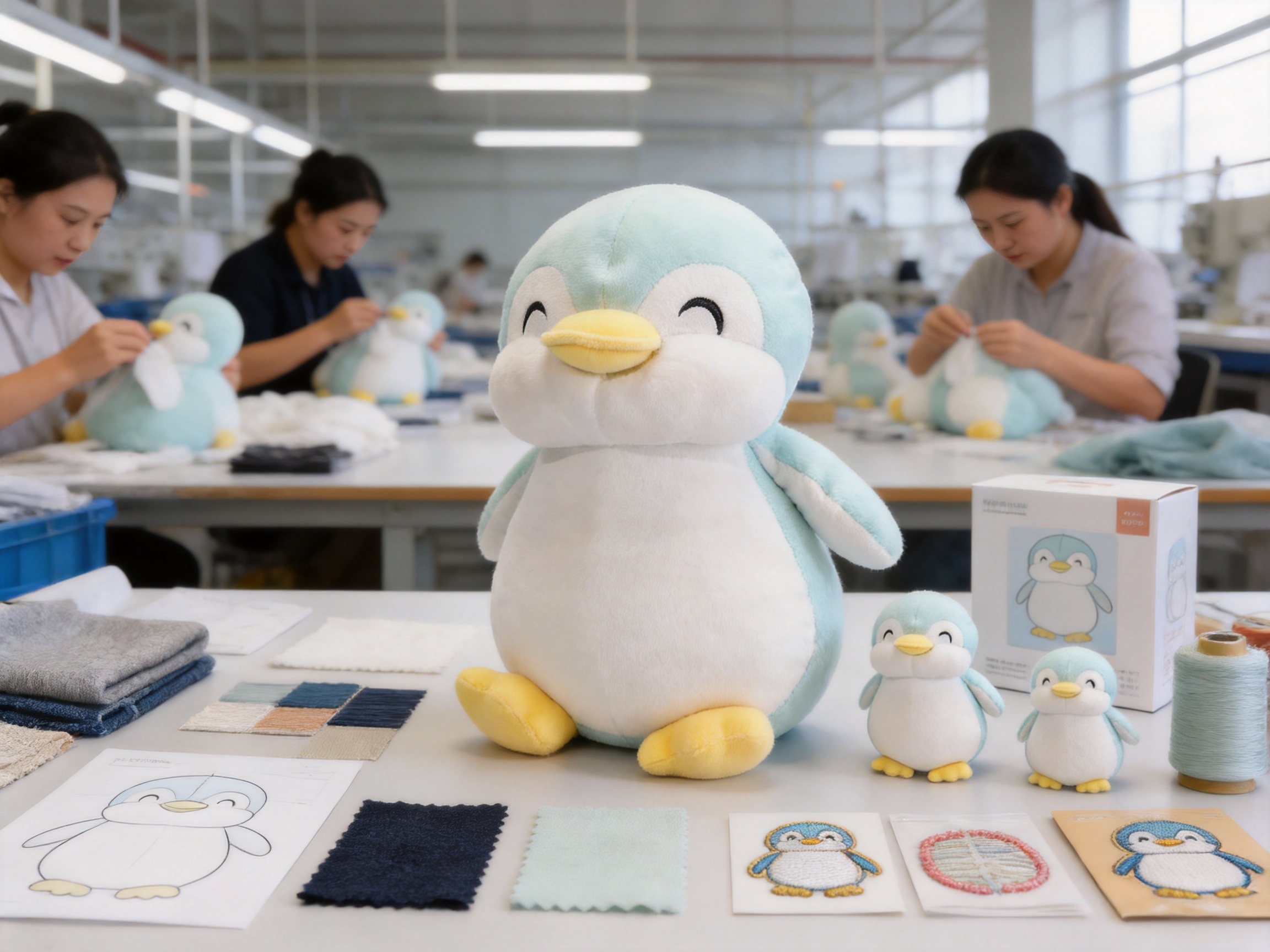
Tianchang Bestjoy Craft & Gift Co., Ltd. is described as an integrated manufacturer specializing in research and development, design, production, sales, and after-sales service. This integrated structure can provide important advantages for buyers who want to move from concept to finished plush product through a coordinated supplier.
The company was established in 2013 as a joint venture involving Hong Kong Jintong International Co., Ltd. and Tianyuan Enterprise Investment Management Co., Ltd. Its factory is located in Jinji Industrial Park, Tianchang City, Anhui Province, China, and covers more than 10,000 square meters. This industrial setting provides a dedicated base for product development, manufacturing, storage, and order coordination.
An integrated factory can reduce communication gaps between design, sampling, production, and sales teams. When a buyer requests a change to the pattern, color, stuffing, packaging, or finishing method, information can be coordinated within the same operational system. This is especially useful during sample revisions, when quick and accurate communication can influence the project schedule.
The manufacturing process for a plush toy generally begins with product interpretation. A design team reviews drawings, reference samples, measurements, color requirements, intended use, and packaging expectations. The concept is then translated into pattern pieces and construction details. For the penguin, this stage includes defining the body shape, head proportions, wing placement, facial details, base structure, and sitting stability.
Pattern development is critical because it determines the final three-dimensional form. A successful pattern must account for seam allowances, fabric direction, stuffing expansion, symmetry, and the behavior of different materials. The pattern may be adjusted through multiple sample rounds to achieve the desired balance between appearance and production efficiency.
Once the pattern is approved, fabric and component preparation begins. Plush fabric is inspected for color consistency, texture, pile direction, and visible defects. PP cotton filling is prepared for controlled insertion. Embroidered or appliquéd details are arranged according to the approved artwork and technical specifications.
Cutting transforms the approved pattern into fabric components. Accurate cutting helps ensure that the left and right sides of the toy remain balanced. It also reduces material waste and supports consistent dimensions across a production batch. For a two-color design, careful component organization is necessary to maintain clean transitions between the light blue-green and white sections.
Sewing operations join the cut parts into the recognizable penguin shape. Skilled operators must manage curves, corners, seams, and fabric pile direction. The body, head, wings, and other parts are assembled in a planned sequence so that the structure remains stable and the external appearance is neat.
Embroidery or other facial detailing is generally completed according to approved positioning guides. Even slight differences in eye spacing or beak placement can change the personality of a plush character. Consistent templates and inspection procedures help ensure that products in the same order maintain a uniform appearance.
Filling is performed after the relevant sections have been sewn and turned. PP cotton is inserted and distributed to create the intended volume and softness. Operators check the firmness of the body, the shape of the head, the stability of the base, and the balance of the sitting posture. Additional shaping may be performed before final closure.
Finishing includes thread trimming, surface cleaning, shaping, label attachment, accessory installation, and final appearance checks. Loose threads, uneven seams, fabric marks, and filling irregularities are addressed before packing. The completed penguin is then folded or positioned according to the selected packaging method.
Quality inspection is performed at appropriate stages rather than only at the end. Early checks may focus on materials and cutting. In-process checks may review sewing, embroidery, stuffing, and assembly. Final inspection may verify measurements, appearance, labels, packaging, and order quantity. A staged approach can help identify issues before they affect a larger quantity of products.
Production Strengths for International Buyers
The company reports annual sales exceeding 12 million RMB and exports products to Europe, America, Australia, Japan, and South Korea. International experience can help a manufacturer understand the importance of clear specifications, consistent packaging, order documentation, and communication across different markets.
The company’s customer base has included major clients such as Walmart, Target, Albertsons, and Kmart. Experience with large or established retail customers may indicate familiarity with structured purchasing processes, product approval requirements, delivery coordination, and quality expectations. Each project remains subject to its own specifications, but this background provides useful manufacturing context for prospective buyers.
Bestjoy’s product range includes trendy plush toys, children’s plush toys, pet plush toys, plush promotional gifts, plush home furnishings, plush stationery gifts, plush handicrafts, and plush cartoon decorations. This broad product experience can support buyers who need more than one type of plush item or who want to build a coordinated product family.
The company also offers in-stock services. In-stock availability may be useful for buyers who need standard products for short-term promotions, urgent gift programs, or seasonal replenishment. For projects requiring exclusive features, the OEM and ODM development route provides a separate path for customization.
Sample Development and Order Process
A clear development process helps buyers understand the stages involved in creating a customized plush product. The standard penguin can serve as a starting point, while more extensive projects may require new patterns and several rounds of review.
Step One: Requirement Confirmation
The buyer provides the desired size, target market, quantity, color references, packaging format, branding information, delivery destination, and intended sales channel. If the product is for children, promotional use, home décor, or a specialty collection, that purpose should be explained at the beginning because it may affect materials and construction.
Step Two: Design Review
The manufacturer reviews artwork, drawings, reference products, and technical requirements. At this stage, questions may be raised about proportions, fabrics, accessories, embroidery, safety-related details, or packaging dimensions. Confirming these points early reduces the risk of misunderstandings later.
Step Three: Prototype Sampling
A sample is created to demonstrate the shape, colors, materials, details, and overall character. The listed sample fee is US$100 per design, while the stated sample time is approximately one week. Actual timing may depend on design complexity, material availability, and the number of requested components.
Step Four: Sample Evaluation
The buyer examines the sample for softness, size, color, facial expression, sitting stability, stitching, filling, and general appearance. Comments should ideally be provided in an organized format, with marked images or written measurements where possible. Clear feedback makes revisions more efficient.
Step Five: Pre-Production Confirmation
After the sample is approved, the buyer and manufacturer confirm the final specifications. These may include materials, colors, dimensions, tolerance ranges, labels, packaging, carton information, quantity, payment terms, and delivery schedule. The approved sample becomes an important reference for production.
Step Six: Bulk Manufacturing
Bulk production begins after the relevant approvals and order arrangements are completed. Materials are prepared, patterns are scheduled, components are produced, and finished toys move through assembly and inspection. The stated minimum order quantity is 1,000 pieces, which supports commercial production while allowing a manageable entry quantity for many wholesale programs.
Step Seven: Final Inspection and Delivery
Finished goods are inspected, packed, counted, and prepared for shipment. The stated delivery time is approximately five to six weeks. The final schedule should be confirmed for each order because quantity, customization, packaging, production capacity, and shipping arrangements can affect the actual timeline.
Quality, Safety, and Responsible Product Planning
Plush toys intended for children or public distribution should be developed with safety and compliance requirements in mind. Buyers should identify the destination market at the start of the project because regulations and testing expectations vary by country and product category.
Important considerations may include fabric and filling specifications, colorants, small components, eye and nose construction, seam strength, stuffing retention, flammability requirements, labeling, packaging, and age grading. The appropriate testing and documentation should be discussed with the manufacturer and relevant testing providers before mass production.
For a soft penguin design, embroidered facial details may offer a practical alternative to certain hard components, depending on the intended age range and approved design. However, every final feature should be reviewed according to the applicable market requirements. Accessories such as scarves, tags, or decorative elements should also be evaluated for attachment strength and suitability.
Quality is not limited to laboratory testing. Visual consistency, tactile feel, dimensional accuracy, clean stitching, and stable posture all influence customer satisfaction. A toy that meets formal requirements but has uneven facial placement or poor filling distribution may still receive negative feedback. Manufacturing quality therefore depends on both compliance and craftsmanship.
Buyers can support quality control by providing complete specifications, approving a physical sample, defining acceptable tolerances, and requesting clear packaging instructions. Consistent communication between the purchasing team and the factory helps align expectations before production begins.
Merchandising and Marketing Opportunities
The penguin can be presented through several storytelling directions. A winter collection may emphasize snow, friendship, warmth, and holiday gifting. An environmental collection may connect the penguin with ocean protection and wildlife awareness. A children’s collection may focus on exploration, curiosity, and companionship.
Color-led merchandising is another effective approach. The light blue-green and white palette can be displayed alongside products in similar pastel or aquatic tones. In a retail setting, the penguin may be paired with snowflake decorations, blue packaging, polar animal illustrations, winter stationery, or ocean-themed accessories.
For online retail, photography should communicate scale, texture, posture, and color accurately. Buyers may choose to show the penguin from the front, side, and back, along with a close view of the plush surface and facial details. Lifestyle images can demonstrate how the toy looks on a shelf, bed, desk, or gift table.
Promotional copy should focus on the product’s gentle appearance, soft touch, fresh colors, sitting posture, and customization potential. If the product is part of an environmental or educational campaign, the surrounding message should be accurate and appropriate for the intended audience.
Gift bundling can increase the product’s perceived value. The penguin may be paired with a greeting card, winter mug, blanket, notebook, children’s book, seasonal ornament, or other themed item. For corporate customers, a branded gift box can transform the plush toy into a complete campaign package.
Why Choose an Experienced Custom Plush Manufacturer?
Developing a plush toy involves more than sewing fabric into a simple shape. It requires coordination among creative design, material selection, pattern engineering, sample development, production planning, quality control, packaging, and delivery. A manufacturer with integrated capabilities can manage these stages more efficiently than a supplier focused on only one part of the process.
Bestjoy’s history since 2013 provides experience in the plush product sector. Its factory area of more than 10,000 square meters indicates a substantial operating base for design, production, and related activities. Its international export coverage demonstrates experience serving customers across several regions and commercial cultures.
The company’s product diversity is also valuable. A buyer may begin with the penguin plush toy and later request matching animals, promotional gifts, home furnishings, stationery gifts, or cartoon decorations. Working with a supplier capable of handling related categories can simplify vendor management and help maintain consistent quality across a collection.
The company’s R&D and design team can support product adaptation, while its production equipment and sales team contribute to project execution. After-sales service is equally important because buyers may need assistance with replenishment, packaging questions, product revisions, or future developments.
For wholesalers, retailers, and brand owners, supplier reliability is often as important as the initial product concept. A visually attractive sample must be supported by repeatable production, organized communication, appropriate inspection, and dependable order coordination. The integrated model described by Bestjoy is intended to address these practical requirements.
Frequently Asked Questions
What is the standard size of the penguin plush toy?
The standard size is approximately 25 centimeters. Customized sizes are also available for buyers who need smaller promotional items, larger decorative versions, or a coordinated range of different dimensions.
What materials are used?
The shell fabric is super soft plush, and the filling material is PP cotton. Buyers can discuss alternative fabrics, textures, colors, and filling specifications for customized projects.
What is the product’s posture?
The standard product has a sitting posture. This gives it a stable base and makes it convenient for shelves, desks, beds, sofas, gift displays, and promotional arrangements.
Can the colors be changed?
Yes. The standard design uses light blue-green and white, but OEM and ODM buyers can discuss alternative colors or coordinated color systems. Color references should be confirmed during sample development.
Can the penguin carry a company logo?
Customized branding may be added through embroidery, labels, hangtags, packaging, patches, or suitable accessories. The best method depends on the logo design, product area, quantity, and intended appearance.
What is the minimum order quantity?
The stated minimum order quantity is 1,000 pieces. The final order terms should be confirmed according to the selected design, materials, packaging, and production requirements.
How much is the sample fee?
The listed sample fee is US$100 per design. The actual fee may depend on the complexity of the design and the number of components required.
How long does sampling take?
The listed sample time is approximately one week. Revisions, special materials, accessories, and packaging samples may influence the final development schedule.
How long does bulk delivery take?
The stated delivery time is approximately five to six weeks. Buyers should confirm the production and shipping schedule for each order because quantity, customization, packaging, and logistics can affect timing.
Is this product suitable for children?
The product is designed as a plush toy, but suitability depends on the final construction, components, labeling, intended age range, and destination-market requirements. Buyers should discuss safety specifications and testing needs before placing a production order.
Can the design be developed as part of a larger animal collection?
Yes. The penguin can serve as one member of a wild animal or polar-themed collection. Additional animals, colors, sizes, accessories, and packaging styles can be developed through an OEM or ODM program.
Is the toy suitable for promotional events?
Its recognizable animal shape, moderate size, sitting posture, and customization potential make it suitable for promotional gifts, exhibitions, seasonal campaigns, customer rewards, environmental programs, and branded events.
Where is the manufacturer located?
The manufacturer is located in Jinji Industrial Park, Tianchang City, Anhui Province, China.
Which markets does the company serve?
The company’s products are exported to Europe, America, Australia, Japan, and South Korea. Its reported customer experience includes major retail clients such as Walmart, Target, Albertsons, and Kmart.
Buyer Checklist for a Successful Penguin Plush Project
Before requesting a quotation, buyers should define the intended product purpose. A toy for a children’s retail range may require different details from a promotional item intended for adult customers or a decorative home gift. Clarifying the purpose helps guide material selection, labeling, packaging, and design decisions.
Buyers should also prepare accurate artwork or reference information. Useful materials may include front and side drawings, dimensions, color references, logo files, embroidery artwork, packaging concepts, and examples of preferred fabric textures. The more complete the initial information, the more efficient the sample review process can be.
Quantity planning should include both the initial order and possible replenishment needs. A buyer should consider whether the product will be sold as a single item, part of a collection, included in a gift set, or distributed in a promotional campaign. Forecasting helps determine the most suitable size, packaging method, and production schedule.
Packaging requirements should be confirmed before mass production. Individual packaging, retail cartons, display cartons, barcode labels, multilingual instructions, and carton markings can affect both cost and lead time. Early confirmation helps prevent last-minute changes.
Finally, buyers should agree on inspection expectations. A clear quality standard may include measurements, color tolerance, seam appearance, filling density, facial placement, label position, accessory attachment, and packaging condition. A signed or approved sample can serve as a practical visual reference for the bulk order.
Conclusion
The adorable wild animal penguin plush toy combines a recognizable animal silhouette with a distinctive light blue-green and white color palette. Its super soft plush exterior, PP cotton filling, sitting posture, approximately 25-centimeter size, and moderate weight create a balanced product for retail, gifting, promotion, home lifestyle use, and seasonal merchandising.
Compared with conventional penguin plush designs, the product offers a fresher visual identity, practical display stability, broad seasonal flexibility, and strong customization potential. It can be sold as a standalone stuffed animal, developed into a character, included in a wild animal collection, or adapted for a branded promotional campaign.
The manufacturing foundation behind the product adds further value. Tianchang Bestjoy Craft & Gift Co., Ltd. provides integrated R&D, design, production, sales, and after-sales capabilities, supported by a factory of more than 10,000 square meters and experience serving international markets. Its OEM and ODM services allow buyers to adjust size, colors, materials, facial details, accessories, labels, packaging, and other product elements.
For buyers seeking a gentle, contemporary, and commercially flexible plush product, this penguin offers a strong starting point. With careful sample approval, clear specifications, suitable quality planning, and coordinated production, it can become an appealing addition to children’s collections, trendy character programs, home gift ranges, seasonal displays, and promotional product portfolios.
References
1. Product specification and description supplied for the adorable wild animal penguin plush toy.
2. Manufacturer information supplied for Tianchang Bestjoy Craft & Gift Co., Ltd., including company history, factory information, product categories, export markets, and service capabilities.
3. General principles of plush toy product development, including pattern construction, fabric selection, filling distribution, sewing, finishing, inspection, and packaging planning.
4. General international product-development considerations for children’s toys, promotional gifts, textile products, labeling, and market-specific safety evaluation.
5. General retail merchandising practices for stuffed animals, seasonal plush products, home lifestyle gifts, and character merchandise.