en
 русский
 Español
 عربى

Content
- 1 Product Overview
- 2 Why Fruit Characters Work Well as Plush Keychains
- 3 Advantages Compared with Conventional Character Accessories
- 4 Material and Construction Features
- 5 Design Development for Custom Fruit Plush Keychains
- 6 Manufacturing Strengths and Production Capabilities
- 7 Production Process for the Fruit Plush Keychains
- 8 Packaging and Logistics Information
- 9 Commercial Applications
- 10 How the Product Creates Competitive Value
- 11 Buyer Checklist Before Ordering
- 12 Care, Presentation, and Product Longevity
- 13 Frequently Asked Questions
- 13.1 What is the approximate size of the Cheerful Fruit Plush Keychains?
- 13.2 What materials are used?
- 13.3 Can I customize the fruit character?
- 13.4 What is the minimum order quantity?
- 13.5 How much is the sample fee?
- 13.6 How long does sampling take?
- 13.7 How long does bulk production take?
- 13.8 Are the keychains suitable for children?
- 13.9 Can I order a complete fruit collection?
- 13.10 Can the packaging be customized?
- 13.11 Where is the manufacturer located?
- 13.12 What markets does the company serve?
- 14 Conclusion
- 15 References
- 16 Product: Cheerful fruit plush keychains
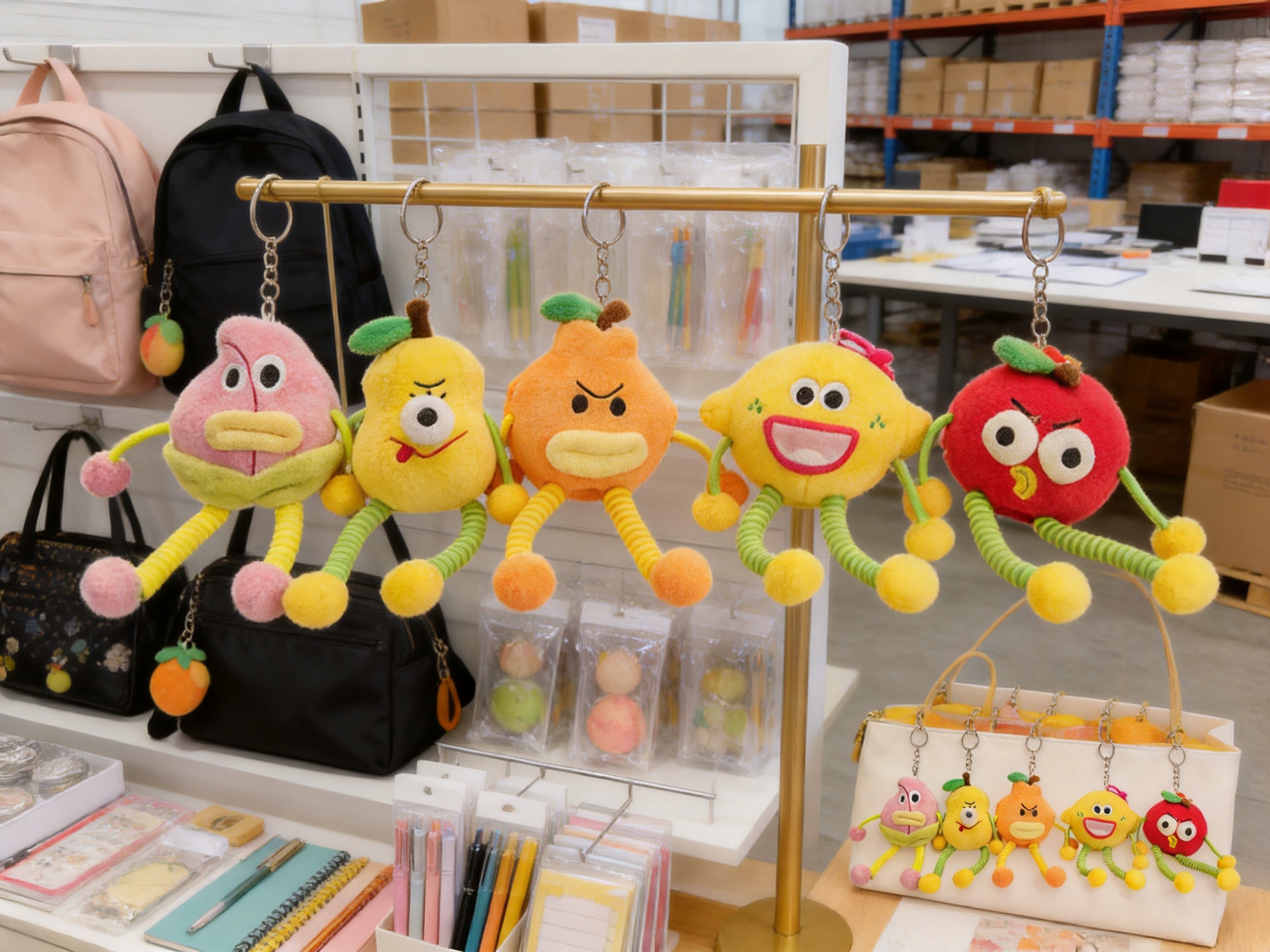
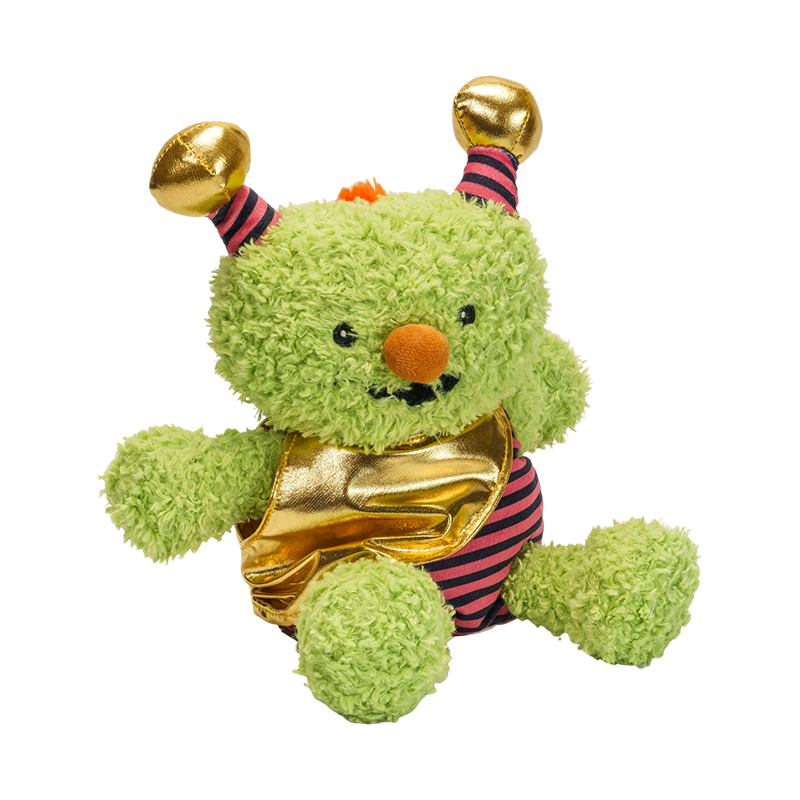
Cheerful Fruit Plush Keychains combine the appeal of colorful fruit characters with the comfort and charm of soft plush toys. Designed for attachment to keys, handbags, backpacks, luggage, pencil cases, and promotional displays, these compact accessories provide a practical way to add personality to everyday items. Their cheerful appearance, soft touch, lightweight format, and customization potential make them suitable for retailers, gift companies, promotional agencies, children’s brands, seasonal campaigns, and lifestyle product collections.
This article examines the product’s design advantages, material structure, production possibilities, packaging information, customization process, and commercial applications. It also explains how an experienced plush manufacturer can transform a simple fruit-inspired idea into a consistent, market-ready product through research and development, professional sampling, carefully managed sewing, quality control, and export-oriented production.
Product Overview
The Cheerful Fruit Plush Keychains feature a creative design concept that blends refreshing fruit imagery with adorable character styling. Instead of presenting fruit as a plain decorative object, the design turns familiar fruits into friendly plush companions. Bright colors help the characters attract attention, while soft plush fabric creates a tactile experience that encourages customers to touch and carry them.
At approximately 5 centimeters, the keychains are compact enough for daily use without creating unnecessary bulk. They can be attached to a key ring, zipper, schoolbag, tote bag, travel case, purse, or phone pouch. Their small size also makes them suitable for impulse purchases, event giveaways, seasonal merchandise, and coordinated collections.
The supplied specification lists a weight of 150 grams. Because actual weight may vary depending on the selected character, accessories, packaging method, and whether the figure is weighed individually or as part of a set, buyers should confirm the final production weight during sampling and pre-production approval.
Multiple color choices are available, and OEM/ODM development is supported. This allows customers to select existing fruit concepts, request new fruit characters, adapt colors to a brand identity, add logos, or develop a complete series around a particular theme. The minimum order quantity is listed as 500 pieces, making the product accessible to small and medium-sized brands while remaining suitable for larger commercial orders.
| Product Attribute | Specification |
| Product Name | Cheerful Fruit Plush Keychains |
| Product Category | Plush Keychains |
| Approximate Size | 5 cm or customized |
| Listed Weight | 150 g |
| Color | Multiple choices |
| Outer Material | Soft plush fabric |
| Filling | PP cotton |
| OEM/ODM | Available |
| Minimum Order Quantity | 500 pieces |
| Sample Fee | US$100 per design |
| Sample Lead Time | 3–7 working days |
| Production Lead Time | Approximately 45 days |
Why Fruit Characters Work Well as Plush Keychains
Instant Visual Recognition
Fruit is one of the most recognizable and approachable design themes. A strawberry, lemon, orange, watermelon, apple, cherry, peach, or banana can often be understood immediately through shape and color. This visual familiarity gives fruit characters a strong advantage over abstract designs that may require more explanation.
When fruit imagery is combined with eyes, facial expressions, limbs, clothing, or other character elements, the result becomes more emotionally engaging. Customers do not simply see a fruit-shaped accessory; they see a small personality. This character-based approach can encourage collection, gifting, social sharing, and repeat purchases.
Bright Colors Attract Attention
Fruit naturally provides a wide color palette. Yellow, orange, red, pink, green, purple, and light blue can be used to create a vibrant display. Bright colors are especially useful in retail environments because they stand out against neutral backgrounds such as display boards, shelves, bags, and stationery areas.
Color also allows a collection to communicate different moods. Warm colors can create an energetic and summery feeling, while pastel shades can support a gentle, cute, or lifestyle-oriented aesthetic. A buyer can use color coordination to match a campaign, holiday, brand identity, or seasonal assortment.
Soft Texture Encourages Interaction
Plush keychains offer more than visual decoration. Their soft surface creates a pleasant tactile experience that differentiates them from hard plastic, metal, or acrylic accessories. The outer plush material feels comfortable in the hand and can make the product more appealing to children, young consumers, gift buyers, and customers who enjoy tactile lifestyle items.
The use of PP cotton filling helps create a lightweight, resilient interior. Proper filling distribution allows the character to maintain its general shape while preserving a soft and squeezable feel. The final firmness can be adjusted during development according to the desired appearance and customer requirements.
Convenient Everyday Format
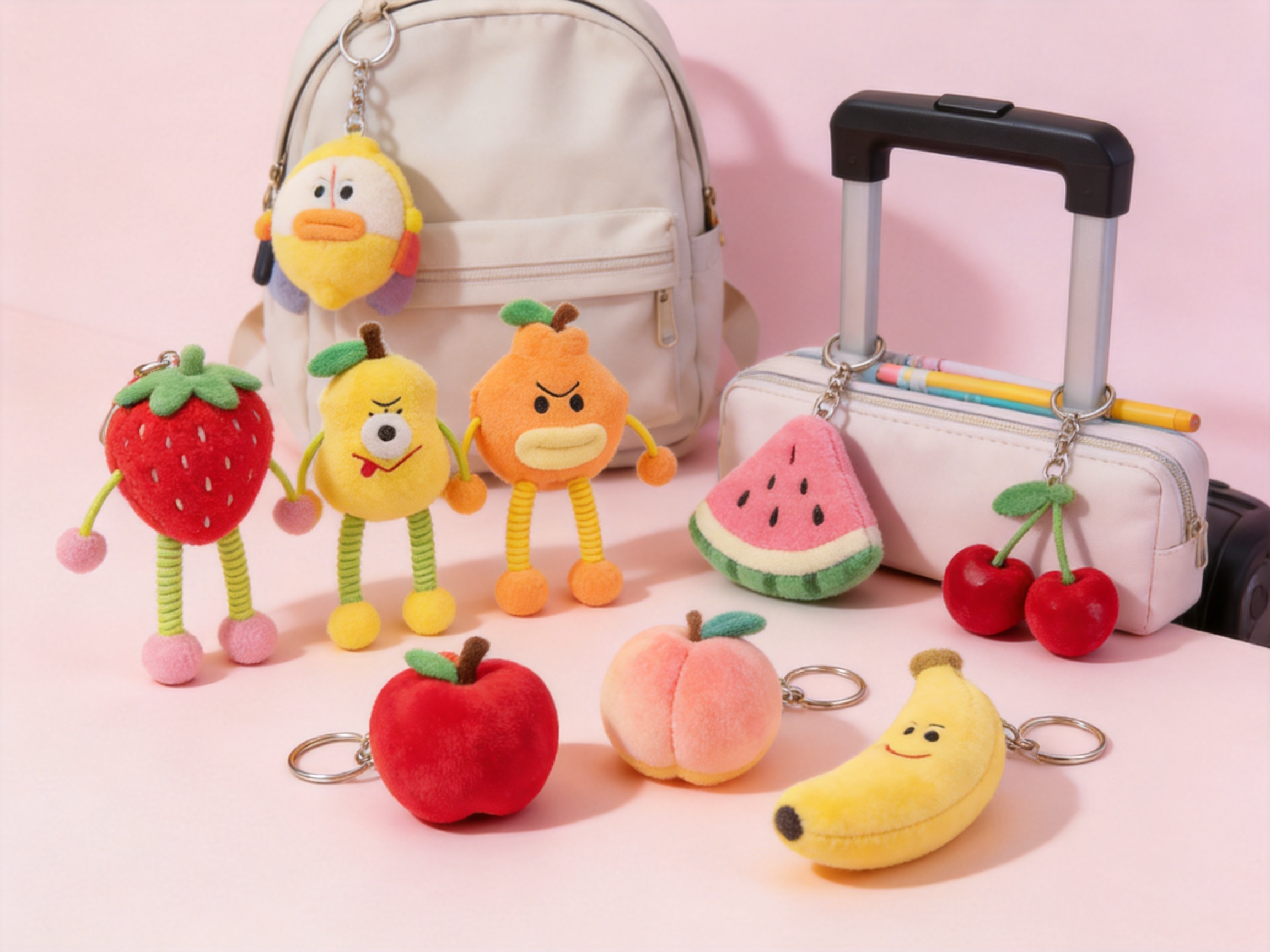
A keychain is a highly practical format because it can be used with items people already carry. Customers do not need to find a special place for the product. It can be clipped to a bag handle, attached to a zipper, placed on a set of keys, or displayed on a travel case.
This everyday visibility gives the product promotional value. A logo, mascot, color scheme, or campaign character can travel with the user and remain visible in public settings. Compared with a larger plush toy, a small keychain is easier to distribute, store, transport, and display.
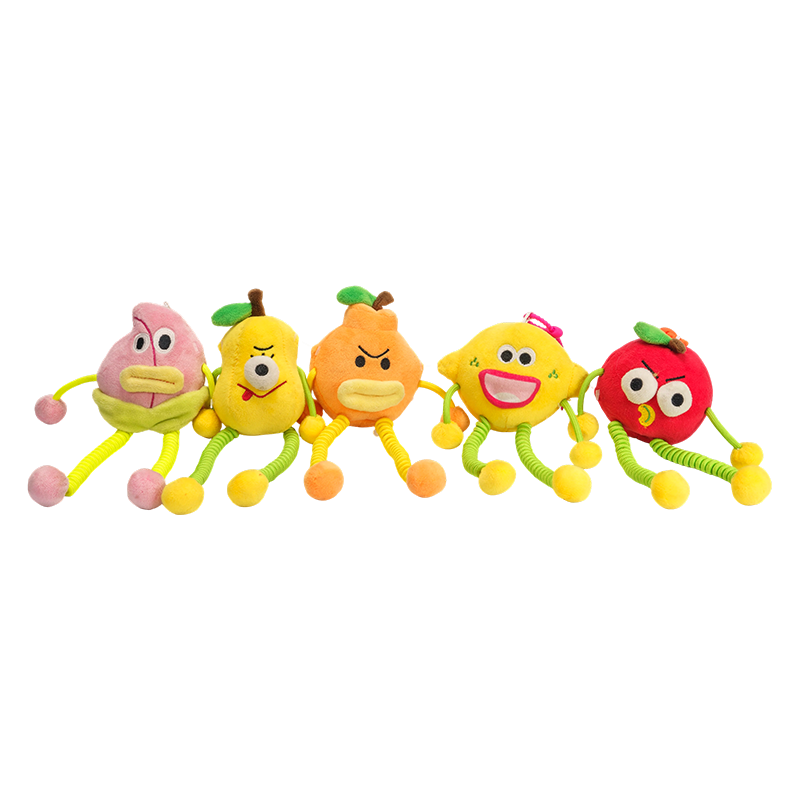
Cheerful fruit plush keychains
Advantages Compared with Conventional Character Accessories
More Tactile Than Flat Printed Products
Printed key tags, paper charms, and flat acrylic accessories can display attractive graphics, but they usually provide little tactile depth. A plush keychain adds three-dimensional form and a soft surface. This creates a stronger physical connection between the customer and the product.
The dimensional construction also gives designers more opportunities to develop distinctive silhouettes. A fruit can be made round, elongated, layered, leafy, smiling, sleepy, or dressed as a themed character. These forms can make the collection more memorable and visually rich.
More Giftable Than Ordinary Utility Items
Many conventional key accessories are purchased only for function. Fruit plush keychains combine utility with emotional appeal. They can be bought as small gifts for friends, classmates, colleagues, family members, or event participants. Their affordable-looking format and cheerful appearance make them suitable for spontaneous purchases.
Retailers can position them near checkout counters, lifestyle displays, stationery shelves, children’s sections, travel accessories, or seasonal merchandise areas. Promotional companies can include them in gift packs, loyalty programs, school activities, food campaigns, and brand events.
Better Potential for Series Development
A single character can become the starting point for an entire fruit collection. Different fruits can share the same face style, proportions, fabric treatment, hanging hardware, and packaging format. This consistency creates a recognizable product family while allowing every character to maintain its own color and personality.
Series-based products can encourage customers to collect multiple designs. A retailer may offer a core assortment throughout the year and introduce limited editions for summer, back-to-school campaigns, festivals, holidays, or special collaborations.
Flexible for Branding and Customization
The fruit theme is broad enough to support many kinds of branding. A food company may select fruit imagery connected with its products. A supermarket or grocery chain may use a mascot-style fruit collection. A beverage brand may develop citrus or berry characters. A children’s brand may create a complete educational fruit family.
Customization may include fabric color, facial expression, embroidered details, printed elements, accessories, labels, hangtags, packaging, and attachment hardware. OEM/ODM availability means that customers are not limited to a standard stock appearance.
Material and Construction Features
Soft Plush Fabric
The shell fabric is listed as soft plush fabric. This material is appropriate for products whose main selling point includes touch, comfort, and visual softness. Fabric selection influences the character’s appearance, color saturation, surface direction, durability, and perceived value.
For a fruit character, fabric can be selected to create different visual effects. A short plush may provide a clean and precise outline, while a longer or more textured plush may create a richer, more playful appearance. Smooth fabric can support bright color blocks, while contrasting fabric types can distinguish leaves, stems, cheeks, seeds, or decorative sections.
PP Cotton Filling
PP cotton is used as the filling material. It is commonly selected for plush products because it is lightweight and can be distributed inside small shapes. The filling process must be managed carefully to avoid empty areas, excessive hardness, or uneven surfaces.
For a small keychain, filling accuracy is particularly important. Even slight differences can affect the silhouette of the fruit, the balance of the character, and the way it hangs from a bag or key ring. During sampling, the manufacturer can evaluate the relationship between shell dimensions, seam allowance, filling density, and final appearance.
Attachment Hardware
The keychain format requires a secure attachment system. Depending on the final design, the product may use a metal key ring, clasp, chain, loop, or another suitable connector. Hardware selection should consider weight, corrosion resistance, visual style, user convenience, and the intended market.
The connection point should be reinforced during construction. A well-designed attachment area helps reduce stress on the fabric when the product is repeatedly clipped onto bags or removed from keys. Buyers should request confirmation of hardware color, size, finish, and attachment method during the sample stage.
Decorative Details
Facial features and fruit details may be created through embroidery, appliqué, printed fabric, sewn components, or a combination of techniques. Embroidery is often suitable for eyes, mouths, seeds, small dots, and simple expressions. Appliqué can create visible layers for leaves, peel sections, or contrasting fruit surfaces.
The most appropriate technique depends on the size of the design and the required level of detail. Since the listed product size is approximately 5 centimeters, miniature elements should remain clear and proportionate. Overly complicated features can become difficult to reproduce consistently at a small scale.
Design Development for Custom Fruit Plush Keychains
Concept Selection
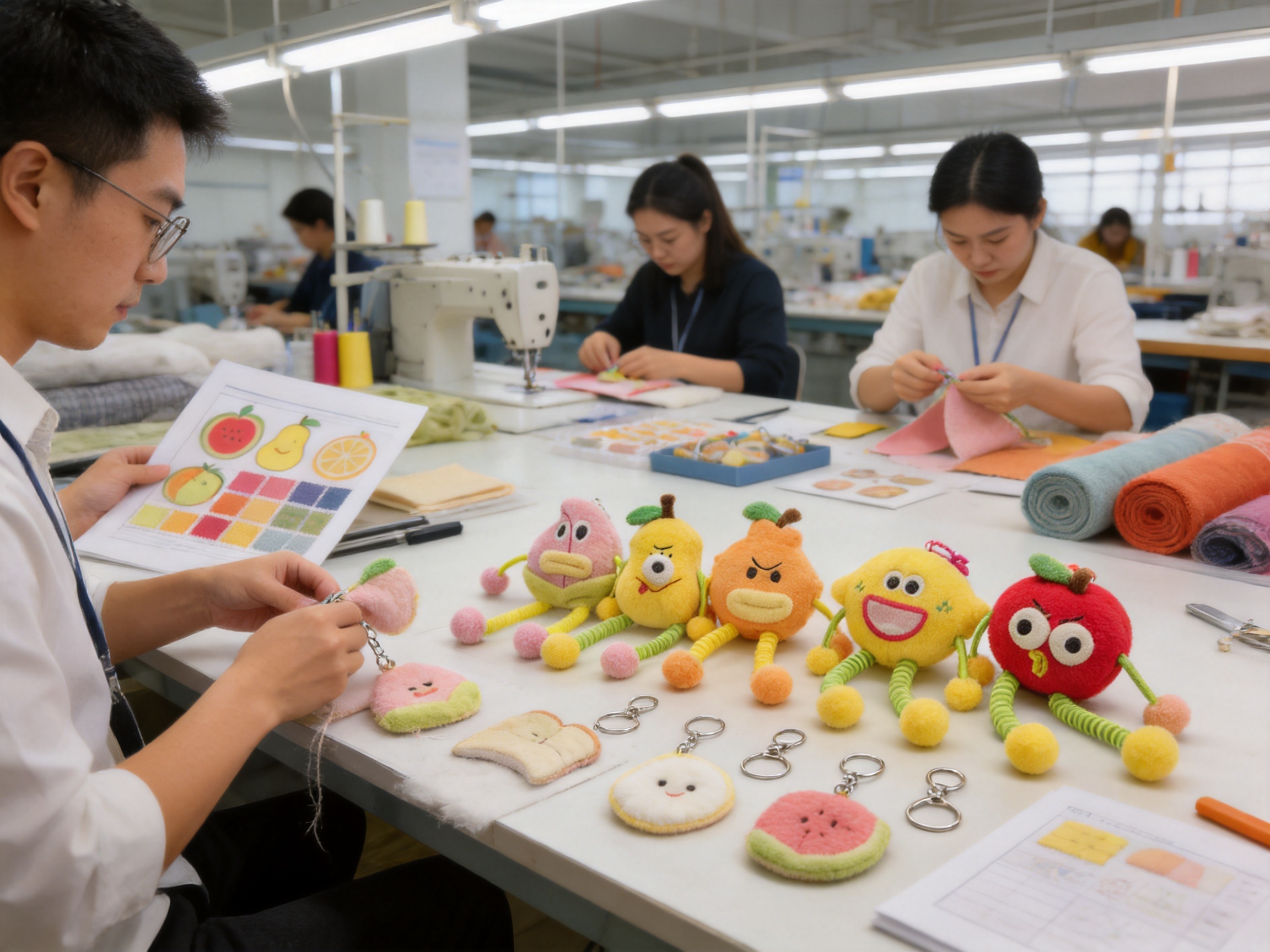
The development process begins with a visual concept. Customers may provide a drawing, character reference, digital illustration, logo, mood board, product photograph, or written description. The design team can then consider how the concept will translate into a three-dimensional plush form.
At this stage, it is important to evaluate the character’s outline, color distribution, facial expression, hanging position, and intended audience. A design that looks attractive as a flat illustration may require adjustments before it can be produced as a small plush keychain.
Three-Dimensional Interpretation
Plush manufacturing uses fabric panels rather than a single flat surface. The design must therefore be divided into workable components. The manufacturer considers how seams will shape the fruit, where the fabric joins will be placed, how the filling will enter the body, and how the hardware will be secured.
A professional interpretation preserves the key visual features while simplifying details that may not be practical at a small scale. This is one of the areas where manufacturing experience adds value. The goal is not only to copy a drawing but also to create a product that can be sewn, filled, finished, inspected, packaged, and reproduced in quantity.
Color Matching
Color consistency is important when producing a series or matching an existing brand. Customers should provide reference colors whenever possible. These may be based on physical samples, approved color standards, printed references, or digital specifications.
Because fabric can reflect light differently from paper or a screen, final color approval should be based on an actual fabric or sample whenever exact matching is important. The manufacturer can help identify suitable materials and determine whether one fabric type can reproduce the required color more effectively than another.
Sample Approval
The listed sample lead time is 3–7 working days per design, depending on project complexity and confirmation speed. A sample allows the buyer to assess the actual product rather than relying only on a drawing or computer rendering.
During sample review, buyers should examine the size, shape, surface softness, filling, expression, seams, fabric color, hardware, hanging balance, and packaging position. Any revisions should be documented clearly so that the final production team has an approved reference.
The sample fee is listed as US$100 per design. Buyers should confirm whether the fee includes one sample, revisions, shipping, special materials, or tooling before placing an order. Clear communication at this stage helps prevent delays later in the production process.
Manufacturing Strengths and Production Capabilities
Tianchang Bestjoy Craft & Gift Co., Ltd. is described as an integrated manufacturer covering research and development, design, production, and sales. This integrated structure is valuable for custom plush keychains because it connects creative development with practical manufacturing requirements.
The company was established in 2013 as a joint venture involving Hong Kong Jintong International Co., Ltd. and Tianyuan Enterprise Investment Management Co., Ltd. Its factory is located in Jinji Town, Tianchang City, Anhui Province, China, and covers more than 10,000 square meters.
A factory of this scale can support coordinated work across design, material preparation, cutting, sewing, filling, finishing, inspection, packaging, and order management. For buyers, this type of integrated production can simplify communication and reduce the need to coordinate multiple separate suppliers.
Research and Development
A dedicated research and development function supports the creation of new plush concepts. For fruit plush keychains, product development may involve translating trends into character themes, refining proportions, testing materials, and preparing multiple designs for a coordinated collection.
R&D also helps identify production risks early. Small products can contain complex details, and the development team must consider whether each feature can be sewn accurately, whether the fabric can support the shape, and whether the finished product can withstand ordinary handling.
Professional Design Team
The company is described as having an innovative R&D and design team. This strength is particularly relevant for OEM and ODM projects. Customers may arrive with only a general idea, such as a cheerful fruit series, and require assistance with character development, visual consistency, color planning, and product differentiation.
A professional design team can help adapt a concept for different markets and age groups. For example, a children’s collection may use large friendly expressions and high-contrast colors, while a lifestyle collection may use softer tones, minimalist faces, and more refined fabric combinations.
Production Equipment and Skilled Manufacturing
The company reports professional production equipment and organized manufacturing capabilities. Plush production requires a combination of equipment and manual skill. Cutting equipment supports repeatable fabric panels, sewing equipment joins components, filling equipment helps distribute PP cotton, and finishing tools support trimming, inspection, and presentation.
Human workmanship remains important even when production equipment is available. Operators must handle curved seams, small components, decorative details, fabric direction, and attachment points. Consistency depends on both equipment and the experience of the production team.
Quality Control
Quality control for plush keychains should cover raw materials, in-process construction, finished appearance, hardware security, dimensions, and packaging. Material inspection helps identify problems with fabric shade, texture, thickness, or surface condition before production begins.
In-process inspection can identify issues such as uneven stitching, misaligned facial features, insufficient filling, excess threads, loose attachments, or incorrect color placement. Finished-product inspection confirms that the approved sample has been followed and that units meet the agreed specifications.
For export orders, packaging inspection is also important. The correct quantity must be placed in each carton, cartons should be labeled accurately, and the packing method should protect the plush surfaces during handling and transportation.
Export Experience
The company’s products are reported to be exported to Europe, America, Australia, Japan, and South Korea. Experience with international markets can help a manufacturer understand the importance of communication, documentation, packaging, production schedules, and buyer approval procedures.
The company also identifies major clients including Walmart, Target, Albertsons, and Kmart. These customer references indicate experience serving established retail environments, although each new project should still be evaluated according to its own specifications, compliance requirements, testing needs, and quality expectations.
Production Process for the Fruit Plush Keychains
Step One: Requirement Confirmation
The process begins with confirmation of the design, size, materials, color, quantity, packaging, hardware, labeling, and delivery requirements. Buyers should provide all available artwork and explain the intended sales channel. A product for a children’s retail collection may require different details from a promotional giveaway for an adult lifestyle campaign.
Step Two: Pattern and Material Preparation
Once the design is approved for development, pattern pieces are prepared. Patterns determine the shape and size of the fabric components. The manufacturer selects appropriate plush fabric, lining or backing materials if required, thread, embroidery materials, filling, and hardware.
The pattern must include suitable seam allowances and account for the way fabric changes shape when sewn and filled. This is especially important for fruit forms with curves, points, leaves, stems, or multiple color sections.
Step Three: Cutting
Fabric is cut according to the approved pattern. Accurate cutting helps maintain consistency across units and supports efficient material use. The direction of the plush pile may also need to be considered so that the finished surfaces appear uniform.
For multi-color fruit characters, each fabric section must be identified and positioned correctly. Errors at the cutting or preparation stage can affect the character’s expression, color balance, and overall identity.
Step Four: Embroidery and Decorative Application
Facial features, seeds, spots, leaves, or other details may be added before or during assembly. Embroidery and appliqué should be positioned according to the approved sample. Small deviations can become visible on a compact product, so alignment and repeatability are important.
Step Five: Sewing and Assembly
Fabric panels are sewn together to create the body. The sewing sequence is planned to make the shape practical to assemble and easy to turn. Curved sections require careful control so that the character does not develop unwanted folds or distortions.
Attachment points are integrated or reinforced during assembly. If the key ring is connected through a fabric loop, the loop must be positioned so that the character hangs attractively. If a metal component is attached directly, the surrounding area must be strong enough to withstand normal use.
Step Six: Filling
PP cotton is inserted after the body has been formed or partially assembled. Filling density influences the product’s firmness, silhouette, and tactile quality. The filling should be distributed evenly, especially around corners and narrow sections.
Overfilling may create excessive tension at the seams, while underfilling can cause a collapsed appearance. Sampling helps establish the correct balance for the selected character.
Step Seven: Closing and Finishing
After filling, the remaining opening is closed. Loose threads are trimmed, surface fibers are checked, and the product is shaped by hand if necessary. The keychain hardware is inspected to ensure that it is correctly positioned and attached.
Step Eight: Inspection and Packing
Finished units are inspected against the approved sample and production specifications. Products that do not meet the required appearance or construction standard are separated for correction or rejection. Approved pieces are packed according to the agreed carton configuration.
Packaging and Logistics Information
The supplied packaging information lists a carton size of 30L × 25W × 18H, carton packing of 12 pieces per carton, gross weight of 3 kilograms, and net weight of 2 kilograms. Buyers should verify the final carton data because packaging can change when the product size, individual polybag, hangtag, inner box, or order quantity changes.
| Packaging Attribute | Listed Information |
| Carton Size | 30L × 25W × 18H |
| Carton Packing | 12 pieces per carton |
| Gross Weight | 3 kg |
| Net Weight | 2 kg |
Appropriate packaging protects the plush surface from dust, moisture, friction, and compression during transportation. Individual bags, header cards, hangtags, or printed cartons can also improve retail presentation. For promotional programs, packaging may be customized with campaign information, brand colors, care instructions, or barcodes.
Because the keychains are small, efficient carton packing can help reduce storage requirements. However, products should not be compressed excessively for long periods, as this may affect the plush pile or body shape. Buyers should confirm the recommended packing method for the selected fabric and final design.
The stated delivery time is approximately 45 days. Actual delivery depends on order confirmation, sample approval, material availability, production scheduling, packaging requirements, inspection, and shipping arrangements. A detailed production schedule should be agreed before the purchase order is finalized.
Commercial Applications
Retail Collections
Retailers can sell fruit plush keychains as low-cost accessories, impulse items, seasonal gifts, or collectible character merchandise. Their compact size makes them suitable for counter displays, rotating stands, hanging racks, and mixed accessory walls.
A retailer may offer individual fruits, assorted packs, mystery assortments, or themed sets. A series can be organized by color, flavor, season, personality, or rarity. Packaging can be designed to make each character easy to identify while maintaining a consistent shelf appearance.
Promotional Campaigns
Fruit characters can support campaigns related to freshness, health, food, beverages, summer activities, family events, and cheerful lifestyle messaging. A branded fruit mascot may be used as a giveaway at trade shows, store openings, product launches, loyalty events, or customer appreciation programs.
The product’s practical attachment format gives the promotional message a longer life than a disposable flyer or single-use item. Customers can continue carrying the keychain after the event, allowing the character and brand identity to remain visible.
Children’s Merchandise
The bright colors and friendly character forms are naturally suitable for children’s merchandise. However, products intended for children must be developed and tested according to the applicable regulations and age grading of the target market. Particular attention should be paid to small components, attachment strength, materials, labeling, and testing documentation.
The manufacturer and buyer should determine the intended age range before production. A product marketed as a general bag charm may have different requirements from one specifically promoted as a toy for young children.
Seasonal and Holiday Programs
Fruit designs can be adapted for summer collections, harvest themes, school-season promotions, picnic merchandise, food festivals, and holiday gift programs. Seasonal color combinations, accessories, costumes, or packaging can make a standard fruit character feel new and timely.
Limited editions can create urgency and encourage customers to purchase before the seasonal window closes. Buyers should allow enough time for design approval and production because seasonal campaigns often have fixed launch dates.
Corporate and Event Gifts
Companies can use custom fruit plush keychains as gifts for employees, attendees, retail partners, or customers. A mascot can communicate a friendly and approachable identity at conferences, exhibitions, educational events, and community activities.
The 500-piece minimum order makes the product practical for many event programs. Larger orders can support national campaigns or multi-location promotions, while smaller orders may suit local events, sample distribution, or pilot programs.
How the Product Creates Competitive Value
The key competitive advantage of the Cheerful Fruit Plush Keychains is the combination of recognition, emotion, practicality, and customization. The fruit theme is easy to understand, the plush surface creates a soft tactile experience, and the keychain format provides everyday usability.
Another advantage is the balance between small size and strong visual identity. Larger plush toys may attract attention but require more storage and higher shipping costs. Flat accessories may be easy to transport but offer less texture and emotional impact. These keychains occupy a useful middle ground: they are compact enough for efficient distribution while still offering three-dimensional character appeal.
OEM/ODM capability further strengthens the product’s commercial potential. Buyers can develop designs that are not widely available from generic accessory suppliers. Custom shapes, expressions, colors, packaging, and branding can help a retailer or promotional agency create a differentiated assortment.
The manufacturer’s integrated structure also supports development from concept to finished product. Instead of separating design, sampling, production, and packaging among unrelated suppliers, customers can work with one organization that manages multiple stages. This may improve communication and make revisions easier to coordinate.
The company’s factory scale, export experience, professional equipment, R&D team, sales organization, and after-sales service provide additional support for international customers. These strengths are particularly important when buyers need repeat production, multiple designs, international documentation, or dependable delivery planning.
Buyer Checklist Before Ordering
Before placing an order, buyers should confirm the exact fruit designs, dimensions, colors, materials, hardware, filling density, labels, packaging, carton quantity, and inspection standards. Clear specifications help ensure that all parties share the same expectations.
Buyers should also clarify whether the 5-centimeter measurement refers to the complete product, the body only, or the longest dimension. The listed 150-gram weight should be confirmed as well, particularly if the product will be sold in sets or packed with additional accessories.
Artwork should be supplied in a clear and usable format. If the design includes a logo, text, special facial expression, or precise color requirements, those elements should be identified separately. Buyers should retain an approved sample or detailed approval record for future repeat orders.
Packaging requirements should be discussed before production begins. Important points include individual packaging, hangtags, barcode placement, warning labels, carton marks, inner quantities, export cartons, and palletization if applicable.
For products intended for children or regulated markets, buyers should identify the necessary testing and compliance requirements at the beginning of the project. Requirements can vary by destination, product classification, materials, and intended age range.
Finally, the production schedule should include time for sample approval, material sourcing, manufacturing, inspection, packing, and transportation. The stated 45-day delivery time should be treated as a production planning reference and confirmed for each order.
Care, Presentation, and Product Longevity
Because plush keychains are carried in everyday environments, they may come into contact with dust, clothing, bags, and other surfaces. Product presentation should therefore communicate suitable care instructions according to the selected fabric and construction. Buyers may request care labels or printed packaging guidance where appropriate.
Retail displays should keep the products clean and prevent unnecessary compression. A hanging display can show the fruit silhouettes clearly and allow customers to compare colors and expressions. For online sales, photographs should show the front, side, attachment hardware, scale, and packaging so that customers understand the product accurately.
For long-term use, customers should avoid pulling sharply on the character or connector. If the product is intended for young users, adult supervision and age-appropriate use should be considered according to the final safety assessment and labeling requirements.
Frequently Asked Questions
What is the approximate size of the Cheerful Fruit Plush Keychains?
The listed size is approximately 5 centimeters. Customized dimensions are available, subject to design review, material selection, and production feasibility.
What materials are used?
The outer shell uses soft plush fabric, and the filling material is PP cotton. The keychain may also include metal or other attachment hardware depending on the approved design.
Can I customize the fruit character?
Yes. OEM/ODM services are available. Customers can request customized fruit shapes, colors, facial expressions, decorative details, accessories, labels, packaging, and branding elements.
What is the minimum order quantity?
The listed minimum order quantity is 500 pieces. Buyers should confirm whether the minimum applies per design, per color, or per total order, especially when ordering a collection of different fruit characters.
How much is the sample fee?
The listed sample fee is US$100 per design. Buyers should confirm the exact terms, including whether revisions, shipping, special materials, or additional prototypes are included.
How long does sampling take?
The listed sample lead time is 3–7 working days. The actual time may depend on design complexity, artwork confirmation, material availability, and the number of requested revisions.
How long does bulk production take?
The listed delivery time is approximately 45 days. The final schedule should be confirmed after design approval, order placement, material confirmation, packaging approval, and production planning.
Are the keychains suitable for children?
They may be suitable for children depending on the final design, hardware, age grading, and applicable safety requirements. Buyers should identify the target age group and required testing before production.
Can I order a complete fruit collection?
Yes. The design concept is well suited to a series containing different fruits with consistent character proportions, expressions, packaging, and branding. A collection can include core designs, seasonal editions, or limited releases.
Can the packaging be customized?
Packaging customization can be discussed for retail, promotional, and seasonal programs. Options may include individual bags, hangtags, printed cards, labels, cartons, barcodes, and campaign-specific artwork.
Where is the manufacturer located?
Tianchang Bestjoy Craft & Gift Co., Ltd. is located in Jinji Industrial Park, Tianchang City, Anhui Province, China. The company operates a factory described as covering more than 10,000 square meters.
What markets does the company serve?
The company reports exporting products to Europe, America, Australia, Japan, and South Korea. Its product range includes trendy plush toys, children’s plush toys, pet plush toys, promotional gifts, home furnishings, stationery gifts, handicrafts, and cartoon decorations.
Conclusion
Cheerful Fruit Plush Keychains provide a versatile combination of colorful character design, soft tactile appeal, practical everyday use, and customization flexibility. Their compact 5-centimeter format makes them easy to carry, display, pack, and distribute, while the fruit theme offers immediate recognition and strong potential for series development.
Compared with flat or purely functional accessories, these plush keychains create a more engaging physical experience. They can serve as retail merchandise, promotional gifts, event products, children’s accessories, seasonal items, and branded character collectibles.
The product is supported by soft plush fabric, PP cotton filling, multiple color options, OEM/ODM availability, a listed minimum order quantity of 500 pieces, and a sampling process of approximately 3–7 working days. The manufacturer’s integrated R&D, design, production, sales, and after-sales structure provides a foundation for moving from an initial concept to a finished international order.
With a factory of more than 10,000 square meters, professional production equipment, an innovative design team, international export experience, and service for major retail customers, Tianchang Bestjoy Craft & Gift Co., Ltd. is positioned to support buyers seeking custom plush products for global markets. The strongest results will come from clear artwork, early specification confirmation, careful sample approval, appropriate safety planning, and coordinated production management.
References
1. Product specification sheet for Cheerful Fruit Plush Keychains, including size, materials, customization options, sample information, delivery time, and packaging data.
2. Tianchang Bestjoy Craft & Gift Co., Ltd. company profile, including factory history, production scope, export markets, facility size, and service capabilities.
3. Internal product development principles for plush toys, including pattern preparation, fabric selection, filling distribution, sewing, finishing, inspection, and packaging.
4. General industry guidance for character merchandise, promotional plush products, retail accessories, and custom OEM/ODM product development.