en
en  русский
 Español
 عربى
عربى
Content
- 1 Product Overview
- 2 Why the Lynx Design Stands Out
- 3 Materials and Tactile Experience
- 4 Manufacturing Strengths and Production Capabilities
- 5 Quality-Oriented Features of the Product
- 6 Advantages Compared with Generic Wild Animal Plush Toys
- 7 Applications Across Different Markets
- 8 Customization Opportunities for OEM and ODM Buyers
- 9 Commercial Planning for Distributors and Retailers
- 10 Responsible Product Development
- 11 Why Work with an Integrated Plush Manufacturer
- 12 Product Strengths at a Glance
- 13 Frequently Asked Questions
- 13.1 What type of product is this?
- 13.2 What is the standard size?
- 13.3 How much does the product weigh?
- 13.4 What materials are used?
- 13.5 Is the plush toy suitable for children?
- 13.6 What makes this product different from a regular cat plush toy?
- 13.7 Can the design be customized?
- 13.8 What is the minimum order quantity?
- 13.9 How much is the sample fee?
- 13.10 How long does sampling take?
- 13.11 What is the expected delivery time?
- 13.12 Where can the product be sold?
- 13.13 Can it be developed as part of a larger animal collection?
- 13.14 What should buyers provide for a custom project?
- 14 Conclusion
- 15 References
- 16 Product: Stuffed sitting lynx plush toy wild animal plush toys
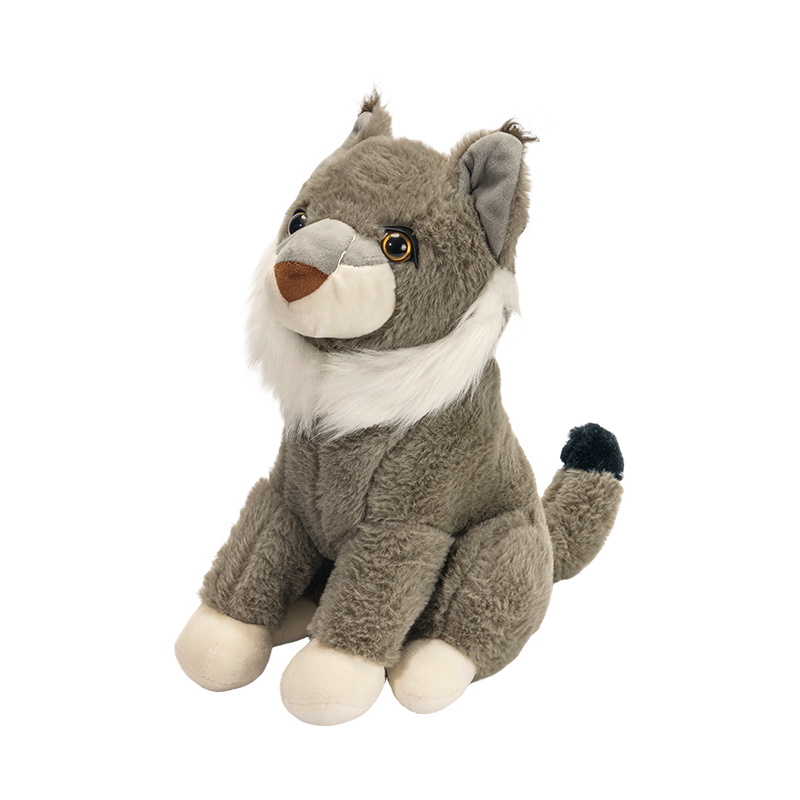
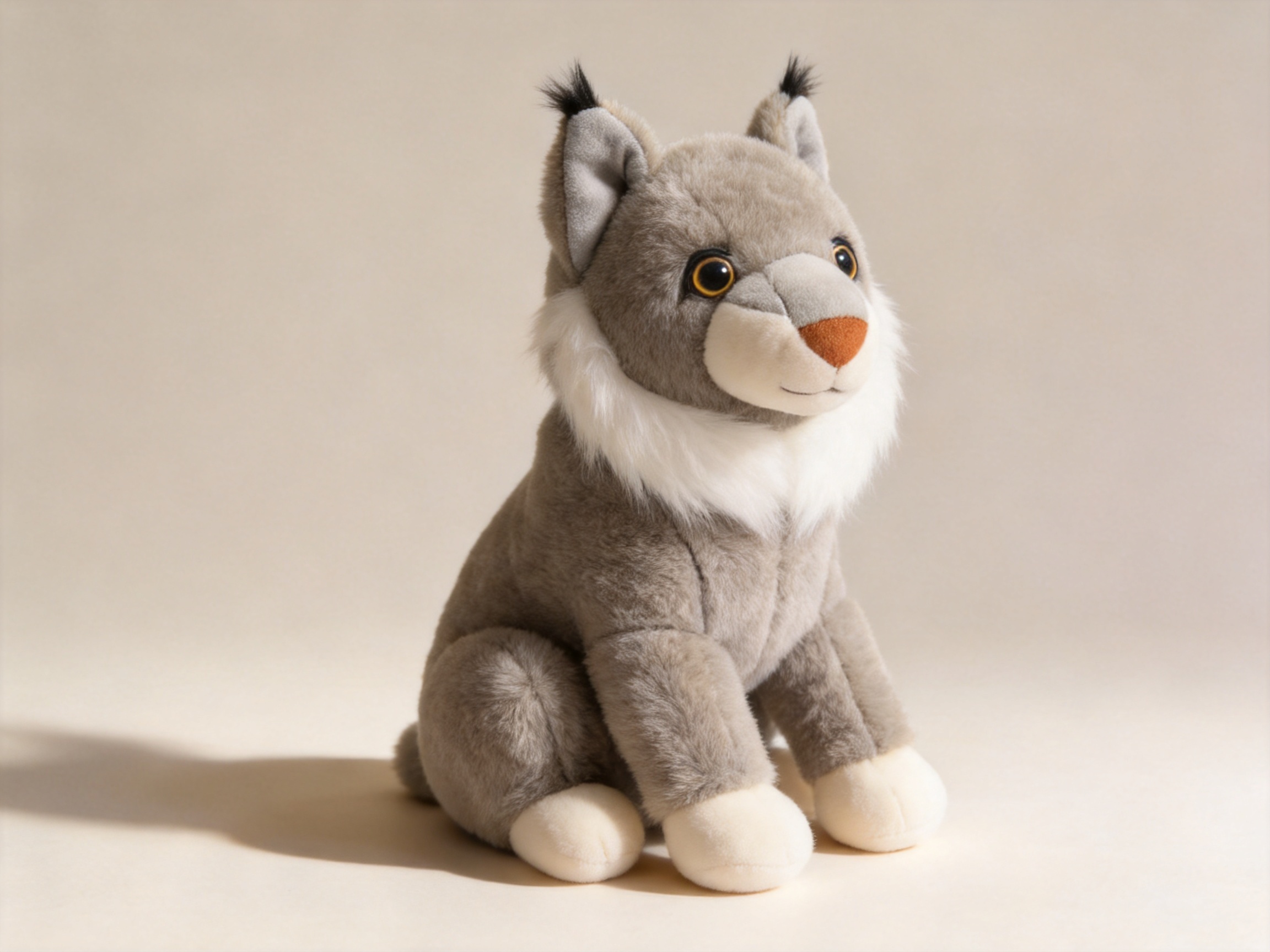
The sitting lynx plush toy is designed for buyers who want more than a conventional stuffed animal. It combines the recognizable appearance of a wild lynx with the softness, approachability, and display value expected from a high-quality plush product. With its light gray coat, white neck ruff, upright ears, black ear tufts, expressive eyes, and gently playful facial expression, this plush animal presents a carefully balanced interpretation of a real lynx.
Wild animal plush toys often face a difficult design challenge. They need to look authentic enough to satisfy collectors, educators, wildlife enthusiasts, and retailers, while remaining friendly and appealing to children and families. A product that is too realistic may appear intimidating, while a product that is too cartoon-like may lose the visual identity of the animal. This sitting lynx addresses that challenge through lifelike color, recognizable anatomical features, and a soft, welcoming expression.
Manufactured by Tianchang Bestjoy Craft & Gift Co., Ltd., the product is suitable for retail collections, museum and zoo gift shops, educational programs, promotional campaigns, seasonal gift assortments, and custom plush development. The manufacturer provides OEM and ODM services, making the design useful not only as a finished product but also as a reference for buyers planning their own wild animal plush series.
The standard product measures approximately 35 centimeters and weighs about 150 grams. It is made with super soft plush fabric and filled with PP cotton. Its sitting style allows it to function as a shelf decoration, bedroom companion, educational prop, or gift item without requiring a large amount of display space.
Stuffed sitting lynx plush toy wild animal plush toys
Product Overview
A lynx is one of nature’s most distinctive wild cats. Its pointed ears, black ear tufts, thick facial fur, compact body, and alert gaze give it an appearance that is immediately recognizable. Translating these characteristics into a plush toy requires attention to silhouette, fabric selection, color placement, facial construction, and stuffing balance.
This product is built around a sitting pose. The sitting position gives the plush a stable visual profile and makes the animal appear attentive, as though it is observing its surroundings. Compared with a long, stretched, or standing plush design, a sitting lynx can be displayed on a desk, bookcase, bedside table, counter, or retail shelf with less horizontal space.
The primary coat color is light gray. This shade supports the natural appearance of the animal while also creating a soft and neutral visual impression. Light gray is versatile for merchandising because it can complement children’s rooms, nature-themed interiors, winter displays, outdoor collections, and neutral home décor. It also allows the white neck ruff and dark ear details to stand out clearly.
The neck is surrounded by a thick white ruff. In a real lynx, the facial and neck fur contributes strongly to the species’ visual identity. On the plush version, the ruff adds volume and softness around the head while creating contrast with the gray body. This detail helps the toy look more substantial and expressive than a basic cat-shaped plush.
The ears are upright and pointed. At the tips, small black fur tufts reproduce one of the most characteristic features of a lynx. These tufts are important because they distinguish the product from ordinary domestic cat plush toys. Even from a short distance, the ear silhouette communicates that the toy represents a wild lynx rather than a generic kitten.
The eyes are round, bright, and expressive. Their alert yet curious appearance gives the face personality without making the toy look aggressive. The orange-brown nose and slightly upturned mouth complete the gentle expression. These details make the plush suitable for both wildlife-themed collections and general gift retail.
| Product Detail | Specification |
|---|---|
| Product type | Sitting lynx plush toy |
| Product category | Wild animal plush toys |
| Standard size | 35 centimeters |
| Customization | Custom size and design available through OEM/ODM |
| Approximate weight | 150 grams |
| Style | Sitting |
| Shell fabric | Super soft plush |
| Filling material | PP cotton |
| Sample fee | 100 US dollars per design |
| Sample time | Approximately one week |
| Delivery time | Approximately five to six weeks |
| Minimum order quantity | 1,000 pieces |
Why the Lynx Design Stands Out
The main advantage of this plush toy is its combination of authenticity and warmth. Many wild animal plush products rely on simplified shapes and generic facial features. Such products may be inexpensive and easy to manufacture, but they often lack a strong species identity. This lynx design places greater emphasis on the features that make the animal recognizable.
The pointed ears are especially important. A cat plush with rounded ears may be attractive, but it does not immediately communicate the appearance of a lynx. The upright ear shape gives the toy a sharper, more alert silhouette, while the black tufts add a premium wildlife detail. These features create an identifiable outline that remains effective in product photography, retail displays, and children’s educational settings.
The white neck ruff is another competitive advantage. It adds texture and contrast around the head, helping the plush achieve a fuller and more realistic appearance. The ruff also increases the tactile appeal of the product. Children and collectors can feel the difference between the smoother body fabric and the thicker fur around the neck, creating a more engaging sensory experience.
The facial expression provides a further point of distinction. The bright eyes, orange-brown nose, and slightly upturned mouth produce a friendly personality. A highly realistic wild cat can sometimes appear severe, especially when the eyes and mouth are designed with strong shadows or sharp angles. This product instead maintains a gentle expression that supports gift-giving, children’s merchandising, and family-oriented retail.
The color palette is also commercially practical. Light gray, white, black, and orange-brown create a natural but approachable combination. The colors are distinctive enough to reflect a real lynx while remaining easy to coordinate with other plush toys. A retailer could place this product beside bears, wolves, foxes, owls, or other woodland animals without creating a visual mismatch.
The sitting pose provides a display advantage over many lying or elongated wild animal plush toys. A sitting product can be arranged in rows, placed on narrow shelves, or used as a centerpiece in a themed display. It is also easier to photograph because the face and upper body remain clearly visible from the front.
Authentic Details Without an Intimidating Appearance
Competitive wild animal plush design requires controlled realism. The product should represent the animal accurately enough to be meaningful, but it should also remain soft, appealing, and emotionally accessible. The sitting lynx achieves this through selective realism. The ear tufts, ruff, color pattern, and facial structure are naturalistic, while the rounded eyes and gentle mouth keep the overall impression friendly.
This balance expands the potential customer base. Wildlife enthusiasts may appreciate the recognizable anatomy. Parents may prefer the calm expression for children. Gift buyers may choose the product because it looks unusual and memorable. Retailers can market it as a decorative wild animal, a collectible plush, a nature-themed gift, or a child-friendly companion.
Appropriate Scale for Multiple Uses
At approximately 35 centimeters, the toy occupies a useful middle position. It is large enough to show off the facial details and neck ruff, but compact enough for ordinary home display. A very small plush may not provide enough surface area for realistic features, while an oversized plush may be more expensive to ship and more difficult to store.
The 35-centimeter format can support several sales channels. It can be included in gift-box assortments, displayed on standard shelves, sold through online stores, or used as a visual prop for educational activities. Its approximate 150-gram weight also makes it relatively convenient for handling, packaging, and general merchandise planning.
Materials and Tactile Experience
The shell fabric is super soft plush. Softness is one of the most important purchase factors in the stuffed animal market because customers often evaluate a plush product through touch as well as appearance. A smooth, comfortable surface increases the likelihood that a shopper will pick up the product, hold it, and form an emotional connection with it.
The soft surface also supports the intended contrast between the body and the ruff. A well-designed plush animal does not need to use many different materials to create visual interest. A carefully selected main fabric, combined with shaped or contrasting fur details, can provide both tactile variety and a consistent appearance.
PP cotton filling gives the product a soft, lightweight structure. The filling helps the plush maintain its volume while keeping the toy comfortable to hold. For a sitting animal, the filling must support the body shape while preserving a soft hand feel. The design therefore benefits from a balanced approach: enough filling to define the silhouette, but not so much that the product becomes hard or excessively heavy.
Material selection also influences the product’s perceived value. Buyers often compare plush products that may have similar dimensions but differ significantly in surface feel, fullness, and finishing. Super soft plush and PP cotton filling help create the type of comfortable, giftable product that can compete in higher-quality wild animal categories.
Appearance and Touch Working Together
The best plush products communicate their quality through both sight and touch. The light gray fabric establishes the animal’s coat, the white ruff adds visual volume, and the soft surface encourages handling. When these elements work together, the product can be attractive in an online image and convincing in a physical retail environment.
For online sales, the strong silhouette and contrasting details help customers understand the product even when they cannot touch it before purchase. For physical stores, the soft fabric and approachable face encourage interaction. This dual performance is valuable because modern plush products are frequently sold through a combination of e-commerce, specialty retail, gift shops, and seasonal displays.
Manufacturing Strengths and Production Capabilities
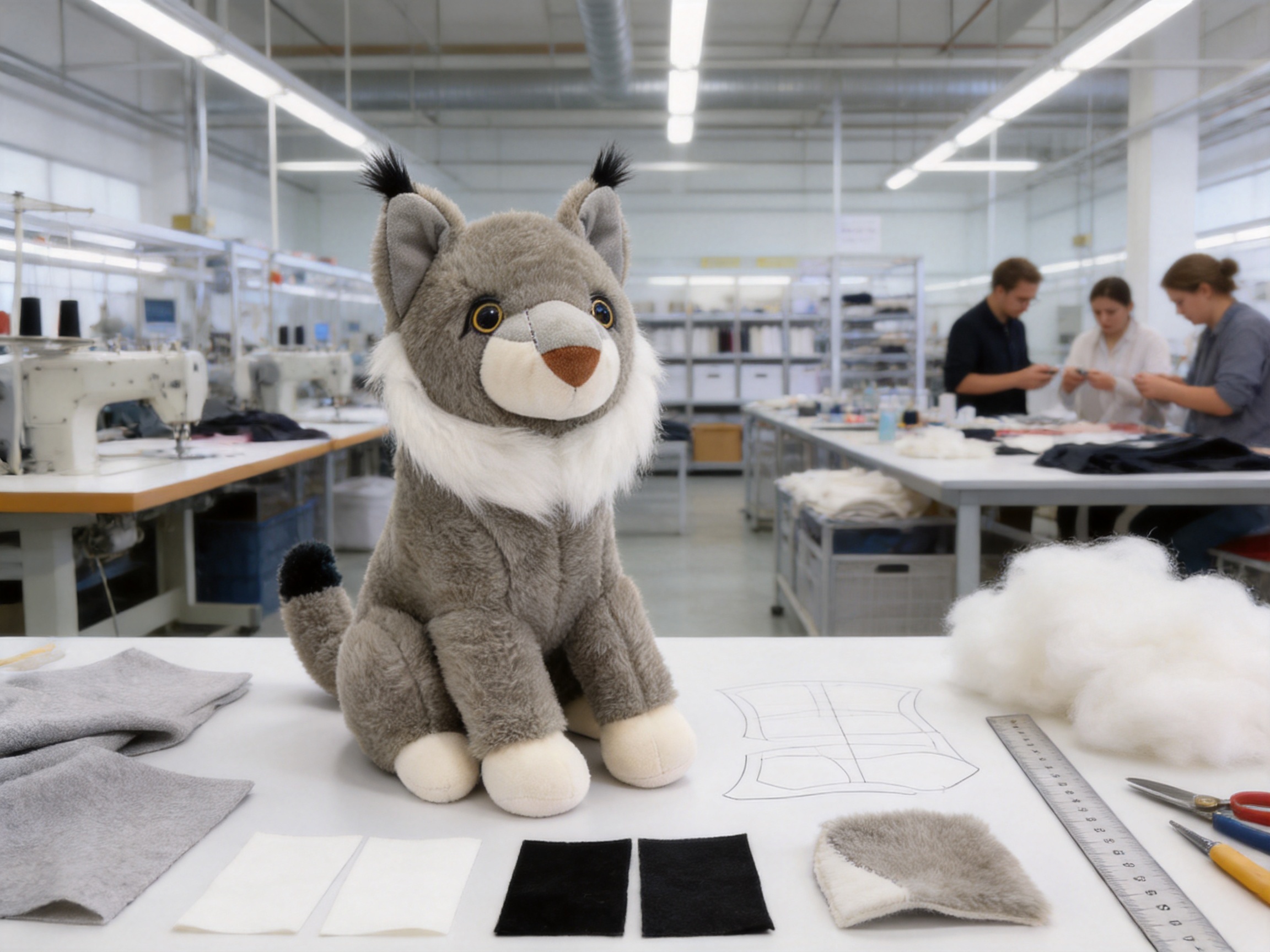
Tianchang Bestjoy Craft & Gift Co., Ltd. is an integrated plush product manufacturer covering research and development, design, production, and sales. This integrated structure is important for buyers because product development involves more than sewing fabric pieces together. A successful plush program requires communication between concept design, pattern development, material selection, sampling, production planning, quality management, packaging, and delivery.
When these functions are coordinated within one manufacturing organization, the development process can be more consistent. Design decisions can be reviewed against production requirements at an early stage. Material choices can be evaluated for availability and suitability. Pattern adjustments can be communicated directly to the sampling and production teams. This reduces the risk that a design will look attractive in an illustration but be difficult to manufacture at commercial scale.
The company was established in 2013 as a joint venture involving Hong Kong Jintong International Co., Ltd. and Tianyuan Enterprise Investment Management Co., Ltd. Its factory is located in Jinji Town, Tianchang City, Anhui Province, China, and covers more than 10,000 square meters. This facility scale provides a foundation for handling development projects and larger production orders.
The company reports annual sales exceeding 12 million RMB and exports products to Europe, America, Australia, Japan, and South Korea. Experience serving multiple international markets can help a manufacturer understand the different design preferences, packaging expectations, communication styles, and purchasing cycles found across regions.
Its customer base includes major retail clients such as Walmart, Target, Albertsons, and Kmart. These relationships indicate experience with structured purchasing requirements and large-scale retail programs. Buyers considering the lynx plush for distribution can therefore evaluate the product through the lens of a manufacturer accustomed to international business and volume-based orders.
Research and Development
Wild animal plush toys require specialized design decisions. A lynx is not simply a cat with different colors. Its ears, facial ruff, body proportions, and expression must work together. The manufacturer’s R&D and design team can support the translation of an animal reference into a practical plush form.
Design development may begin with visual references, product positioning, size requirements, and target customer information. The team can then determine the shape language, fabric combinations, facial details, and decorative elements needed to express the concept. For custom projects, buyers can use the existing lynx product as a starting point and request changes to the size, color, expression, accessories, or packaging concept.
OEM and ODM support is particularly useful for companies that want an exclusive animal collection. An OEM project may follow a buyer’s specifications, brand guidelines, or approved artwork. An ODM project may use the manufacturer’s design and production experience to develop a product around a market concept. In both cases, direct coordination between design and production can help create a more realistic development schedule.
Sampling and Production Planning
The stated sample time is approximately one week, with a sample fee of 100 US dollars per design. A short sample cycle can be valuable for buyers working with seasonal launches, promotional deadlines, trade events, or retail assortment reviews. It allows the buyer to examine the physical result before committing to a full order.
Sampling is not only a visual approval stage. It is also an opportunity to assess the fabric hand feel, filling amount, proportions, facial expression, ear shape, ruff thickness, color balance, and overall sitting posture. A physical sample can reveal details that are difficult to judge from digital drawings alone.
The stated delivery time is approximately five to six weeks. Actual timing may depend on order quantity, material confirmation, packaging requirements, production scheduling, and approval speed. Nevertheless, a clear estimated lead time allows buyers to plan purchase orders and inventory more effectively.
The minimum order quantity is 1,000 pieces. This quantity is suited to distributors, retailers, promotional buyers, gift companies, zoo and museum stores, and organizations planning a coordinated collection. It also creates an opportunity for customized packaging or variations when the buyer has a clear sales channel and sufficient demand forecast.
Production Equipment and Operational Coordination
The manufacturer has professional production equipment and a dedicated sales team, design team, and after-sales service team. While individual machinery and internal procedures may vary by project, an equipped plush factory can coordinate the main stages of production: material preparation, cutting, sewing, embroidery or facial application, stuffing, shaping, finishing, inspection, and packing.
For a lynx plush, production coordination is especially important in the face and ears. Small changes in eye placement or ear angle can change the entire personality of the toy. The white ruff must be positioned consistently, and the black ear tufts must be attached in a way that preserves the intended silhouette. An integrated factory structure helps these details remain aligned from sample approval through bulk production.
Production strength also includes the ability to manage repeated quantities. A design may look excellent as a single sample but lose consistency if the factory cannot control material cutting, component placement, stuffing, and finishing across a large order. A professional manufacturing system is therefore essential for buyers who require uniformity throughout a shipment.
Quality-Oriented Features of the Product
Although no single plush product can meet every market requirement automatically, the lynx design provides several features that buyers can review during product approval. The body fabric should be checked for softness and even texture. The gray color should remain consistent across the main body. The white ruff should be full enough to create contrast without obscuring the face.
The ears should retain their pointed shape, and the black tufts should remain visually distinct. The eyes should be positioned symmetrically and securely. The orange-brown nose should be centered in relation to the face, while the mouth should preserve the intended friendly expression. These details are particularly important because customers tend to notice facial irregularities immediately.
The sitting pose should also be reviewed during sample approval. The body should communicate a clear seated posture rather than appearing collapsed or elongated. Buyers may evaluate the product from the front, side, and back to confirm that the overall shape is attractive from multiple viewing angles.
For commercial orders, buyers should establish their own quality requirements in writing. These may include acceptable color variation, seam appearance, filling consistency, decoration security, labeling, packaging, carton quantities, and inspection procedures. The manufacturer’s sales and after-sales teams can coordinate these requirements as part of the order process.
Safety and Compliance Planning
Because plush toys may be sold to children, safety and compliance should be considered from the earliest stage of product development. The appropriate standards depend on the destination market, age grading, decoration method, packaging, and intended use. Buyers should communicate the target countries and required testing arrangements before placing a bulk order.
Important review areas may include fabric and filling materials, small components, seam strength, surface decoration, labeling, flammability, packaging materials, and chemical requirements. The correct compliance process should be confirmed with the importer, testing laboratory, or regulatory specialist responsible for the destination market.
Customization may affect compliance. For example, changing embroidered features to attached components, adding accessories, introducing sound modules, or modifying the filling can create new testing considerations. A stable product specification and documented approval process can help reduce confusion before mass production.
Advantages Compared with Generic Wild Animal Plush Toys
The market contains many animal plush products, but not all provide the same level of recognition or presentation. Generic wild animal plush toys may use a simple body shape, limited color contrast, and minimal facial detailing. Such products can be suitable for low-cost programs, but they may not create a strong identity or premium impression.
The sitting lynx offers a more deliberate design. Its features are linked directly to the animal it represents. The upright ears, black ear tufts, white ruff, gray coat, alert eyes, and orange-brown nose work together as a complete visual system. This makes the product easier to identify and easier to merchandise as a specific species.
Another advantage is its emotional range. Some realistic wild animal toys are designed primarily for display and may not feel suitable for children. This lynx retains realistic details but uses a gentle facial expression and soft materials. It can therefore serve both educational and gift-oriented markets.
The design also has a stronger storytelling opportunity than a generic cat plush. Retailers can build themes around forests, mountain habitats, northern wildlife, conservation, exploration, ecology, and animal discovery. The product can become part of a broader narrative rather than functioning only as an isolated stuffed toy.
| Comparison Factor | Generic Animal Plush | Sitting Lynx Plush Toy |
|---|---|---|
| Species recognition | May rely on general animal shapes | Uses lynx-specific ears, tufts, ruff, and facial details |
| Display format | May require more shelf depth depending on pose | Sitting pose supports compact front-facing display |
| Visual character | Can appear simplified or interchangeable | Combines naturalistic details with a friendly expression |
| Color identity | May use basic single-color treatment | Uses light gray, white, black, and orange-brown accents |
| Touch appeal | Depends on the selected material | Uses super soft plush with PP cotton filling |
| Customization potential | May be limited by basic product structure | OEM/ODM support allows design and size adjustments |
| Market applications | General toy and gift sales | Retail, education, wildlife collections, promotions, and home display |
Applications Across Different Markets
Retail and E-Commerce
The lynx plush toy is suitable for general toy stores, gift shops, online marketplaces, department stores, specialty animal retailers, and home lifestyle stores. Its unusual species identity can help it stand out among common bears, dogs, rabbits, and cats. The product is also visually strong for online merchandising because the face and ear tufts are easy to recognize in a product image.
For e-commerce, sellers can position the item through several themes. It may be presented as a wild animal plush, a forest animal gift, a realistic cat plush, a nature-inspired decoration, or a collectible wildlife toy. The best positioning depends on the seller’s customer base and product assortment.
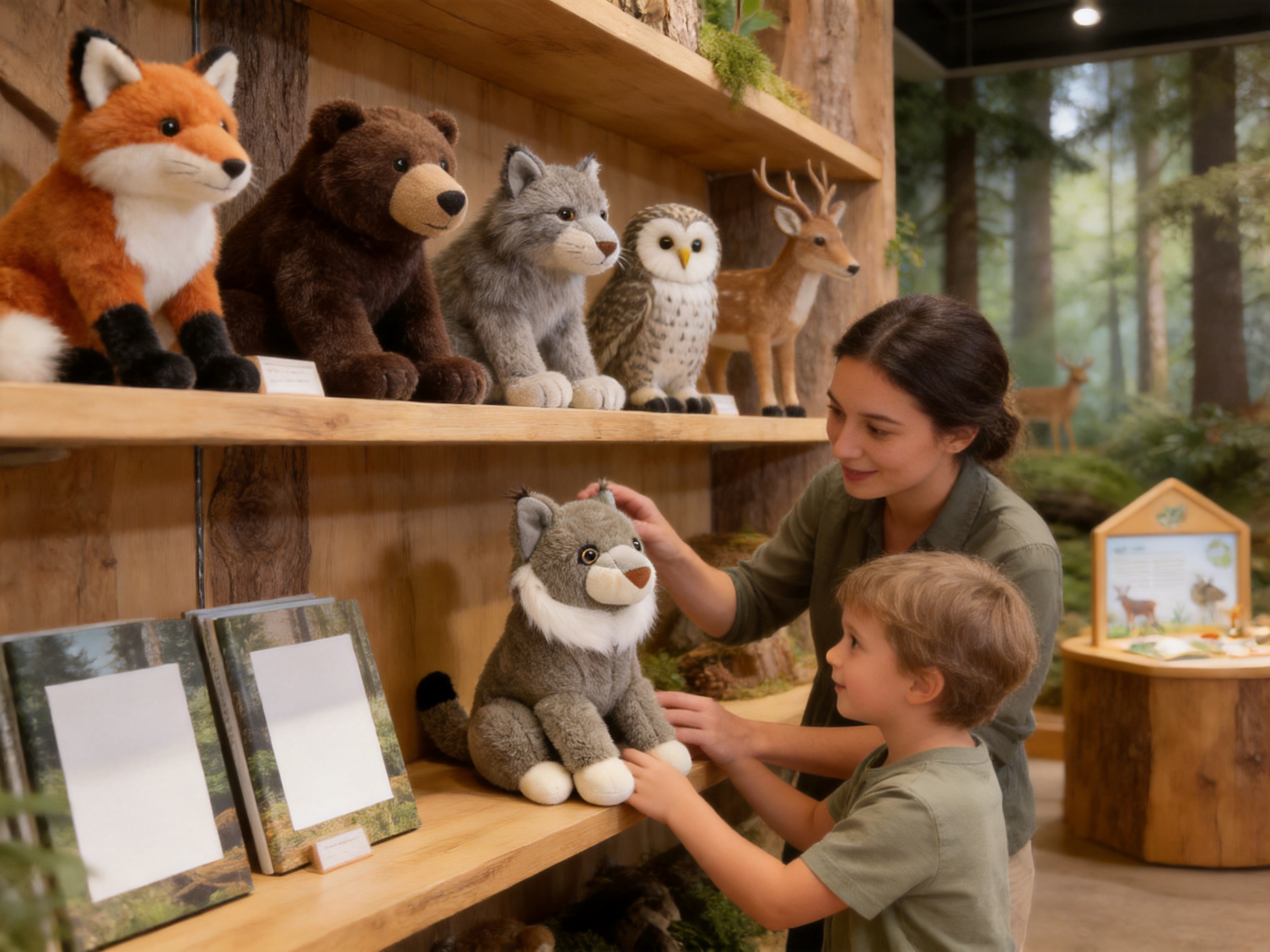
Retailers can also create a display story by combining the lynx with other wild animal plush toys. A woodland or mountain-themed arrangement may include bears, wolves, foxes, deer, owls, and big cats. The lynx’s gray-and-white color scheme can add visual variety to a collection dominated by brown, orange, or green colors.
Zoo, Museum, and Wildlife Gift Shops
Wildlife institutions often look for products that connect visitors with animals and habitats. A lynx plush can support this purpose by offering a friendly physical representation of an animal that many visitors may never encounter in person. It can be sold as a souvenir, used in educational programming, or included in a themed gift set.
For these channels, accurate visual details are important. Visitors may expect the product to reflect the animal’s recognizable characteristics. The ear tufts and neck ruff provide strong educational talking points, while the soft construction makes the product appealing to families.
Organizations may also request custom labels, hangtags, packaging, or educational inserts. OEM and ODM capabilities allow the basic plush format to be adapted for a specific institution, campaign, habitat exhibit, or conservation message, subject to the buyer’s order requirements and approvals.
Children’s Education and Nature Programs
The product can be used as a teaching aid in lessons about mammals, forests, habitats, food chains, biodiversity, and wildlife protection. A physical plush animal can make abstract topics more approachable for younger learners. Teachers and program leaders can use it during storytelling, classroom demonstrations, role-play, or interactive discussions.
The friendly expression is useful in educational settings because it invites attention without creating fear. The sitting pose also makes it easy for an instructor to place the product on a table, hold it during a presentation, or use it as a visual reference while discussing animal anatomy.
Promotional and Seasonal Programs
Promotional buyers can use custom wild animal plush toys for campaigns related to nature, travel, outdoor recreation, environmental awareness, family activities, and regional identity. A lynx is particularly suitable for campaigns that want to communicate wilderness, alertness, independence, exploration, or northern landscapes.
The product may also work in seasonal assortments. Its gray-and-white color palette can fit winter displays, holiday gift programs, forest-themed events, and cold-weather campaigns. It does not depend on a specific holiday symbol, which allows it to remain relevant beyond a single sales period.
Home and Lifestyle Decoration
Plush products are increasingly used as home accents rather than only as children’s toys. The sitting lynx can be placed on a shelf, reading chair, sofa, bed, nursery cabinet, or themed display. Its natural colors make it suitable for rustic, woodland, outdoor, Scandinavian, and neutral interior styles.
For lifestyle retailers, the product can be merchandised with blankets, cushions, children’s books, nature prints, camping accessories, or woodland décor. The design’s soft materials and friendly face help bridge the gap between decorative object and comforting companion.
Customization Opportunities for OEM and ODM Buyers
The standard 35-centimeter lynx provides a clear foundation for customization. Buyers may request a different size for a particular shelf, gift box, educational program, or promotional budget. A smaller version could work as a lower-priced impulse gift, while a larger version could be developed as a premium display item.
Color customization may be appropriate for special collections, although changes should be evaluated carefully to preserve lynx recognition. Buyers may also consider adjustments to the gray tone, ruff color, eye expression, nose color, or ear tuft contrast. A coordinated color system can help the product match a retailer’s existing brand or seasonal collection.
Facial expression is another possible customization area. A buyer may prefer a more playful, more realistic, more youthful, or more sophisticated appearance. Small changes to the eye shape, mouth angle, or head proportion can produce a different emotional impression while retaining the lynx identity.
Packaging is an important part of custom development. Options may include printed boxes, window cartons, paper bands, hangtags, polybags, collection cards, educational inserts, or retail-ready packaging. The appropriate format depends on the sales channel, shipping requirements, target age, and brand positioning.
Buyers can also develop a complete animal series around the lynx. Consistent size, fabric quality, facial style, and packaging can create a cohesive collection. The lynx might serve as one character in a woodland group, a wildlife discovery range, a national park assortment, or an educational habitat series.
Recommended Customization Workflow
A practical development workflow begins with a written product brief. The brief should identify the target market, desired size, quantity, materials, color references, packaging concept, delivery expectations, and compliance destination. Clear information at this stage helps the design and sales teams understand the commercial purpose of the project.
The next stage is design review. The buyer and manufacturer can discuss whether to use the existing lynx design or modify its proportions and features. Artwork, sketches, photographs, color references, and written notes can all support the discussion.
After the design direction is confirmed, a physical sample can be developed. The stated sample time is approximately one week, although timing may vary depending on the complexity of the requested changes. The sample should be reviewed from multiple angles and assessed for appearance, touch, size, pose, and overall market suitability.
Sample comments should be consolidated into one approval document whenever possible. This makes revisions easier to track and helps prevent contradictory instructions. Once the sample, materials, packaging, and specifications are approved, the buyer can proceed toward bulk production.
Before production begins, the buyer should confirm the final quantity, carton information, labeling, packing method, delivery location, payment schedule, inspection expectations, and required documents. A clear final specification protects both parties and supports smoother manufacturing coordination.
Commercial Planning for Distributors and Retailers
With a minimum order quantity of 1,000 pieces, the product is best suited to buyers who have an established sales plan. Distributors can introduce the lynx to multiple retail accounts, while retailers can allocate units across stores or online and offline channels. Promotional organizations may use the quantity for a broad campaign or a series of events.
Inventory planning should take into account the product’s size, packaging method, lead time, and seasonal demand. A five-to-six-week delivery estimate provides a starting point, but buyers should add time for sample approval, production scheduling, inspection, freight, customs, and local distribution.
Product photography should show the front, side, and rear views, as well as close details of the face, ear tufts, and neck ruff. Lifestyle images may place the product in a woodland, nursery, reading, or nature-themed setting. Clear scale information is also important because customers often have different expectations about the size of plush products.
Retail descriptions should explain both the emotional and physical qualities of the product. Terms such as soft, sitting, wild animal, lynx, light gray, white ruff, expressive eyes, and black ear tufts help customers understand the product quickly. The 35-centimeter size and approximate 150-gram weight should be listed clearly.
For wholesale buyers, the manufacturer’s OEM and ODM services create additional opportunities. A distributor may offer an exclusive version to a regional retailer. A gift company may add a custom hangtag. A wildlife organization may request educational packaging. A home lifestyle brand may adapt the color palette and presentation for a décor collection.
Positioning by Price and Perceived Value
Pricing should reflect the full product proposition rather than only the amount of fabric and filling used. The lynx’s value comes from its specific species design, soft materials, expressive face, distinctive details, manufacturing support, and customization potential.
Retailers can build perceived value through presentation. A well-designed label can explain the lynx’s characteristic ear tufts and neck ruff. A collection display can show how the product relates to other wild animals. A premium package can position it as a gift or collectible. Educational content can support a higher-value wildlife theme.
Buyers should also compare products based on consistency and service. A low initial unit price may not offer the same design support, sampling speed, production coordination, or after-sales communication. An integrated manufacturer can provide value across the entire product development process, not only at the sewing stage.
Responsible Product Development
Responsible plush manufacturing begins with clear material and product specifications. Buyers should identify the intended age group, destination market, packaging expectations, and applicable safety requirements. The manufacturer and buyer should work together to confirm that the final product meets the necessary standards for its intended market.
Responsible development also includes efficient communication. Accurate artwork, complete measurements, approved color references, and consolidated feedback reduce unnecessary sample revisions and material waste. A structured approval process can make the project more predictable for both the factory and the buyer.
The product’s durable visual identity may also support longer merchandising life. Because the lynx is not tied exclusively to one holiday, it can be sold in wildlife, children’s, gift, home, and seasonal contexts. A product that remains relevant across several sales periods can help buyers manage inventory more effectively.
For custom programs, buyers may consider packaging reduction, appropriate carton planning, and the elimination of unnecessary components. These choices should always be balanced with product protection, safety, retail presentation, and destination-market requirements.
Why Work with an Integrated Plush Manufacturer
An integrated manufacturer can help buyers move from an idea to a physical product through a connected chain of services. R&D supports concept development. Designers shape the appearance. Production teams convert the design into sewn components. Sales staff coordinate commercial requirements. After-sales personnel assist with follow-up communication and issue resolution.
This structure is especially beneficial when a product contains several visual details. The lynx’s ear tufts, ruff, facial expression, body proportions, and sitting pose must remain consistent. If design decisions and manufacturing decisions are separated too widely, important details may be lost or interpreted differently. Direct coordination helps protect the original concept.
The manufacturer’s more than 10,000-square-meter factory provides a substantial operating base. Its export experience in Europe, America, Australia, Japan, and South Korea demonstrates familiarity with international business. Its reported relationships with large retail clients further indicate experience with organized purchasing and volume production.
The company’s product range extends beyond wild animal plush toys. It includes trendy plush toys, children’s plush toys, pet plush toys, promotional gifts, plush home furnishings, stationery gifts, handicrafts, and cartoon decorations. This broad category experience can help buyers develop coordinated product lines rather than ordering a single isolated item.
Bestjoy also offers in-stock services, which may be relevant to buyers seeking faster access to existing products. For customers who require an exclusive appearance, OEM and ODM services provide a route to customization. The combination of standard products and custom development allows buyers to select a project model that fits their schedule and budget.
Product Strengths at a Glance
| Strength | Commercial Benefit |
|---|---|
| Lifelike lynx appearance | Creates clear species recognition and supports wildlife-themed merchandising |
| Light gray body with white ruff | Provides a natural, attractive, and versatile color combination |
| Black ear tufts | Highlights a distinctive lynx characteristic and separates the product from generic cat plush |
| Bright, expressive eyes | Creates an approachable personality for children, families, and gift buyers |
| Sitting pose | Supports compact display and front-facing presentation |
| Super soft plush fabric | Improves tactile appeal and perceived comfort |
| PP cotton filling | Provides lightweight softness and a defined plush structure |
| 35-centimeter standard size | Balances visibility, handling convenience, packaging, and shelf use |
| OEM/ODM availability | Allows customized designs, sizes, packaging, and collection development |
| Integrated factory capability | Connects R&D, design, production, sales, and after-sales service |
Frequently Asked Questions
What type of product is this?
This is a sitting lynx plush toy categorized as a wild animal plush product. It is designed to resemble a real lynx through its light gray coat, white neck ruff, pointed ears, black ear tufts, expressive eyes, and orange-brown nose.
What is the standard size?
The standard size is approximately 35 centimeters. Custom sizes may be discussed for OEM and ODM projects.
How much does the product weigh?
The listed approximate weight is 150 grams. The final weight may vary slightly depending on size, fabric, filling quantity, packaging, and approved customization.
What materials are used?
The shell fabric is super soft plush, and the filling material is PP cotton. Buyers should confirm final material specifications and destination-market compliance requirements during the order process.
Is the plush toy suitable for children?
The product has a soft, friendly appearance and may be suitable for child-oriented markets, but suitability depends on the final design, age grading, components, labeling, and safety requirements of the destination market. Buyers should confirm the required testing and compliance arrangements before commercial sale.
What makes this product different from a regular cat plush toy?
The lynx identity is expressed through the upright pointed ears, black ear tufts, thick white neck ruff, wild animal color treatment, and alert facial expression. These details distinguish it from a generic domestic cat or kitten plush.
Can the design be customized?
Yes. OEM and ODM services are welcome. Buyers may discuss custom sizes, colors, facial expressions, packaging, labels, accessories, and collection concepts, subject to design review, sample approval, production feasibility, and order requirements.
What is the minimum order quantity?
The listed minimum order quantity is 1,000 pieces. Buyers should confirm whether the MOQ changes for special materials, custom packaging, mixed designs, or complex modifications.
How much is the sample fee?
The listed sample fee is 100 US dollars per design. The commercial terms for sample charges, revisions, and possible refunds or credits should be confirmed with the manufacturer before development begins.
How long does sampling take?
The stated sample time is approximately one week. The actual schedule may depend on design complexity, material availability, artwork confirmation, and the speed of buyer feedback.
What is the expected delivery time?
The listed delivery time is approximately five to six weeks. This estimate should be reviewed together with the final order quantity, approved sample date, packaging requirements, production schedule, inspection plan, and shipping arrangement.
Where can the product be sold?
Potential channels include toy stores, gift shops, e-commerce stores, wildlife and museum gift shops, children’s retailers, home lifestyle stores, promotional programs, educational organizations, and seasonal collections.
Can it be developed as part of a larger animal collection?
Yes. The lynx can serve as one design within a woodland, forest, mountain, wildlife, habitat, or nature discovery collection. Consistent sizing, packaging, materials, and facial styling can help create a unified product range.
What should buyers provide for a custom project?
Buyers should provide the target market, quantity, size, artwork or reference images, color preferences, materials, packaging requirements, delivery destination, desired schedule, and applicable compliance expectations. A detailed brief helps the manufacturer prepare an accurate proposal and sample.
Conclusion
The sitting lynx plush toy offers a strong combination of realistic wildlife character, soft tactile appeal, compact display format, and customization potential. Its light gray body, white ruff, pointed ears, black ear tufts, bright eyes, orange-brown nose, and gentle mouth create a memorable product with clear species recognition.
At approximately 35 centimeters and 150 grams, it is practical for retail display, gift packaging, online sales, educational use, home decoration, and promotional distribution. The sitting pose improves shelf presentation, while the soft plush shell and PP cotton filling support comfortable handling.
Its advantages over generic wild animal plush products come from the deliberate use of lynx-specific details and the balance between natural appearance and friendly expression. This balance allows the product to reach multiple audiences, including children, collectors, wildlife enthusiasts, families, retailers, and institutional gift shops.
The manufacturing foundation further strengthens the product proposition. Tianchang Bestjoy Craft & Gift Co., Ltd. operates as an integrated manufacturer with R&D, design, production, sales, and after-sales capabilities. With a factory exceeding 10,000 square meters, international export experience, professional production equipment, OEM/ODM services, and experience serving major retail customers, the company can support both standard product purchasing and customized plush development.
For buyers seeking a distinctive wild animal product, the lynx provides a commercially flexible starting point. It can be sold as a standalone plush, incorporated into a broader wildlife collection, adapted for a promotional campaign, or developed into an exclusive retail design. Its combination of visual authenticity, softness, practical size, and manufacturing support makes it a compelling option for the global plush toy and gift market.
References
1. Product specification and description supplied for the sitting lynx plush toy, including dimensions, materials, pose, sample information, MOQ, and delivery estimate.
2. Manufacturer profile supplied for Tianchang Bestjoy Craft & Gift Co., Ltd., including company history, factory scale, product categories, export markets, and service capabilities.
3. General principles of plush toy product development, including concept design, sampling, material selection, sewing, stuffing, finishing, packaging, and quality review.
4. General retail merchandising practices for stuffed animals, wildlife gifts, children’s products, promotional merchandise, and home lifestyle plush décor.
5. General guidance on reviewing toy safety, labeling, testing, age grading, and destination-market compliance during custom product development.
6. General wildlife education and interpretation principles concerning the visual identification of lynx features, including pointed ears, black ear tufts, facial ruff, and compact wild-cat appearance.
7. General international sourcing practices for OEM and ODM plush toy programs, including product briefs, sample approval, production scheduling, inspection planning, packaging confirmation, and delivery coordination.