en
en  русский
 Español
 عربى
عربى
Content
- 1 1. Product Overview
- 2 2. Why the Standing Design Matters
- 3 3. Character Appeal and Emotional Value
- 4 4. Material Selection and Tactile Comfort
- 5 5. Construction Quality and Visual Consistency
- 6 6. Advantages Compared with Ordinary Seasonal Plush Toys
- 7 7. Manufacturing Capabilities
- 8 8. The Product Development Process
- 9 9. From Fabric to Finished Plush Toy
- 10 10. Quality Management Considerations
- 11 11. OEM and ODM Opportunities
- 12 12. Packaging and Logistics
- 13 13. Applications Across Different Markets
- 14 14. Sustainability and Responsible Product Planning
- 15 15. Safety and Compliance Planning
- 16 16. Why Work with an Integrated Plush Toy Factory?
- 17 17. Ordering Process for Buyers
- 18 18. Merchandising Ideas
- 19 19. Care and Display Recommendations
- 20 20. Frequently Asked Questions
- 20.1 What is the standard size of the plush toy?
- 20.2 How much does one toy weigh?
- 20.3 What materials are used?
- 20.4 Is the product suitable for both children and decoration?
- 20.5 Can the colors be customized?
- 20.6 Are OEM and ODM services available?
- 20.7 What is the minimum order quantity?
- 20.8 How long does sampling take?
- 20.9 How long is the production lead time?
- 20.10 How many pieces are packed in one carton?
- 20.11 What are the carton dimensions and weights?
- 20.12 What makes the product different from a basic snowman plush toy?
- 20.13 Where is the manufacturer located?
- 20.14 What should buyers confirm before placing an order?
- 21 21. Final Assessment
- 22 References
- 23 Product: Standing snow olaf festive plush toy
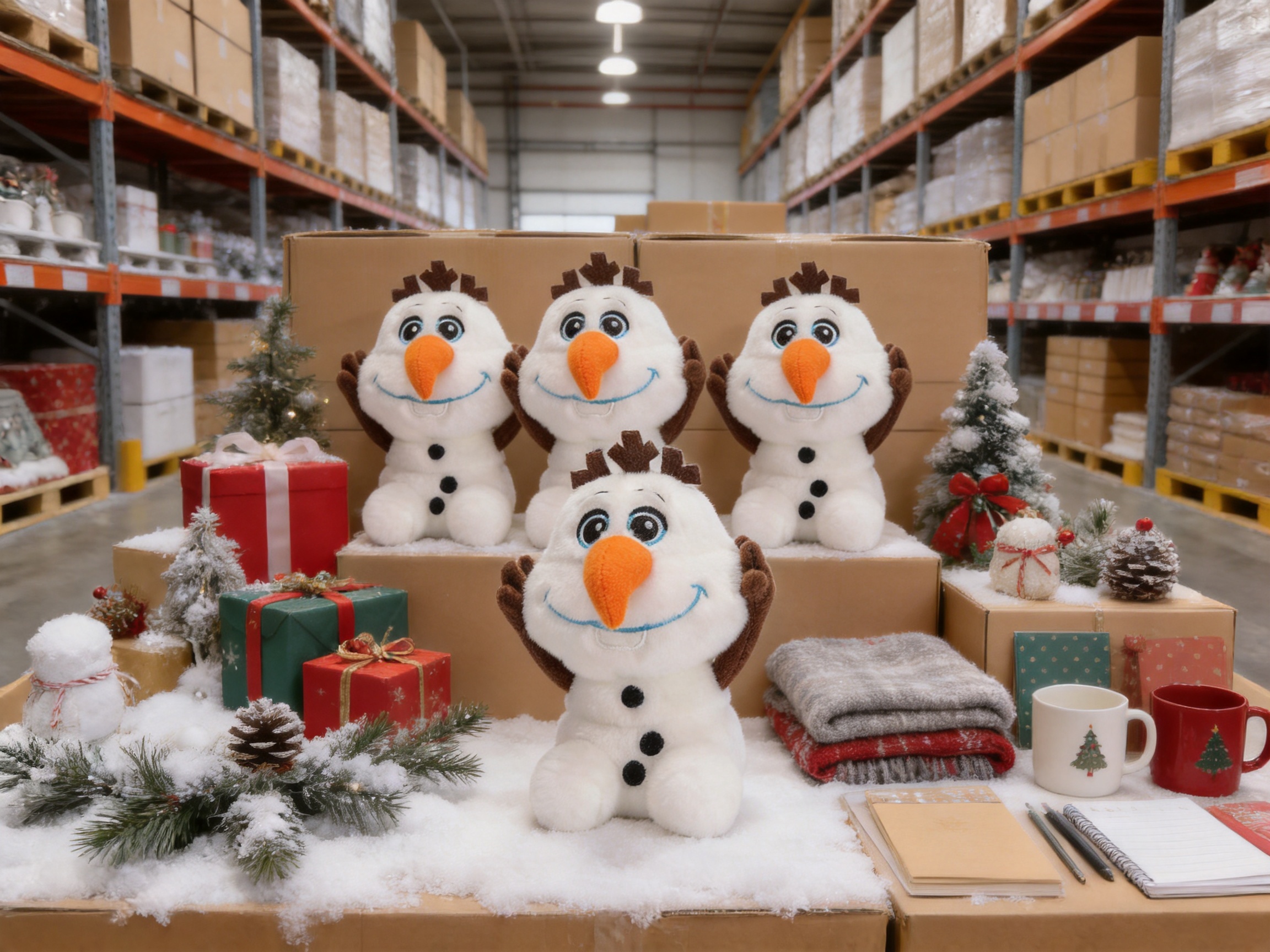
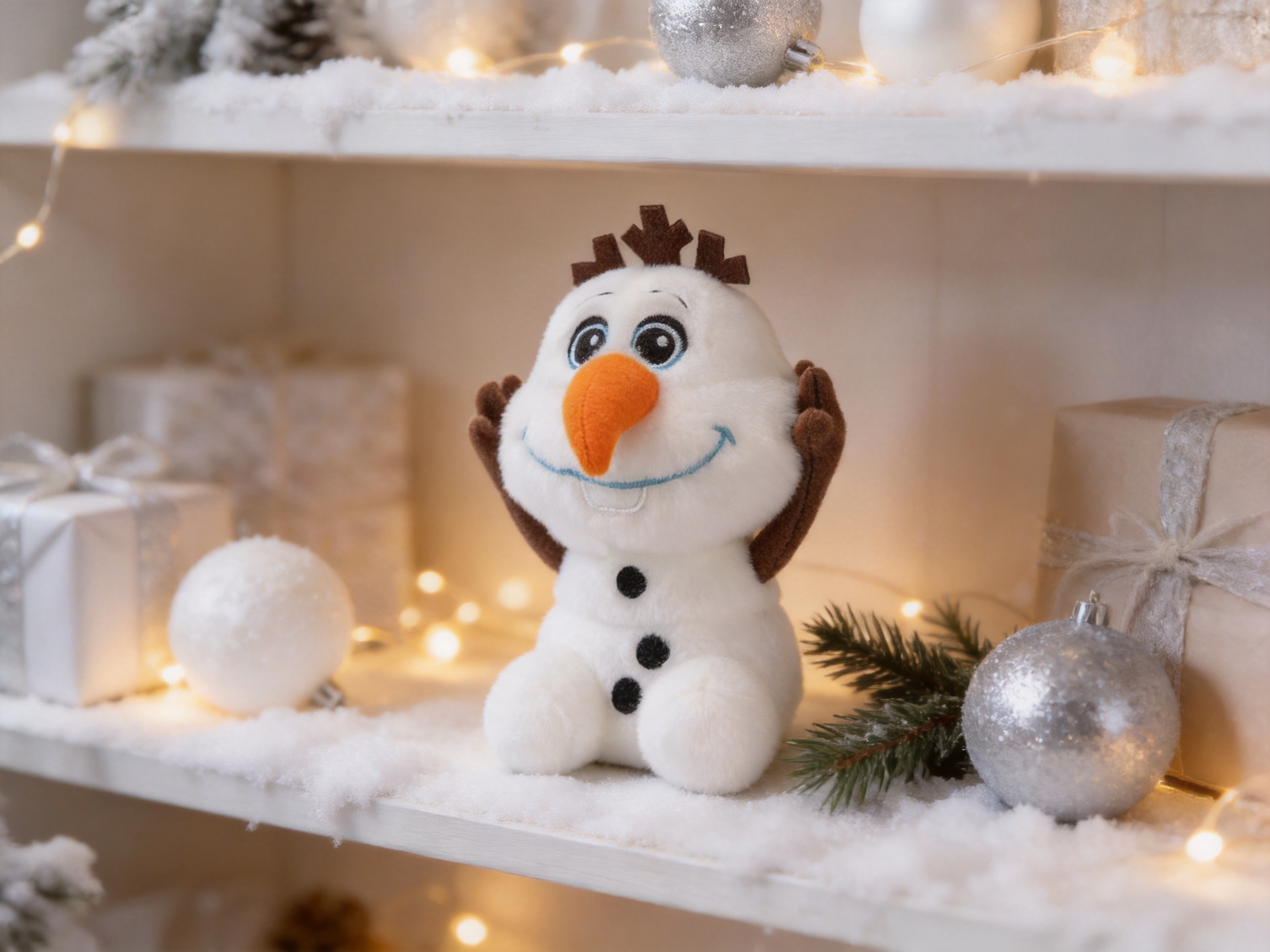
Seasonal plush toys have a special ability to transform ordinary spaces into welcoming holiday environments. They combine visual charm, soft tactile appeal, and emotional warmth in a format that is suitable for children, families, retailers, hospitality venues, promotional campaigns, and seasonal gift programs. Among these products, the Standing Snow Olaf Festive Plush Toy offers a lively interpretation of a cheerful winter snowman character. Its upright posture, bright white body, orange carrot-like nose, brown twig-like hair, and friendly smile create an immediately recognizable festive appearance.
Designed for both decoration and companionship, this plush toy has a versatile role in the seasonal merchandise market. It can be placed on shelves, desks, reception counters, children’s rooms, holiday displays, gift baskets, or retail promotional installations. Its compact size makes it easy to package and distribute, while its soft plush construction provides the comfort expected from a high-quality stuffed animal.
This article examines the product’s design features, material selection, production advantages, customization opportunities, quality considerations, packaging specifications, and commercial applications. It also explains how Tianchang Bestjoy Craft & Gift Co., Ltd. supports plush toy development through integrated research and development, design, manufacturing, sales, and after-sales services.
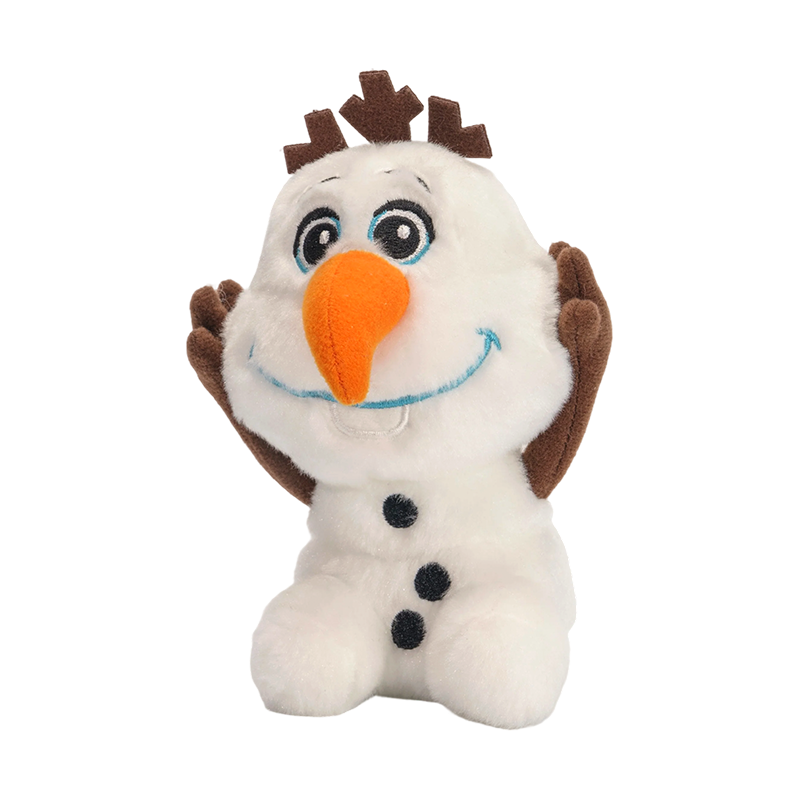
Standing snow olaf festive plush toy
1. Product Overview
The Standing Snow Olaf Festive Plush Toy is a 15-centimeter seasonal plush figure with a standing pose. Its design communicates movement and energy rather than presenting the snowman as a flat or seated decoration. The upright form gives it strong shelf visibility and allows it to function as a freestanding ornament without requiring a separate support structure.
The central visual theme is a joyful winter snowman. The white body creates a clean and traditional snow appearance, while the orange carrot-like nose provides a vivid contrast. Brown twig-like hair adds character and texture to the head, and the smiling facial expression gives the toy a warm, approachable personality. These elements work together to create a product that is suitable for Christmas displays, winter-themed promotions, family gifts, and seasonal interior decoration.
The exterior is made from soft plush fabric and the interior is filled with PP cotton. This combination is widely appreciated in the stuffed toy sector because it provides a soft hand feel while maintaining a lightweight structure. At approximately 150 grams, the toy is easy for children to hold and convenient for businesses to ship, display, and include in gift packages.
The standard product size is 15 centimeters, although customized dimensions are available. This flexibility allows buyers to adapt the design to different sales channels. A smaller version may be suitable for promotional giveaways or gift boxes, while a larger version may be more appropriate for department store displays, holiday exhibitions, or home decoration collections.
| Product Attribute | Specification |
|---|---|
| Product Type | Standing festive snowman plush toy |
| Standard Size | 15 centimeters, with customization available |
| Approximate Weight | 150 grams |
| Primary Color | White body with contrasting orange and brown details |
| Shell Fabric | Soft plush fabric |
| Filling Material | PP cotton |
| Color Options | Multiple options available |
| OEM and ODM | Available |
| Minimum Order Quantity | 500 pieces |
| Sample Fee | 100 United States dollars per design |
| Sample Lead Time | 3 to 7 working days |
| Production Lead Time | Approximately 45 days |
2. Why the Standing Design Matters
Many seasonal plush toys are designed in a sitting or reclining position. Although these formats can be attractive, a standing design provides several important commercial and decorative advantages. The product occupies vertical space, making it more visible on retail shelves and display tables. It can also be positioned beside gift boxes, seasonal signs, artificial trees, or other decorations without being hidden by surrounding merchandise.
The standing pose also reinforces the lively personality of the snowman. Instead of appearing passive, the figure looks ready to greet visitors, join a celebration, or accompany a child during the winter season. This emotional quality is valuable because consumers often choose plush toys based on facial expression and posture as much as on material and price.
From a merchandising perspective, an upright toy can be arranged in groups. Retailers may display several units together in different colors or sizes, creating a small snowman scene. Businesses can also combine the plush toy with seasonal gift sets, winter stationery, candy packages, blankets, mugs, or home accessories. Its neutral white body and colorful facial details make it easy to coordinate with both traditional red-and-green holiday themes and modern white-and-silver winter designs.
The standing construction is also beneficial for photography and online product presentation. A freestanding figure can be photographed from the front, side, and three-quarter angles while preserving its shape. This gives buyers a clearer understanding of the product and helps online retailers create attractive product listings, seasonal banners, catalog pages, and social media content.
3. Character Appeal and Emotional Value
The appeal of this plush toy comes from the combination of familiar winter symbolism and a friendly character expression. Snowmen are associated with winter play, family activities, holiday gatherings, and childhood imagination. The white body immediately communicates a seasonal theme, while the carrot-like nose and twig-like hair establish a classic snowman identity.
The smiling expression is particularly important. A plush toy with a warm facial expression can make a room feel more welcoming and can encourage children to interact with it. The toy may become a companion during holiday travel, a decorative item in a bedroom, or a keepsake that is brought out every winter. For adults, the same design can evoke memories of family celebrations and traditional winter scenes.
Emotional value also supports the product’s suitability for promotional use. Companies often look for gifts that are friendly, easy to understand, and connected to a particular season. A cheerful snowman plush toy can be used in customer appreciation campaigns, employee gift programs, charity events, winter festivals, retail loyalty programs, and family-oriented brand activities.
The product’s visual language is broad enough to appeal to multiple age groups. Children may appreciate the soft material and expressive face, while adults may value its decorative appearance and seasonal atmosphere. This multi-audience appeal can help retailers reduce the risk of targeting an overly narrow customer segment.
4. Material Selection and Tactile Comfort
Soft plush fabric is one of the defining features of the product. The shell material gives the toy a pleasant surface texture and contributes to its visual fullness. A well-made plush exterior should feel smooth and comfortable while retaining an even appearance after handling and display.
For children’s products, tactile quality can influence purchase decisions. Parents and gift buyers often touch a plush toy before buying it, especially in physical stores. A soft surface creates an immediate impression of comfort and quality. It also supports the toy’s role as a companion rather than merely an ornament.
PP cotton is used as the filling material. Properly distributed PP cotton helps the body retain its intended shape while keeping the product lightweight. It can support the upright form, provide a soft compressible feel, and reduce the overall shipping burden compared with heavier filling materials.
Filling distribution is an important part of plush toy production. If the material is unevenly placed, the body may appear lumpy or lose its balance. An experienced manufacturer pays attention to the amount of filling in different areas, including the body, head, limbs, and decorative sections. The goal is to create a full but comfortable shape that remains visually consistent from one unit to another.
The balance between softness and structural support is especially important for a standing plush toy. It must be soft enough to meet consumer expectations, yet sufficiently stable to remain upright during display. The design and filling process therefore need to be coordinated rather than treated as separate stages.
5. Construction Quality and Visual Consistency
Plush toy quality is determined by more than fabric softness. Stitching, panel alignment, stuffing, facial placement, color matching, and finishing details all influence the final result. A snowman’s face is particularly sensitive to small variations because the nose, hair, and smile define its personality.
Consistent placement of the facial features helps every unit maintain the approved appearance. The orange carrot-like nose should be positioned securely and proportionally to the face. Brown twig-like hair should be attached in a way that supports the intended silhouette. The smile should remain clear and balanced, avoiding an expression that looks uneven or distorted.
Panel cutting is another important quality factor. When fabric pieces are cut accurately, the body can be assembled with smoother contours and fewer visible irregularities. Consistent cutting also helps reduce material waste and improves the repeatability of production runs.
Seam strength contributes to product durability. The seams need to withstand ordinary handling, squeezing, transportation, and display. Areas that experience greater stress, such as the connection between the head and body or the attachment points of decorative elements, require particular attention during assembly and inspection.
Finishing work may include trimming loose threads, checking the shape, correcting surface irregularities, and confirming that the toy matches the approved sample. These steps are essential for commercial orders because buyers generally expect uniformity across an entire shipment.
6. Advantages Compared with Ordinary Seasonal Plush Toys
The Standing Snow Olaf Festive Plush Toy offers several advantages over basic seasonal plush products. First, its standing pose creates stronger visual presence. A seated figure may blend into a crowded display, while an upright figure is easier to notice and arrange.
Second, the design combines simple seasonal symbols with a lively character expression. Some winter decorations depend heavily on accessories such as hats, scarves, or printed patterns. This product creates its identity through its body shape, facial features, and snowman-inspired details, giving it a recognizable appearance even when displayed without additional props.
Third, its compact size supports multiple sales and distribution channels. At 15 centimeters, the toy is large enough to be visually appealing but small enough for gift boxes, retail shelves, event tables, and parcel shipments. Its approximate 150-gram weight also makes it practical for promotional programs where shipping and storage costs must be controlled.
Fourth, the product supports customization. Buyers can request different sizes, colors, and design adjustments through OEM and ODM services. This is useful for retailers seeking exclusive seasonal collections, distributors developing private-label programs, and organizations preparing customized promotional gifts.
Fifth, the design has broad application potential. It can be sold as a children’s plush toy, displayed as a holiday decoration, included in a winter gift set, or used as a promotional item. This flexibility gives buyers more opportunities to position the product according to their market.
| Comparison Point | Standing Snowman Festive Plush Toy | Basic Seasonal Plush Product |
|---|---|---|
| Display Position | Freestanding upright pose with strong shelf visibility | May require support or appear less prominent |
| Visual Identity | Defined by snowman features, facial expression, and contrasting details | May rely mainly on printed patterns or accessories |
| Portability | Compact and lightweight for gifts, events, and shipping | Varies according to size and construction |
| Customization | OEM and ODM services available | May offer limited design flexibility |
| Market Use | Decoration, companionship, promotion, retail, and gifting | Often focused on one primary use |
| Seasonal Appeal | Suitable for winter, Christmas, and festive campaigns | Depends on the specific theme |
7. Manufacturing Capabilities
Tianchang Bestjoy Craft & Gift Co., Ltd. is an integrated plush product manufacturer with capabilities covering research and development, design, production, sales, and after-sales service. This integrated structure is valuable for buyers because product development, manufacturing communication, and order management can be coordinated through one organization.
The company was established in 2013 as a joint venture between Hong Kong Jintong International Co., Ltd. and Tianyuan Enterprise Investment Management Co., Ltd. Its factory is located in Jinji Industrial Park, Tianchang City, Anhui Province, China, and covers more than 10,000 square meters.
A dedicated manufacturing site of this scale can support the organization of different production activities, including material preparation, cutting, sewing, stuffing, assembly, finishing, inspection, and packing. The precise arrangement of each order depends on the product design and production schedule, but an integrated factory environment generally helps improve communication between development and manufacturing teams.
The company reports annual sales exceeding 12 million RMB and serves international markets in Europe, America, Australia, Japan, and South Korea. Its customer base includes major retailers such as Walmart, Target, Albertsons, and Kmart. Experience with international customers can be valuable for buyers who require consistent product specifications, organized export preparation, and communication across different markets.
The company’s product range includes trendy plush toys, children’s plush toys, pet plush toys, plush promotional gifts, plush home furnishings, plush stationery gifts, plush handicrafts, and plush cartoon decorations. This broad portfolio suggests experience across multiple categories, materials, sizes, and design styles.
8. The Product Development Process
A successful plush toy begins with a clear concept. For the standing snowman design, the concept includes the intended character mood, upright posture, body proportions, facial expression, color arrangement, and seasonal use. The development team can translate these ideas into sketches, reference images, measurements, and construction details.
During the design stage, important questions include how the toy will stand, how large the head should be in relation to the body, where the decorative elements should be positioned, and how the product will be packaged. These decisions affect both the appearance and the manufacturing cost.
A prototype or sample is then produced for evaluation. The stated sample lead time is 3 to 7 working days, and the sample fee is 100 United States dollars per design. The sample allows the buyer to examine the fabric, softness, proportions, colors, facial expression, standing stability, and overall finish before mass production begins.
Sample approval is a critical control point. Changes are generally easier and less costly before the bulk order is released. Buyers may request adjustments to the body shape, nose size, hair placement, color tone, filling level, label position, or packaging method. Once the sample is approved, it becomes the visual reference for production.
For a customized project, the manufacturer may also prepare a production specification sheet. This document can include measurements, materials, color references, construction notes, decoration methods, packaging instructions, and inspection requirements. Clear documentation helps reduce misunderstandings between the buyer and production team.
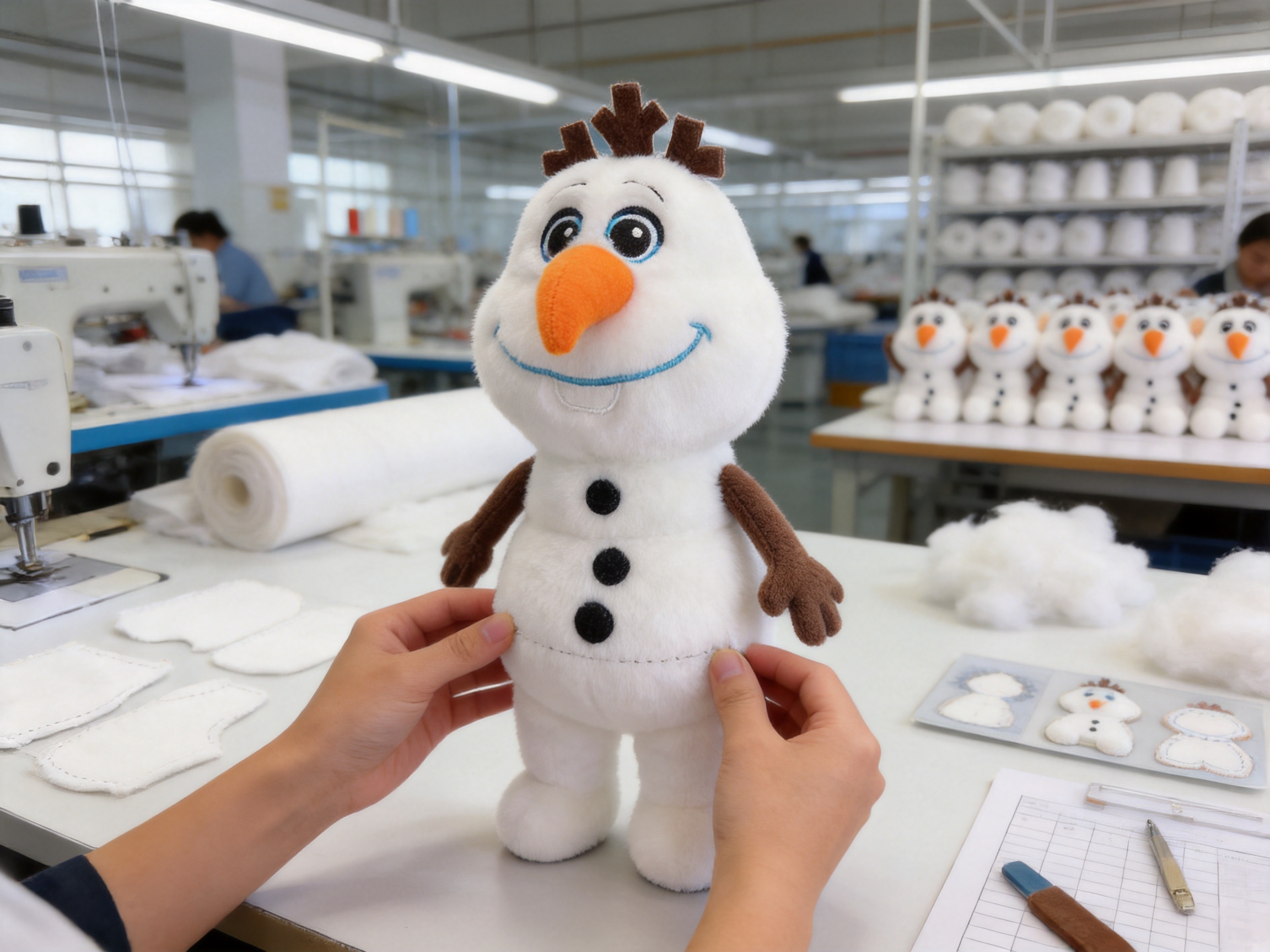
9. From Fabric to Finished Plush Toy
Design and Material Preparation
Production begins with the preparation of approved materials. The shell fabric, filling material, thread, decorative components, labels, and packaging supplies need to match the confirmed specifications. Color consistency is particularly important for the white body and contrasting facial details.
Pattern Making and Cutting
Patterns define the shape of each fabric component. Accurate patterns help ensure that the head, body, limbs, and other sections remain proportional. Fabric cutting must follow the approved pattern direction and dimensions so that the finished surface appears even and the seams align correctly.
Sewing and Assembly
After cutting, fabric pieces are sewn into subassemblies. The head, body, limbs, and decorative parts may be prepared separately before being joined together. Sewing quality influences the silhouette, durability, and overall visual appearance of the product.
Stuffing and Shaping
PP cotton is inserted into the sewn components. The filling needs to be distributed carefully so that the plush toy feels soft and maintains its shape. The body must receive enough support to preserve the standing posture without becoming excessively firm.
Facial and Decorative Details
The orange carrot-like nose, brown twig-like hair, and smiling facial details are added according to the approved sample. These features create the character’s personality and must be positioned consistently. Special attention is required for attachment strength and visual alignment.
Finishing and Inspection
The final stage includes thread trimming, shape adjustment, surface cleaning, appearance checking, and packaging preparation. Finished units may be compared with the approved sample to confirm that the size, colors, facial expression, fabric, and construction remain within the agreed requirements.
10. Quality Management Considerations
Quality management should begin before production rather than only at the final inspection stage. Buyers and manufacturers can reduce risk by confirming the product specification, approving a physical sample, identifying critical appearance points, and agreeing on packaging requirements in advance.
For this product, important inspection points may include overall height, approximate weight, body fullness, standing stability, fabric softness, seam condition, nose attachment, hair placement, smile alignment, color consistency, and cleanliness. The exact inspection standard should be established for each order, especially when the product is customized.
Packaging checks are also important. Each unit should be packed according to the agreed instructions, and the carton count should correspond with the shipping documents. Correct carton labeling helps warehouses, distributors, and retailers receive and organize the goods efficiently.
The company’s comprehensive after-sales service team provides an additional support point for buyers. While specific service terms should be confirmed for each order, an established after-sales process can help address questions related to production status, shipment preparation, product issues, or future repeat orders.
11. OEM and ODM Opportunities
OEM and ODM services allow buyers to adapt the festive plush toy to their own commercial requirements. OEM projects may use a buyer’s existing design, logo, packaging concept, or product specification. ODM projects may involve developing a new design with support from the manufacturer’s research and development and design teams.
Customization can include size, color, fabric type, facial expression, accessories, labels, packaging, and seasonal styling. For example, a buyer might request a smaller version for a promotional gift, a larger version for a store display, or a special color scheme for a regional holiday collection.
Customization should be approached systematically. Buyers should provide clear artwork, measurements, color references, target price expectations, order quantities, delivery requirements, and intended market. The manufacturer can then evaluate construction feasibility, sample requirements, material availability, and production timing.
The minimum order quantity is listed as 500 pieces. This quantity may be suitable for wholesalers, regional distributors, online retailers, department stores, event organizers, and companies planning coordinated promotional campaigns. The minimum order also provides enough volume to support a consistent production run while allowing buyers to test a seasonal product line.
12. Packaging and Logistics
The listed carton size is 43 centimeters in length, 25 centimeters in width, and 18 centimeters in height. Each carton contains 12 pieces. The gross weight is approximately 3 kilograms, while the net weight is approximately 2 kilograms.
These packaging details are useful for freight planning, warehouse organization, and landed-cost calculations. Buyers can estimate how many cartons may fit within a shipment, how much storage space will be required, and how the product can be distributed to retail locations or fulfillment centers.
| Packaging Item | Specification |
|---|---|
| Carton Length | 43 centimeters |
| Carton Width | 25 centimeters |
| Carton Height | 18 centimeters |
| Carton Quantity | 12 pieces per carton |
| Gross Carton Weight | Approximately 3 kilograms |
| Net Carton Weight | Approximately 2 kilograms |
Because the toy is lightweight and compact, it can be suitable for mixed seasonal shipments. Retailers may combine it with other plush products, holiday accessories, or promotional merchandise. Before placing an order, buyers should confirm the final packed dimensions because customized sizes or packaging may change carton capacity and shipping calculations.
Protection during transportation is another consideration. Plush toys should be packed in a manner that minimizes crushing, moisture exposure, dust accumulation, and deformation. If the product will be stored for an extended period before the holiday season, the buyer should also establish appropriate warehouse conditions.
13. Applications Across Different Markets
Retail Stores
The plush toy can be displayed in seasonal aisles, toy departments, gift sections, home decoration areas, or checkout zones. Its standing posture makes it useful for small feature displays and impulse-purchase arrangements.
Online Retail
Its compact size and clear visual identity support online sales. Retailers can present the toy in product photography, seasonal landing pages, gift guides, and holiday promotions. Multiple images can show the front, side, and close-up details.
Promotional Campaigns
Companies can use the product as a customer gift, employee appreciation item, event souvenir, or seasonal campaign reward. Custom packaging or branded labels may help connect the product to the campaign while preserving its cheerful winter appearance.
Home Decoration
The toy can be placed on shelves, desks, bedside tables, entryway furniture, children’s room furniture, and holiday display areas. Its soft construction makes it less visually rigid than ceramic, metal, or glass decorations.
Gift Sets
The product can be included in winter gift boxes with scarves, mugs, blankets, sweets, books, stationery, or family activity materials. Its small size makes it easy to combine with other products without dominating the entire package.
Hospitality and Events
Hotels, restaurants, shopping centers, schools, and community organizations may use the plush toy in winter events and seasonal decoration programs. It can contribute to a friendly atmosphere in reception areas, children’s activities, holiday markets, and family festivals.
14. Sustainability and Responsible Product Planning
Responsible product planning is becoming increasingly important in the plush toy industry. Buyers may wish to discuss material selection, packaging reduction, production efficiency, carton utilization, and product durability with their manufacturing partners.
A durable plush toy can remain in use for multiple seasons, increasing its value and reducing the likelihood of immediate disposal. Strong construction, secure attachments, and appropriate filling can support a longer product life under normal use.
Packaging efficiency is another consideration. The listed carton arrangement of 12 pieces per carton provides a starting point for logistics planning. Buyers can ask whether packaging materials can be optimized while still protecting the toys during transport. Customized packaging should balance attractive presentation with practical storage and shipping requirements.
Any sustainability claims, material certifications, recycling statements, or safety approvals should be confirmed directly for the specific order and market. Requirements can vary by country, age classification, retailer, and sales channel. A responsible purchasing process includes reviewing the applicable standards before mass production.
15. Safety and Compliance Planning
When a plush toy is intended for children, safety planning is essential. Buyers should identify the intended age group and target market at the beginning of the project. Different regions may apply different requirements concerning materials, small parts, seams, surface coatings, labeling, flammability, and mechanical or physical properties.
The carrot-like nose, twig-like hair, and other decorative elements should be evaluated for secure attachment. The appropriate construction method depends on the design, size, material, and intended age group. Buyers should communicate their safety requirements clearly and request relevant testing or documentation when needed.
Labels and packaging may need to include information such as age guidance, care instructions, material details, importer information, country of origin, batch information, or other legally required markings. These details should be finalized before production so that the factory can prepare the correct labels and packing materials.
Compliance responsibilities may be shared among the manufacturer, importer, distributor, and retailer depending on the destination market. For this reason, purchasers should consult their own regulatory advisors and confirm all requirements before ordering.
16. Why Work with an Integrated Plush Toy Factory?
An integrated factory can provide advantages throughout the product lifecycle. When design, development, production, sales, and after-sales functions are connected, communication may be more direct than when a buyer works with separate design studios, trading companies, and production facilities.
For a seasonal product, timing is especially important. Holiday merchandise must often be designed, sampled, produced, shipped, and distributed before a fixed selling period. An integrated manufacturer can coordinate these stages and help the buyer understand how design changes may affect cost and lead time.
In-house or closely connected research and development resources can also support product improvements. The manufacturer may help adjust proportions, simplify construction, select suitable fabrics, improve standing stability, or adapt the product for different price points.
Production experience across several plush categories can provide additional flexibility. A supplier familiar with children’s toys, promotional gifts, home furnishings, pet products, and decorative plush items may be better positioned to recommend practical solutions for different applications.
International export experience is another advantage. Tianchang Bestjoy Craft & Gift Co., Ltd. serves customers across Europe, America, Australia, Japan, and South Korea. This international focus indicates familiarity with overseas business communication and the operational requirements associated with global orders, although buyers should confirm all destination-specific documentation for each project.
17. Ordering Process for Buyers
The ordering process typically begins with an inquiry that identifies the product, quantity, target market, desired delivery date, packaging expectations, and customization needs. Buyers should specify whether they require the standard 15-centimeter version or a customized size.
The next step is design confirmation. If the buyer chooses the existing design, the manufacturer can confirm the available specifications and possible color options. For OEM or ODM projects, the buyer may provide artwork, reference samples, logos, packaging concepts, or written design instructions.
A sample is then developed. The listed sample lead time is 3 to 7 working days, with a sample fee of 100 United States dollars per design. Buyers should review the sample carefully and provide consolidated feedback to avoid unnecessary revision cycles.
After sample approval, the purchase order and production details can be finalized. The standard minimum order quantity is 500 pieces, and the stated delivery time is approximately 45 days. The actual schedule should be reconfirmed based on order volume, customization complexity, material availability, seasonality, and shipping arrangements.
Before shipment, the buyer and manufacturer should confirm the final quantity, carton information, shipping marks, documentation, and inspection status. Clear communication at each stage helps reduce delays and supports a smoother seasonal launch.
18. Merchandising Ideas
The Standing Snow Olaf Festive Plush Toy can be merchandised in several ways. A simple display may place the toy on a white or silver platform with artificial snow and winter signage. A more colorful arrangement may combine it with red ribbons, green foliage, gold ornaments, and gift boxes.
Retailers can create a collection by displaying multiple units at different heights. Since the toy has a standing form, risers, shelves, and small display steps can create depth without blocking the facial features. Group merchandising may increase the sense of a festive scene and encourage customers to consider multiple purchases.
For e-commerce, product photography should show the toy standing independently and should include a size reference. Close-up images can emphasize the soft fabric, carrot-like nose, twig-like hair, and smiling face. Seasonal lifestyle images may demonstrate how the product can be used in a home, office, gift basket, or children’s room.
Promotional descriptions should focus on the combination of softness, cheerful character, compact size, and seasonal versatility. Buyers may also emphasize customization availability when presenting the product to corporate clients or wholesale customers.
19. Care and Display Recommendations
To preserve the toy’s appearance, it should be kept in a clean, dry environment away from excessive moisture, direct heat, and prolonged exposure to strong sunlight. Dust can generally be removed with gentle surface cleaning methods appropriate for the selected fabric.
Because plush products can be compressed during storage or transportation, the toy may require gentle reshaping before display. Lightly adjusting the body, head, and decorative features can help restore its intended silhouette.
Care instructions should be determined according to the final materials and construction. Buyers should not print washing or cleaning claims until the appropriate method has been confirmed. If the product is marketed for children, the packaging should communicate any relevant care or supervision guidance.
20. Frequently Asked Questions
What is the standard size of the plush toy?
The standard size is 15 centimeters. Customized sizes can be discussed for different retail, promotional, decoration, or gift applications.
How much does one toy weigh?
The listed product weight is approximately 150 grams. The final weight may vary slightly if the size, fabric, filling amount, or accessories are customized.
What materials are used?
The shell is made from soft plush fabric, and the filling material is PP cotton. Other material options may be reviewed for customized projects.
Is the product suitable for both children and decoration?
Yes. Its soft construction and friendly character make it suitable as a companion toy, while its upright shape and seasonal appearance make it suitable for holiday decoration. The final age suitability should be confirmed according to the product configuration and applicable market requirements.
Can the colors be customized?
Multiple color options are available. Buyers should provide preferred color references and confirm the final colors during the sample approval stage.
Are OEM and ODM services available?
Yes. OEM and ODM services are available. Buyers may request changes to size, color, packaging, labels, decorative details, and other design elements, subject to production evaluation.
What is the minimum order quantity?
The listed minimum order quantity is 500 pieces. The final quantity should be confirmed according to the design, customization level, and production plan.
How long does sampling take?
The stated sample lead time is 3 to 7 working days. The sample fee is 100 United States dollars per design.
How long is the production lead time?
The listed delivery time is approximately 45 days. Buyers should reconfirm the schedule because seasonal demand, order volume, customization, material preparation, and shipping arrangements may affect the final timeline.
How many pieces are packed in one carton?
Each carton contains 12 pieces according to the listed packaging information.
What are the carton dimensions and weights?
The carton measures approximately 43 centimeters by 25 centimeters by 18 centimeters. The gross weight is approximately 3 kilograms, and the net weight is approximately 2 kilograms.
What makes the product different from a basic snowman plush toy?
The standing pose gives it stronger display visibility, while the expressive face, contrasting orange nose, brown twig-like hair, soft plush fabric, compact size, and customization options provide broader commercial flexibility.
Where is the manufacturer located?
The manufacturer is located in Jinji Industrial Park, Tianchang City, Anhui Province, China.
What should buyers confirm before placing an order?
Buyers should confirm the final design, size, materials, colors, labels, packaging, minimum quantity, sample approval, inspection requirements, delivery schedule, shipping terms, and any safety or compliance requirements for the destination market.
21. Final Assessment
The Standing Snow Olaf Festive Plush Toy is a practical and appealing seasonal product that combines character design with commercial versatility. Its upright pose improves display visibility, its white snowman body creates immediate winter recognition, and its orange and brown details give the figure a lively personality. Soft plush fabric and PP cotton filling support a comfortable tactile experience, while the compact 15-centimeter format makes the product convenient for retail, gifting, events, and shipping.
Compared with ordinary seasonal plush products, this toy offers a stronger freestanding presentation, broad application potential, and OEM and ODM flexibility. Its design can be used in home decoration, children’s gifting, seasonal retail, corporate promotions, hospitality displays, and winter-themed events.
The manufacturing support provided by Tianchang Bestjoy Craft & Gift Co., Ltd. adds value for buyers seeking an experienced plush product partner. The company combines research and development, design, production, sales, and after-sales service, operates a factory of more than 10,000 square meters, and exports plush products to multiple international markets. Its broad product portfolio and integrated operating structure can support both standard orders and customized seasonal programs.
For buyers, the most important next steps are to confirm the intended market, review the product sample, define customization requirements, establish safety and labeling expectations, and plan production and shipping early enough for the holiday selling period. With careful coordination, this festive plush toy can become an attractive addition to seasonal collections and a memorable gift for children, families, customers, and event participants.
References
1. Tianchang Bestjoy Craft & Gift Co., Ltd. Product specification information for the Standing Snow Olaf Festive Plush Toy.
2. Tianchang Bestjoy Craft & Gift Co., Ltd. Company profile and manufacturing capability information.
3. General plush toy product development practices, including fabric cutting, sewing, stuffing, assembly, finishing, and inspection.
4. General seasonal merchandising principles for holiday toys, gifts, home decoration, and promotional products.
5. General buyer guidance for OEM and ODM product development, sample approval, packaging planning, and international order coordination.