en
en  русский
 Español
 عربى
عربى
Content
- 1 A Wildlife-Inspired Design with Strong Commercial Appeal
- 2 Premium Softness and Tactile Comfort
- 3 Details That Help the Product Stand Apart
- 4 Advantages Over Generic Wild Animal Plush Toys
- 5 Suitable Markets and Product Applications
- 6 Manufacturing Expertise Behind the Product
- 7 Advanced Plush Toy Production Process
- 8 OEM and ODM Customization Opportunities
- 9 Quality, Safety, and International Order Considerations
- 10 Retail Presentation and Merchandising Ideas
- 11 Why Work with an Integrated Plush Manufacturer?
- 12 Ordering Information for the Sitting Lynx Plush Toy
- 13 Frequently Asked Questions
- 13.1 What animal does this plush toy represent?
- 13.2 What is the standard size?
- 13.3 How much does the standard plush toy weigh?
- 13.4 What type of filling is used?
- 13.5 What fabric is used for the outer shell?
- 13.6 Can the product be customized?
- 13.7 What is the minimum order quantity?
- 13.8 How long does sampling take?
- 13.9 What is the sample fee?
- 13.10 How long does bulk production take?
- 13.11 Is this product suitable for retail displays?
- 13.12 Can the lynx be used for promotional campaigns?
- 13.13 What makes this design different from a generic cat plush toy?
- 13.14 Where is the manufacturer located?
- 13.15 Which markets does the manufacturer serve?
- 14 Conclusion
- 15 References
- 16 Product: Stuffed sitting lynx plush toy wild animal plush toys
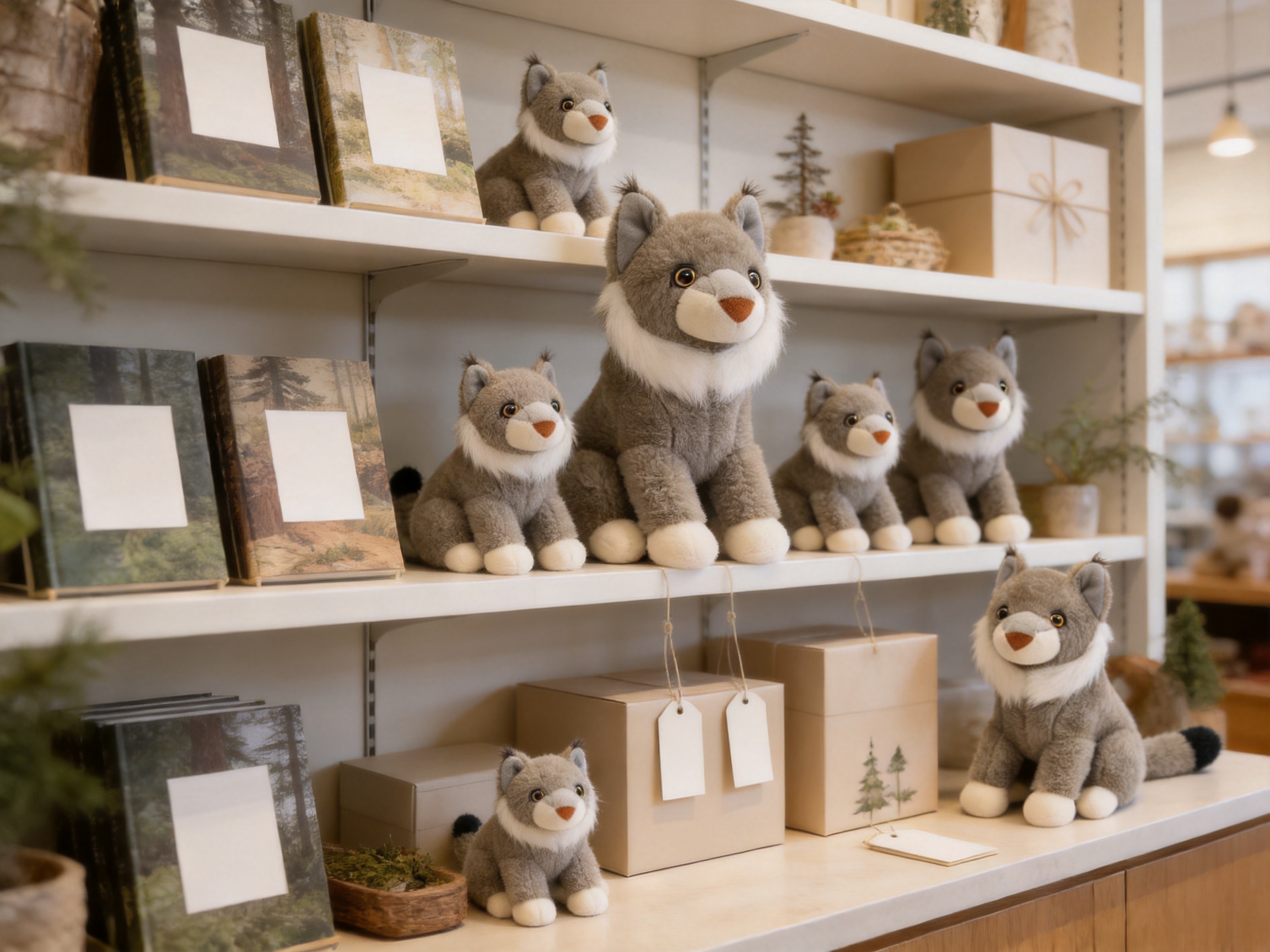
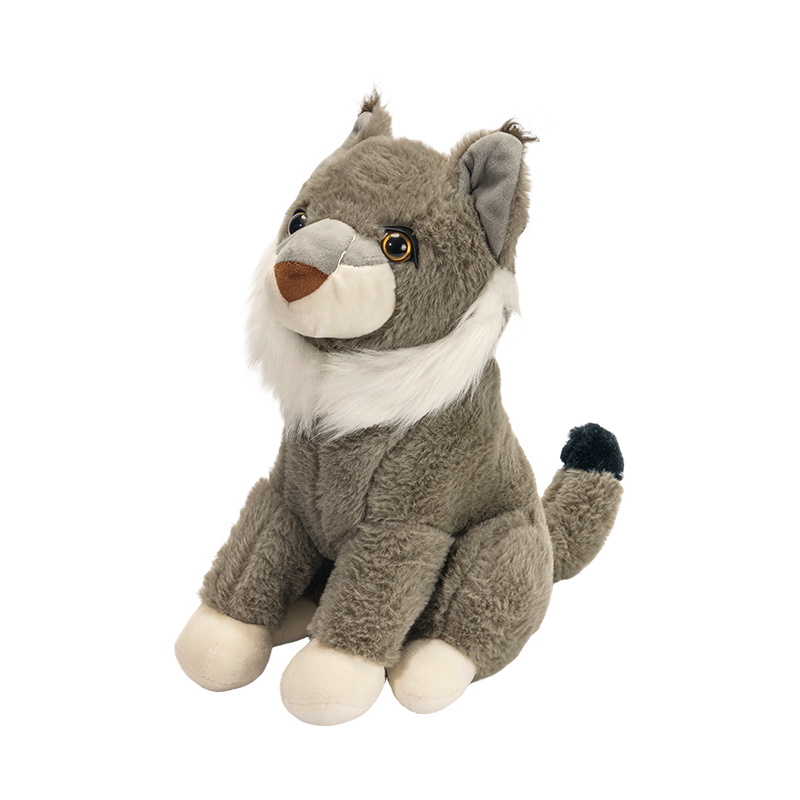
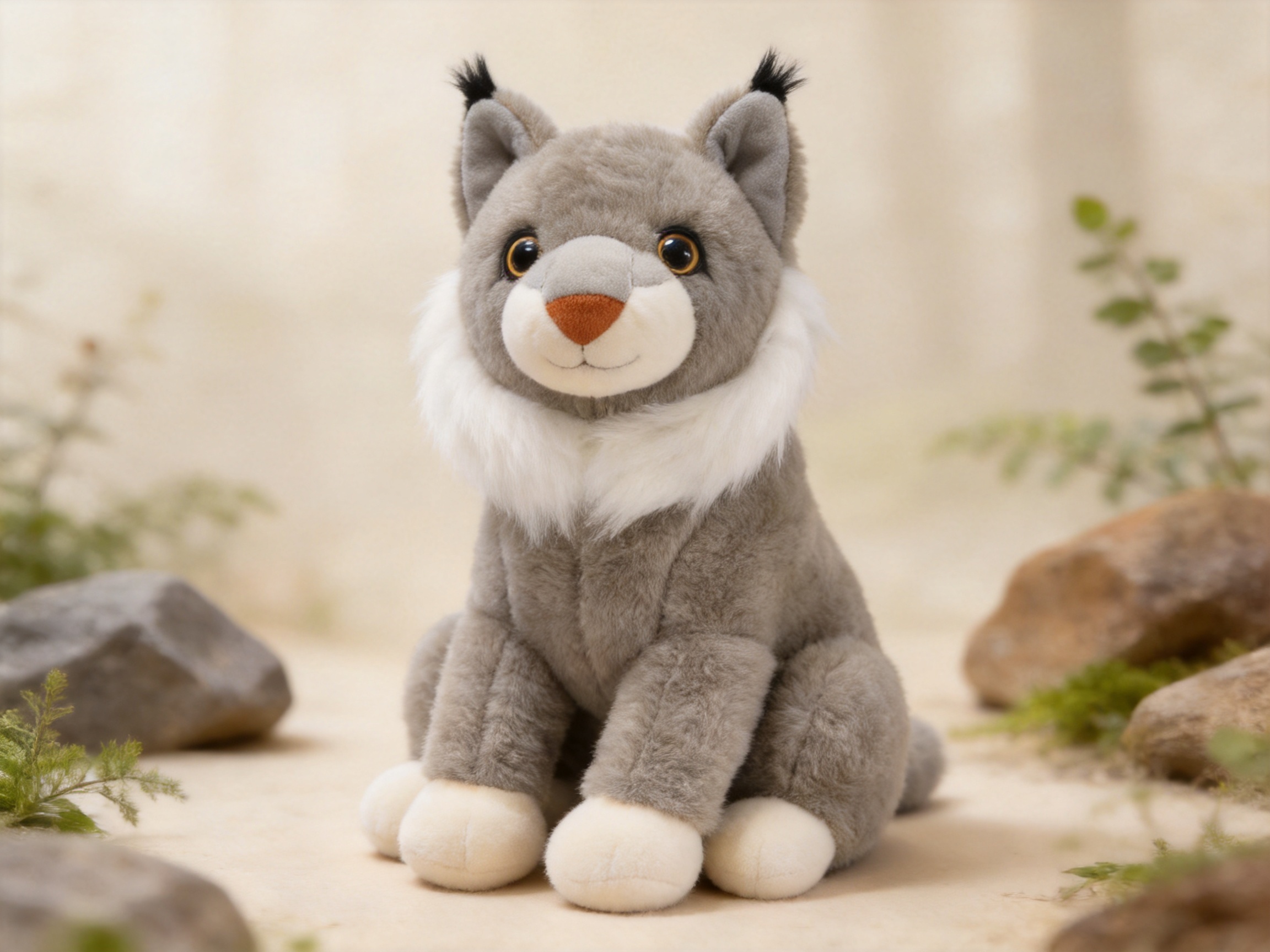
The stuffed sitting lynx plush toy brings the distinctive character of one of nature’s most fascinating wild cats into a soft, approachable, and display-friendly form. Designed with a lifelike light-gray coat, a full white neck ruff, upright ears, black ear tufts, bright round eyes, and a gentle expression, this plush animal combines realistic wildlife details with the warmth expected from a premium stuffed toy. It is suitable for children’s collections, wildlife education, nature-themed rooms, gift programs, seasonal promotions, specialty toy ranges, and home décor applications.
Unlike generic cat plush toys that often rely on simplified facial features and uniform colors, this lynx design is built around recognizable species characteristics. Its seated posture gives the toy a stable silhouette, while the carefully shaped head and ears create a strong shelf presence. The contrast between the light-gray fur and white ruff adds visual depth, and the black ear tips immediately communicate the identity of the lynx. These details help the product stand out in a crowded plush toy market where distinctive appearance is essential for attracting attention.
Manufactured by Tianchang Bestjoy Craft & Gift Co., Ltd., the product benefits from an integrated approach covering research and development, design, sampling, production, quality control, and sales support. The manufacturer has specialized in plush products since 2013 and operates a factory of more than 10,000 square meters. With experience serving international markets and major retail clients, the company is positioned to support both standard product orders and customized OEM/ODM programs.
A Wildlife-Inspired Design with Strong Commercial Appeal
The lynx has a naturally compelling appearance. It is recognizable, expressive, and visually different from more common wild animal characters such as tigers, lions, bears, and wolves. This makes the sitting lynx plush toy a useful addition to product lines that want to offer something beyond ordinary animal designs. It can appeal to children who enjoy wildlife, collectors who appreciate realistic animal models, and adults looking for tasteful nature-inspired décor.
The design focuses on the lynx’s most memorable physical features. Its pointed ears stand upright and are finished with small black tufts, a signature detail that distinguishes the animal from domestic cats. The thick white ruff around the neck creates a soft, almost scarf-like appearance. This feature gives the plush toy a combination of majesty and cuteness, allowing it to work in both educational wildlife collections and gift-oriented displays.
The round eyes are bright and expressive without making the face overly cartoonish. They suggest alertness and curiosity, qualities associated with the lynx in the wild. The orange-brown nose and slightly upturned mouth soften the overall appearance and make the toy feel friendly rather than intimidating. This balance is commercially valuable because it broadens the product’s audience. A highly realistic plush toy may appeal to collectors but seem too serious for children, while an excessively cartoon-like design may lack value for wildlife-themed retailers. This lynx occupies a flexible middle ground.
The sitting pose is another practical advantage. A standing plush animal may require wider packaging, additional structural support, or careful positioning on shelves. A sitting design is naturally stable and compact. It can be displayed on bookshelves, desks, bedside tables, retail counters, gift baskets, and themed window displays. The pose also gives the lynx a companion-like quality, making it suitable for both decorative and interactive use.
Stuffed sitting lynx plush toy wild animal plush toys
Premium Softness and Tactile Comfort
The shell fabric is super soft plush, selected to provide a comfortable hand feel and an attractive surface appearance. Tactile quality is one of the most important purchasing factors in the plush toy category. Customers often judge a product within seconds by touching the fabric, checking its softness, and observing whether the material looks full and consistent. A soft plush surface can increase perceived value, encourage repeat handling, and make the product more appealing as a gift.
The texture of this lynx plush is intended to suggest realistic fur while remaining pleasant and suitable for everyday use. The light-gray body fabric supports the appearance of a wild animal coat without becoming visually harsh. The white ruff introduces a contrasting texture and color around the neck, helping the toy look fuller and more dimensional. When these materials are properly cut, sewn, and brushed, they create a natural fur effect that is more convincing than a flat, single-color plush surface.
PP cotton filling provides a lightweight yet resilient interior. At approximately 150 grams for the standard 35-centimeter version, the product is easy to handle, pack, transport, and display. The filling gives the body enough volume to maintain its seated shape while preserving a soft, squeezable feel. This combination is especially useful for promotional programs and retail products because it supports efficient logistics without making the toy feel insubstantial.
Material selection also contributes to production consistency. Super soft plush fabric can be sourced and cut according to approved patterns, while PP cotton can be distributed throughout the body, head, limbs, and ruff area according to the required firmness. Consistent filling is important because uneven density can affect balance, facial alignment, and the appearance of the finished product. A professional plush manufacturing process therefore treats fabric, filling, stitching, and shaping as connected stages rather than separate operations.
Details That Help the Product Stand Apart
Recognizable Lynx Ear Tufts
The black fur tufts at the ear tips are among the most important design elements. Without them, the animal could be mistaken for an ordinary cat or another small feline. The tufts create a vertical accent that makes the silhouette instantly recognizable, especially when the toy is viewed from a distance on a retail shelf. They also add visual energy to the head and reinforce the wild-animal identity of the product.
Full White Neck Ruff
The thick white ruff around the neck provides contrast against the gray body and frames the face. This gives the lynx a fuller, more luxurious appearance while creating a soft area that customers may enjoy touching. The ruff also helps separate the head from the torso, improving the clarity of the seated silhouette. In comparison with ordinary plush cats that may have a simple circular neck transition, the ruff gives this product greater character and a more premium appearance.
Expressive Facial Construction
The face is designed to be gentle and playful while preserving the alert look associated with a wild lynx. Bright round eyes make the product emotionally approachable. The orange-brown nose adds a warm color accent, and the slightly upturned mouth creates a friendly expression. Facial features are especially important in plush toys because customers often form an emotional response based on the eyes and mouth before evaluating technical specifications.
Natural Color Coordination
The primary light-gray color is versatile enough for a wide range of retail environments. It can coordinate with woodland themes, winter displays, wildlife collections, children’s bedrooms, and neutral home interiors. The white ruff, black ear tips, and warm nose provide controlled contrast without making the product appear overly bright or artificial. This natural palette can also support seasonal packaging, educational labels, and collection-based merchandising.
Advantages Over Generic Wild Animal Plush Toys
The plush toy market includes a large number of basic animal products, but not every product offers a strong combination of visual identity, softness, stability, and customization potential. The sitting lynx plush toy has several advantages that can help retailers, wholesalers, gift companies, and promotional buyers distinguish their programs.
First, it represents a less commonly commercialized animal. Bears, rabbits, dogs, and cats appear frequently in plush collections, while lynx designs are more specialized. A less common species can create a sense of discovery and help a retailer build a more distinctive wildlife selection. It may also attract customers who already own conventional animal plush toys and are looking for a different character.
Second, the product has a realistic yet friendly design. Some wildlife plush toys sacrifice accuracy for exaggerated cartoon styling, while others attempt realism but become stiff or visually uninviting. This lynx uses recognizable anatomy and natural coloring while maintaining a soft expression and approachable proportions. The result is suitable for both educational and gift-oriented applications.
Third, the seated construction improves display convenience. The toy can stand independently in a seated position, reducing the need for special supports. This makes it easier to arrange in retail displays, promotional booths, hotel gift shops, museum stores, and home décor settings. The compact posture can also simplify carton packing and help buyers manage available shelf space.
Fourth, the 35-centimeter size offers a useful balance between visibility and portability. It is large enough to show the ear tufts, facial details, neck ruff, and body shape clearly, but not so large that it becomes difficult to handle or ship. The size is appropriate for children’s rooms, themed displays, gift packaging, and product photography. Because the size can be customized, buyers may also request alternative dimensions for different sales channels.
Fifth, the design can be adapted through OEM/ODM development. Buyers may use the existing lynx concept as a starting point or request adjustments to size, colors, facial expression, accessories, labels, packaging, or branding elements. This flexibility is valuable for companies seeking a private-label wildlife collection or a promotional product that reflects a specific campaign.
Product Feature |
Commercial Benefit |
Typical Application |
Light-gray lifelike fur |
Creates a natural and premium appearance |
Wildlife collections, specialty retail, home décor |
White neck ruff |
Adds volume, contrast, softness, and visual identity |
Gift products, children’s rooms, seasonal displays |
Black ear tufts |
Makes the lynx recognizable from a distance |
Educational products, museum stores, retail shelves |
Sitting posture |
Improves stability and display efficiency |
Counter displays, bookshelves, promotional booths |
Super soft plush shell |
Enhances tactile appeal and perceived quality |
Children’s toys, gifts, comfort products |
PP cotton filling |
Provides light weight, softness, and shape retention |
Retail distribution, event giveaways, wholesale programs |
OEM/ODM availability |
Supports customized collections and private-label projects |
Promotional campaigns, branded merchandise, seasonal ranges |
Suitable Markets and Product Applications
The product category is broad enough to support several commercial directions. As a wild animal plush toy, it can be included in a collection focused on forests, mountains, northern wildlife, endangered species, or global habitats. Retailers may place it alongside foxes, wolves, bears, snow leopards, owls, and other woodland animals to create a cohesive nature-themed assortment.
For children’s stores, the lynx can function as a soft companion and a starting point for conversations about wildlife. Its unusual appearance may encourage children to ask questions about where lynx live, what they eat, and how they differ from domestic cats. When paired with age-appropriate educational packaging, it can support learning through imaginative play.
Museum shops, zoo gift stores, nature centers, and conservation-themed retailers may find the design especially relevant. These channels often seek products that are recognizable, attractive, and connected to natural history. A lynx plush toy can complement books, postcards, educational cards, posters, and other wildlife merchandise.
Home and lifestyle retailers can present the product as a decorative accent. The neutral gray and white palette allows it to fit into modern, Scandinavian, rustic, woodland, and winter-themed interiors. Its sitting pose makes it suitable for shelves and small display areas. Unlike a highly colorful character plush, the lynx can appeal to consumers who prefer natural tones and realistic animal forms.
Promotional and seasonal buyers can adapt the product for campaigns related to outdoor recreation, environmental awareness, winter tourism, wildlife education, or regional identity. Customized packaging, hangtags, scarves, badges, or other accessories can help connect the plush toy with a specific event or organization. For larger programs, the manufacturer can discuss customized dimensions and development requirements.
Specialty plush retailers can also use the lynx as a collection anchor. Because it has a clear species identity and a strong silhouette, it can serve as a centerpiece for a premium wild animal range. Additional sizes or related animals can be developed through OEM/ODM services, allowing buyers to build a consistent family of products rather than purchasing isolated designs.
Manufacturing Expertise Behind the Product
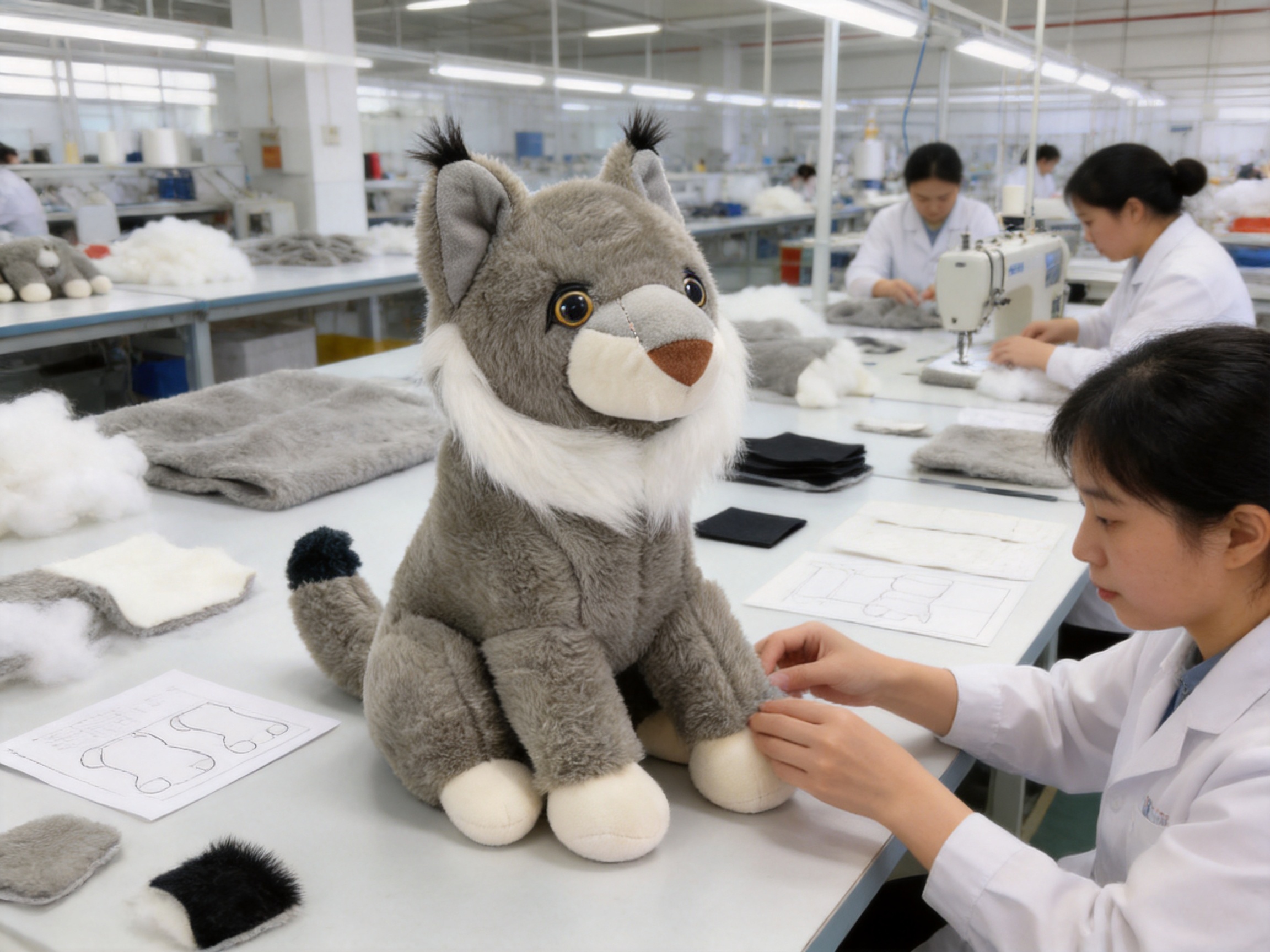
A successful plush toy depends on more than an attractive concept. The finished product must translate a design drawing into a stable, soft, durable, and repeatable item. Tianchang Bestjoy Craft & Gift Co., Ltd. operates as an integrated manufacturer with capabilities in research and development, design, production, sales, and after-sales service. This integrated structure helps reduce communication gaps between creative development and factory execution.
The company was established in 2013 as a joint venture between Hong Kong Jintong International Co., Ltd. and Tianyuan Enterprise Investment Management Co., Ltd. Its factory is located in Jinji Industrial Park, Tianchang City, Anhui Province, China, and covers more than 10,000 square meters. A factory of this scale can provide the space needed for material preparation, pattern cutting, sewing, filling, shaping, inspection, packing, and finished-goods storage.
The company’s annual sales exceed 12 million RMB, demonstrating experience in commercial production and order management. Its products are exported to Europe, America, Australia, Japan, and South Korea. International business requires attention to product consistency, communication, documentation, packaging, lead times, and customer expectations. This export experience can be useful for buyers developing products for multiple markets.
The manufacturer’s customer base includes major retailers such as Walmart, Target, Albertsons, and Kmart. Serving large retail organizations generally requires organized production systems, dependable quality procedures, and the ability to coordinate volumes and delivery schedules. While every project has its own specifications, this background suggests that the company understands the operational demands associated with retail-oriented plush programs.
Advanced Plush Toy Production Process
Research and Design Development
The process begins with research into the target animal, product positioning, customer age range, and intended sales channel. For the lynx design, the development focus includes the shape of the ears, placement of the black tufts, proportions of the head and body, character of the eyes, structure of the neck ruff, and stability of the sitting pose. These decisions affect both the appearance and the manufacturing feasibility of the product.
A professional design team must consider how a two-dimensional concept will become a three-dimensional sewn object. Patterns need to create the desired curves while allowing fabric to be cut efficiently. The face must remain centered, the ears must stand upright, and the body must hold its position after filling. Design development therefore involves a combination of artistic judgment and technical pattern engineering.
Pattern Making and Material Planning
Pattern pieces define the final volume and shape of the plush toy. For a lynx, the pattern may include separate components for the head, muzzle, ears, ear tips, body, legs, arms, tail, and neck ruff. Each component must be sized and aligned so that seams follow the intended contours. The pattern team also plans how different fabrics and colors will be joined to create the gray body, white ruff, and black ear-tip details.
Material planning helps control waste and maintain consistency. Fabric direction, pile orientation, color matching, and cutting efficiency are important considerations. Plush fabric has a visible nap, so pieces must be arranged carefully to ensure that the fur flows in a consistent direction. Proper material planning can improve the finished appearance and reduce unnecessary consumption.
Sampling and Approval
Before mass production, a sample is created for evaluation. The standard sample time for this product is approximately one week, and the sample fee is listed as 100 dollars per design. The sample allows buyers to review the actual scale, softness, facial expression, colors, sitting balance, stitching, and overall resemblance to the approved concept.
Sampling is especially important for realistic animal plush toys because small changes can significantly affect the character. A slight adjustment to the ear angle may make the lynx appear more alert. A change in eye placement may make the face more gentle or more serious. The amount of filling in the ruff can influence whether the neck looks majestic or overly bulky. A structured approval process gives the buyer an opportunity to confirm these details before bulk production.
Cutting and Sewing
Once the sample is approved, fabric is prepared and cut according to the confirmed patterns. Consistent cutting supports uniform dimensions across the production run. Sewing then joins the components, with special attention paid to curved seams, facial panels, ear construction, and the connection between the head and body. The seam allowance, stitch density, and thread quality all influence durability and appearance.
For the lynx, the ears require careful construction because they are a defining part of the silhouette. The ear shape must remain pointed, and the black tufts must be securely attached. The white neck ruff also needs clean joining so that it surrounds the neck naturally without creating visible gaps or irregular edges. Consistent sewing helps each unit maintain the same recognizable character.
Filling and Shaping
PP cotton is inserted after the fabric components are sewn or partially assembled. Filling is distributed in stages to create the correct firmness in the head, torso, limbs, and decorative areas. The head generally needs enough support to maintain facial alignment, while the body must be filled in a way that supports the sitting posture. Overfilling can make the plush toy rigid, while underfilling may cause it to collapse or lose its intended form.
Shaping is performed during and after filling. Workers adjust the distribution of PP cotton, smooth the fabric, and check the relationship between the head, neck, torso, and legs. The goal is to achieve a balanced, soft product that remains upright in its sitting position. This stage directly contributes to the product’s tactile quality and shelf presentation.
Facial Feature Application
The eyes, nose, mouth, and other facial elements are applied according to the approved sample. Their placement must be consistent because even a small difference in alignment can change the animal’s expression. Bright round eyes should appear balanced, while the orange-brown nose and slightly upturned mouth must support the intended gentle and playful character.
Facial components are inspected for position, attachment, cleanliness, and visual consistency. For children’s products, buyers may also specify additional requirements related to component security, age grading, testing, and market compliance. These requirements should be confirmed during the development stage so that the production plan reflects the destination market.
Trimming, Finishing, and Inspection
After assembly, the plush toy is checked for loose threads, uneven seams, fabric marks, filling irregularities, and shape inconsistencies. The pile may be brushed or adjusted to improve the fur effect. The white ruff is arranged so that it frames the face properly, and the black ear tufts are checked for secure placement and symmetry.
Inspection can take place at multiple points, including incoming-material review, in-process checks, and final inspection. This layered approach helps identify problems early rather than waiting until the entire order is complete. Finished items can then be sorted, reworked when appropriate, labeled, and packed according to the customer’s instructions.
Packing and Delivery Coordination
For the standard product, the stated delivery time is approximately five to six weeks. Actual timing may depend on order quantity, sample approval, material availability, packaging requirements, testing, and customization. Clear communication at the beginning of a project helps buyers plan promotional launches, seasonal sales, and retail delivery schedules.
Because the lynx has a stable sitting form, it can be packed efficiently while preserving the visual character of the design. Buyers may request individual polybags, color boxes, hangtags, master cartons, barcode labels, or customized packaging. Packaging choices should consider the intended retail environment, shipping conditions, customer age, and brand presentation.
OEM and ODM Customization Opportunities
The manufacturer welcomes OEM and ODM cooperation, allowing buyers to develop a product that is aligned with a particular market or campaign. OEM projects may use the existing lynx design with customized branding, labels, packaging, colors, or accessories. ODM projects may involve broader changes to the shape, size, expression, materials, or product concept.
Size customization is one practical option. The standard size is 35 centimeters, but buyers may request a smaller version for keychain or small-gift programs, a medium version for general retail, or a larger version for premium displays. Changes in size should be evaluated carefully because they can affect pattern proportions, filling quantity, production costs, carton dimensions, and shipping calculations.
Color and material adjustments can also create different market positions. A buyer may request a more natural gray, a winter-white version, or a fantasy-inspired colorway for a character collection. The super soft plush shell can be reviewed in alternative textures if a specific tactile effect is required. Any material substitution should be evaluated for colorfastness, durability, safety, and compatibility with the manufacturing process.
Accessories can add storytelling value. A removable scarf, educational tag, themed collar, miniature backpack, seasonal hat, or conservation message may help connect the lynx with a campaign. Accessories should be designed with attention to secure attachment, age grading, packaging, and the intended customer experience.
Branding can be applied through woven labels, printed hangtags, embroidered marks, packaging graphics, or customized product cards. For institutional customers such as zoos, museums, parks, and environmental organizations, the product can be paired with information about wildlife habitats or conservation initiatives. Such details may increase the educational and emotional value of the plush toy.
Quality, Safety, and International Order Considerations
Buyers should define product requirements before confirming bulk production. Important details may include dimensions, acceptable tolerances, fabric composition, filling specifications, color references, facial feature materials, packaging, labeling, age grading, and required testing. When products are sold internationally, the destination market may have specific rules for toys and children’s products.
A pre-production sample should be approved in writing, with clear records of the final colors, measurements, materials, artwork, packaging, and construction. This approved reference helps the production team maintain consistency and gives the buyer a clear basis for inspection. For customized projects, a detailed specification sheet can reduce misunderstandings and improve efficiency.
Quality inspection should review the complete product rather than only one visual feature. The body should be checked for balanced filling and a stable sitting pose. The fabric should be examined for shade consistency and surface defects. The ears, ruff, eyes, nose, and mouth should be evaluated for alignment and secure attachment. Packaging should be checked for correct labels, quantities, and carton markings.
Although the standard product specifications list a weight of approximately 150 grams, customized dimensions or materials may change the final weight. Buyers should request updated measurements when preparing freight quotations, shelf plans, e-commerce listings, or packaging artwork. Accurate product data supports better inventory management and customer communication.
Retail Presentation and Merchandising Ideas
The sitting lynx plush toy can be merchandised as a single specialty item or as part of a wider wildlife collection. A single-unit display can emphasize the product’s unusual species and realistic details. A collection display can create a woodland or mountain habitat using complementary animals, natural textures, illustrated backdrops, and educational cards.
In children’s retail, the product may be placed at an accessible height so customers can feel the super soft plush fabric and observe the facial expression. In gift shops, it can be displayed near wildlife books, postcards, nature-themed stationery, and seasonal products. In home and lifestyle stores, a neutral background and soft lighting can emphasize the gray coat and white ruff.
Online retailers should show several angles, including the front, side, seated profile, and close-up views of the face and ear tufts. Product copy can highlight the realistic light-gray fur, soft white neck ruff, expressive eyes, sitting posture, 35-centimeter size, and PP cotton filling. Clear information about customization and intended use can help wholesale customers understand the product’s potential.
Seasonal merchandising may position the lynx as a winter or forest-themed gift. The white ruff and gray fur naturally complement snowy or woodland displays, while the sitting posture works well in gift baskets and holiday scenes. Promotional buyers may also use it for outdoor events, environmental campaigns, children’s reading programs, and nature education activities.
Why Work with an Integrated Plush Manufacturer?
Working with an integrated manufacturer can simplify the path from concept to finished product. Instead of coordinating separate design studios, sample workshops, production factories, and packaging suppliers, a buyer can communicate through one manufacturing partner. This can shorten feedback cycles and make it easier to solve issues involving patterns, materials, construction, and cost.
An integrated team also supports product consistency. Designers understand the capabilities of the production department, while production staff can communicate technical feedback during development. This cooperation is valuable for products with distinctive details such as pointed ears, black tufts, a thick neck ruff, and a carefully balanced sitting posture.
The company’s R&D and design team can support new concepts, modifications, and collection development. Its professional production equipment and factory infrastructure provide a foundation for larger orders. The sales team assists with communication and order coordination, while the after-sales service team supports customers after shipment. This combination is particularly useful for overseas buyers who need reliable communication throughout the project lifecycle.
The company also offers in-stock services, which may be useful for buyers seeking faster access to selected plush products. Stock availability can change, so customers should confirm current quantities, colors, packaging, and delivery arrangements before placing an order. For larger or customized projects, the standard process generally begins with design confirmation, sample development, approval, production, inspection, and shipment.
Ordering Information for the Sitting Lynx Plush Toy
The standard product is approximately 35 centimeters in size and weighs about 150 grams. It has a sitting style, a super soft plush shell, and PP cotton filling. The minimum order quantity is listed as 1,000 pieces, making the product suitable for wholesale, retail programs, promotional campaigns, and collection launches rather than small personal orders.
The sample fee is 100 dollars per design, and the estimated sample time is one week. The standard delivery time is approximately five to six weeks after the relevant approvals and production arrangements are completed. Customers should discuss all project variables in advance, including customized sizes, packaging, labeling, material changes, testing, shipping terms, and destination requirements.
For project inquiries, buyers can contact Tianchang Bestjoy Craft & Gift Co., Ltd. at its facility in Jinji Industrial Park, Tianchang City, Anhui Province, China. The company’s listed contact details include the telephone number +86-139 5632 0335, the email address Emily@bestplushtoysfactory.com, and an additional contact number of +86-153 9550 6046. Buyers should verify the preferred sales contact and current project details before sending confidential artwork or purchase information.
Frequently Asked Questions
What animal does this plush toy represent?
This product represents a lynx, a wild feline recognized by its pointed ears, black ear tufts, short tail, expressive face, and thick fur around the neck. The plush design emphasizes the ear tufts, light-gray coat, white ruff, and alert expression so that the species is easy to identify.
What is the standard size?
The standard size is approximately 35 centimeters. Customized sizes are welcome, subject to pattern development, sample approval, material planning, pricing, and production requirements.
How much does the standard plush toy weigh?
The listed weight is approximately 150 grams. The final weight may vary if the size, fabric, filling amount, accessories, or packaging is changed.
What type of filling is used?
The product uses PP cotton filling. This material helps create a soft and lightweight plush toy while supporting the shape of the seated body and head.
What fabric is used for the outer shell?
The outer shell uses super soft plush fabric. The material is intended to provide a comfortable tactile experience and support the lifelike appearance of the fur.
Can the product be customized?
Yes. OEM and ODM services are welcomed. Possible customization areas include size, colors, materials, facial details, accessories, labels, packaging, and other approved product specifications.
What is the minimum order quantity?
The listed minimum order quantity is 1,000 pieces. Buyers should confirm the current MOQ for standard products, customized products, and different packaging arrangements.
How long does sampling take?
The stated sample time is approximately one week. More complex customization, material sourcing, revisions, or approval procedures may affect the actual schedule.
What is the sample fee?
The listed sample fee is 100 dollars per design. The buyer should confirm whether additional costs apply for special materials, complex accessories, multiple sizes, or repeated revisions.
How long does bulk production take?
The stated delivery time is approximately five to six weeks. The final schedule depends on sample approval, order quantity, material availability, packaging, testing, and shipping arrangements.
Is this product suitable for retail displays?
Yes. The sitting posture provides good stability, and the 35-centimeter size offers clear visibility without taking excessive shelf space. The product can be displayed in toy stores, gift shops, museum stores, nature centers, home décor departments, and specialty wildlife collections.
Can the lynx be used for promotional campaigns?
Yes. It may be suitable for outdoor, wildlife, environmental, educational, seasonal, tourism, and nature-themed promotional programs. Custom labels, packaging, accessories, and product cards can help connect the plush toy with a specific campaign.
What makes this design different from a generic cat plush toy?
The black ear tufts, pointed upright ears, thick white neck ruff, natural gray coat, and wild-animal facial styling give the product a clear lynx identity. Its realistic details help it stand apart from ordinary domestic cat plush designs.
Where is the manufacturer located?
The manufacturer is located in Jinji Industrial Park, Tianchang City, Anhui Province, China. Its factory covers more than 10,000 square meters and supports plush product development and manufacturing.
Which markets does the manufacturer serve?
The company exports products to Europe, America, Australia, Japan, and South Korea. Its product range includes trendy plush toys, children’s plush toys, pet plush toys, promotional gifts, home furnishings, stationery gifts, handicrafts, and cartoon decorations.
Conclusion
The stuffed sitting lynx plush toy combines a distinctive wildlife identity with the softness, portability, and display stability expected from a modern plush product. Its light-gray fur, white neck ruff, black ear tufts, expressive eyes, warm nose, and friendly mouth create a balanced design that is both lifelike and approachable. The 35-centimeter seated format makes it practical for retail shelves, gift displays, children’s rooms, promotional programs, and nature-themed collections.
Its strongest advantage is the way recognizable animal details are combined with commercial flexibility. The lynx is less common than many traditional plush animals, giving retailers an opportunity to offer a more specialized product. The soft plush shell and PP cotton filling enhance customer appeal, while the stable sitting pose supports efficient merchandising. OEM/ODM capabilities allow buyers to adapt the design for private labels, educational projects, seasonal launches, and promotional campaigns.
Behind the product is an integrated manufacturer with experience in R&D, design, sampling, production, export sales, and after-sales service. A factory exceeding 10,000 square meters, international market experience, professional production equipment, and a history of serving recognized retailers provide a strong foundation for wholesale and customized orders. With a listed MOQ of 1,000 pieces, one-week sample time, and five-to-six-week delivery estimate, the product is positioned for organized commercial programs around the world.
References
1. Product specification sheet for the stuffed sitting lynx plush toy, including size, weight, materials, style, MOQ, sampling information, and delivery estimate.
2. Manufacturer profile for Tianchang Bestjoy Craft & Gift Co., Ltd., including company history, factory scale, export markets, product categories, and service capabilities.
3. General plush toy product development practices, including pattern engineering, fabric cutting, sewing, filling, shaping, finishing, inspection, and packaging procedures.
4. General wildlife interpretation principles concerning recognizable lynx characteristics, including pointed ears, black ear tufts, thick neck fur, and natural gray coloration.
5. General retail merchandising principles for soft toys, specialty gifts, wildlife products, seasonal displays, and home lifestyle merchandise.