en
en  русский
 Español
 عربى
عربى
Content
- 1 Product Overview
- 2 Key Product Specifications
- 3 Why the Design Stands Out
- 4 Advantages Over Conventional Plush Hats
- 5 Materials and Construction
- 6 Manufacturing and Development Strengths
- 7 Production Process for the Plush Hat
- 8 Customization Opportunities
- 9 Applications Across Different Markets
- 10 Merchandising and Marketing Benefits
- 11 Order Planning and Commercial Considerations
- 12 Quality and Safety Review
- 13 Why Work with an Integrated Plush Manufacturer
- 14 Recommended Buyer Workflow
- 15 Frequently Asked Questions
- 15.1 What is the Tiger-Stripe Bear Plush Hat?
- 15.2 Is the product suitable for retail sales?
- 15.3 What materials are used?
- 15.4 What is the standard size?
- 15.5 Can the colors be customized?
- 15.6 Can the face or stripes be changed?
- 15.7 What is the minimum order quantity?
- 15.8 How much is the sample fee?
- 15.9 How long does sampling take?
- 15.10 How long does production and delivery take?
- 15.11 How is the product packed?
- 15.12 Is the product certified for children?
- 15.13 Can the product be used for promotions?
- 15.14 What makes this hat different from a basic animal cap?
- 16 Conclusion
- 17 References
- 18 Product: Tiger-stripe bear plush hat
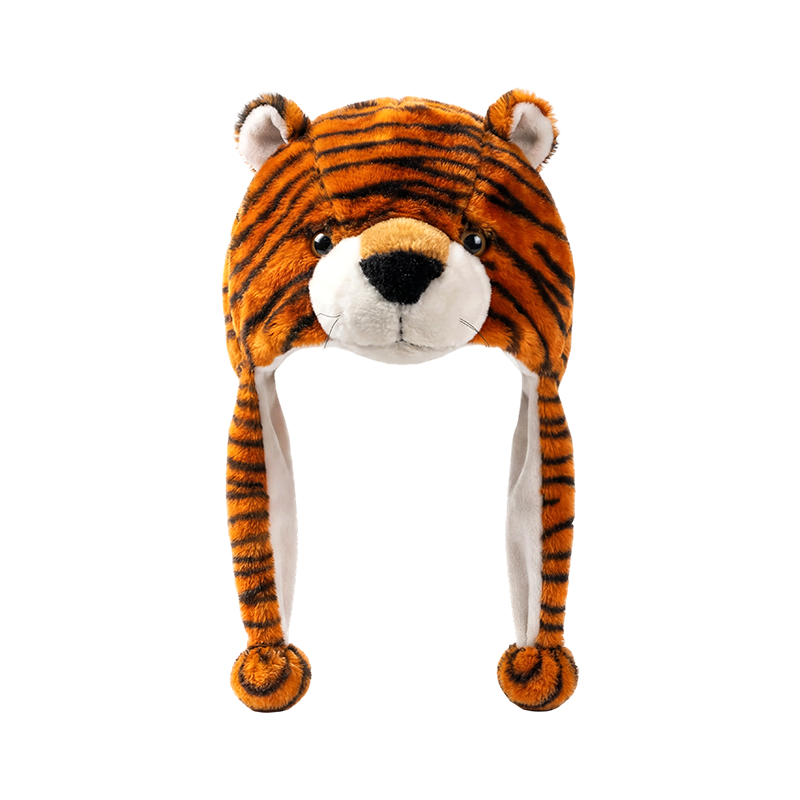
The Tiger-Stripe Bear Plush Hat is a memorable character accessory that combines the visual power of a jungle animal with the softness, comfort, and approachability of a plush toy. Designed in a vibrant orange-and-black striped style, the hat presents a playful tiger-inspired face with upright round ears, bright black eyes, a small nose, and a charming mouth. Although its product name refers to a bear plush hat, its facial styling and stripe pattern create a distinctive tiger character that can attract attention across children’s merchandise, costume accessories, promotional campaigns, seasonal collections, and themed retail displays.
Unlike a conventional fabric cap, this product functions as a wearable plush character. It can become part of a costume, a photo opportunity, a store promotion, an event uniform, a holiday gift assortment, or a collectible character range. Its soft plush shell and PP cotton filling help create a substantial, three-dimensional appearance while maintaining the friendly look expected from a plush accessory. The design is expressive without being overly complicated, giving it broad appeal for children, families, mascot programs, entertainment venues, and novelty gift buyers.
For buyers seeking a custom plush product, the hat also offers a practical manufacturing foundation. It is available for OEM and ODM development, supports customization, and has a listed minimum order quantity of 500 pieces. This makes it suitable for distributors, retailers, promotional agencies, online brands, amusement venues, and companies that want a recognizable character product without beginning from an entirely blank concept.
Tiger-stripe bear plush hat
Product Overview
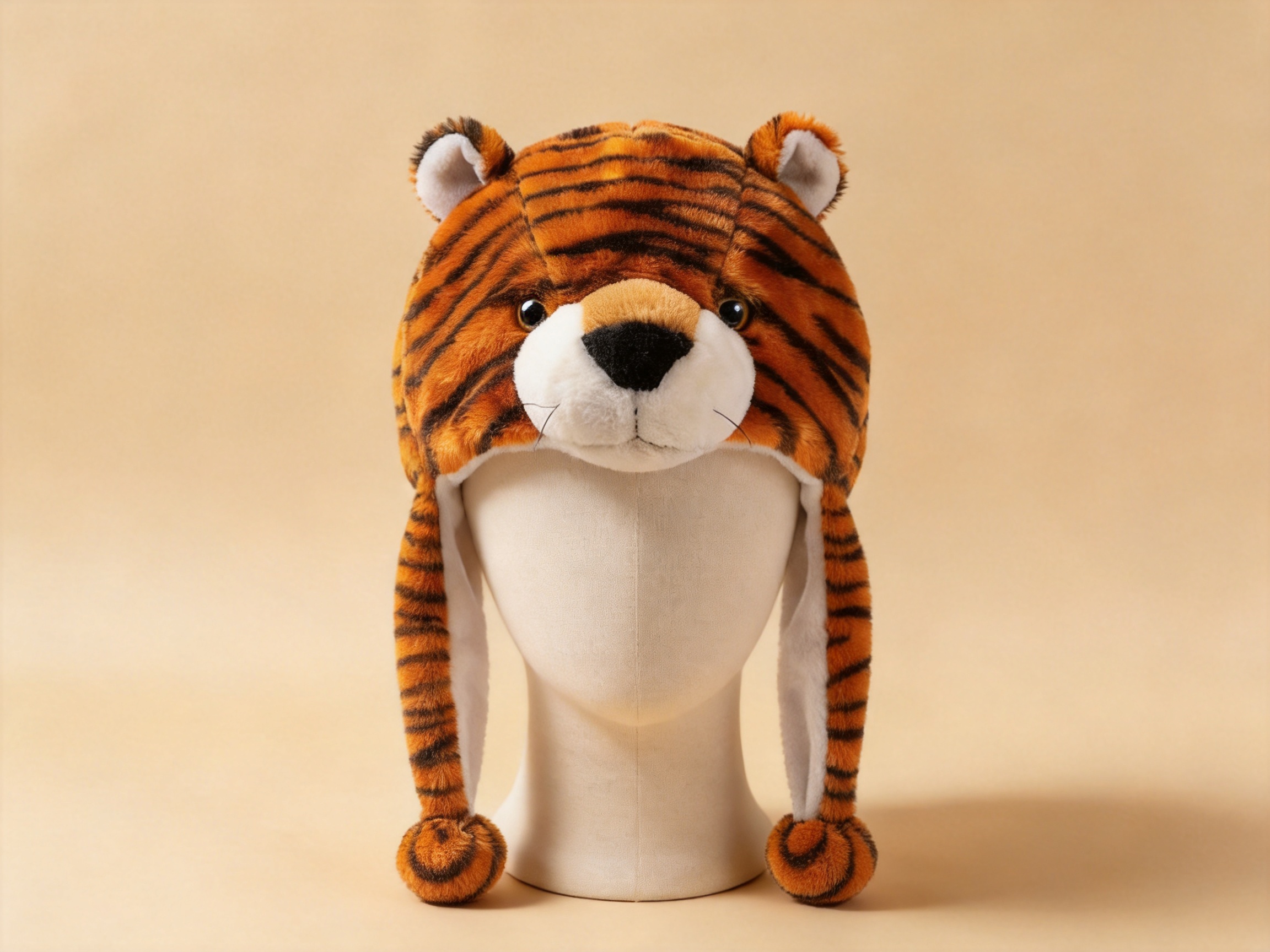
The Tiger-Stripe Bear Plush Hat is shaped to resemble an animal head rather than a flat printed cap. Its rounded silhouette gives the product visual volume, while the raised ears immediately communicate the animal-inspired theme. The orange-and-black stripe treatment provides strong shelf impact and helps the hat stand out in photographs, videos, retail displays, and event environments.
The white facial area creates contrast against the darker stripes. This contrast makes the character easier to recognize from a distance and gives the face a clean, animated appearance. Bright black eyes add a lively expression, while the small nose and mouth soften the fierce tiger reference. The result is not an intimidating animal mask. Instead, it is a friendly, humorous, and highly approachable plush character accessory.
The hat is designed with a squeaky feature, adding an interactive element to the product. A squeak can make the accessory more entertaining for children and can also enhance demonstrations at retail counters, trade shows, parties, and promotional events. Interactive details often help a product receive more attention than a purely decorative accessory because users can engage with it through touch and sound.
With a listed size of approximately 30 centimeters, the hat has enough presence to function as a visible character accessory while remaining relatively easy to handle, display, package, and transport. The size can also be customized according to a buyer’s requirements. Custom sizing may be useful for different age groups, mascot programs, theatrical use, promotional uniforms, or coordinated product collections.
Key Product Specifications
| Specification | Details |
|---|---|
| Product name | Tiger-Stripe Bear Plush Hat |
| Product category | Plush Hats |
| Approximate size | 30 cm, or customized |
| Listed weight | 150 g |
| Listed color | Brown |
| Visual design | Tiger-inspired orange-and-black stripes with a white facial area |
| Shell fabric | Soft plush fabric |
| Filling material | PP cotton |
| Interactive feature | Squeaky design |
| OEM and ODM | Available |
| Minimum order quantity | 500 pieces |
| Sample fee | 100 USD per design |
| Sample lead time | 3–7 working days |
| Production and delivery time | 45 days |
The listed specifications provide a useful starting point for product planning. Buyers should confirm the final dimensions, color standards, packaging requirements, labeling, testing, and shipping schedule during the quotation and sample approval process. This is particularly important when the product will be sold to children, distributed in multiple markets, or incorporated into a large promotional campaign.
Why the Design Stands Out
One of the strongest advantages of this plush hat is its immediate visual identity. Many novelty hats rely on printed graphics or simple ears, but this product combines a complete animal face, dimensional construction, bold stripes, contrasting facial panels, and an interactive squeaky function. These features create several points of recognition at the same time.
The stripe pattern is especially valuable from a merchandising perspective. Strong stripes are easy to identify on a product page thumbnail, in a crowded store display, or in a short social media video. They also communicate the animal theme without requiring a complicated explanation. When a customer sees the product, the tiger-inspired concept is understood quickly.
The rounded ears contribute to the character’s personality. Upright ears suggest alertness and energy, while their soft construction keeps the expression cute rather than aggressive. This balance is important because products aimed at families and children must often combine excitement with a reassuring appearance. The hat’s design achieves this through the contrast between a powerful animal reference and gentle plush materials.
The white facial area is another practical design advantage. Light-colored facial panels help the eyes, nose, and mouth remain visible, even when the product is photographed under ordinary indoor lighting. The face can therefore retain its expression in online listings, promotional photographs, product catalogs, and event pictures.
From a character-development standpoint, the hat can also serve as the first item in a larger animal-themed range. The same construction approach may be adapted for different colors, facial expressions, ears, horns, seasonal details, or branded accessories. A buyer could develop a family of plush hats that includes jungle animals, woodland characters, farm animals, or imaginative creatures while retaining a consistent product format.
Advantages Over Conventional Plush Hats
Compared with a basic plush hat that uses a single-color fabric and minimal decoration, the Tiger-Stripe Bear Plush Hat offers more layered character communication. The stripes establish a recognizable animal theme, the white face creates contrast, the upright ears add dimensionality, and the squeaky feature gives the product an interactive quality.
Compared with a standard printed cap, the plush hat provides a more tactile and giftable experience. Printed caps may be lightweight and inexpensive, but they typically do not offer the same softness or three-dimensional appeal. A plush hat can be touched, squeezed, displayed, worn for photographs, and incorporated into playful activities. These additional uses may increase its perceived value and broaden its marketing potential.
Compared with a hard plastic animal mask, the plush format is softer, less visually severe, and more suitable for casual family settings. A fabric-based character accessory can be more comfortable to handle and can be displayed as a plush collectible when it is not being worn. The soft appearance also fits children’s gift sections, lifestyle stores, party supplies, and home entertainment products.
Compared with ordinary promotional merchandise such as printed bags or generic caps, a character hat can create stronger event participation. People are more likely to photograph an expressive animal accessory, especially when it is used at a themed gathering, school activity, retail opening, family festival, or brand activation. This can help transform a promotional item into part of the experience rather than merely another logo-bearing object.
Its customization potential is also an important competitive advantage. OEM and ODM availability allows buyers to request adjustments to color, size, labels, packaging, facial details, or other design elements. A company does not have to limit itself to an off-the-shelf appearance. With an approved development plan, the product can be aligned with a campaign concept, character identity, seasonal theme, or merchandise collection.
Materials and Construction
The shell fabric is specified as soft plush fabric. Plush textiles are well suited to character accessories because they create a warm visual impression and offer a comfortable tactile surface. The fabric can also support the varied color blocking required by the tiger-inspired design, including the darker stripes and lighter facial section.
PP cotton is used as the filling material. This type of filling is commonly selected for plush products because it is lightweight, resilient, and capable of creating rounded forms. In this hat, the filling helps support the animal-head silhouette, the ears, and the facial structure. Proper distribution of filling is important because uneven stuffing can cause a character product to look distorted or lose its intended shape during transportation.
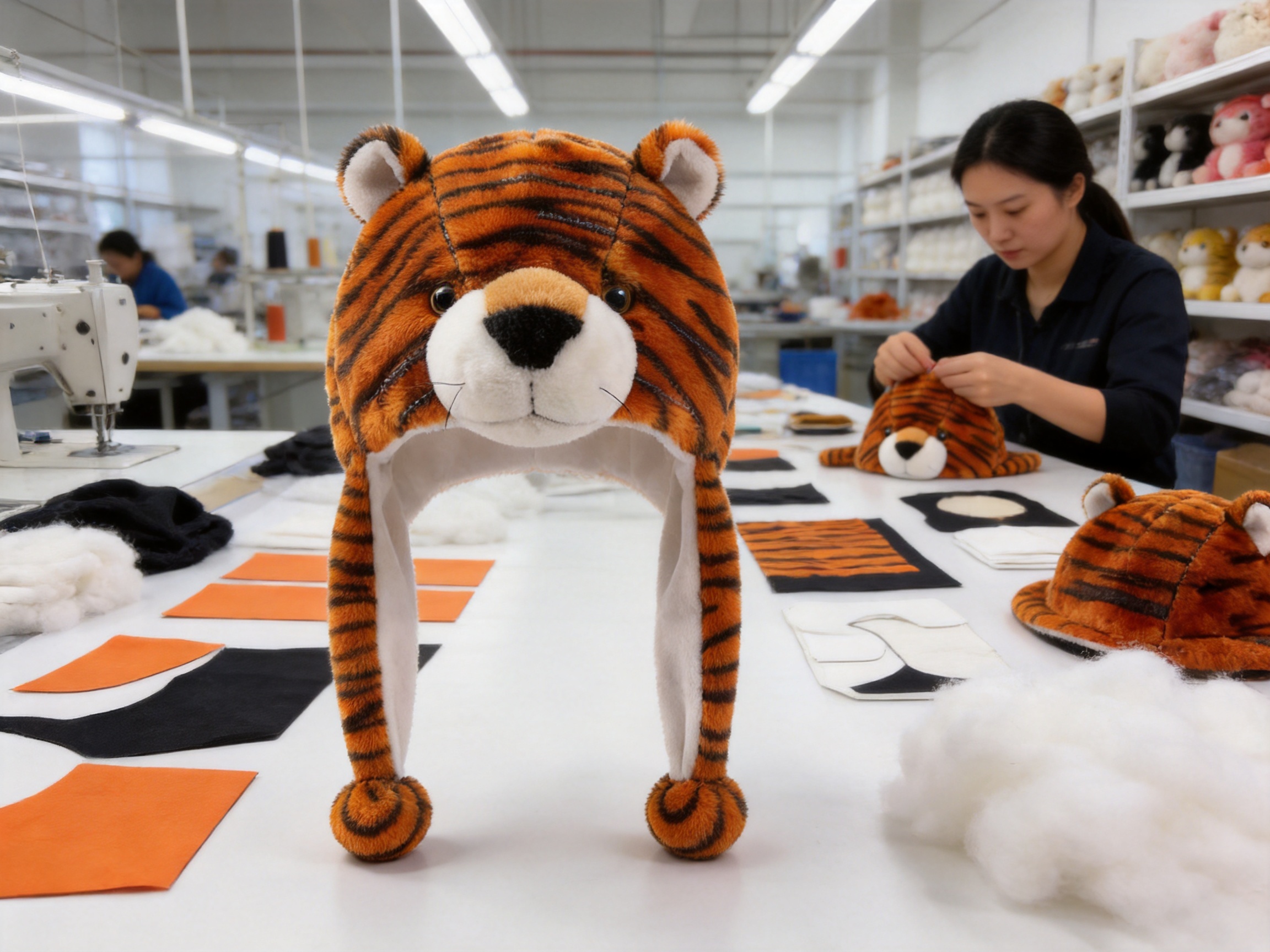
The construction of a three-dimensional plush hat generally requires several coordinated operations. These may include pattern preparation, fabric cutting, stripe placement, panel assembly, facial feature attachment, ear construction, filling, shaping, sewing, inspection, and final packing. Each stage influences the final appearance. If a stripe does not align correctly, if an ear is positioned unevenly, or if the facial components are not centered, the character may lose its visual appeal.
The manufacturer’s integrated approach is valuable in this respect. Tianchang Bestjoy Craft & Gift Co., Ltd. specializes in research and development, design, production, and sales of plush products. Having these functions connected within one organization can simplify communication between the design team, sample room, production department, and sales staff. It can also reduce the risk of information being lost between separate suppliers.
For custom orders, the production process should begin with a clear technical package. This package may include reference drawings, measurements, color specifications, material requirements, logo files, packaging instructions, and intended market information. A structured package allows the manufacturer to identify construction challenges early and helps the buyer evaluate a physical sample more efficiently.
Manufacturing and Development Strengths
The manufacturer was established in 2013 and operates an integrated plush product business. Its factory covers more than 10,000 square meters, providing a substantial base for product development, material handling, production coordination, quality inspection, and finished-goods management. The company reports annual sales exceeding 12 million RMB, indicating established commercial activity rather than a small workshop focused only on occasional orders.
A professional research and development team supports the creation of new plush products. This capability is particularly important for a character hat because the product must balance appearance, wearability, stuffing, structural stability, decoration, and production efficiency. A design that looks attractive in a drawing may require substantial adjustment before it can be produced consistently. Experienced development personnel can help translate visual ideas into patterns and repeatable manufacturing steps.
The company also has professional production equipment and an experienced sales team. Production equipment contributes to consistent cutting, sewing, finishing, and assembly, while the sales team can help coordinate specifications, samples, quantities, and delivery expectations. The combination is useful for overseas buyers who need assistance communicating requirements across different stages of a project.
Quality management for a plush hat involves more than checking whether the finished item resembles the original drawing. Inspection may include appearance, stitching, symmetry, filling distribution, color consistency, attachment strength, cleanliness, packaging, and the operation of the squeaky element. For products intended for children, buyers should additionally confirm the testing and compliance requirements that apply in the destination market.
The company’s experience serving international markets is another strength. Its products are mainly exported to Europe, America, Australia, Japan, and South Korea. These markets can involve demanding expectations regarding product presentation, packaging, communication, quality control, and shipping coordination. Experience with international customers may help the manufacturer understand the importance of clear specifications and reliable documentation.
Bestjoy’s reported customer base includes large retail and wholesale names such as Walmart, Target, Albertsons, and Kmart. Such experience suggests familiarity with organized retail expectations, although individual project requirements must still be discussed and confirmed for each order. A supplier’s previous export background can be useful to buyers that need a partner capable of handling repeat production and international delivery procedures.
Production Process for the Plush Hat
1. Concept Review and Technical Planning
The process begins with the review of the character concept. For the Tiger-Stripe Bear Plush Hat, the principal features include the animal-head silhouette, round upright ears, tiger-inspired stripes, a white facial area, black eyes, a nose, a mouth, soft plush fabric, PP cotton filling, and a squeaky component. During planning, these features must be converted into measurable specifications.
The buyer and manufacturer can confirm the intended size, wearing position, opening dimensions, interior comfort, fabric pile, color references, decoration method, and packaging format. If customization is requested, the factory can assess whether the proposed changes affect material consumption, sample development, production time, or the minimum order quantity.
2. Pattern and Sample Development
Pattern development determines how flat pieces of fabric will become a rounded character form. The designer must consider seam placement, fabric stretch, ear shape, face proportions, and the position of the hat opening. Good patterns support a balanced appearance and reduce unnecessary material waste.
A physical sample allows the buyer to evaluate the design in three dimensions. The sample stage is also an opportunity to check whether the stripes look balanced, whether the face is centered, whether the ears stand correctly, and whether the product feels comfortable to handle. The stated sample lead time is 3–7 working days, while the sample fee is 100 USD per design.
3. Fabric Selection and Cutting
After sample approval, the selected plush fabric is prepared for cutting. Color consistency is important because the orange, black, white, and brown elements must work together as a coherent character. Fabric direction and pile orientation may also influence the final appearance. Careful cutting helps ensure that repeated production pieces remain close to the approved sample.
The stripe arrangement should be planned before cutting. Depending on the approved construction, stripes may be created through separate fabric panels, sewn appliques, embroidery, printing, or another decoration method. The best approach depends on the desired appearance, order quantity, durability expectations, and target cost.
4. Sewing and Character Assembly
The cut pieces are assembled into the hat’s rounded form. At this stage, the production team joins the main panels, creates the ears, attaches the facial components, and prepares the opening. Stitch quality is essential because the hat must maintain its shape while being handled, worn, packed, unpacked, and possibly squeezed during use.
Facial details require careful positioning. The black eyes should appear balanced, the nose should be centered, and the mouth should support the intended expression. Small changes in facial placement can make a character look more cheerful, surprised, sleepy, or fierce. The manufacturer’s sample approval process gives the buyer an opportunity to confirm these details before mass production.
5. Filling and Shaping
PP cotton is inserted after the relevant sections have been sewn. The amount and distribution of filling influence the hat’s softness, weight, and silhouette. Too little filling can produce a flat or weak appearance, while too much can make the product excessively firm or affect its wearability.
Shaping is performed so that the ears, face, and crown retain their intended form. Consistency at this stage is important for large orders because customers generally expect products from the same shipment to look alike. Inspection staff can compare completed pieces with the approved sample and identify irregularities before packing.
6. Interactive Feature Installation
The squeaky feature adds play value but must be incorporated carefully. The component should be positioned in a way that supports the intended interaction without damaging the silhouette or creating an uncomfortable pressure point. Buyers should confirm the specific construction and safety requirements for the target market, especially when the product may be used by young children.
Because a squeaky feature is an interactive component, quality control should include functional checks. Inspectors may verify whether the squeak operates as intended, whether the component remains secure, and whether the surrounding fabric and stitching are properly finished. The buyer may also request additional testing documentation depending on the destination country and sales channel.
7. Final Inspection and Packing
Before shipment, finished hats can be inspected for appearance, dimensions, stitching, facial alignment, stripe consistency, cleanliness, filling, and packaging. Products that do not meet the agreed standard should be corrected or removed from the shipment. Final inspection is especially valuable for custom orders because the approved sample becomes the reference for mass production.
According to the provided packaging details, the carton size is 43L × 25W × 18H, with 12 pieces per carton. The listed gross weight is 3 kilograms and the net weight is 2 kilograms. These details help importers estimate warehouse space, freight costs, and distribution requirements. They should be reconfirmed before shipment because final packaging can change when buyers request individual boxes, hang tags, polybags, master cartons, or additional protective materials.
Customization Opportunities
The standard tiger-inspired appearance already offers a strong identity, but OEM and ODM services allow buyers to develop a version that better suits a particular business purpose. Customization may include color changes, alternative stripe patterns, different facial expressions, embroidered logos, woven labels, printed tags, packaging artwork, and coordinated accessories.
Size customization can help the product serve different audiences. A smaller version may be appropriate for children’s party favors or low-cost promotional bundles, while a larger version may be more suitable for performance costumes, photo events, or retail display use. Any size adjustment should be reviewed with the manufacturer because it may affect the hat opening, filling quantity, sewing structure, packing ratio, and shipping volume.
Color customization can support a brand campaign or seasonal theme. The tiger-inspired orange and black palette is energetic and recognizable, but alternative colors could be considered for sports events, school programs, entertainment properties, or holiday promotions. Buyers should provide clear color references to reduce differences between digital artwork, approved samples, and mass-produced goods.
Facial customization can create different character personalities. A smiling tiger may suit a family-oriented brand, while a more energetic expression may fit an amusement venue or sports promotion. Changes to the eyes, eyebrows, mouth, nose, and facial patch can make the same basic hat pattern feel like an entirely new character.
Branding can be added through labels, packaging, hang tags, or approved decorative details. The appropriate branding method depends on the product’s intended use and the desired visual effect. A subtle label may be preferred for a retail gift, while a larger branded package may be useful for a corporate promotional campaign. Buyers should provide artwork in production-ready formats and approve the final placement during sampling.
Applications Across Different Markets
Retail and Gift Stores
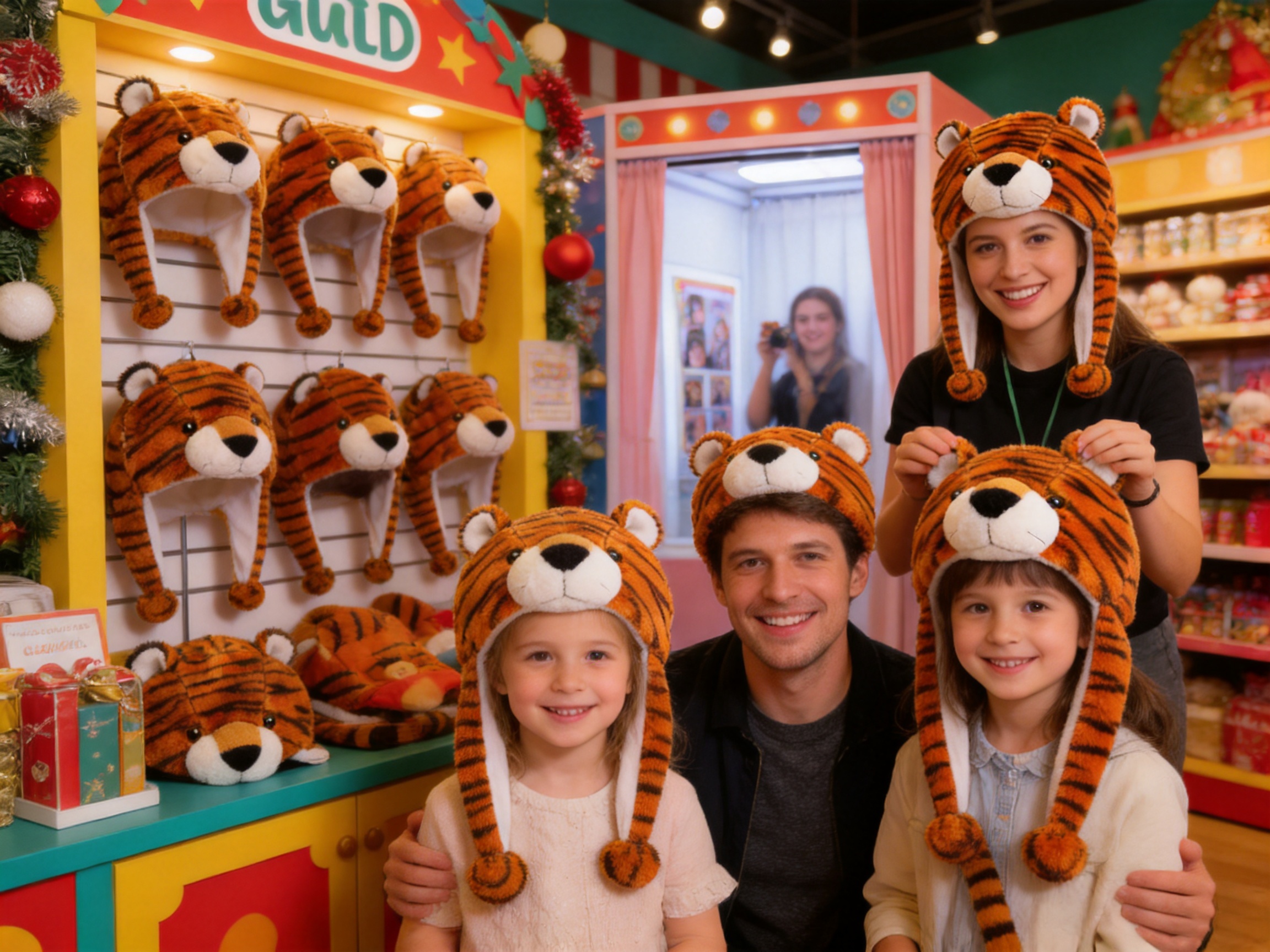
The Tiger-Stripe Bear Plush Hat can fit naturally into gift shops, toy stores, lifestyle stores, zoo gift shops, amusement venues, and seasonal merchandise sections. Its strong character face makes it easy to display on a mannequin head, shelf fixture, basket, or themed wall. It may be sold as a novelty accessory, a children’s gift, a costume item, or part of an animal-themed collection.
Promotional Campaigns
Promotional agencies can use the hat as a high-visibility giveaway or event accessory. It can support a jungle-themed product launch, family entertainment campaign, wildlife education activity, restaurant promotion, school event, or sports mascot program. Custom labels and packaging can connect the product to the campaign while preserving the playful value of the animal design.
Festivals and Seasonal Events
Animal accessories are suitable for fairs, carnivals, school celebrations, family days, costume parties, and holiday markets. The soft construction and bright appearance make the hat easy to recognize in crowded environments. It can also be used in photo booths, where its expressive face may encourage participants to create and share memorable images.
Children’s Entertainment
Indoor play centers, birthday party organizers, children’s theaters, and educational venues may use plush hats to support role-play. A child can wear the hat while pretending to be a tiger, while staff members can use coordinated hats as part of a themed activity. The product’s friendly expression makes it more suitable for interactive play than a frightening or highly realistic animal mask.
Home and Lifestyle Merchandise
Not every customer will wear the product continuously. Some buyers may purchase it as a decorative character item for a bedroom, playroom, entertainment space, or collection. The plush appearance allows the hat to function as a soft home accessory when displayed on a hook, shelf, chair, or stuffed-animal stand.
Merchandising and Marketing Benefits
A character accessory has several advantages in visual marketing. It can be photographed on a model, displayed in a flat-lay arrangement, used in a short product demonstration, or presented as part of a themed retail installation. The stripes and high-contrast face remain visible in many formats, including online catalogs, marketplace listings, printed flyers, and social media posts.
The squeaky feature provides a natural demonstration moment. A short video can show the product being squeezed, worn, or used during a playful interaction. This can help online sellers communicate that the item is more than a decorative hat. However, all marketing claims should accurately reflect the final product and the confirmed safety information.
Retailers can create bundles around the animal theme. Possible combinations include a plush tiger toy, animal-themed stationery, a children’s book, a party kit, a small bag, or seasonal decorations. The hat may also be offered as a premium gift-with-purchase item when customers reach a specified spending level.
For corporate buyers, the product’s unusual format can create stronger recall than a standard promotional cap. A customer may remember an event because of the playful hat worn by staff or provided to families. When customized with suitable packaging or labeling, it can become a physical reminder of a campaign after the event has ended.
Order Planning and Commercial Considerations
The listed minimum order quantity is 500 pieces. This quantity is suitable for regional promotions, online product launches, specialty retail testing, event distribution, and initial wholesale programs. Buyers should estimate expected sales, promotional usage, storage capacity, and replenishment timing before confirming the order.
The stated sample fee is 100 USD per design. For custom projects, buyers should treat the sample as an important development tool rather than merely a pre-production formality. A careful review of the sample can identify improvements to proportions, material feel, facial placement, stripe layout, packaging, and wearability before the full order is manufactured.
The sample lead time is listed as 3–7 working days. Mass production and delivery are listed at 45 days. The final schedule may depend on sample approval, raw material availability, order confirmation, packaging approval, production capacity, inspection arrangements, and shipping conditions. Buyers should allow additional time for internal approvals and international transportation when planning a campaign launch.
Packaging information should be reviewed alongside the sales channel. Bulk carton packing may be efficient for importers and distributors, while direct-to-consumer sellers may require individual packaging and barcode labels. If the buyer needs retail-ready packaging, this requirement should be included at the quotation stage because it can affect material selection, labor, carton capacity, and cost.
Shipping calculations should use confirmed carton dimensions and weights. The provided carton specification is 43L × 25W × 18H, with 12 pieces per carton, a gross weight of 3 kilograms, and a net weight of 2 kilograms. These figures are useful for preliminary planning, but the final packing configuration should be verified after any changes to product size, packaging, or accessories.
Quality and Safety Review
Before placing a commercial order, buyers should establish a written quality standard. This standard may cover fabric color, stripe placement, dimensions, facial alignment, seam tolerance, filling density, squeak performance, odor, loose threads, packaging, and labeling. A physical golden sample or approved reference sample can help both parties maintain the same expectations.
For children’s products, safety requirements vary by market. Buyers should determine which regulations, testing procedures, labeling rules, flammability requirements, chemical restrictions, mechanical safety checks, and age grading apply in the intended destination. The product information provided does not state specific certifications, so compliance documentation should be requested and confirmed directly for each order.
The squeaky component deserves particular attention. Buyers should ask how it is enclosed, how its attachment is checked, and which tests are available. The same applies to eyes, noses, mouths, labels, and any other attached decorations. A product designed for children should be evaluated according to the strictest requirements applicable to its intended use rather than relying only on visual inspection.
Storage conditions can also affect plush products. Finished goods should be protected from excessive moisture, dust, direct sunlight, and strong odors. Proper carton handling helps prevent compression and deformation. After unpacking, the hats may require gentle reshaping so that the ears and facial areas recover their intended form.
Why Work with an Integrated Plush Manufacturer
An integrated manufacturer can provide continuity from concept development through production and sales support. This is valuable for products such as the Tiger-Stripe Bear Plush Hat because the visual concept depends on multiple details working together. If design, sampling, sourcing, sewing, filling, inspection, and packaging are handled by disconnected parties, communication problems may occur.
Tianchang Bestjoy Craft & Gift Co., Ltd. combines R&D, design, production, sales, and after-sales service. This structure gives buyers a single business contact for discussing product changes, sampling, order quantities, delivery expectations, and follow-up issues. It can also make repeat orders easier because approved designs and manufacturing information can be retained within the same organization.
The company’s factory scale, professional equipment, design resources, export experience, and reported relationships with major retailers provide a strong foundation for wholesale cooperation. Its product range covers trendy plush toys, children’s plush toys, pet plush toys, promotional gifts, home furnishings, stationery gifts, handicrafts, and cartoon decorations. This broad experience may support buyers that want to build a coordinated product line rather than purchase only one isolated item.
Bestjoy also offers in-stock services, which may be useful for buyers seeking shorter purchasing cycles or ready-made products. Availability should be confirmed for the specific hat, quantity, color, and packaging requirement. If the buyer needs a fully customized design, the OEM and ODM service provides a separate path for product development.
Recommended Buyer Workflow
Step One: Define the Commercial Purpose
Begin by deciding whether the hat will be sold as a retail product, used as a promotional giveaway, included in an event package, or developed as part of a wider character collection. The purpose affects the ideal size, packaging, branding, quantity, and compliance requirements.
Step Two: Confirm the Standard Product
Review the available design, listed 30-centimeter size, brown color specification, soft plush shell, PP cotton filling, and squeaky function. Confirm whether the standard appearance is suitable or whether customization is required.
Step Three: Prepare Artwork and Specifications
For a custom project, prepare logos, color references, facial artwork, packaging graphics, labels, and measurement requirements. Clear documentation can shorten revisions and make the sample review more productive.
Step Four: Approve the Sample
Evaluate the physical sample for appearance, comfort, weight, structure, facial expression, stripe placement, ear position, sewing, filling, and interactive performance. Record requested adjustments in writing and approve a final reference sample before mass production.
Step Five: Confirm Production and Packaging
Confirm the order quantity, unit price, payment terms, packaging, carton details, inspection plan, delivery schedule, and shipping responsibilities. The listed MOQ is 500 pieces and the listed production and delivery time is 45 days, but the final commercial schedule should be agreed for the specific order.
Step Six: Plan Distribution
Arrange warehouse space, retail displays, e-commerce photographs, promotional materials, and transportation. Because the product is soft and three-dimensional, packaging and storage planning can help preserve its appearance and reduce handling damage.
Frequently Asked Questions
What is the Tiger-Stripe Bear Plush Hat?
It is a wearable plush hat shaped like an animal head. The design combines a bear-hat product format with tiger-inspired stripes, upright round ears, a white facial area, black eyes, a nose, and a mouth. It also includes a squeaky feature.
Is the product suitable for retail sales?
Yes. Its character appearance, soft construction, and interactive feature make it suitable for gift shops, toy stores, lifestyle retailers, amusement venues, seasonal displays, and online stores. Final retail suitability depends on packaging, labeling, and the compliance requirements of the destination market.
What materials are used?
The listed shell fabric is soft plush fabric, and the listed filling material is PP cotton. Buyers should confirm the final material specifications and any required testing documents before placing an order.
What is the standard size?
The listed size is approximately 30 centimeters. Customized sizing is available, subject to development review and confirmation of the effect on production, packing, and shipping.
Can the colors be customized?
OEM and ODM services are available, so buyers may discuss custom colors and design changes. Specific color adjustments should be reviewed through artwork and physical sampling before mass production.
Can the face or stripes be changed?
Custom facial expressions, stripe arrangements, and other visual details may be possible through the ODM process. The manufacturer should assess each request because changes can affect patterns, decoration methods, costs, and lead times.
What is the minimum order quantity?
The listed minimum order quantity is 500 pieces. Buyers should confirm whether the MOQ applies separately to each color, design, size, or packaging configuration.
How much is the sample fee?
The listed sample fee is 100 USD per design. The exact sample terms should be confirmed when the buyer submits the design requirements.
How long does sampling take?
The listed sample lead time is 3–7 working days. The actual period may depend on design complexity, material availability, artwork approval, and the number of revisions requested.
How long does production and delivery take?
The listed delivery time is 45 days. Buyers should confirm whether this refers to production, shipment preparation, or the complete delivery schedule, and should discuss the shipping method and destination before finalizing the order.
How is the product packed?
The provided packaging information states a carton size of 43L × 25W × 18H and 12 pieces per carton. The listed gross weight is 3 kilograms and the net weight is 2 kilograms. Final details should be reconfirmed if individual retail packaging or custom cartons are requested.
Is the product certified for children?
The provided information does not identify specific certifications. Buyers should request applicable testing and compliance documentation based on the target country, intended age group, sales channel, and use scenario.
Can the product be used for promotions?
Yes. The high-contrast animal design and wearable format make it suitable for brand activations, school events, family festivals, retail openings, entertainment campaigns, and seasonal promotions. Custom labels or packaging can be considered for campaign use.
What makes this hat different from a basic animal cap?
It combines a three-dimensional plush animal-head shape, bold tiger-inspired stripes, contrasting facial panels, expressive details, soft materials, and a squeaky feature. These characteristics give it stronger character value and more opportunities for interaction, display, and photography.
Conclusion
The Tiger-Stripe Bear Plush Hat is a versatile plush accessory with a strong visual identity and broad commercial potential. Its tiger-inspired stripes, upright ears, expressive face, soft plush fabric, PP cotton filling, and squeaky function distinguish it from ordinary caps and less interactive novelty products. It can be used as a retail item, children’s accessory, event prop, promotional gift, seasonal product, or part of a larger character collection.
Its customization options make it especially relevant to distributors, retailers, promotional agencies, entertainment venues, and brands seeking a recognizable product format. With a listed 30-centimeter size, OEM and ODM availability, a 500-piece minimum order quantity, a 3–7-working-day sample lead time, and a listed 45-day delivery schedule, the product offers a practical basis for both standard purchasing and customized development.
The manufacturing capabilities of Tianchang Bestjoy Craft & Gift Co., Ltd. further support the product’s commercial value. The company’s integrated R&D, design, production, sales, and after-sales structure, factory capacity of more than 10,000 square meters, professional production equipment, international export experience, and broad plush product range provide a solid foundation for wholesale cooperation. Buyers can use the sample process to refine the character, confirm construction details, establish quality standards, and prepare packaging for their intended market.
For companies looking for a soft, expressive, and highly visible animal-themed accessory, this plush hat presents a compelling combination of character appeal, customization potential, interactive value, and scalable production support.
References
1. Product specification sheet for the Tiger-Stripe Bear Plush Hat, including size, weight, materials, customization, MOQ, sample terms, delivery information, and packaging details.
2. Tianchang Bestjoy Craft & Gift Co., Ltd. company profile, including manufacturing history, factory scale, product categories, export markets, customer experience, and integrated service capabilities.
3. General plush product development practices covering pattern construction, fabric cutting, sewing, filling, shaping, inspection, and packaging.
4. General guidance for evaluating children’s products, including material safety, attachment security, labeling, testing, and destination-market compliance.